Best Lead Generation Companies for Contractors in 2026: 8 Services Compared

How we put this together: we compare official feature and pricing pages, app store listings, privacy policies and public user reviews. Prices change, so check the provider's site before you pay.
Key takeaways
- The most important question is exclusivity, because a shared lead forces you to compete with other contractors for the same job.
- Per-lead pricing varies by trade and market, so a headline price means little without your local rates and close rate.
- Contract terms, refund rules, and cancellation rules matter as much as lead volume, especially for annual deals.
- Google Local Services Ads offers a different model from marketplaces, because leads are more direct and tied to a verified profile.
- Track cost per booked job, not cost per lead, because a cheap lead that never books is expensive in practice.
Quick comparison
| Name | Who it suits | Starting price | Free option | |
|---|---|---|---|---|
 Angi Leads | High-volume shared leads | See website | No | Visit |
 Thumbtack | Pay-per-contact testing | See website | No | Visit |
 Bark | Hand-picked shared leads | See website | No | Visit |
 CraftJack | Lower-cost shared leads | See website | No | Visit |
 Houzz Pro | Directory profile plus leads | See website | Free trial | Visit |
 Google Local Services Ads | Direct verified leads | See website | No | Visit |
 Modernize | High-ticket home improvement leads | See website | No | Visit |
 Service Direct | Pay-per-call leads | See website | No | Visit |
The best lead generation companies for contractors
Contractor lead services sell very different things: shared leads, direct calls, directory profiles, and advertising placement. We compared official service pages, lead models, exclusivity, pricing structures, contract terms, and refund policies where published. Prices for many services vary by trade and market, so we use See website where a single price would mislead.
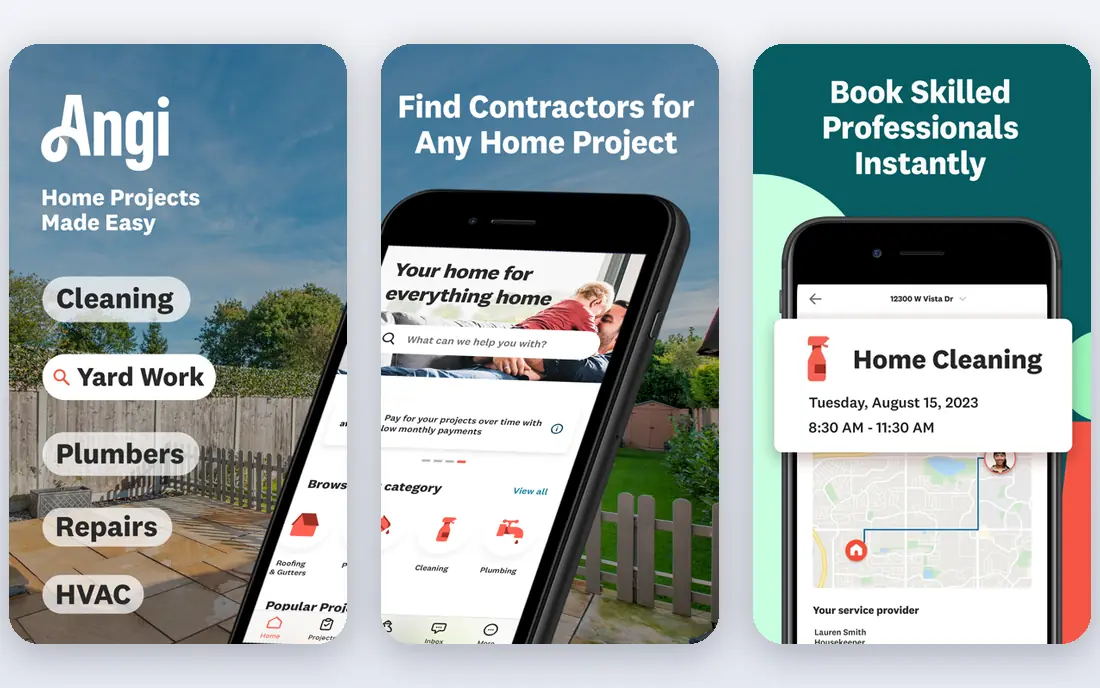
Angi Leads suits contractors who need volume quickly and have no owned channels yet. Homeowners use Angi to find pros, so a new business can get enquiries without waiting for search rankings or referrals to build. For a contractor launching in a new territory, that immediate volume can keep crews busy while other channels grow.
The catch is sharing and terms. Leads go to multiple contractors, so speed of response matters a lot, and annual terms are common, which locks in spend. Lead quality also varies by trade and market, so a price that works for one trade may fail for another. Angi works best as a short-term volume source, tracked closely by cost per booked job.
- Largest homeowner audience among marketplaces
- Immediate volume for new businesses
- Useful for launching a trade or territory
- Leads shared with other contractors
- Annual terms are common
- Lead quality varies by trade and market
Thumbtack suits contractors who want to test whether platform leads work in their market without a long contract. You pay per contact, pause when busy, and cover a wide range of trades, from plumbing to remodelling. For a newer contractor, that flexibility is valuable.
The downside is reply rate. You pay per contact even when a homeowner never replies, and leads are shared, so close rates are lower than for exclusive leads. Pricing also rises in competitive markets, which can surprise a contractor who budgeted from an early quote. Thumbtack is best for testing, with strict tracking of replies and bookings.
- Pay as you go with no long contract
- Useful for testing a market
- Wide range of trades covered
- Charged per contact even when homeowners do not reply
- Shared leads
- Pricing rises in competitive markets
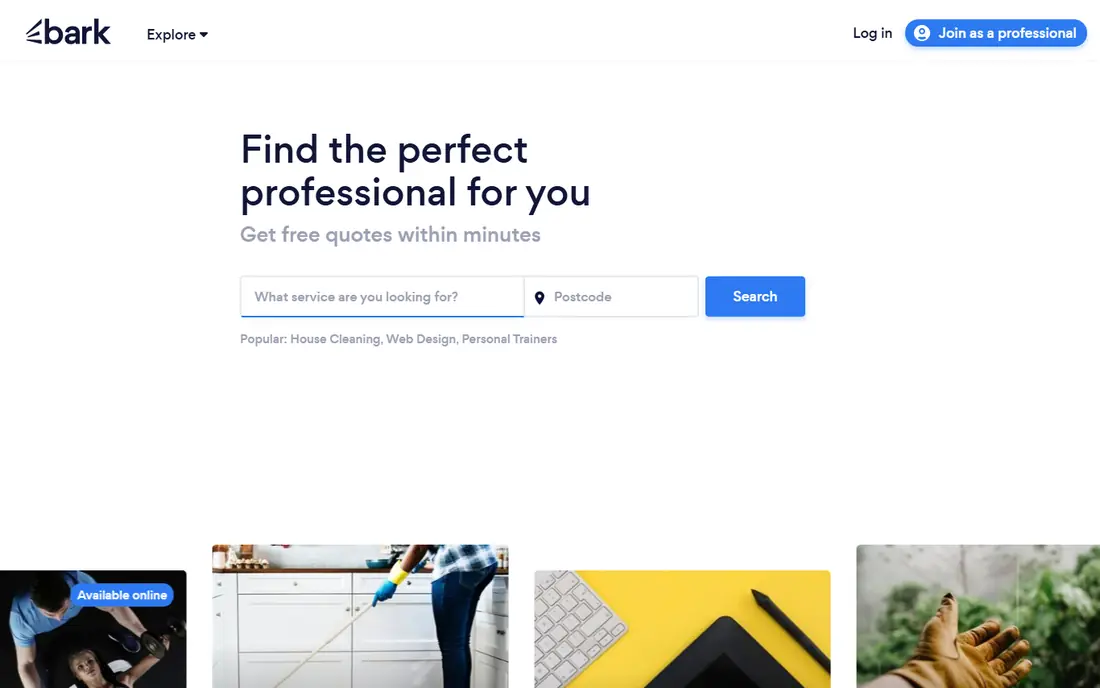
Bark suits contractors who want to choose leads rather than receive them automatically. You view a lead, decide whether it fits your trade and area, and spend credits only on leads you want to pursue. That control helps contractors avoid paying for jobs they would never take.
The catch is the credit model. Credits obscure the real dollar cost, and credits may expire, so contractors need to track spend in dollars, not just credits. Leads are also shared with multiple pros. Bark works best for contractors who review leads daily and track cost per booked job in real money.
- You see leads before spending credits
- No long-term contract
- Wide trade coverage
- Credit system can hide the real dollar cost
- Leads sold to multiple pros
- Credit expiry rules need checking
CraftJack suits contractors who answer the phone fast and want a lower per-lead cost than larger marketplaces. Leads are shared with fewer contractors than some rivals, which can improve close rates slightly, and fast response can matter for winning the job. For trades with lower ticket sizes, that cost difference adds up.
The limit is sharing. Even with fewer competitors, you still compete for the same job, and lead quality varies by trade and market. CraftJack is also owned by the same parent as Angi, so contractors using both should not expect fully separate lead pools. Use CraftJack as one channel, not as a sole source.
- Lower per-lead cost than some marketplaces
- Shared with fewer contractors than some rivals
- Fast-response discounts in some cases
- Still a shared-lead model
- Lead quality varies by trade
- Owned by the same parent as Angi
Houzz Pro suits contractors whose work sells visually, such as remodelling, design-build, and high-end trades. A strong profile with photos, reviews, and project details can attract homeowners over time, and the profile remains an asset even when advertising pauses. That lasting presence differs from pure per-lead buying.
The downside is subscription cost. You pay even in slow months, and lead volume depends on profile quality, reviews, and local competition. Houzz Pro works best for contractors who invest in photos and reviews, and who want a directory presence alongside lead generation. It is less suited to contractors who need instant volume only.
- Strong profile and portfolio showcase
- Directory presence that lasts
- Optional advertising for extra leads
- Subscription cost even in slow months
- Lead volume depends on profile quality and market
Google Local Services Ads suits contractors who want direct, more exclusive leads from search. Homeowners see a verified badge, call directly, and reach the contractor without competing in a shared lead pool in the same way. That direct model often gives higher close rates than shared marketplaces, though results vary by trade.
The catch is setup and pricing. Verification takes time and documents, pricing varies by trade and market, and availability varies by area. Contractors also need to answer calls promptly and manage reviews, because the profile affects visibility. For contractors with a solid reputation, Local Services Ads is often the first channel to test.
- Direct calls from verified profile
- Google Verified badge builds trust
- Leads are more exclusive than marketplace leads
- Pricing varies by trade and market
- Verification and setup take time
- Availability varies by area
Modernize suits contractors in high-ticket trades such as roofing, windows, bathrooms, and solar, where one booked job can justify a higher lead cost. Its focus on home improvement means leads are matched to those trades, rather than spread across every service category. For high-ticket work, that focus can improve relevance.
The downside is pricing opacity. Quote-based pricing means you need a sales conversation to compare costs, and lead quality varies by market. Contract terms also need checking before signing. Modernize is best for high-ticket contractors who track cost per booked job carefully and who can handle larger jobs.
- Focus on high-ticket home improvement
- Useful for roofing, windows, and solar
- Structured lead matching
- Quote-based pricing makes comparison hard
- Lead quality varies by market
- Contract terms need checking
Service Direct suits contractors who close well on the phone, especially in emergency trades such as plumbing, HVAC, and electrical work. Pay-per-call means you pay for a live inbound call, not just a form submission, which can feel closer to a real enquiry. For trades where speed matters, a live call is a strong lead type.
The limit is call quality. Not every call becomes a job, and pricing varies by trade and market. Dispute rules for invalid calls, such as wrong numbers or out-of-area calls, need checking before signing. Service Direct works best for contractors who answer promptly and track which calls turn into bookings.
- Pay per qualified call rather than per form lead
- Live inbound calls
- Useful for emergency trades
- Call quality varies
- Pricing varies by trade
- Dispute rules for invalid calls need checking
How we picked these
We compared official service pages, lead models, exclusivity, pricing structures, contract terms, and refund policies where published. We included shared marketplaces, direct advertising, directory services, and pay-per-call providers, because the best lead service for contractors depends on trade, ticket size, and close rate. We favoured services with clear models over services with vague promises.
Buying guide: how to buy contractor leads without wasting money
Start with exclusivity, because it decides your close rate more than any other factor. Ask exactly how many contractors receive each lead, and get the answer in writing. Then ask how a valid lead is defined, what counts as invalid, and how credits or refunds work. A vendor that cannot answer those questions clearly is a risk, no matter how low the headline price looks.
Track cost per booked job
Do not judge a service by cost per lead alone. Track leads, replies, booked jobs, and revenue for each channel, then divide total spend by booked jobs. A cheap shared lead that rarely books can cost more per job than a pricier direct lead that books often. Review those numbers monthly, and pause any channel that fails to book at a profitable rate.
Contracts, refunds, and owned channels
Read contract length, renewal terms, and early termination fees before signing, because annual deals with auto-renewal are common in this market. Check refund rules for invalid leads, and keep records of every disputed lead. At the same time, build owned channels such as reviews, referrals, and a strong Google profile, because owned leads cost less over time and do not disappear when you stop paying a platform.
Frequently asked questions
What is the best lead service for contractors?
Google Local Services Ads is a strong starting point for many contractors, because leads are direct and tied to a verified profile. Angi Leads suits high-volume needs, while Thumbtack suits testing without a long contract. The best choice depends on trade, ticket size, and close rate in your market.
What is the best lead generation service for small contractors?
Thumbtack and Bark suit small contractors testing lead platforms, because they offer pay-as-you-go models without long contracts. Google Local Services Ads also suits small contractors with a good reputation. Start small, track cost per booked job, and expand only the channels that book profitably.
Are shared leads worth it for contractors?
Shared leads can work when response speed is high and ticket size covers the cost, but they close at lower rates than exclusive leads. Track cost per booked job, not cost per lead, to judge value. If shared leads rarely book, switch spend to direct or owned channels.
How much do contractor leads cost?
Costs vary by trade, market, lead type, and exclusivity, so a single price would mislead. Shared form leads, direct calls, and high-ticket leads sit in different ranges. Ask each vendor for your local rates, and model the total at your real close rate before signing.
Should contractors rely on one lead company?
No, relying on one platform is risky, because pricing, lead quality, and terms can change. Use one or two paid channels alongside owned channels such as reviews, referrals, and search visibility. That mix protects your pipeline when a platform changes its rules or prices.
Sources we checked (8)

Online Jobs is an independent blog about careers, online work, learning new skills and the tools that help people earn. More about us.
Keep reading
All posts
n8n Alternatives
n8n alternatives compared for 2026, with Zapier, Make, Activepieces, and more, covering visual builders, code steps, self-hosting, and pricing models.

ZoomInfo Alternatives
The best ZoomInfo alternatives in 2026, compared on price, free plans, data coverage, and which tool fits small teams or large sales teams best in detail.
Workday Alternatives
We compared the best workday alternatives for HR, payroll, and global hiring, from BambooHR and Gusto to Rippling, Deel, and HiBob for growing teams in 2026.