Best Lead Generation Companies in 2026: 8 Tools Compared

How we put this together: we compare official feature and pricing pages, app store listings, privacy policies and public user reviews. Prices change, so check the provider's site before you pay.
Key takeaways
- ZoomInfo suits large teams that need intent data and deep company coverage, while Apollo suits smaller teams that want data and outreach in one tool.
- Lusha and UpLead are practical for quick contact lookups, with Lusha stronger on mobile numbers and UpLead clearer on credit refunds.
- Cognism is the stronger pick for European prospecting, where phone verification and privacy compliance matter more.
- Leadfeeder is different from the rest, since it identifies visiting companies rather than selling contact lists.
Quick comparison
| Name | Who it suits | Starting price | Free option | |
|---|---|---|---|---|
 ZoomInfo | Enterprise sales teams | See website | Yes | Visit |
 Apollo | Data plus outreach in one tool | Free | Yes | Visit |
 Lusha | Fast contact lookups | Free | Yes | Visit |
 Cognism | European prospecting | See website | No | Visit |
 UpLead | Verified contacts at mid-market price | $99 per month | Free trial | Visit |
 Seamless.AI | Real-time contact search | Free | Yes | Visit |
 LinkedIn Sales Navigator | Social selling on LinkedIn | See website | Free trial | Visit |
 Leadfeeder | Website visitor identification | Free | Yes | Visit |
The best lead generation companies
Lead generation tools differ more than their home pages suggest. Some sell contact databases, some track buying signals, and some turn your own website traffic into leads. We picked tools that are live in October 2026, publish a clear use case, and fit B2B sales teams of different sizes.
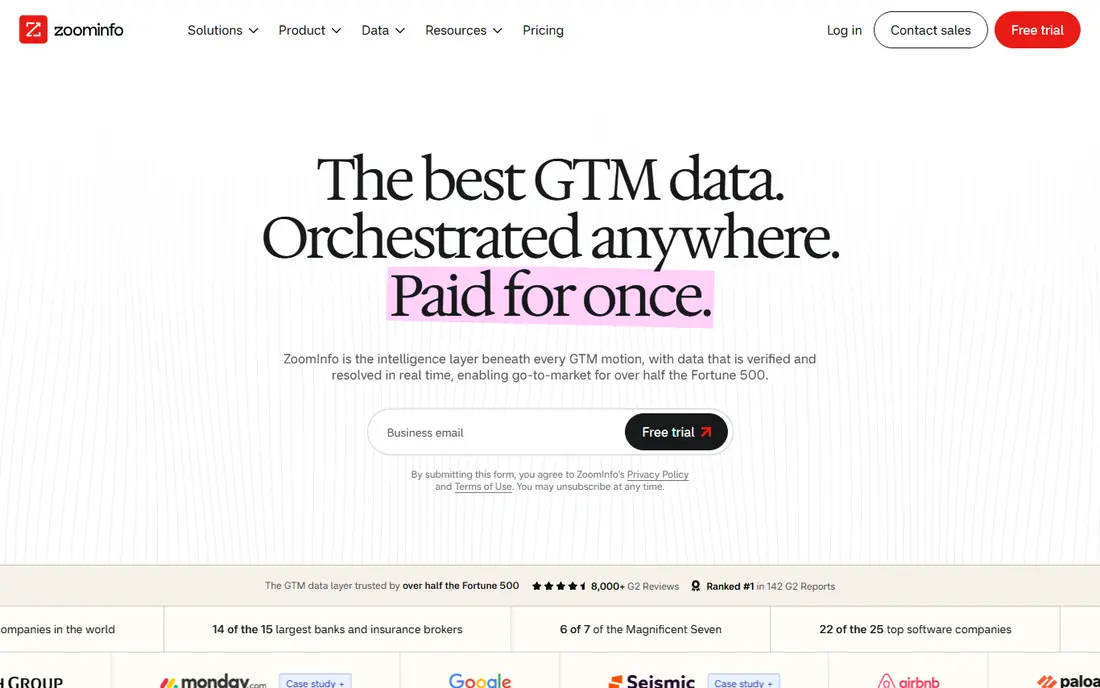
ZoomInfo is the default choice for larger revenue teams that need depth. Its database covers contacts, companies, technographics, and intent signals, so reps can build lists by role, company size, technology used, and recent buying activity. Integrations with major CRMs keep that data flowing into existing workflows without constant manual exports.
The cost is the main barrier. Paid plans are quote based, and small teams may find the minimum commitment hard to justify when a cheaper tool covers their core list needs. ZoomInfo Lite offers a free starting point with limited credits, which is a useful way to test data quality for your market before a sales conversation. Test bounce rates on a sample list first, since data quality varies by industry and region.
- Large contact and company database
- Intent signals and buying triggers
- Strong CRM integrations
- Pricing is quote based and can be high for small teams
- Contracts can be long
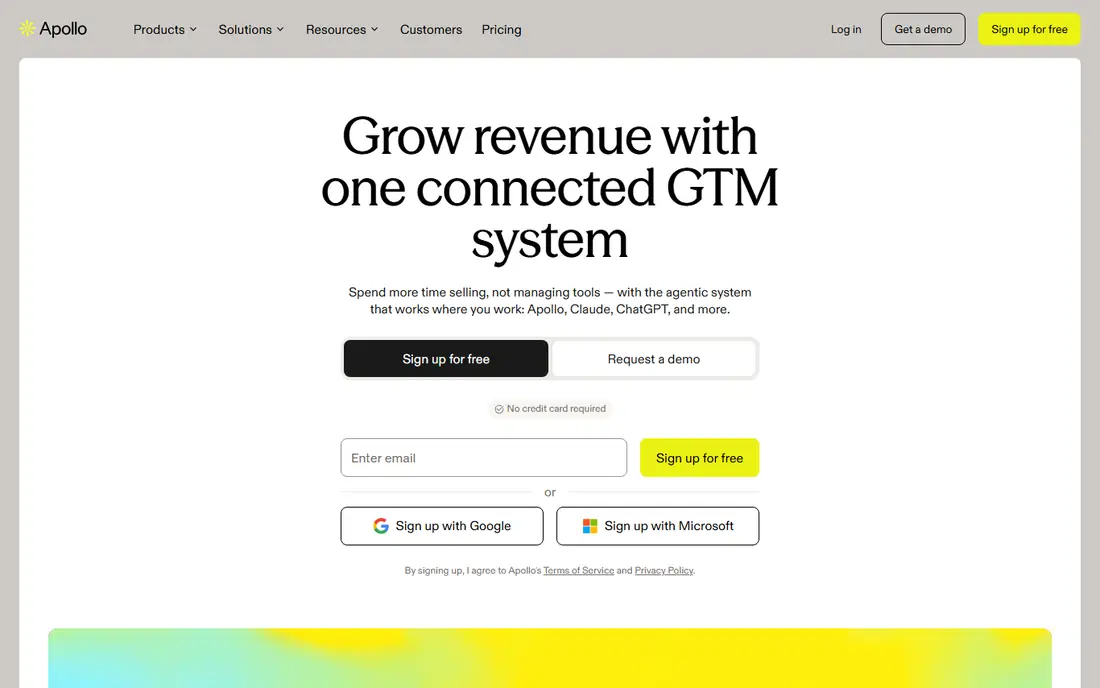
Apollo appeals to founders and small sales teams because it combines prospecting data with email sequences, so you do not need a second outreach tool to start. The free tier lets you test search filters and exports, and paid plans add more credits, sequences, and integrations. Public pricing also makes budgeting simpler than with quote-only vendors.
Data quality is the honest trade. Apollo covers a very large database, but accuracy varies, so verify key contacts before a high-value campaign. Use its verification and bounce handling, keep lists fresh, and pair it with a second source for senior or hard-to-reach roles. For volume outreach at a controlled cost, Apollo is hard to beat.
- Contact database plus sequences in one place
- Free tier to start
- Public pricing
- Data accuracy varies by segment
- Credit limits can run out quickly on large campaigns
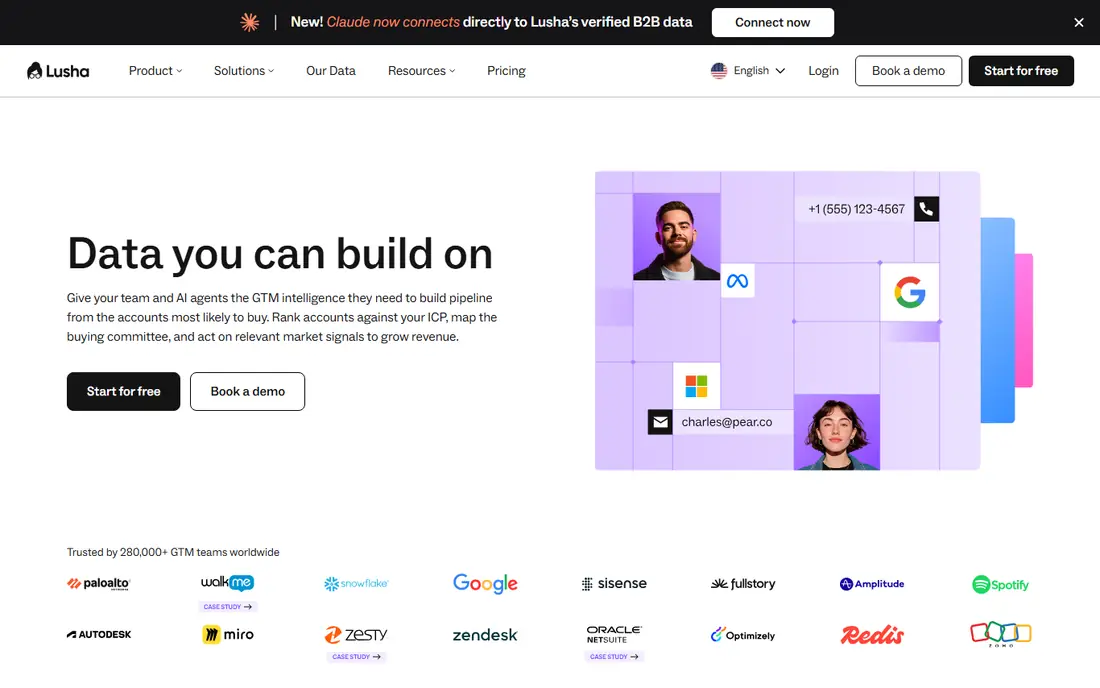
Lusha works best as a rep tool rather than a full database platform. A rep can open a LinkedIn profile or company page, use the extension to reveal contact details, and save the prospect to a list or CRM. That speed matters in daily prospecting, where waiting for a bulk export slows momentum.
The free tier gives a limited monthly credit allowance, which is enough to test whether Lusha covers your target roles. Paid plans add credits, team features, and buying signals. Watch credit use on large campaigns, since phone reveals cost more than email reveals. For teams that prospect person by person, Lusha is a practical daily tool.
- Quick Chrome extension lookups
- Useful mobile numbers
- Buying signals and prospecting lists
- Credits can deplete fast on large lists
- Accuracy varies outside core markets
Cognism is built for teams that prospect in Europe and need mobile numbers they can trust. Its Diamond Data service verifies phone numbers, and its compliance approach, including checks against do-not-call lists, helps teams that must meet stricter privacy rules. Intent data and CRM integrations add context beyond a name and email.
Pricing is quote based, and the platform is priced for teams rather than single users testing a tool. That makes Cognism a better fit once you have a clear European target market and a repeatable outreach motion. Ask for a data sample in your exact countries and roles before signing, since coverage strength varies by market.
- Phone-verified mobile numbers
- Strong European coverage
- Privacy and compliance focus
- Quote-based pricing
- Less suited to very small teams on tight budgets
UpLead positions itself on accuracy rather than size. It verifies emails in real time and refunds credits for inaccurate contacts, which helps teams that have been burned by high bounce rates. Filters cover role, industry, location, technology, and company size, so list building stays close to an ideal customer profile.
The database is smaller than ZoomInfo or Apollo, so very niche roles may return fewer results. For mid-market teams that send fewer, better-targeted emails, that trade often pays off in deliverability and reply rates. Use the trial to test a real list from your market, and measure bounces rather than trusting any accuracy claim at face value.
- 95 percent data accuracy claim with credit refunds
- Real-time email verification
- Technographic filters
- Smaller database than ZoomInfo
- Fewer intent features than enterprise platforms
Seamless.AI searches for contact details in real time rather than relying only on a stored database. That approach can surface newer contacts and smaller companies that larger databases miss. The extension and list tools make it easy to build prospect lists while browsing, and AI features help with research and outreach drafting.
Quality varies because real-time search pulls from public web sources, so verification matters before you send at scale. The free tier, with a limited credit allowance, is a good test for your niche. Larger teams should get a clear quote and credit terms in writing, since pricing is less transparent than Apollo or UpLead.
- Real-time search from the web
- Chrome extension
- AI-assisted list building
- Paid plans are quote based for larger teams
- Contact quality can vary by source
LinkedIn Sales Navigator is not a contact database in the usual sense, and that is why it belongs here. It helps reps find decision makers, track job changes, follow accounts, and find warm introduction paths through shared connections. Lead recommendations and saved searches keep prospecting focused on people who match your buyer profile.
It does not, on its own, give you verified emails or phone numbers for bulk outreach, so most teams pair it with Lusha, Apollo, or a similar tool. The trial is worth using to test whether your buyers are active on LinkedIn and whether your team will actually use social selling daily. If your buyers rarely use LinkedIn, a pure data tool will serve you better.
- Access to LinkedIn network data
- Lead and account recommendations
- Alerts on job changes
- No bulk email data on its own
- Pricing rises with advanced tiers
Leadfeeder, now part of Dealfront, turns anonymous website traffic into named companies. When a business visits your site, Leadfeeder matches the visit to a company, shows which pages were viewed, and scores the visit for sales follow-up. That intent signal is often warmer than a cold list, since the company has already shown interest.
The limit is clear: you get companies, not named contacts, so you still need a contact tool or a website form to reach a person. Leadfeeder also needs meaningful traffic to be useful, so very new sites will see fewer leads. For B2B teams with steady site traffic, it is a strong second layer on top of outbound prospecting.
- Identifies companies visiting your site
- Lead scoring and CRM sync
- Free Lite tier
- Company-level data only, not individual contacts
- Needs website traffic to be useful
How we picked these
We reviewed official feature pages, pricing pages, and public product documentation for each tool, and we kept only tools that are live and used for B2B lead generation in October 2026. We weighted database coverage, data verification, compliance features, CRM integrations, and pricing transparency. We treated vendor accuracy claims as claims, not facts, and we recommend testing a sample list in your own market before committing to any annual plan.
Where pricing is quote based, we listed it as See website rather than repeating a third-party estimate. Prices and credit allowances change, and the vendor page is the current source. Free tiers and trials are useful, but check credit limits, export limits, and renewal terms before you build a workflow around them.
How to choose a lead generation tool
Start with your motion, not the vendor list. If you run cold outbound at volume, you need a large database, verification, and sequences, which points to Apollo or ZoomInfo. If you prospect person by person on LinkedIn, Lusha or Seamless.AI plus Sales Navigator may be enough. If you sell in Europe, put Cognism at the top of your test list for compliance and mobile coverage.
Next, test data quality in your exact market. Build the same list in two tools, check bounce rates, and count how many contacts match your ideal profile. A smaller, accurate list usually beats a larger, stale one. Finally, check compliance and consent rules for your region, including email outreach laws and do-not-call lists, and keep records of where each contact came from.
A simple testing plan
Give each shortlisted tool one week and the same target list brief. Measure verified contacts found, bounce rate on a test send, and time spent per qualified lead. Include CRM sync and credit cost in the comparison, since a cheap tool that needs manual work can cost more in rep time. Pick the tool your reps will actually open every day, not just the one with the largest database.
Frequently asked questions
What is the best lead generation company for small businesses?
Apollo is a strong starting point for small teams, since it combines a contact database with outreach sequences and a free tier. Lusha also works well for individual reps who prospect on LinkedIn. Test both with your real target market before paying, since data coverage varies by industry.
Is ZoomInfo worth the price?
For large teams with a clear ideal customer profile and a high-volume outbound motion, ZoomInfo intent data and depth can justify the cost. For small teams, the quote-based price and contract length often make Apollo, UpLead, or Lusha a better value. Use ZoomInfo Lite or a sample list to judge data quality first.
How accurate is B2B contact data?
Accuracy varies by vendor, role, and region, and no database stays fresh on its own. Job changes, company moves, and outdated emails all reduce accuracy over time. Use real-time verification, measure bounce rates on test sends, and refresh lists regularly rather than trusting a single accuracy figure.
Do I need Sales Navigator and a data tool?
Many teams use both. Sales Navigator helps you find people and track signals on LinkedIn, while a data tool provides verified emails and phone numbers for outreach. If your buyers are not active on LinkedIn, a data tool alone may be enough. If they are, the combination usually works better than either tool alone.
What is the difference between a lead list and intent data?
A lead list is a set of contacts that match filters like role, industry, and company size. Intent data shows buying signals, such as website visits, technology changes, or funding news, that suggest a company may be ready to buy. Lists give you who to contact, while intent data helps you decide who to contact first.
Are these tools compliant with privacy laws?
Compliance depends on how you use the tool, not just on the vendor. Cognism and other vendors offer compliance features, but you still need lawful grounds for outreach, respect for opt-outs, and care with do-not-call lists. Check the rules for each country you target, and keep records of consent and data sources.
Sources we checked (8)

Online Jobs is an independent blog about careers, online work, learning new skills and the tools that help people earn. More about us.
Keep reading
All posts
ZoomInfo Alternatives
The best ZoomInfo alternatives in 2026, compared on price, free plans, data coverage, and which tool fits small teams or large sales teams best in detail.

Workday Alternatives
We compared the best workday alternatives for HR, payroll, and global hiring, from BambooHR and Gusto to Rippling, Deel, and HiBob for growing teams in 2026.
Which SaaS Tools Have the Best Customer Support
Which SaaS tools have the best customer support? Compare eight popular tools on help centres, live help, response options and overall support quality.