Best Language Learning Apps in 2026: 9 Apps Compared

How we put this together: we compare official feature and pricing pages, app store listings, privacy policies and public user reviews. Prices change, so check the provider's site before you pay.
Key takeaways
- Duolingo is our pick for daily habit building, because short, game-like lessons are easy to repeat.
- Babbel suits learners who want structured grammar and real dialogues for European languages.
- italki suits learners who need real conversation, since no app alone teaches speaking confidence.
- Pimsleur suits commuters and audio learners, while Rosetta Stone suits visual learners who prefer immersion.
- Pair a core app with speaking practice. An app for vocabulary plus a tutor or exchange partner beats any single app alone.
Quick comparison
| Name | Who it suits | Starting price | Free option | |
|---|---|---|---|---|
 Duolingo | Daily habit building | Free | Yes | Visit |
 Babbel | Structured grammar courses | See website | No | Visit |
 Rosetta Stone | Visual immersion | See website | No | Visit |
 Pimsleur | Audio-first learning | See website | No | Visit |
 Busuu | Study plans with feedback | Free | Yes | Visit |
 italki | Live tutoring | See website | No | Visit |
 Memrise | Vocabulary with video clips | Free | Yes | Visit |
 Mondly | Fun first steps in many languages | Free | Yes | Visit |
 LingQ | Reading and listening immersion | Free | Yes | Visit |
The best language learning apps
No app alone makes you fluent, and the best app depends on whether you need grammar, vocabulary, speaking or listening most. We compared official feature pages, pricing pages, app store listings and public reviews, and we weighted lesson structure, language range, speaking practice and free plan value.
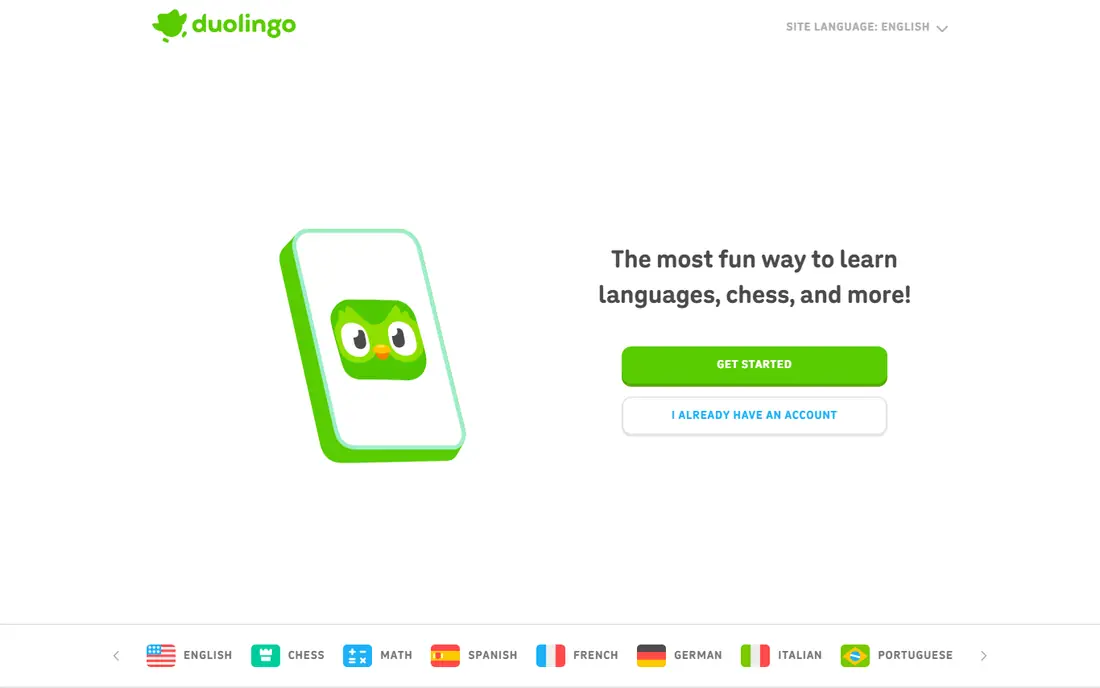
Duolingo wins on habit. Lessons take a few minutes, streaks reward daily return, and the free plan covers enough content for beginners to build vocabulary and basic sentences. That low friction matters, since the learners who improve are usually the ones who practise most days, not the ones who buy the most expensive course.
Grammar and speaking are the limits. Explanations are brief, and app speech practice cannot replace a real conversation. Use Duolingo as a daily base, then add a tutor, exchange partner or speaking app when you are ready to talk, rather than expecting fluency from streaks alone.
- Free plan covers core lessons in many languages
- Short lessons and streaks keep daily practice going
- Wide language range, including less common options
- Grammar explanation is thin
- Speaking practice is limited compared with tutoring
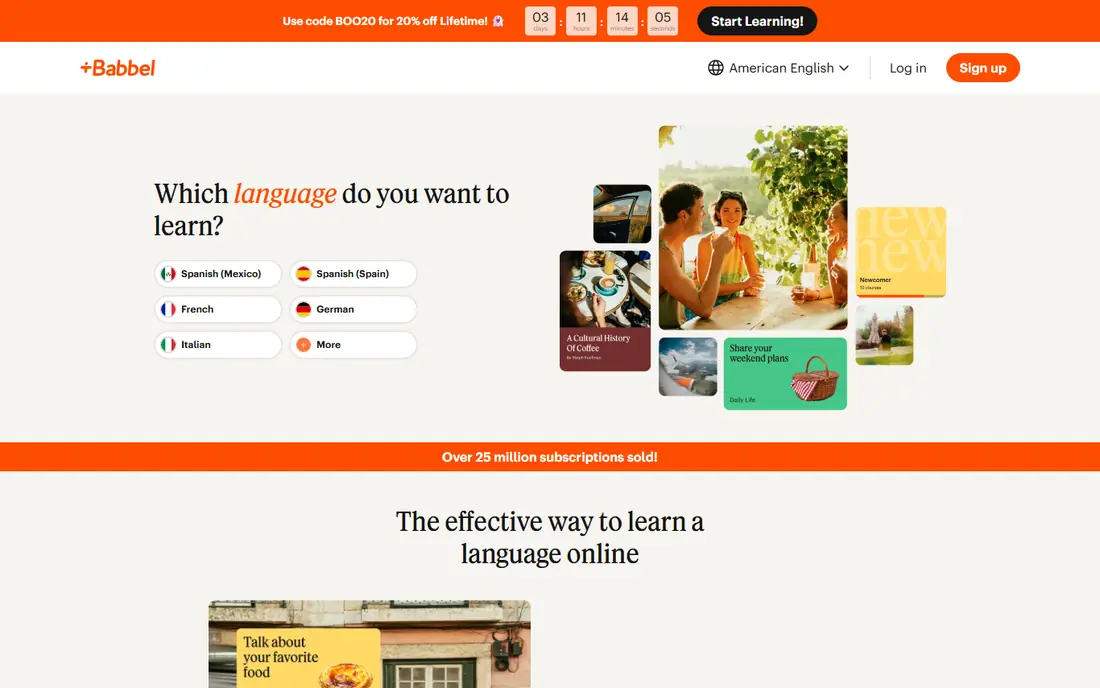
Babbel feels more like a course than a game. Lessons follow a clear path, grammar points get explicit explanations, and dialogues cover situations such as travel, work and daily life. That structure suits learners who want to understand why a sentence works, not just memorise it, and it works well for major European languages.
Language choice is narrower, with around fourteen languages in current listings, and the free taste is limited to a first lesson. If your language is covered and you want structure over gamification, Babbel is a strong step up from a free app. If your language is not covered, look at Duolingo, LingQ or a tutor instead.
- Structured courses with grammar tips and real dialogues
- Lessons built around everyday situations
- Review tools for vocabulary retention
- Language range is narrower than Duolingo
- First lesson only is free, so testing is limited
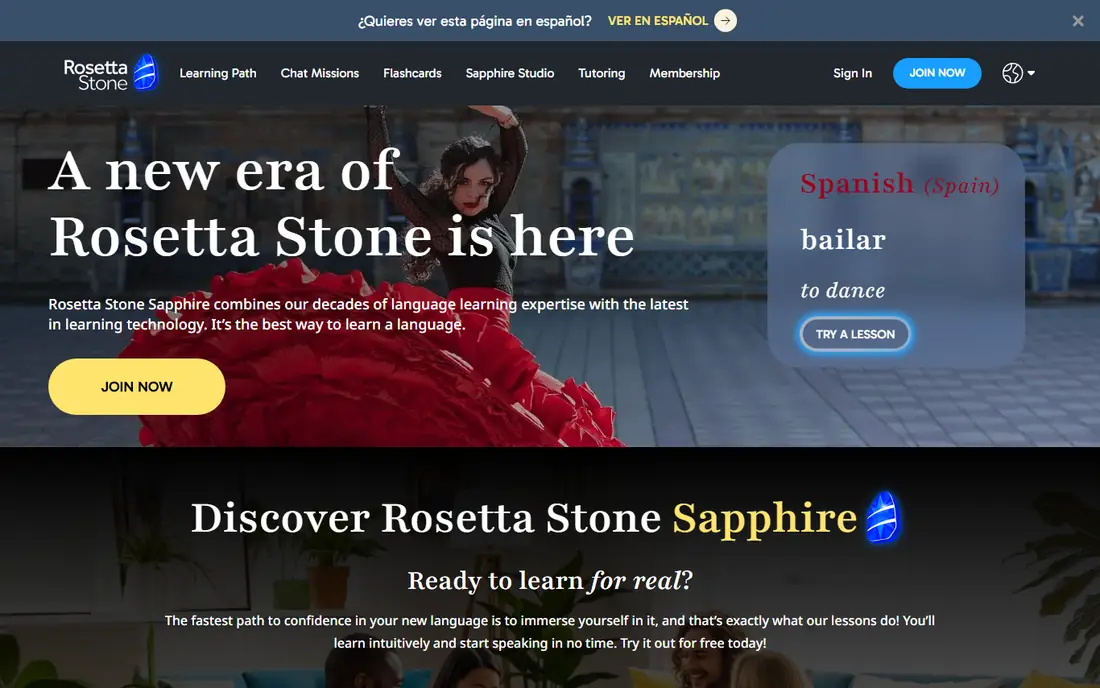
Rosetta Stone teaches through pictures and sound rather than translation, asking you to link words to images from the first lesson. That immersion builds vocabulary intuition and listening habits, and speech recognition gives pronunciation feedback without a human tutor. Learners who dislike grammar tables often enjoy this approach.
The same method frustrates learners who want rules explained, especially for languages with cases, verb conjugations or complex word order. Rosetta Stone also costs more than many rivals, with lifetime options that only make sense if you plan to use it for years. Try the trial first, and check whether immersion alone keeps you learning after the novelty fades.
- Immersion method with images and audio, no translation
- Speech recognition for pronunciation practice
- Long track record and broad device support
- Grammar is rarely explained explicitly
- Price is high for learners who want grammar detail
Pimsleur suits people whose study time happens away from a screen. Thirty-minute audio lessons use spaced repetition and prompt you to speak, so a commute or a walk becomes a lesson without looking at a phone. That audio focus builds speaking confidence faster than reading-heavy apps for many beginners.
Reading and writing get less attention, and the subscription price is higher than Duolingo or Babbel. If your day includes regular audio time, Pimsleur turns dead time into progress. If you study at a desk and want reading practice, pair it with LingQ or a textbook rather than relying on audio alone.
- Audio lessons ideal for driving, walking and chores
- Spaced repetition builds recall of spoken phrases
- Strong focus on speaking from early lessons
- No permanent free plan beyond a trial
- Visual learners may miss reading and writing practice
Busuu combines structured courses with a community twist. You follow a study plan tied to language levels, complete writing and speaking exercises, and receive corrections from native speakers using the app. That human feedback, even when imperfect, adds a layer that purely automated apps lack, and the free plan lets you test the approach.
Feedback quality varies, since it depends on who responds, and language choice is narrower than Duolingo. For learners who want structure plus occasional human correction without paying for a tutor yet, Busuu is a practical middle step between a game app and live lessons.
- Structured study plans with clear levels
- Community feedback on writing and speaking exercises
- Free plan for testing the method
- Language range is smaller than Duolingo
- Community feedback quality varies
italki changes the learning model entirely. Instead of an app teaching you, a human tutor adapts to your level, corrects pronunciation in real time, and holds a conversation that no scripted exercise can match. Lessons are paid per session, so you can start with one lesson a week and scale up, and the range covers many languages that apps skip.
Cost is the obvious limit, since weekly lessons add up over a year, and finding a good tutor takes a few trials. For learners stuck at a plateau, or preparing for travel, work or an exam, even a monthly tutor session can open up progress that months of app practice cannot. Pair italki with a free app for vocabulary, and each side supports the other.
- One-to-one lessons with native tutors in many languages
- Pay per lesson, with no subscription required
- Trial lessons help you find a tutor who fits
- Cost adds up with regular lessons
- Quality varies by tutor, so choosing takes time
Memrise focuses on vocabulary that sounds real. Short video clips show native speakers using words in context, which helps with listening and pronunciation in a way text flashcards cannot. Spaced repetition schedules reviews so words return before you forget them, and the free plan covers a useful amount of content.
It is not a full course. Grammar explanation and structured conversation practice are thinner than Babbel or a tutor, so Memrise works best as a vocabulary companion. Use it alongside a core course, and let it handle the word learning while the course handles grammar and dialogue.
- Video clips of native speakers for real pronunciation
- Spaced repetition for vocabulary retention
- Free plan covers core learning
- Grammar and conversation depth are thinner than Babbel
- Some content feels less structured than a full course
Mondly suits curious beginners who want to try a language quickly. Daily lessons, speech recognition and a chatbot for simple conversations make the first weeks feel playful, and the language range covers many options that structured courses skip. That breadth helps if you are choosing between languages or learning a less common one.
Intermediate learners will outgrow it, since depth and grammar detail trail Babbel and Pimsleur. Treat Mondly as a fun entry point and a vocabulary booster, then move to a structured course or tutor when you want to hold real conversations.
- Wide language range, including many less common options
- Speech recognition and chatbot-style conversation practice
- Daily lessons and review tools
- Depth for intermediate learners is limited
- Paid plan needed for full courses
LingQ takes an immersion approach through reading and listening. You import articles, books or podcasts, click unknown words to save them, and review those words as they recur in new material. That method suits intermediate learners who already know basic grammar and want to grow vocabulary through real content rather than textbook dialogues.
Beginners may feel lost without a structured path, and the interface needs a few sessions to feel natural. For learners who love reading and listening, and who want to learn from material they actually enjoy, LingQ turns that material into a study system. Pair it with a tutor for speaking, and you cover input and output together.
- Learn from real texts and audio you choose
- Vocabulary tracking across reading and listening
- Large library of imported content
- Interface takes time to learn
- Beginners may need a structured course first
How we picked these
We compared official feature pages, pricing pages, app store listings and public reviews, and we weighted lesson structure, speaking practice, language range and free plan value. We treated fluency claims with caution, since no app alone delivers fluency, and we favoured apps that state their limits clearly. Prices vary by country, term and promotion, so we used See website where a current vendor price was not confirmed, and we focused on fit rather than headline price alone.
How to build a routine that lasts
Pair an app with speaking
Choose one core app for daily vocabulary and grammar, then add speaking practice at least once a week, whether through a tutor, an exchange partner or a conversation group. Apps build recognition, but speaking builds recall under pressure, and that gap is where most learners stall. Even a short weekly conversation changes how fast app lessons stick.
Study little and often
Short daily sessions beat long weekend sessions for most learners, since spaced repetition works best with frequent review. Aim for fifteen to thirty minutes a day on your core app, plus a few minutes of review, rather than a single three-hour block. Streaks and reminders help, but a simple daily time slot, such as after breakfast, works just as well.
Learn from material you enjoy
Once you know basics, switch some study time to songs, shows, podcasts or articles you actually like in your target language. Enjoyable material keeps you reading and listening longer, and vocabulary learned in context sticks better than isolated word lists. LingQ, YouTube and podcasts all support this step, and a tutor can help you discuss what you read or watched.
Frequently asked questions
What is the best language learning app?
Duolingo is our pick for daily habit building, Babbel suits structured grammar learners, and italki suits learners who need real conversation. The best app depends on your level, language and learning style, so test free plans first. Pair any app with speaking practice for the fastest progress toward real conversation.
What is the best app to learn a language for free?
Duolingo offers the strongest free plan for beginners, with core lessons in many languages at no cost. Busuu, Memrise, Mondly and LingQ also offer free plans that cover useful starter content. Free plans suit beginners well, while paid plans or tutoring help most once you reach intermediate level and need speaking practice.
Is Babbel or Duolingo better?
Babbel is better for structured grammar and real dialogues, especially for major European languages, while Duolingo is better for free daily habit building across many languages. Many learners start with Duolingo for free, then move to Babbel when they want deeper grammar. Try both free options and keep the one you return to daily.
Can you become fluent with an app alone?
No app alone makes you fluent, since fluency needs real conversation, listening to varied speech and sustained practice over time. Apps build vocabulary, grammar and listening well, but speaking confidence comes from talking with people. Pair an app with tutoring, exchange partners or conversation groups for the best results.
What is the best language app for speaking practice?
italki is best for live speaking practice, since a tutor corrects you in real time and adapts to your level. Pimsleur also builds speaking through audio prompts, while Mondly offers chatbot-style conversation for beginners. For real confidence, live conversation beats scripted app exercises, even if it costs more.
How long does it take to learn a language with an app?
Time varies by language difficulty, daily study time and speaking practice, but most learners need months of daily practice to hold basic conversations and years for advanced fluency. Short daily sessions, spaced review and weekly speaking practice speed progress more than any single app choice. Set a concrete goal, such as ordering food or holding a five-minute chat, rather than aiming for fluency in general.
Sources we checked (9)

Online Jobs is an independent blog about careers, online work, learning new skills and the tools that help people earn. More about us.
Keep reading
All posts
Best Writing Software
Looking for the best writing software in 2026? We compared 9 writing apps for books, articles and screenplays on price, features and fit. All verified.
Best Weather Apps
Searching for the best weather app? We compared eight top weather apps for accurate forecasts, radar, severe alerts, and daily planning near you today.
Best Video Editing Software
We compared the best video editing software for beginners and pros, checking official pricing, free plans and honest limits before ranking all nine editors.