Best IT Service Management Software in 2026: 8 Tools Compared

How we put this together: we compare official feature and pricing pages, app store listings, privacy policies and public user reviews. Prices change, so check the provider's site before you pay.
Key takeaways
- ServiceNow and BMC Helix suit large enterprises with complex workflows, while Freshservice and Jira Service Management suit most mid-sized IT teams.
- Freshservice offers the clearest mid-market value, with published pricing starting at $19 per agent per month on annual billing.
- Jira Service Management is the natural pick for teams already using Atlassian tools, and it offers a free tier for up to three agents.
- ManageEngine ServiceDesk Plus suits budget-conscious teams and teams that need an on-premise option.
- ITSM pricing is usually per agent or per technician, so count agents carefully, and check which features sit on which tier before you buy.
Quick comparison
| Name | Who it suits | Starting price | Free option | |
|---|---|---|---|---|
 ServiceNow | Large enterprises | See website | No | Visit |
 Freshservice | Mid-market ITSM value | $19 per month | Free trial | Visit |
 Jira Service Management | Atlassian teams | $20 per month | Yes | Visit |
 Zendesk | Service with strong automation | $19 per month | Free trial | Visit |
 BMC Helix ITSM | Large regulated enterprises | See website | No | Visit |
 ManageEngine ServiceDesk Plus | Budget and on-premise | $13 per month | Yes | Visit |
 SysAid | AI-led service management | See website | Free trial | Visit |
 HaloITSM | All-inclusive ITIL licensing | $49 per month | Free trial | Visit |
The best IT service management software
IT service management software covers incidents, service requests, problems, changes, and assets in one system. The right platform depends on team size, existing tools, and how much process control you need. The eight platforms below cover the main choices, from enterprise suites to budget-friendly desks.
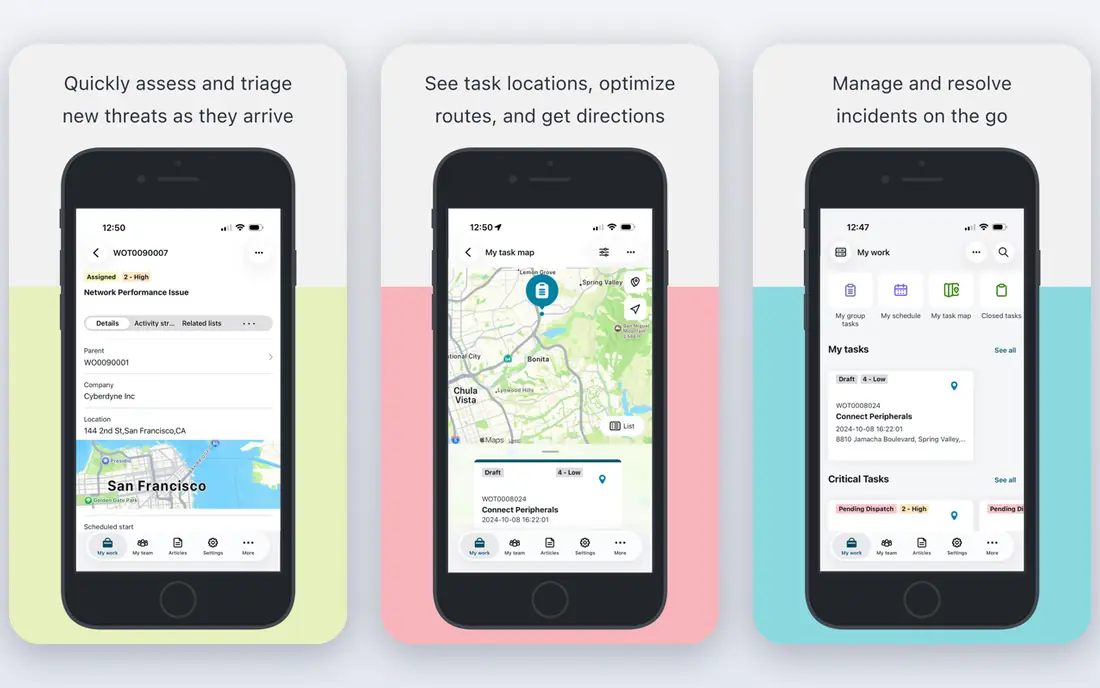
ServiceNow is the platform large enterprises standardize on when mid-market tools run out of depth. Incident, problem, change, configuration, and asset management run on one model, and the same platform extends into HR, security, and custom apps. For global teams with strict controls and many subsidiaries, that depth is the point.
The trade-off is cost and effort. Pricing is quote-only, and most deployments involve an implementation partner and dedicated administrators. For a team of three to fifteen technicians, ServiceNow is usually more than needed. Buy it when your complexity genuinely exceeds what mid-market tools handle, not for the brand name alone.
- Very deep incident, problem, change, and asset management
- One data model across IT and business workflows
- Large partner and integration ecosystem
- Quote-only pricing with long contracts in many cases
- Needs dedicated admins and often an implementation partner
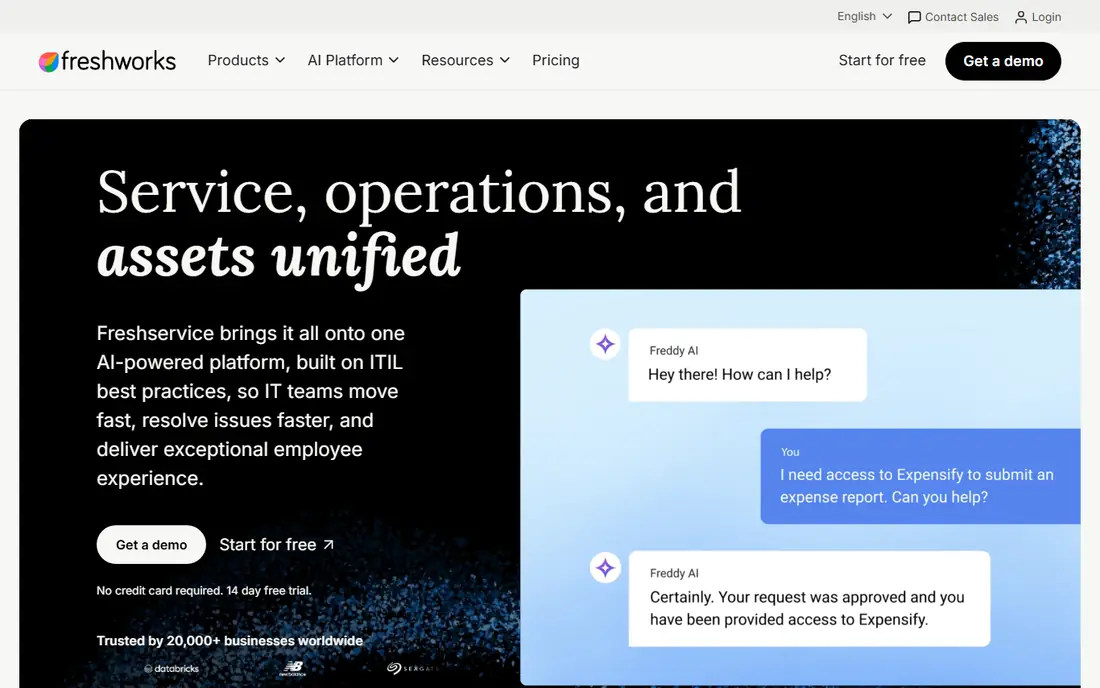
Freshservice is the easiest mid-market recommendation in this list. It covers tickets, a service catalogue, a knowledge base, asset tracking, and automation, and the Starter plan starts at $19 per agent per month on annual billing. Setup is cloud-based and fast, so a small IT team can be running in days rather than months.
Freshservice is less suited to enterprises that need deep custom workflows or on-premise deployment. AI triage and advanced automation also sit higher up the pricing ladder. For teams that want a proper ITSM tool without enterprise cost or a long project, Freshservice is a strong first pick.
- Clear published pricing
- Fast cloud setup
- Incident, asset, and automation features in one place
- No free plan, only a trial
- AI features sit on higher plans or as an add-on in many cases
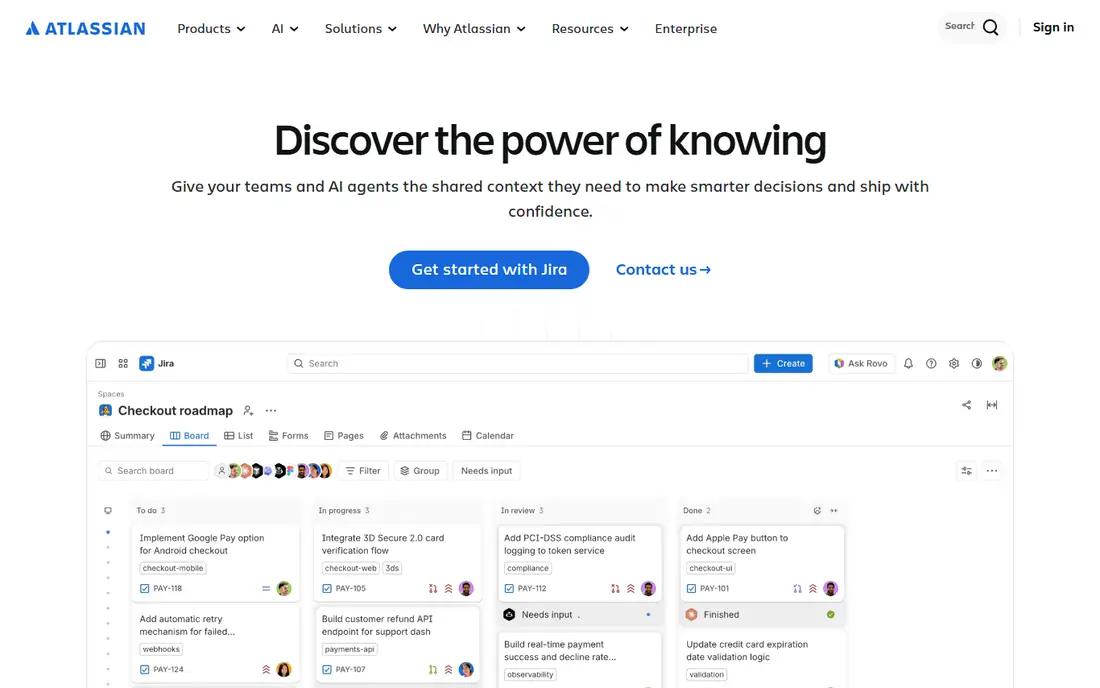
Jira Service Management is the natural choice for teams already using Jira and Confluence. Developers, IT staff, and service teams can share one workflow, link incidents to code changes, and use Confluence for the knowledge base. The free tier for up to three agents makes it easy to test with a real queue.
The catch is audience. Jira Service Management is built for technical teams, and non-technical requesters may find the portal less friendly than Freshservice or Zendesk. It is also priced per agent, so a large agent team needs careful budgeting. If your company already runs on Atlassian, this tool fits with the least friction.
- Free tier for up to three agents
- Tight link to Jira and Confluence
- Strong incident and change workflows for dev-led teams
- Feels technical for non-IT requesters
- Some ITSM depth sits on higher plans
Zendesk is best known for customer service, but it also works well for internal IT service, especially when the team values automation, self-service, and a clean agent workspace. Tickets, macros, triggers, and a help centre come together quickly, and the Suite Team plan starts at $19 per agent per month on annual billing.
Zendesk is less of a pure ITSM suite than ServiceNow, BMC Helix, or Freshservice, so teams that need strict ITIL change and configuration management may need extra setup. For IT teams that sit close to customer service, or that want one service platform for both audiences, Zendesk is a practical choice.
- Mature ticketing, automation, and self-service
- Strong reporting
- Large integration library
- Less pure ITSM depth than ServiceNow or BMC Helix
- ITSM-specific features may need configuration
BMC Helix ITSM suits large, regulated organizations that need formal ITIL processes and audit trails. It covers the full service lifecycle, from incident and problem management to change, release, and asset control, and it is built to handle high ticket volumes across many teams. Banks, healthcare providers, and government teams often shortlist it for that reason.
The trade-off is similar to ServiceNow: quote-only pricing, a longer implementation, and a need for skilled administrators. Small and mid-sized teams will find it heavy and costly. For enterprises that need proven ITIL depth and regulatory control, BMC Helix is a serious contender.
- Deep ITIL processes for incident, problem, change, and asset management
- Strong for regulated industries
- Mature automation and AI options
- Quote-only pricing
- Implementation can be long and needs skilled admins
ManageEngine ServiceDesk Plus
Who it suits: Budget and on-premise
ManageEngine ServiceDesk Plus is the budget pick for teams that want proper ITSM without a high monthly bill. The Standard edition starts from $13 per technician per month, and a free edition covers small technician teams. Cloud and on-premise deployment both exist, which matters for teams with data or network rules that rule out cloud-only tools.
The interface is more functional than polished, and some users will find it less modern than Freshservice or Jira Service Management. That is a fair trade for the price and deployment choice. For schools, public sector teams, and cost-conscious IT departments, ServiceDesk Plus offers a lot for the money.
- Low starting price
- Cloud and on-premise options
- Free edition for small technician teams
- Interface feels dated next to newer rivals
- Some advanced features need higher editions
SysAid positions itself as an AI-led service desk for mid-sized teams that want automation without enterprise complexity. Tickets, assets, automation, and a self-service portal sit together, and the AI copilot helps agents find answers and draft replies. Deployment is simpler than ServiceNow or BMC Helix, which suits teams without a large admin function.
Pricing is less transparent than Freshservice, so request a quote for your agent count and check which AI features are included. SysAid is a good pick for teams that want AI help in the agent workspace and a faster rollout than an enterprise suite, provided the quoted price fits the budget.
- AI copilot and automation built into the service desk
- Asset management included
- Simpler deployment than enterprise suites
- Pricing is not published as clearly as Freshservice
- Smaller ecosystem than ServiceNow or Atlassian
HaloITSM appeals to IT teams that dislike tiered feature gates. Its single-tier model includes ITIL processes, a configuration database, and asset management, so teams do not need to upgrade to get core ITSM depth. That clarity helps budgeting, and the product suits teams that want a full ITSM tool without enterprise-suite cost.
The starting price is higher than Freshservice or ManageEngine, so small teams should compare total cost, not only the tier model. HaloITSM is also a smaller vendor than ServiceNow or Atlassian, which matters if you value a very large partner network. For mid-sized teams that want full ITIL coverage in one price, HaloITSM is worth a trial.
- All-inclusive ITIL features on one tier
- Configuration management included
- Cloud and on-premise options
- Higher starting price than Freshservice
- Smaller vendor than the largest ITSM names
How we picked these
We shortlisted platforms with a clear ITSM model covering incidents, requests, and assets, a public pricing or quote route, and current availability in October 2026. We checked each official homepage to confirm the product still exists and fits ITSM, and we read official pricing pages, feature pages, and public comparisons to compare agent pricing, free tiers, deployment, and AI options. Where pricing was quote-only or unclear, we wrote See website rather than inventing a figure.
How to choose an ITSM platform
Count agents, not employees
Most ITSM tools charge per agent or per technician, while requesters are often free or unlimited. Count the people who will work tickets, approve changes, and manage assets, then price for that number. A tool that looks cheap per user can be costly when every IT staff member needs an agent seat.
Test with a real queue, not a demo
Import a week of real tickets, test the portal as a requester, and run an incident through to closure. Check search, knowledge base use, approvals, and reporting in that test. A demo shows the best path; a real queue shows the friction your team will live with.
Check asset and change needs early
If you need a configuration database, change approvals, or asset tracking, confirm those features are on the plan you will buy, not only on the top tier. Teams often buy a low tier, then discover that change management or asset depth needs an upgrade.
Frequently asked questions
What is the best it service management software?
The best it service management software for most mid-sized teams is Freshservice or Jira Service Management. Freshservice suits teams that want clear pricing and fast setup, while Jira Service Management suits teams already using Atlassian tools. Large enterprises should shortlist ServiceNow and BMC Helix.
What are the best it service management platforms for small teams?
Freshservice, Jira Service Management, and ManageEngine ServiceDesk Plus are the best it service management platforms for small teams in this guide. Jira Service Management offers a free tier for up to three agents, ManageEngine offers a free edition for small technician teams, and Freshservice offers the clearest paid starting price.
What are the best it service management tools for enterprises?
ServiceNow and BMC Helix ITSM are the strongest enterprise tools here, with deep ITIL processes, automation, and scale. HaloITSM and SysAid suit mid-sized teams that want enterprise-style depth without the same implementation effort.
What is the best it service management tool for asset management?
Freshservice, ManageEngine ServiceDesk Plus, SysAid, and HaloITSM all include asset management, but the depth and limits differ by plan. Check how many assets are included, whether discovery tools are included, and whether the configuration database sits on your chosen tier.
How much does ITSM software cost?
ITSM software in this guide ranges from free tiers for small teams to quote-only enterprise pricing. Mid-market starting prices include $19 per agent per month for Freshservice, $20 per agent per month for Jira Service Management, and $13 per technician per month for ManageEngine ServiceDesk Plus, all on annual billing where published. Enterprise platforms are priced by quote and depend on agents, modules, and contract length.
Do I need ITIL to use ITSM software?
No. Small teams can start with incident and request tickets only, then add problem, change, and asset processes as they grow. Larger teams benefit from ITIL structure, because it gives a shared language for incidents, changes, and service levels, but the tools in this guide work without a full ITIL rollout on day one.
Sources we checked (8)

Online Jobs is an independent blog about careers, online work, learning new skills and the tools that help people earn. More about us.
Keep reading
All posts
ZoomInfo Alternatives
The best ZoomInfo alternatives in 2026, compared on price, free plans, data coverage, and which tool fits small teams or large sales teams best in detail.

Workday Alternatives
We compared the best workday alternatives for HR, payroll, and global hiring, from BambooHR and Gusto to Rippling, Deel, and HiBob for growing teams in 2026.
Which SaaS Tools Have the Best Customer Support
Which SaaS tools have the best customer support? Compare eight popular tools on help centres, live help, response options and overall support quality.