Best IT Security Companies in 2026: 9 Tools Compared


Broad enterprise platform consolidation · Starting price: See website
How we put this together: we compare official feature and pricing pages, app store listings, privacy policies and public user reviews. Prices change, so check the provider's site before you pay.
Key takeaways
- No single vendor covers every control well, so most businesses use a platform for one area and specialist tools for the rest.
- Endpoint, network, cloud, and identity are different jobs, and a vendor strong in one area may be weak in another.
- Managed detection suits teams without a 24 hour security team, because monitoring and response need people, not just software.
- Pricing for enterprise security is often quote based, so compare total cost, including implementation, training, and support.
- Job seekers should also weigh training, certification support, and team size, not just brand name, when shortlisting employers.
Quick comparison
| Name | Who it suits | Starting price | Free option | |
|---|---|---|---|---|
| Palo Alto Networks | Broad enterprise platform consolidation | See website | No | Visit |
 CrowdStrike | Endpoint led detection and response | See website | No | Visit |
 Fortinet | Distributed networks and branches | See website | No | Visit |
 Microsoft Security | Microsoft 365 and Azure centred teams | See website | No | Visit |
 Cisco Security | Network centred security and zero trust | See website | No | Visit |
 Zscaler | Zero trust access for remote users | See website | No | Visit |
 Check Point | Unified prevention across network and cloud | See website | No | Visit |
 SentinelOne | Autonomous endpoint and cloud protection | See website | No | Visit |
 Cloudflare | Cloud delivered application and network security | See website | Yes | Visit |
The best IT security companies
We compared companies by the job they do best, not by size alone. The nine below cover endpoint protection, network security, cloud security, identity, and managed detection, so a buyer should start from the risk they need to reduce, then shortlist vendors for that area.
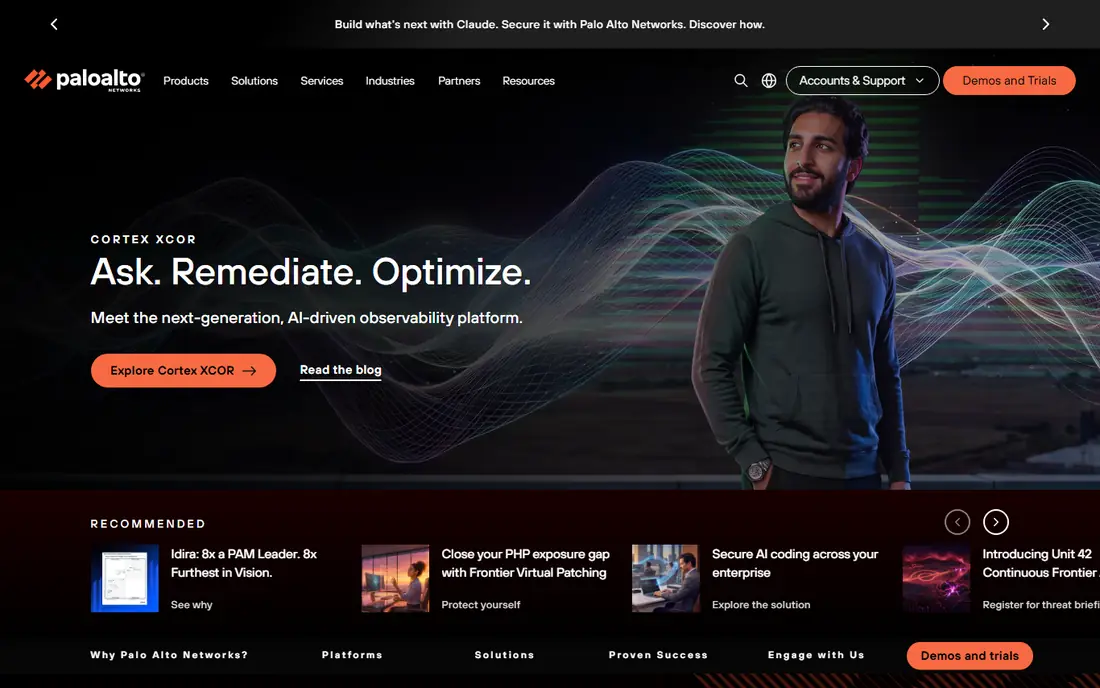
Palo Alto Networks suits a large organisation that wants fewer vendors across network security, cloud security, and endpoint detection. Its Strata, Prisma Cloud, and Cortex products cover different layers, and its threat intelligence team publishes research that many security teams follow. That breadth helps a buyer consolidate contracts and data. The trade-off is complexity and cost. Implementation, tuning, and training take time, and pricing depends on modules and scale, so a small business will find it heavy. For a large enterprise with a dedicated security team, the platform approach can be worth that effort.
- Broad platform across network, cloud, and endpoint
- Threat intelligence from Unit 42
- Large enterprise customer base
- Enterprise pricing is quote based
- Platform breadth can mean complex implementation
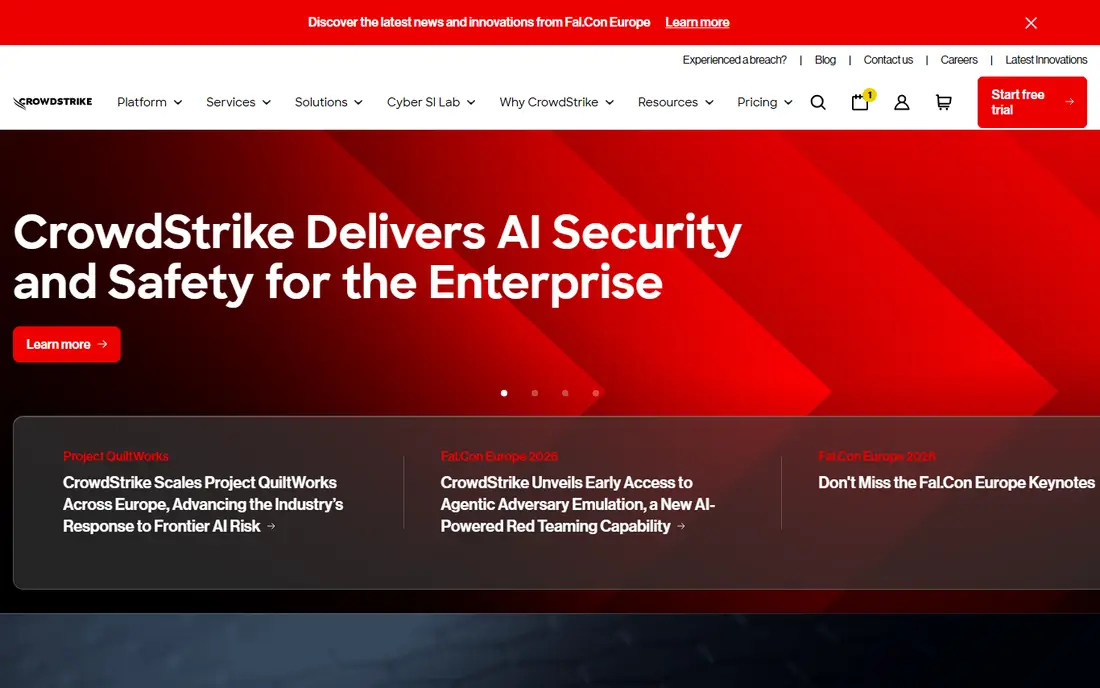
CrowdStrike is best known for endpoint detection and response through its Falcon platform. A single agent collects endpoint data, flags suspicious behaviour, and supports response, while identity protection and cloud security extend the same platform. That endpoint led approach suits teams that see laptops and servers as their main risk. A buyer should not expect CrowdStrike alone to cover network firewalls or web application security in the same depth. It works best as the endpoint and threat operations core, with network and cloud tools alongside it. Pricing is quote based, so a pilot on a subset of endpoints is a sensible first step.
- Cloud native Falcon platform
- Single agent for endpoint and identity
- Strong threat intelligence
- Enterprise pricing is quote based
- Endpoint focus means other layers need separate tools
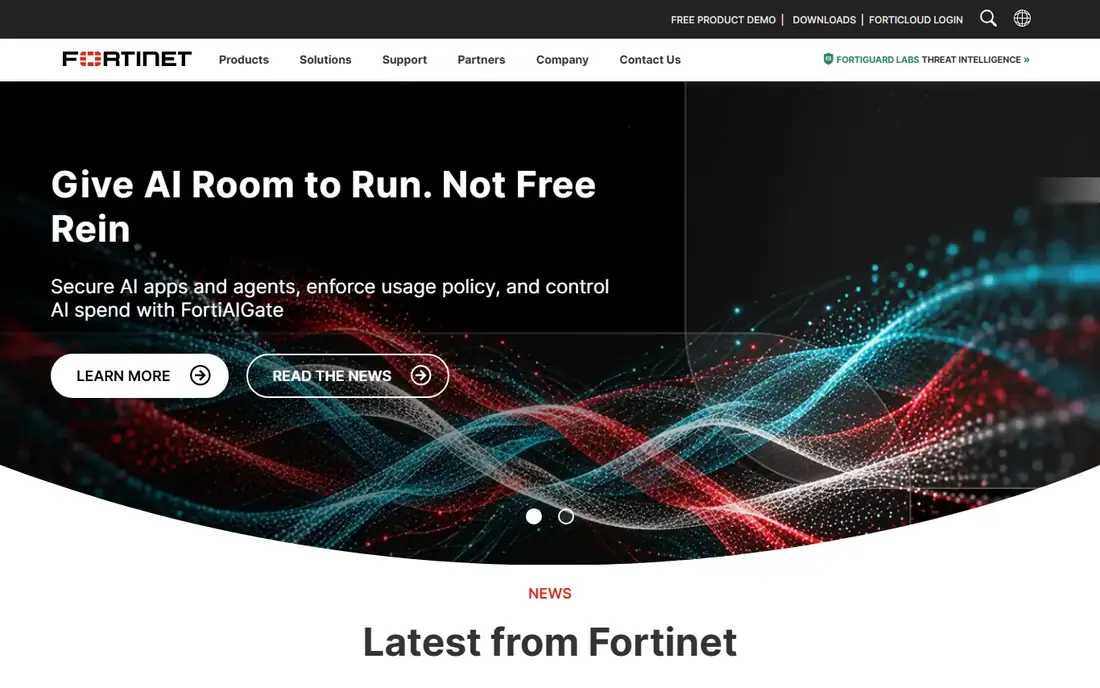
Fortinet suits organisations with many branches, offices, or operational sites. Its FortiGate firewalls, SD-WAN, and Security Fabric link network security across sites, while endpoint and cloud products extend the same system. That fabric approach helps a distributed team manage policy from one place. The range is also a challenge, because choosing the right firewall model, licence, and service bundle takes careful sizing. A mid-sized business should work through a partner or a Fortinet sizing exercise, and confirm support and renewal costs, not just the first year hardware price.
- FortiGate firewalls and Security Fabric
- Strong branch and SD-WAN options
- Broad product range
- Product range can be complex to size
- Enterprise pricing varies by deployment
Microsoft Security is the natural shortlist for a team already centred on Microsoft 365 and Azure. Defender for endpoint and cloud, Sentinel for security monitoring, and Entra for identity work together, and Security Copilot adds AI assisted investigation on some plans. That native link reduces integration work. Outside a Microsoft estate, the advantage shrinks, and licensing across E5, Defender, and Sentinel tiers needs a careful read. A Microsoft centred team should compare the cost of adding Microsoft security licences with buying a separate platform, and check which features are included at each tier.
- Native integration with Microsoft 365 and Azure
- Defender XDR and Sentinel
- Entra identity tools
- Best value inside a Microsoft estate
- Licensing can be complex
Cisco Security suits network centred organisations, especially those already running Cisco networking. Firewalls, Secure Access for zero trust, Duo for identity verification, and XDR for detection cover network, user, and endpoint layers. Talos threat intelligence supports detection across those products. The portfolio has grown through acquisition, so product names and licensing can confuse a new buyer. A team should map the products to its network, identity, and endpoint needs before buying, and confirm how the pieces share data. For a Cisco network estate, the integration case is strong.
- Network security heritage
- Talos threat intelligence
- Duo identity and Secure Access
- Portfolio breadth can be confusing
- Enterprise pricing is quote based
Zscaler replaces the old model of routing remote users through a central VPN with cloud delivered zero trust access. Users connect to the internet or to a private app through the Zscaler cloud, with policy applied based on identity and device, rather than network location. That suits hybrid teams and contractors. Policy design matters. A rushed rollout can block legitimate apps or create gaps, so a team should pilot with one user group, test key apps, and review logs before a full switch. For a remote first organisation, the cloud model can be simpler than maintaining VPN hardware at scale.
- Cloud delivered zero trust exchange
- Secure internet and private app access
- No VPN backhaul for many users
- Cloud model needs careful policy design
- Pricing is quote based for enterprise
Check Point is a long established vendor for prevention across networks, cloud, and user devices. Its Quantum firewalls, CloudGuard, and Harmony products share threat prevention and policy under the Infinity architecture, which suits regulated sectors that need consistent prevention in several places. As with other enterprise platforms, success depends on skilled implementation and tuning. A buyer should check partner support, training, and renewal costs, and run a proof of concept on real traffic. For a team that values prevention and unified policy, Check Point remains a solid shortlist option.
- Quantum firewalls
- CloudGuard for cloud
- Harmony for workspace security
- Infinity architecture
- Enterprise pricing is quote based
- Implementation needs skilled staff
SentinelOne focuses on autonomous endpoint protection, with automated response and ransomware rollback that can undo some malicious changes. The Singularity platform extends to cloud workloads, identity, and security operations, which helps a mid-sized team that wants automation without a large security operations centre. A buyer should test rollback and response behaviour in a lab, not just read marketing, and check integration with existing monitoring tools. For teams that need strong endpoint automation and a modern platform, SentinelOne is a credible alternative to the larger endpoint vendors.
- Singularity platform
- Autonomous response and ransomware rollback
- Identity and cloud extensions
- Enterprise pricing is quote based
- Smaller partner ecosystem than the largest vendors in some regions
Cloudflare suits teams that need to protect websites, APIs, and remote users from the cloud. Its network, DDoS protection, web application firewall, and Cloudflare One zero trust tools sit in front of applications, which helps a team without a large on-premises security estate. A free tier covers basic use for small sites. Cloudflare does not replace endpoint protection, so a team still needs an endpoint tool alongside it. For web facing businesses, the combination of application protection and zero trust access in one cloud platform is a practical and scalable choice.
- DDoS protection and web application firewall
- Cloudflare One for zero trust
- Free tier for basic use
- Enterprise features are quote based
- Application focus means endpoint needs a separate tool
How we picked these
We compared official feature pages, pricing pages, company documentation, and privacy policies, and we checked public reviews and industry rankings for recurring points about detection, integration, and support. We kept only companies that were still operating in October 2026, that served business customers, and that had a clear product in endpoint, network, cloud, identity, or managed detection. We did not claim hands-on testing that we did not do, and where a vendor did not publish a price, we wrote See website rather than guessing. We also considered job seeker interest, since many readers search for these companies as employers. That is why we noted team focus and platform breadth, but we did not rank companies as employers on pay or culture, because that data varies by role and region and was not verified here.
Buying IT security without buying the wrong platform
Start from the risk, not the vendor list. List your main assets, such as laptops, servers, cloud accounts, websites, and identities, and note where incidents would hurt most. A company with many remote users needs zero trust and identity first, while a company with many branches needs network security first. That risk list will narrow a long vendor list to two or three real contenders. Run a proof of concept on real data. Ask each vendor to show detection on your traffic, integration with your existing tools, and reporting your team can actually use. Check how alerts are tuned, how false positives are handled, and what happens out of hours. A product that looks strong in a demo but floods a small team with alerts will be ignored in practice. Compare total cost, not licence cost alone. Implementation, training, partner support, renewal, and the staff time to run the tool all count. For managed detection, compare response times, escalation paths, and what the provider does versus what your team must still do. A clear service agreement matters more than a feature list when an incident happens at night.
For small and mid-sized teams
A managed detection service or a cloud platform with strong defaults often fits better than a large enterprise platform that needs dedicated staff. Start with endpoint, identity, and backup, then add network and cloud controls as the estate grows.
For job seekers
Shortlist by the work you want to do, such as endpoint detection, network security, cloud security, or identity, then check which vendors and partners hire for that work in your region. Certifications and hands-on lab work usually matter more than memorising a vendor ranking.
Frequently asked questions
What is the best IT security company for a small business?
A small business usually needs endpoint protection, identity controls, and backup first, and a managed service can cover monitoring without a full security team. Microsoft Security suits Microsoft centred small teams, while SentinelOne and Sophos style managed options suit teams that want endpoint plus managed detection. Compare total cost and support hours, not just the product name.
What is the best cyber security company to work for?
That depends on the role, team, and region, not just the company name. CrowdStrike, Palo Alto Networks, Microsoft, and Fortinet all hire across endpoint, network, cloud, and threat intelligence roles, while smaller firms can offer broader responsibility sooner. Check current job listings, team focus, and training support for the specific role you want.
Do I need one security vendor or several?
Most organisations use several, because no vendor is strongest in every area. A common pattern is one endpoint platform, one network or cloud platform, and one identity tool, with monitoring linking them. The goal is coverage and integration, not a single logo on every product.
What is the difference between endpoint security and network security?
Endpoint security protects laptops, servers, and other devices, by detecting and responding to malicious behaviour on that device. Network security protects traffic between devices and sites, using firewalls, segmentation, and secure access controls. Both are needed, because an attack can enter through either layer.
How much does enterprise IT security cost?
Enterprise pricing is usually quote based and depends on user count, devices, modules, and support level. Small teams may pay a per-user monthly fee, while large enterprises sign annual contracts that include implementation and support. Always ask for a total that includes renewal, training, and partner services.
What should I ask in a security vendor demo?
Ask the vendor to show detection on your data, integration with your tools, alert tuning, and out-of-hours response. Ask who owns an incident, how quickly they respond, and what reports your board or auditors will receive. A demo that only shows a dashboard without those answers is not enough to decide.
Sources we checked (9)

Online Jobs is an independent blog about careers, online work, learning new skills and the tools that help people earn. More about us.
Keep reading
All posts
ZoomInfo Alternatives
The best ZoomInfo alternatives in 2026, compared on price, free plans, data coverage, and which tool fits small teams or large sales teams best in detail.

Workday Alternatives
We compared the best workday alternatives for HR, payroll, and global hiring, from BambooHR and Gusto to Rippling, Deel, and HiBob for growing teams in 2026.
Which SaaS Tools Have the Best Customer Support
Which SaaS tools have the best customer support? Compare eight popular tools on help centres, live help, response options and overall support quality.