Best IoT Platform in 2026: 8 Platforms Compared


Large-scale cloud device fleets · Starting price: See website
How we put this together: we compare official feature and pricing pages, app store listings, privacy policies and public user reviews. Prices change, so check the provider's site before you pay.
Key takeaways
- AWS IoT Core and Azure IoT Hub suit large fleets, but their per-message pricing needs careful modelling before you commit.
- ThingsBoard is the strongest self-hosted option, while Blynk and Arduino Cloud favour fast prototypes and mobile control.
- Ubidots and Losant suit small commercial fleets, with per-device or plan pricing that is easier to predict than message metering.
- Free tiers are generous for learning, but commercial use, device counts, and data retention limits decide the real cost.
Quick comparison
| Name | Who it suits | Starting price | Free option | |
|---|---|---|---|---|
| AWS IoT Core | Large-scale cloud device fleets | See website | Yes | Visit |
 Azure IoT Hub | Enterprise and industrial fleets | $10 per month | Yes | Visit |
 Particle | End-to-end connected hardware | See website | Yes | Visit |
 ThingsBoard | Self-hosted dashboards and fleets | $49 per month | Yes | Visit |
 Ubidots | Small commercial device fleets | See website | Yes | Visit |
 Blynk | Mobile control for connected products | See website | Yes | Visit |
 Arduino Cloud | Arduino-based projects | See website | Yes | Visit |
 Losant | Visual workflows for connected products | See website | Yes | Visit |
The best IoT Platform
An IoT platform connects devices, collects their data, and turns that data into dashboards, alerts, and automation. Maker platforms favour speed and simplicity, while cloud platforms favour scale and control. We compared pricing models, free tiers, and device limits for the platforms below.
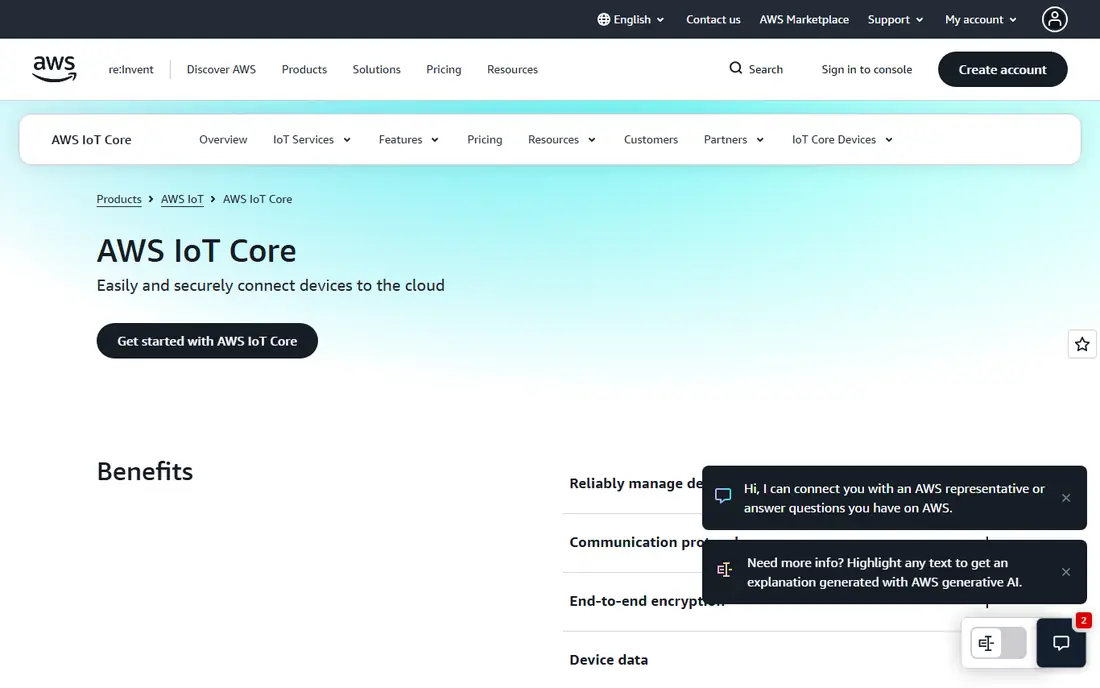
AWS IoT Core fits enterprises and technical teams already building on AWS. In our comparison, its AWS integration makes large fleets and analytics straightforward. Pricing sits at See website, with a free option listed as Yes, so check the plan page for the exact limits before you commit. Teams that match the best-for description above will get the most from it, while teams outside that group should weigh the trade-offs carefully. The honest catch is that small teams may find setup and billing far heavier than a maker platform. That weakness does not make it a poor product, but it does decide whether it fits your situation. If the strength matters more than the weakness for your team, it belongs on your shortlist. If not, one of the other options in this list will serve you better.
- Massive scale
- Deep AWS service integration
- Strong security and device management
- Per-message pricing is complex
- Needs real cloud skill to run well
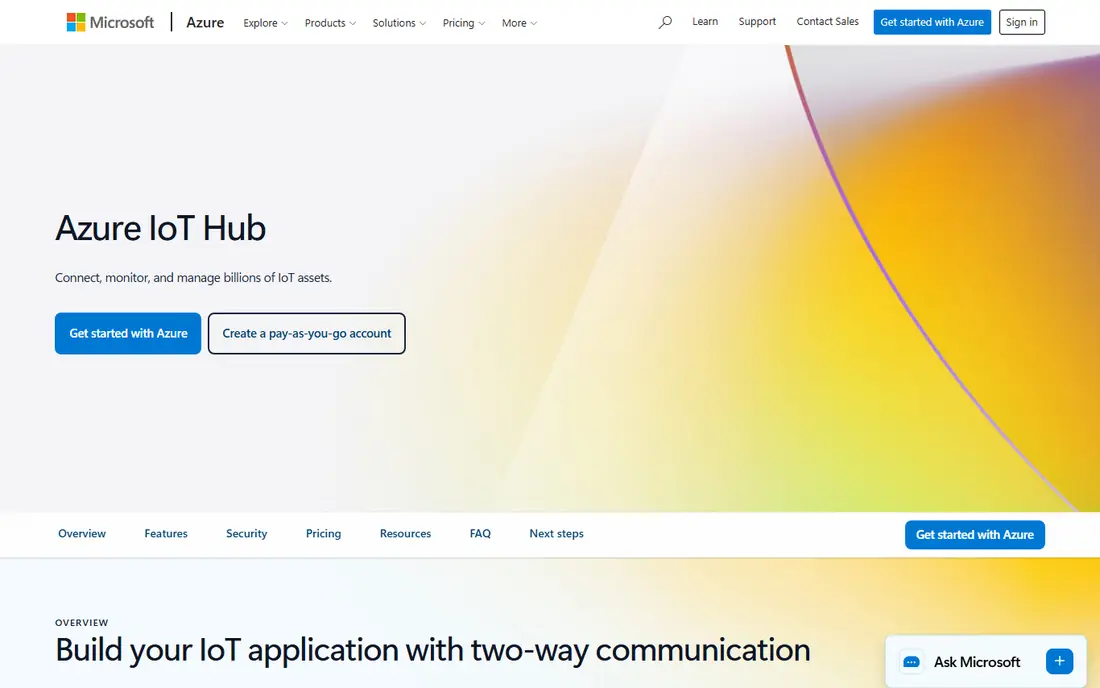
Azure IoT Hub fits industrial teams and companies standardised on Microsoft Azure. In our comparison, its tiered model gives industrial fleets predictable hub costs. Pricing sits at $10 per month, with a free option listed as Yes, so check the plan page for the exact limits before you commit. Teams that match the best-for description above will get the most from it, while teams outside that group should weigh the trade-offs carefully. The honest catch is that maker projects will find it heavier than Blynk or Arduino Cloud. That weakness does not make it a poor product, but it does decide whether it fits your situation. If the strength matters more than the weakness for your team, it belongs on your shortlist. If not, one of the other options in this list will serve you better.
- Tiered hub pricing from $10 per unit
- Edge support
- Strong Microsoft integration
- Per-tier message limits need planning
- Smaller fleets may overpay
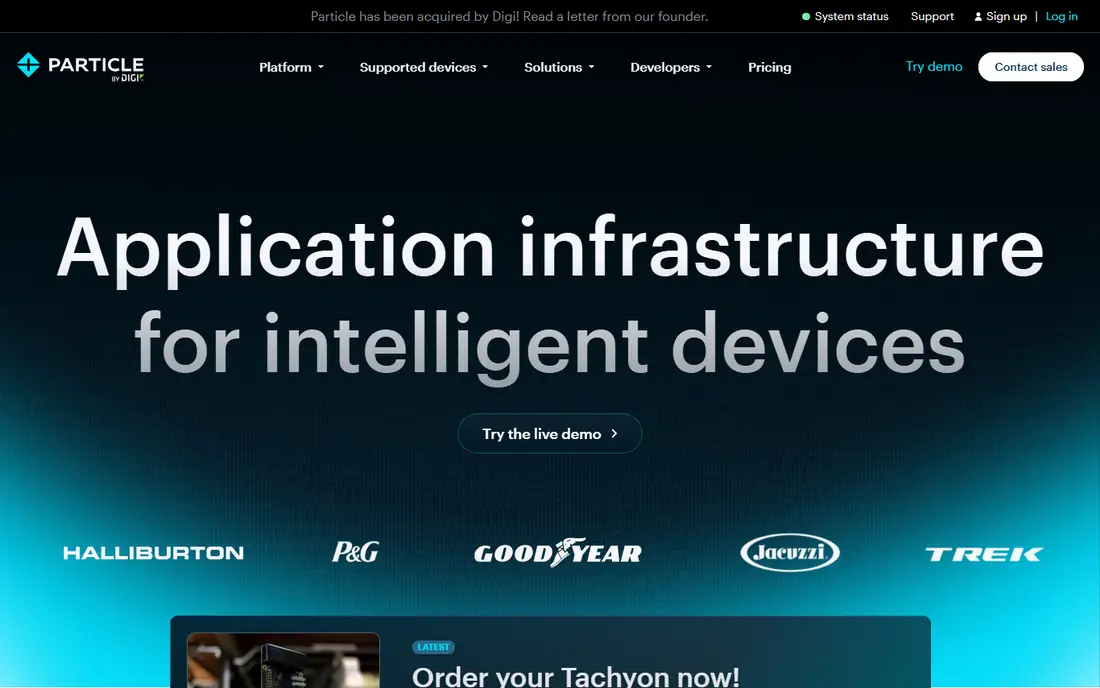
Particle fits product teams shipping connected hardware. In our comparison, its combined hardware and cloud path shortens time to a working product. Pricing sits at See website, with a free option listed as Yes, so check the plan page for the exact limits before you commit. Teams that match the best-for description above will get the most from it, while teams outside that group should weigh the trade-offs carefully. The honest catch is that teams with their own hardware may prefer a hardware-neutral platform. That weakness does not make it a poor product, but it does decide whether it fits your situation. If the strength matters more than the weakness for your team, it belongs on your shortlist. If not, one of the other options in this list will serve you better.
- Hardware plus cloud in one system
- Device management
- Cellular options
- Hardware lock-in is a real consideration
- Pricing needs a quote for scale
ThingsBoard fits teams that want full data ownership and custom dashboards. In our comparison, its self-hosted option gives control that cloud-only rivals cannot match. Pricing sits at $49 per month, with a free option listed as Yes, so check the plan page for the exact limits before you commit. Teams that match the best-for description above will get the most from it, while teams outside that group should weigh the trade-offs carefully. The honest catch is that teams without ops capacity should use the hosted cloud plan instead. That weakness does not make it a poor product, but it does decide whether it fits your situation. If the strength matters more than the weakness for your team, it belongs on your shortlist. If not, one of the other options in this list will serve you better.
- Open-source community edition
- Self-hosting
- Strong dashboards and rules
- Self-hosting needs ops skill
- Cloud plan caps devices and data points
Ubidots fits small businesses launching a commercial device product. In our comparison, its simple setup gets a small fleet live faster than enterprise clouds. Pricing sits at See website, with a free option listed as Yes, so check the plan page for the exact limits before you commit. Teams that match the best-for description above will get the most from it, while teams outside that group should weigh the trade-offs carefully. The honest catch is that large fleets may find per-device pricing expensive at scale. That weakness does not make it a poor product, but it does decide whether it fits your situation. If the strength matters more than the weakness for your team, it belongs on your shortlist. If not, one of the other options in this list will serve you better.
- Easy device setup
- Dashboards and alerts
- Free STEM plan for learning
- Commercial pricing is per device, so fleet costs grow linearly
Blynk fits makers and product teams needing a mobile app fast. In our comparison, its mobile app builder is the fastest route to a polished control app. Pricing sits at See website, with a free option listed as Yes, so check the plan page for the exact limits before you commit. Teams that match the best-for description above will get the most from it, while teams outside that group should weigh the trade-offs carefully. The honest catch is that industrial fleets needing deep analytics should compare ThingsBoard. That weakness does not make it a poor product, but it does decide whether it fits your situation. If the strength matters more than the weakness for your team, it belongs on your shortlist. If not, one of the other options in this list will serve you better.
- Drag-and-drop mobile app builder
- Free plan for 5 devices
- Fast prototyping
- Advanced features sit on paid plans
- Larger fleets need higher tiers
Arduino Cloud fits Arduino users building connected projects. In our comparison, its Arduino integration removes the setup friction of generic platforms. Pricing sits at See website, with a free option listed as Yes, so check the plan page for the exact limits before you commit. Teams that match the best-for description above will get the most from it, while teams outside that group should weigh the trade-offs carefully. The honest catch is that non-Arduino hardware fits better on ThingsBoard or Ubidots. That weakness does not make it a poor product, but it does decide whether it fits your situation. If the strength matters more than the weakness for your team, it belongs on your shortlist. If not, one of the other options in this list will serve you better.
- Native Arduino integration
- Dashboards and sketches in one place
- Free plan is limited
- Commercial use needs the Team plan
Losant fits product teams that want visual workflow logic for devices. In our comparison, its visual workflows make device logic easier to build and review. Pricing sits at See website, with a free option listed as Yes, so check the plan page for the exact limits before you commit. Teams that match the best-for description above will get the most from it, while teams outside that group should weigh the trade-offs carefully. The honest catch is that teams needing published pricing for quick comparison may prefer ThingsBoard. That weakness does not make it a poor product, but it does decide whether it fits your situation. If the strength matters more than the weakness for your team, it belongs on your shortlist. If not, one of the other options in this list will serve you better.
- Visual workflow builder
- Dashboards and edge options
- Developer-friendly APIs
- Pricing is quote-based for larger use
- Smaller community than AWS or Azure
How we picked these
We compared official pricing pages, free tier terms, and recent comparison guides that quoted vendor pricing in 2026. We did not claim hands-on testing. Where pricing is message-based or quote-based, we say so rather than inventing a flat monthly figure. We focused on products that exist and work today, that truly fit the topic, and that ordinary buyers can actually sign up for. We compared official feature and pricing pages first, and used public reviews and comparison guides only to cross-check figures. We did not invent prices, awards, counts, or features, and where a figure could not be verified we used See website instead.
What to check before you buy
Start with your fleet size in two years, not today. A platform that is cheap for 10 devices can be expensive for 10,000, and a platform built for 10,000 can be overkill for 10. Next, check protocol support for your hardware, including MQTT, HTTP, and any industrial protocols you need. Then test the full path: device to dashboard to alert, including offline behaviour and firmware updates. Finally, model total cost, including messages, data retention, dashboards, and support. Message-metered platforms punish chatty devices, while per-device platforms punish large fleets, so your device behaviour decides the winner. Also check contract terms before you sign. Notice periods, renewal prices, and data export options matter more after the first year than during a trial. A tool that is hard to leave is a tool you should price with extra care.
Frequently asked questions
What is the best IoT platform?
AWS IoT Core suits large enterprise fleets, Azure IoT Hub suits Microsoft-based industrial teams, ThingsBoard suits self-hosted control, and Blynk suits fast mobile prototypes.
What is the best free IoT monitoring tool?
Blynk, Ubidots STEM, Arduino Cloud, and ThingsBoard Community all offer free starting points. Check device limits and commercial-use terms, since free plans often exclude commercial use.
What is the best IoT software for small business?
Ubidots and Losant suit small commercial fleets, while ThingsBoard Cloud suits teams that want dashboards without running servers. Blynk suits products that need a mobile app.
Is AWS IoT Core better than Azure IoT Hub?
Neither is clearly better. AWS suits teams already on AWS, while Azure suits Microsoft shops and industrial edge workloads. Compare message pricing at your real device volume before choosing.
How much does an IoT platform cost?
Azure IoT Hub starts at $10 per hub unit per month, ThingsBoard Cloud from $49 per month, and AWS IoT Core by message volume, with several platforms offering free tiers for small projects.
Sources we checked (8)

Online Jobs is an independent blog about careers, online work, learning new skills and the tools that help people earn. More about us.
Keep reading
All posts
Workday Alternatives
We compared the best workday alternatives for HR, payroll, and global hiring, from BambooHR and Gusto to Rippling, Deel, and HiBob for growing teams in 2026.
Which SaaS Tools Have the Best Customer Support
Which SaaS tools have the best customer support? Compare eight popular tools on help centres, live help, response options and overall support quality.
Top AI Helpdesk Software
Searching for top AI helpdesk software in 2026? We compared 8 AI helpdesks on automation, pricing, channels and ease of setup for small and growing teams.