Best Influencer Marketing Platforms in 2026: 8 Platforms Compared

How we put this together: we compare official feature and pricing pages, app store listings, privacy policies and public user reviews. Prices change, so check the provider's site before you pay.
Key takeaways
- Grin suits e-commerce brands on Shopify that want discovery, gifting, payments, and sales tracking in one system.
- CreatorIQ suits enterprise brands that need deep analytics, brand safety, and compliance workflows at scale.
- Aspire suits direct-to-consumer brands focused on ambassador programs and user-generated content for ads.
- Most enterprise platforms do not publish prices and require annual contracts, so budget for a sales conversation, not just a monthly fee.
- Small brands should start with Shopify Collabs or Heepsy before signing an enterprise contract, and test one real campaign during any trial.
Quick comparison
| Name | Who it suits | Starting price | Free option | |
|---|---|---|---|---|
 Grin | E-commerce brands on Shopify | See website | No | Visit |
 CreatorIQ | Enterprise analytics and compliance | See website | No | Visit |
 Aspire | Ambassador programs and UGC for ads | See website | No | Visit |
 Upfluence | Micro-influencer discovery and customer creators | See website | No | Visit |
 Creator.co | Small teams and managed campaigns | See website | No | Visit |
 Modash | Creator research and vetting | See website | No | Visit |
 Heepsy | Affordable discovery and vetting | $69 per month | No | Visit |
 Shopify Collabs | Shopify brands starting with affiliates | Free | Yes | Visit |
The best influencer marketing platforms
Influencer platforms do three different jobs: finding creators, running campaigns, and proving results. Some tools do all three, while others specialize in discovery or vetting. We compared official feature pages, pricing information, and public reviews for platforms that are actively sold in 2026, and we favored tools with a clear audience, real campaign workflows, and honest pricing notes. Where a vendor does not publish a price, we wrote "See website" rather than repeating a third-party estimate as fact.
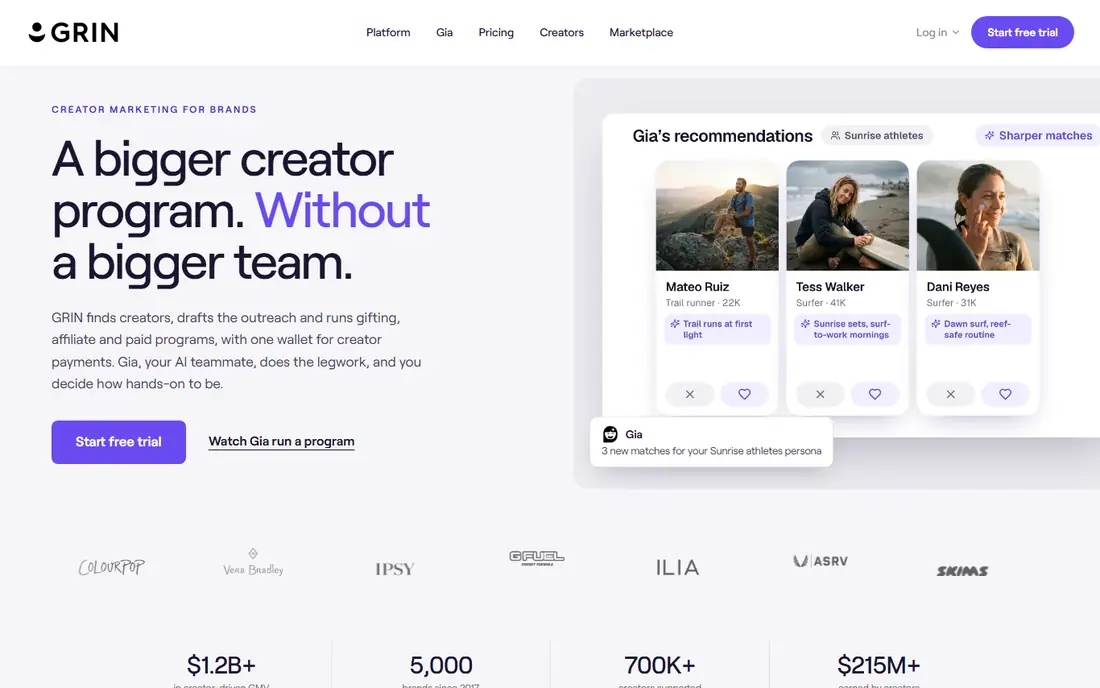
Grin is the strongest all-round pick for e-commerce brands that already sell on Shopify. It covers creator discovery, outreach, gifting, affiliate links, payments, and reporting in one system, so a brand can trace a creator's post to orders without stitching together spreadsheets and separate tools. Its Shopify integration, including product seeding and discount codes, is the reason many direct-to-consumer brands choose it over a general discovery tool.
The catch is access and cost. Grin does not publish a starting price, contracts are typically annual, and smaller brands may find the commitment heavy before they know their creator volume. If you run regular creator campaigns on Shopify and need revenue attribution, request a demo with your real product catalog and creator count, and ask for the total annual cost in writing.
- Discovery-to-payment workflow in one system
- Deep Shopify integration for gifting and affiliate sales
- Strong reporting on revenue and content
- No published price, so budgeting needs a sales conversation
- Enterprise-leaning contracts suit larger brands
- Setup takes time for large creator programs
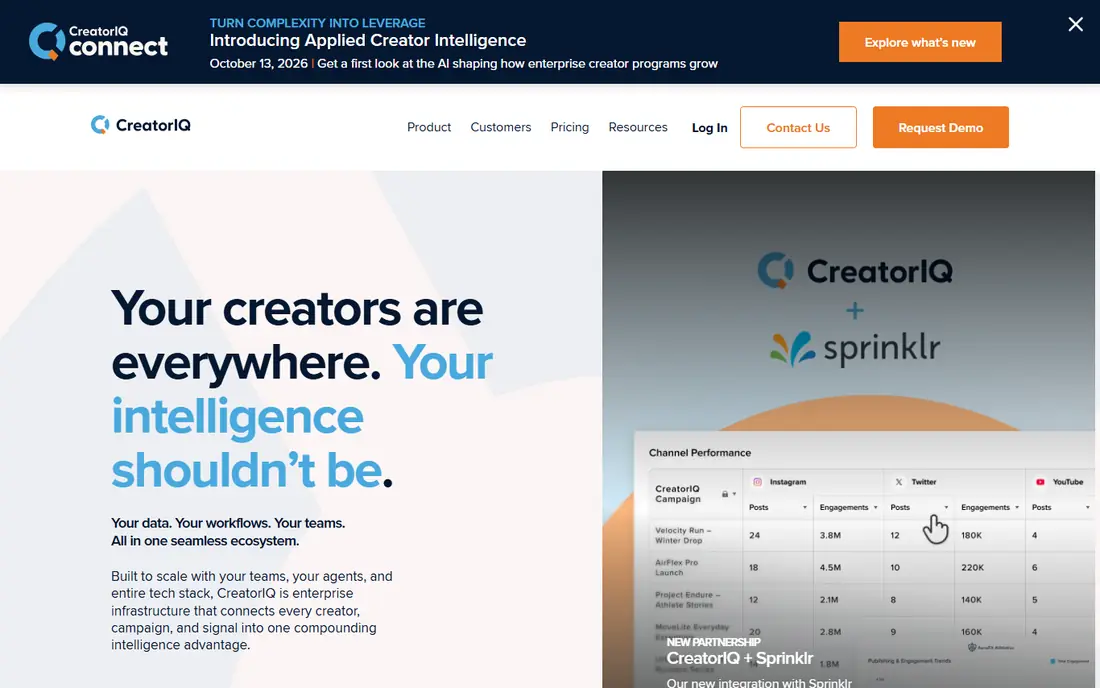
CreatorIQ suits large brands and agencies that run influencer programs as a serious media channel. Its discovery covers millions of creator profiles, its analytics track earned media value and campaign performance in detail, and its compliance workflows help global teams manage approvals, disclosures, and usage rights. For a brand spending heavily on creators across regions, that governance is as valuable as discovery itself.
The trade-off is scale and cost. CreatorIQ is enterprise-only, with custom annual pricing, and implementation can take weeks as teams connect it to their existing marketing systems. A small brand with a handful of creators will not use most of its depth, and should start with a cheaper, self-serve tool instead.
- Large creator database with deep analytics
- Brand safety and compliance workflows
- Earned media value and campaign reporting at scale
- Enterprise pricing only, with annual contracts
- Implementation takes weeks
- Overkill for brands with fewer than 50 active creators
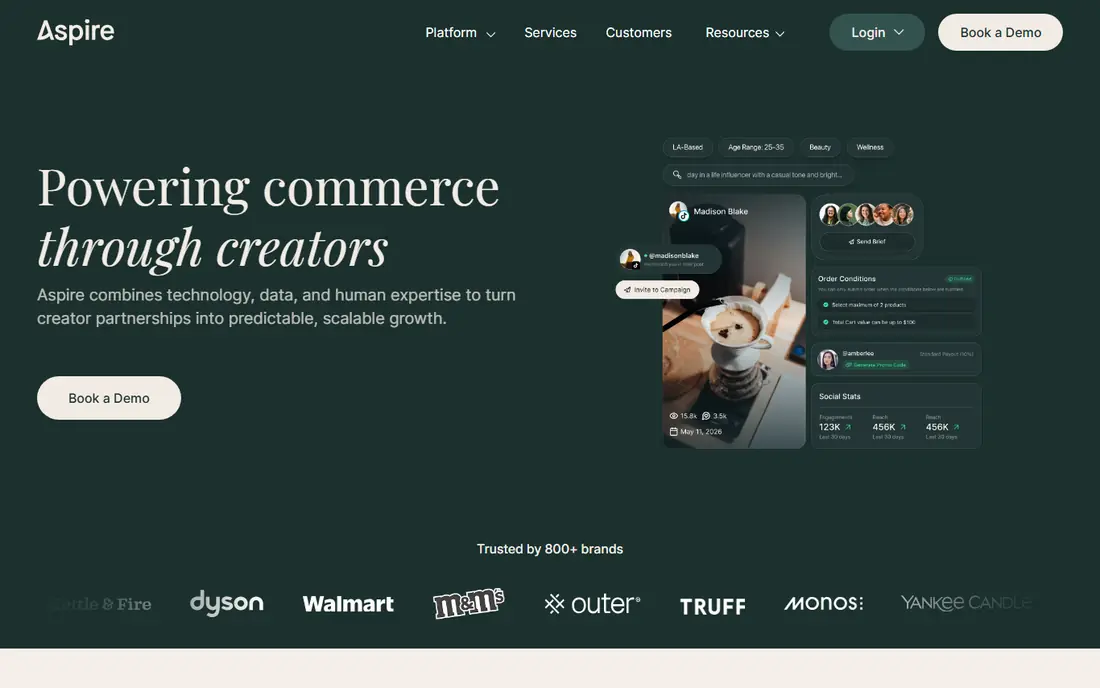
Aspire fits direct-to-consumer brands that want creators as long-term ambassadors, not one-off posts. Its marketplace helps brands find creators, its workflow manages briefs, content approval, and payments, and its reporting tracks reach and promo-code sales, which suits brands that turn creator content into paid ads. That focus on user-generated content for advertising is Aspire's clearest strength.
The catch is pricing transparency and analytics depth. Aspire does not publish a starting price and sells mainly through demos, so small brands cannot easily budget for it, and its analytics are less deep than CreatorIQ's enterprise reporting. If ambassador programs and ad-ready content are your goal, it is worth a demo, but compare its total contract cost against Grin before signing.
- Creator marketplace plus campaign workflow
- Strong for long-term ambassador programs
- Content and promo-code reporting for ads
- No published price
- Demo-led sales process
- Reporting is lighter on analytics depth than CreatorIQ
Upfluence stands out for turning customers into creators. It can identify influential customers from your own buyer list, which suits brands that want authentic advocates rather than cold outreach to strangers, and it pairs that discovery with campaign management, e-commerce integrations, and built-in payments. Its database also covers micro-influencers well, which matters for brands that prefer many small creators over a few large ones.
The trade-off is cost and contract. Upfluence does not publish a starting price, annual contracts are common, and entry tiers can still be expensive for a small brand. If customer-to-creator discovery is your main need, test that feature specifically in a demo with your own customer data, rather than judging it on database size alone.
- Large creator database
- Finds influencers among your own customers
- E-commerce integrations and built-in creator payments
- No published price, with annual contracts common
- Workflow depth varies by tier
- Smaller brands may find entry tiers expensive
Creator.co suits small teams that want help running campaigns, not just software. Its marketplace connects brands with creators, including micro-influencers, and its managed campaign options add human support for brands without an in-house influencer team. Community features also help smaller creators find work, which can make outreach feel less transactional.
Its limits are depth and price clarity. Creator.co's pricing has varied across plans and over time, so we list it as "See website" rather than repeating an older figure, and managed services cost extra on top of platform fees. For a small team, compare the total cost of platform plus management against hiring a freelancer or agency for a single campaign first.
- Marketplace plus managed campaign options for smaller teams
- Community features for micro-influencers
- Simpler entry than enterprise platforms
- Pricing varies by plan and has changed over time
- Less enterprise depth than Grin or CreatorIQ
- Managed services add cost on top of platform fees
Modash is the clearest self-serve research tool here. Brands can sign up, search a very large creator database, and vet audiences, growth patterns, and fake-follower signals without waiting for a sales call or implementation project. That speed suits agencies and brands that mainly need to find and check creators, then run campaigns in another system or by hand.
The catch is workflow depth. Modash covers research and vetting well, but campaign management, payments, and content approvals are basic compared with Grin or Aspire. Buy it when discovery and vetting are your bottleneck, and pair it with a workflow tool or a clear internal process for briefs and payments.
- Very large creator database for research
- Self-serve signup without a long sales process
- Strong audience and fraud vetting tools
- Campaign management is basic next to Grin or Aspire
- Pricing varies by tier and usage
- You still need a workflow tool for large campaigns
Heepsy is the budget pick for brands that need to find and vet creators without an enterprise contract. Starting at 69 dollars per month, it offers influencer search, audience data, and fake-follower audits, which help a small brand avoid paying a creator whose audience is inflated. It is well suited to vetting a shortlist before outreach, and to occasional discovery work.
Its limits are scope and scale. Heepsy is a discovery and vetting tool, not a full campaign management platform, so briefs, payments, and content approvals still need another process. Its database is also smaller than the enterprise tools here, so niche searches may return fewer results. For a small brand's first creator campaigns, though, it offers the best value in this list.
- Low published starting price
- Influencer discovery plus fake-follower audits
- Good for campaign vetting and research on a budget
- Discovery-focused, not a full campaign platform
- Database is smaller than Modash or CreatorIQ
- Advanced filters and exports need higher plans
Shopify Collabs is the free starting point for any brand already selling on Shopify. Merchants can set up an affiliate and gifting program, let creators apply, and track sales through affiliate links and discount codes, all inside the Shopify admin. Because creators apply to you, outreach starts warmer than cold messages, and there is no platform fee to justify before your first creator sale.
The trade-off is scope. Collabs is an affiliate and gifting tool, not a full influencer platform: discovery, campaign workflows, and analytics are lighter than Grin or Aspire, and it only makes sense inside Shopify. If you outgrow it, Grin is the natural upgrade, since it builds on the same Shopify foundation with deeper workflows.
- Free for Shopify merchants
- Built-in affiliate links, discount codes, and gifting
- Creators apply to your program
- Only useful inside Shopify
- Discovery and analytics are lighter than dedicated platforms
- Best for affiliate programs, not large managed campaigns
How we picked these
We compared official feature pages, pricing information, and public reviews for influencer platforms that are actively sold in 2026, and we favored tools with a distinct strength, from enterprise analytics to affordable discovery and free Shopify affiliate tools. We kept both all-in-one platforms and specialist discovery tools, because buyers often confuse the two and overpay for workflow features they do not need. Where a vendor does not publish a price, we wrote "See website" and noted the contract model, rather than presenting a third-party estimate as a vendor price.
Running a campaign without wasting budget
Start with your bottleneck, not the biggest platform
If finding creators is the problem, buy discovery. If managing briefs, approvals, and payments is the problem, buy workflow. If proving sales is the problem, buy attribution. The most expensive platform is the one whose main strength solves a problem you do not have.
Vet audiences before you pay
Check follower growth, engagement patterns, audience location, and fake-follower signals with a tool like Modash or Heepsy before agreeing a fee. A creator with a smaller, real audience in your market usually outperforms a larger account with inflated numbers, and vetting costs far less than a wasted campaign.
Set usage rights in writing
Agree before content is made how long you can use it, where you can run it as an ad, and whether you can edit it. Perpetual, unlimited rights for a one-time fee is the most common way brands overpay or creators lose out, so match rights to the fee and the campaign length.
Run one real campaign before signing annually
Use any trial or pilot period for a live campaign with real creators, real briefs, and real payments, not a demo with sample data. Check creator onboarding, content approval speed, payment reliability, and reporting accuracy, and read cancellation and auto-renewal terms before signing, since many platforms require 60 to 90 days notice.
Frequently asked questions
What is the best influencer marketing platform for small business?
Shopify Collabs is the best free start for Shopify merchants, while Heepsy at 69 dollars per month suits small brands that need discovery and vetting. Creator.co suits small teams that want managed campaign help. Avoid enterprise platforms until you run regular campaigns with dozens of creators.
How much do influencer marketing platforms cost?
Prices range from free for Shopify Collabs and 69 dollars per month for Heepsy to custom annual contracts for Grin, Aspire, Upfluence, and CreatorIQ, where enterprise pricing can reach tens of thousands of dollars per year. Always ask for the total annual cost, including seats, usage limits, and managed service fees.
What is the difference between Grin and CreatorIQ?
Grin is built for e-commerce brands, with Shopify-native gifting, affiliate sales, and revenue tracking in one workflow. CreatorIQ is built for enterprise brands, with deeper analytics, brand safety, and compliance workflows across large, global programs. Choose Grin for sales tracking and CreatorIQ for enterprise governance.
Do I need an influencer platform or can I manage campaigns manually?
If you run fewer than five campaigns a year with under ten creators, spreadsheets and direct messages usually work. Beyond that volume, a platform saves time on discovery, briefs, approvals, payments, and reporting, and the saving grows with campaign volume.
How do influencer platforms track ROI?
Most track affiliate links, discount codes, and content performance, while stronger platforms add revenue attribution and earned media value. For subscription businesses, check whether the platform follows a referred customer through upgrades, downgrades, and cancellations, since a first sale alone can overstate value.
What should I check before signing an influencer platform contract?
Check the total annual cost, seat and usage limits, auto-renewal and cancellation notice periods, content usage rights handling, payment reliability for creators, and whether creator onboarding is smooth. Run a real pilot campaign first, and confirm in writing which features sit in your tier.
Sources we checked (8)

Online Jobs is an independent blog about careers, online work, learning new skills and the tools that help people earn. More about us.
Keep reading
All posts
Best White Label SEO Companies
We compare the best white label SEO companies and tools in 2026 for agencies, from fulfilment services to branded reporting platforms, margins and prices.
Best Webinar Software
We compared the best webinar software for 2026 on price, attendee limits, automation and ease of use, to help you host better live sessions with confidence.
Best Web Scraping Tools
Compare the best web scraping tools in 2026, from no-code Octoparse and Browse AI to Apify, Firecrawl, Bright Data, Zyte, ScraperAPI and free Scrapy, with prices.