Best Identity Verification Service in 2026: 8 Products Compared

How we put this together: we compare official feature and pricing pages, app store listings, privacy policies and public user reviews. Prices change, so check the provider's site before you pay.
Key takeaways
- Most enterprise identity tools are quote-based, while Veriff, Sumsub, Persona and iDenfy publish entry pricing that helps smaller teams compare.
- Document checks, selfie matching and liveness checks are the core trio, while AML screening, age checks and business verification are often separate.
- Persona suits product teams that want to build custom flows without heavy code, while Jumio and Entrust suit regulated firms at scale.
- Global document coverage varies widely, so check the countries and ID types your customers actually use.
- Per-check pricing is only part of cost, because minimums, monthly fees and add-on checks can change the total fast.
Quick comparison
| Name | Who it suits | Starting price | Free option | |
|---|---|---|---|---|
 Veriff | Fast self-serve onboarding | See website | Free trial | Visit |
 Persona | Custom onboarding flows | See website | Yes | Visit |
 Jumio | Regulated firms at scale | See website | No | Visit |
 Entrust IDV | Enterprises on Entrust stacks | See website | No | Visit |
 Sumsub | All-in-one KYC and AML | See website | Free trial | Visit |
 Trulioo | Global data-based verification | See website | No | Visit |
 iDenfy | Pay-per-check global checks | See website | Free trial | Visit |
 Socure | Fraud-focused identity checks | See website | No | Visit |
The best identity verification service
We compared services on document coverage, biometric checks, liveness, workflow tools, developer ease and pricing clarity. Identity verification touches sensitive personal data, so buyers should also weigh security certifications, data handling and compliance fit alongside price and speed.
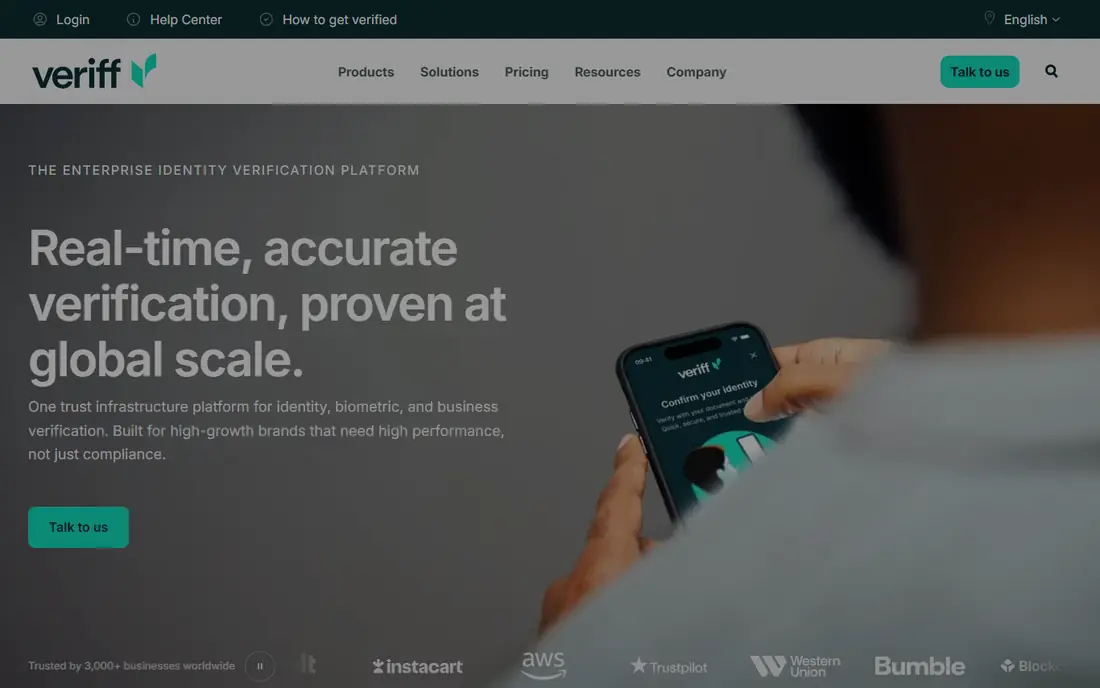
Veriff is a strong starting point for startups and scaling fintechs that want to launch verification without a long sales cycle. Its flow combines document checks with selfie matching, and recent listings show a self-serve entry point with per-check pricing. That transparency helps small teams estimate cost before talking to sales, which is rare in this market.
The platform is mobile-first, which suits apps where most users sign up on a phone. Buyers should still check which add-ons are included, because AML screening and some fraud checks may sit outside the base check price. For cross-border apps that need fast decisions and a clear entry tier, Veriff is a practical first test.
- Published self-serve entry pricing in recent listings
- Broad document coverage
- Mobile-first verification flow
- AML screening is an add-on in some plans
- Enterprise pricing still needs a sales discussion
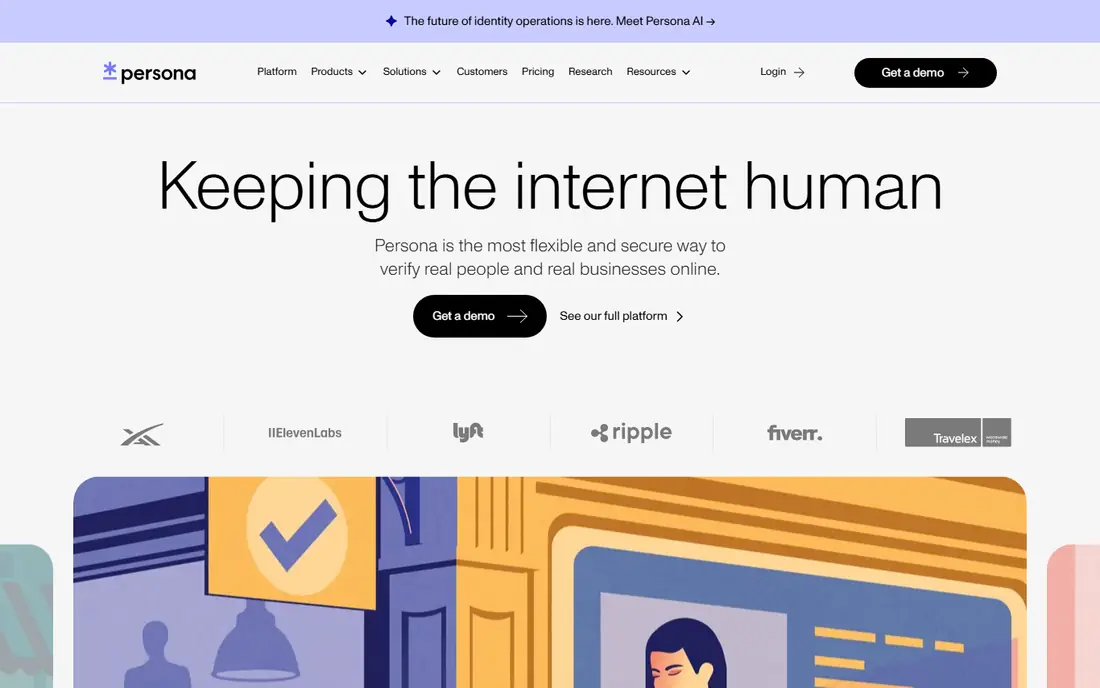
Persona suits product teams that want to shape onboarding around their own risk rules. Its workflow builder lets teams chain document checks, selfie verification, database lookups and watchlist screens into one flow, without building every step in backend code. That flexibility helps marketplaces, fintechs and platforms that serve different user types with different risk levels.
Persona also offers a free tier for low volumes in recent listings, which makes it easy to test a flow before committing. The catch is that complex flows with many checks cost more per verification, so teams should model real flow cost, not just a single check price. For teams that value control over onboarding logic, Persona is a leading choice.
- Low-code workflow builder
- Modular checks for documents, selfies and database lookups
- Case management tools
- Pricing can vary by flow complexity
- Enterprise tiers need a quote
Jumio is aimed at banks, lenders, crypto firms and other regulated businesses that need high-assurance checks. Its tools cover document verification, biometric matching and liveness checks, with added monitoring after onboarding in some products. That depth helps firms that face strict audit and fraud requirements, and Jumio lists a long history of large-scale verification work.
The trade-off is access and cost. Pricing is quote-based and aimed at enterprise contracts, and integration may need dedicated developer time. Small startups may find the entry bar high. For regulated firms where a missed fraud case costs far more than a check, Jumio offers a level of assurance that lighter tools may not match.
- Deep liveness and fraud detection
- Large ID coverage
- Enterprise compliance pedigree
- Quote-only pricing
- Heavier integration lift for small teams
Entrust IDV, formerly Onfido, is the enterprise identity verification product inside Entrust. It offers document and selfie checks, liveness detection and a Workflow Studio tool for building verification flows without heavy code. Coverage spans many document types and countries, which suits global firms with users in several markets.
Buyers should note the name change when reading older reviews, because Onfido guides now refer to Entrust IDV. Pricing is quote-based, and the product fits mid-market to enterprise teams rather than very small startups. For firms already using Entrust products, or for global teams that need orchestration at scale, Entrust IDV is a strong candidate.
- Workflow Studio for no-code orchestration
- Broad document coverage
- Links to Entrust identity products
- Quote-only pricing
- Formerly Onfido, so older guides use the old name
Sumsub combines identity verification, business verification, AML screening and transaction monitoring in one platform, which appeals to fintechs, crypto firms and marketplaces that would otherwise buy several tools. Recent listings show a Basic tier and a Compliance tier with per-verification pricing and monthly minimums, plus a trial that includes free checks. That published pricing makes budgeting easier than with quote-only rivals.
The limit is tier scope. AML screening and ongoing monitoring sit on the Compliance tier, while business verification and advanced monitoring may need a custom plan. Teams should compare the tier that actually covers their required checks, not just the entry tier. For all-in-one compliance at mid-market scale, Sumsub is a clear option to test.
- Published Basic and Compliance tiers in recent listings
- KYC, KYB and AML in one platform
- Trial with free checks
- Monthly minimums apply on paid tiers
- Full KYB and monitoring need higher plans
Trulioo takes a data-first approach, matching identity details against a large set of global data sources rather than relying only on document uploads. That can lower friction for users in markets where document checks are slow or hard to complete, and it suits global enterprises with customers in many countries. Trulioo also offers business verification and screening options.
The drawback is that document and biometric checks may be thinner than in document-first tools in some markets, so firms with strict document requirements should test coverage for their key countries. Pricing is quote-based and usage-driven. For global firms that prioritise breadth and low-friction checks, Trulioo is a strong complement or alternative to document-first vendors.
- Very broad data source coverage
- Verification without document friction in many markets
- Global person and business data
- Quote-only pricing
- Document and biometric depth varies by market
iDenfy suits fintechs and global small businesses that want predictable pay-per-check pricing without a large monthly minimum. Recent listings show published volume tiers and a model where teams pay for checks they use, with document verification, liveness and AML screening available. That structure helps firms with uneven volume, where a fixed monthly fee would waste budget in quiet months.
Buyers should check which checks are included in each tier, because AML and business checks may be priced separately. Support and integration depth also matter for firms without a large compliance team. For cost control and global coverage at small to mid-market scale, iDenfy is a useful option to compare with Veriff and Sumsub.
- Published volume tiers in recent listings
- Pay-per-verification model
- Document, liveness and AML options
- Enterprise features need a sales discussion
- Pricing varies by check type
Socure focuses on fraud prevention as much as identity proofing, using data signals, device data and risk models to spot synthetic identities and account fraud. That fraud-first angle suits banks, lenders and fintechs where fake accounts are a major cost. Socure combines document checks with data-based verification, so teams can use different check types based on risk level.
The limit is global breadth. Socure is strongest in North American markets, and document coverage elsewhere may be thinner than Trulioo or Veriff. Pricing is quote-based and aimed at larger firms. For fraud-heavy onboarding in the United States, Socure offers a distinct and valuable approach.
- Strong fraud signals and risk scoring
- Document and data checks combined
- Used by large financial firms
- Quote-only pricing
- Global document coverage is narrower than some rivals
How we picked these
We reviewed official vendor pages, pricing pages where published, and public comparisons to confirm current products, coverage and pricing models. We favoured vendors with live document and biometric checks, clear workflow or API tools, and current compliance coverage, rather than older tools with only database checks. Where pricing is quote-only, we say so instead of repeating third-party estimates as fact. Buyers should still confirm pricing, data handling and certifications directly with each vendor.
Choosing an identity verification service
Start with your risk and regulation profile. A marketplace with low fraud risk needs a fast, low-friction flow, while a bank or crypto exchange needs high-assurance checks, audit trails and AML screening. That profile decides whether a self-serve tool is enough or an enterprise platform is required. Also list the countries and ID types your customers use, because coverage gaps cause drop-off and manual reviews.
Test conversion, not just fraud catch
Run a pilot with real user types, including older phones, low light and non-standard ID documents. Measure pass rates, manual review rates and time to decision, not just the headline fraud catch rate. A tool that blocks fraud but rejects many good users will cost more in lost signups than it saves in fraud.
Check data, security and total cost
Ask where personal data is stored, how long it is kept, which certifications the vendor holds and how data is handled after a check. Model total cost with minimums, add-on checks and manual review time included. A low per-check price can hide a high monthly minimum or expensive AML add-ons.
Frequently asked questions
What is the best identity verification online service?
Veriff and Persona suit startups and product teams that want published entry pricing and flexible flows, while Jumio and Entrust IDV suit regulated firms at scale. Sumsub suits teams that want KYC and AML in one platform. The best service depends on volume, countries, fraud risk and whether AML screening is required.
What are the best identity verification services for startups?
Persona, Veriff, Sumsub and iDenfy are strong startup options, because they offer self-serve tiers, trials or published pricing. Test with a small pilot, measure pass rates and manual reviews, and check monthly minimums before committing to a paid tier.
What is the best identity verification software for global users?
Trulioo, Veriff, Sumsub and Entrust IDV offer broad global coverage, but document types and check depth vary by country. List your top ten countries by user volume, then ask each vendor to confirm coverage and pass rates for those markets specifically.
How much does identity verification cost per check?
Published entry prices in recent listings range from under one dollar to around two dollars per check, depending on vendor and check type, with monthly minimums on some plans. Enterprise contracts are usually quoted and can be lower per check at high volume. Always model total cost with add-ons and minimums included.
Do I need AML screening with identity verification?
It depends on your sector and regulation. Banks, payment firms, crypto exchanges and other regulated firms usually need sanctions, PEP and adverse media screening alongside identity checks. Unregulated marketplaces may not need full AML screening, but fraud checks and liveness still help reduce fake accounts.
What is the difference between KYC and identity verification?
Identity verification confirms that a person is who they claim to be, using documents and biometrics. KYC is the wider process, which can include identity verification plus risk assessment, AML screening, business checks and ongoing monitoring. Many vendors sell both, but pricing and scope differ.
Sources we checked (8)

Online Jobs is an independent blog about careers, online work, learning new skills and the tools that help people earn. More about us.
Keep reading
All posts
DocuSign Alternatives
We compared the best DocuSign alternatives on price, free plans, templates, audit trails and ease of use, including free DocuSign alternatives for small teams.
Best subscription billing software
Looking for the best subscription billing software? We compare 9 platforms for billing, dunning, tax, revenue recognition, and team workflows in 2026.
Best Workforce Management Software
Looking for the best workforce management software? We compare 8 tools for scheduling, time tracking, payroll, and compliance for hourly teams and managers.