Best Identity Management Software in 2026: 9 Tools Compared

How we put this together: we compare official feature and pricing pages, app store listings, privacy policies and public user reviews. Prices change, so check the provider's site before you pay.
Key takeaways
- Okta is the strongest vendor-neutral choice for workforce identity, with broad SSO, MFA, and lifecycle features.
- Microsoft Entra ID is the obvious pick for organisations already standardised on Microsoft 365 and Azure.
- JumpCloud and Duo suit smaller teams, with free tiers and simpler pricing than enterprise identity suites.
- Auth0 suits customer-facing login, which is a different job from workforce SSO and should not be confused with it.
- Price IAM by total cost, since directory, MFA, SSO, and lifecycle features are often sold as separate modules.
Quick comparison
| Name | Who it suits | Starting price | Free option | |
|---|---|---|---|---|
 Okta | Vendor-neutral workforce identity at scale | See website | Free trial | Visit |
 Microsoft Entra ID | Microsoft 365 and Azure organisations | See website | Yes | Visit |
 JumpCloud | Small teams replacing on-premises directory | See website | Yes | Visit |
 Duo | Fast MFA rollout across a workforce | See website | Yes | Visit |
 Ping Identity | Large hybrid estates with complex needs | See website | Free trial | Visit |
 Auth0 | Customer-facing authentication for apps | See website | Yes | Visit |
 OneLogin | Mid-market SSO with simple setup | See website | Free trial | Visit |
 Keycloak | Self-hosted open-source identity | Free | Yes | Visit |
 CyberArk Identity | Privileged access plus workforce identity | See website | Free trial | Visit |
The best identity management software
Identity management software controls who can sign in, what they can access, and how that access changes when people join, move, or leave. The tools below cover workforce identity, customer identity, and privileged access, and the right pick depends on your existing stack and team size.
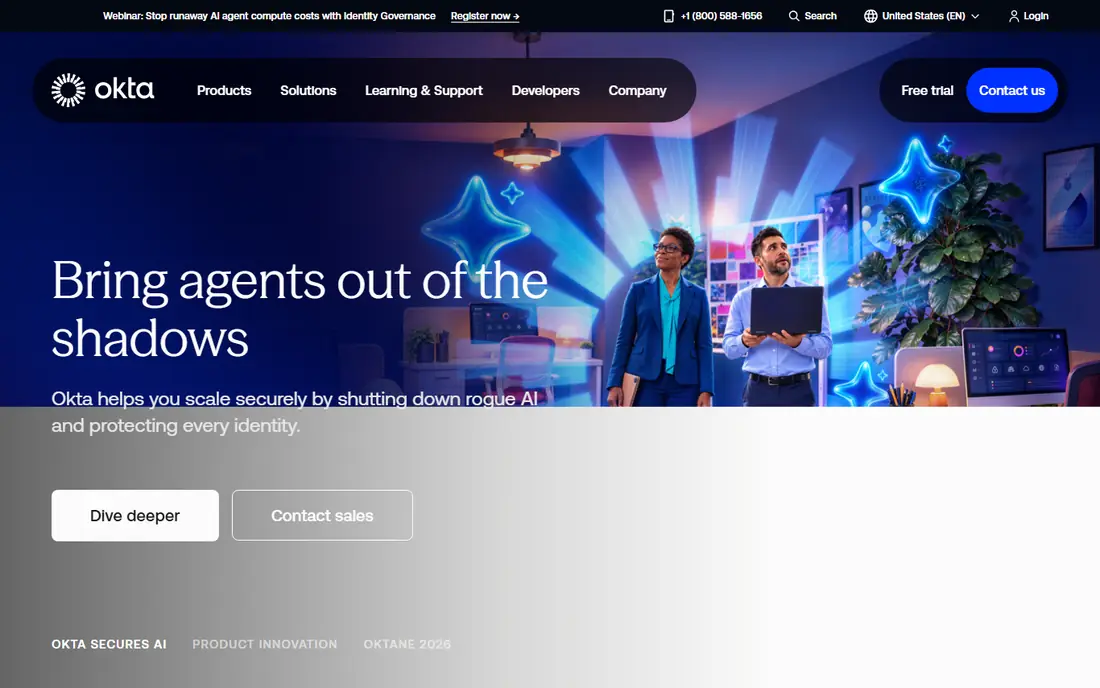
Okta is our pick for organisations that want one identity system across many SaaS apps without being tied to a single vendor. Single sign-on, multi-factor authentication, and lifecycle workflows help IT grant access when someone joins and remove it quickly when they leave. Its broad integration catalogue is a real advantage for SaaS-heavy companies.
Cost and complexity are the trade-offs. Okta pricing often involves modules and annual minimums, so small teams should check total cost before committing. For a mid-sized or large company with many apps, that breadth and neutrality justify the effort.
- Broad SSO app catalogue
- Strong MFA and lifecycle automation
- Works across Microsoft, Google and other stacks
- Pricing can be complex with modules and minimums
- Setup needs expertise for larger estates
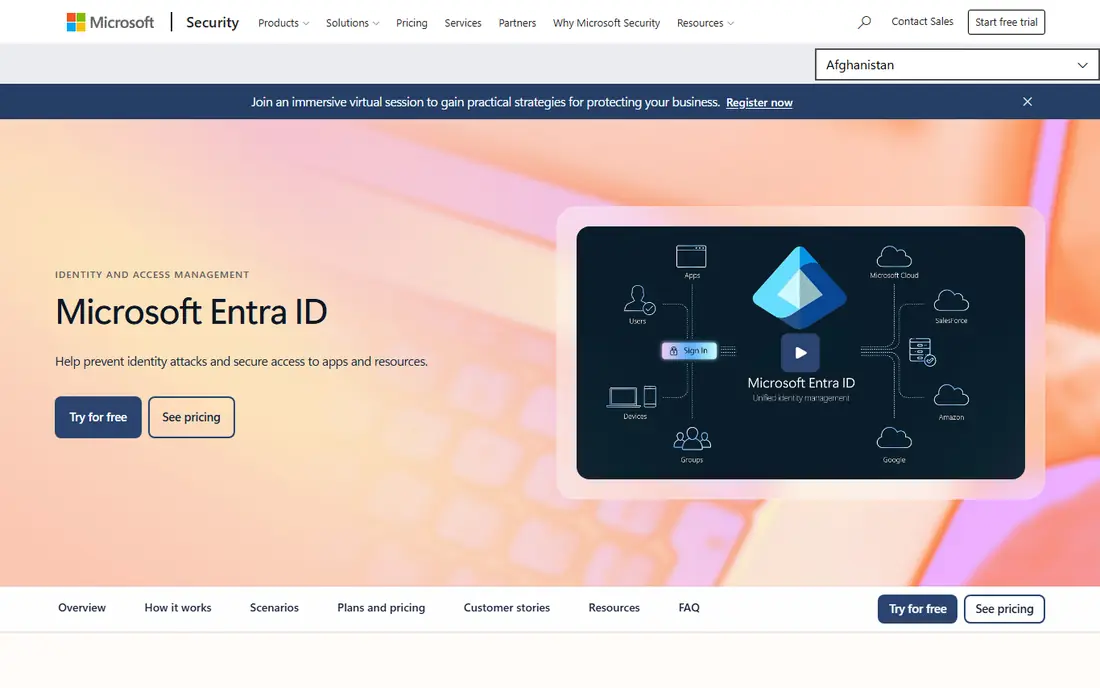
Microsoft Entra ID, formerly Azure Active Directory, is the natural choice if your organisation already runs on Microsoft 365. Users, groups, sign-in, MFA, and Conditional Access sit close to the apps and data people already use, which simplifies administration and support. A free tier covers basic SSO and MFA for many small setups.
The catch is fit. If your stack is mainly Google Workspace or a mix of non-Microsoft tools, a vendor-neutral option like Okta may integrate more cleanly. Advanced identity governance also sits on higher Entra tiers, so check which plan covers lifecycle reviews and access controls you need.
- Built into Microsoft 365 and Azure
- Conditional Access and MFA included on paid tiers
- Free tier for basic use
- Less neutral if you run mainly Google or other stacks
- Advanced governance needs higher tiers
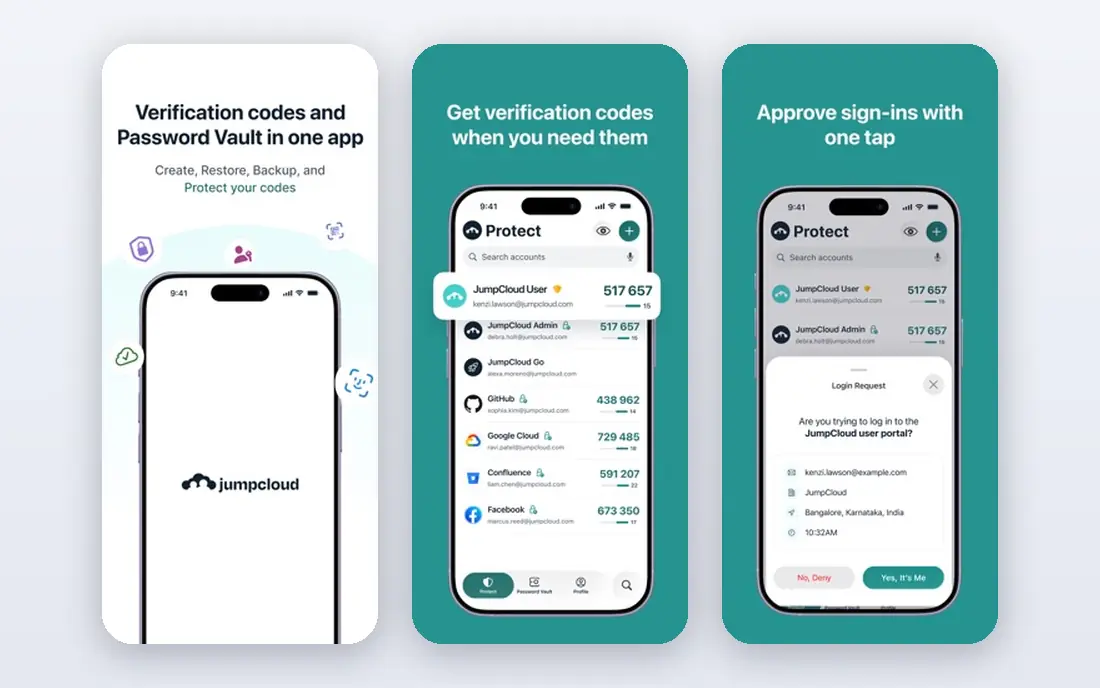
JumpCloud suits small and mid-sized teams that want to move away from an on-premises directory without buying a large enterprise suite. It combines user directory, SSO, MFA, and device management, which helps IT manage a mixed fleet of Windows, Mac, and Linux machines from one place. A free tier for up to ten users and devices lets small teams start without a bill.
Larger enterprises may need deeper federation, governance, or privileged access features from Okta, Ping, or CyberArk. For a team under a few hundred people with a mixed device fleet, JumpCloud offers a clear, practical path to cloud identity.
- Cloud directory plus device management in one console
- Free tier for small teams
- Works across Windows, Mac and Linux
- Less depth than Okta or Ping for large enterprises
- Some features need higher plans
Duo, by Cisco, is the pick when the urgent job is stronger sign-in security, not a full identity rebuild. Push approvals, passkeys, and device checks make MFA easy for users and quick for IT to roll out. A free tier for small teams makes it easy to test before paying.
Duo is not a full replacement for a directory or lifecycle system. It works best alongside an existing directory like Entra ID or JumpCloud, adding MFA and device trust on top. If your main gap is MFA adoption, Duo solves it with less friction than a larger suite.
- Simple MFA deployment
- Free tier for up to ten users
- Device trust checks
- Mainly MFA and access, not a full directory or lifecycle suite
Ping Identity suits large organisations with complex identity needs, such as hybrid cloud and on-premises systems, multiple brands, or strict regulatory requirements. Federation, orchestration, and customer identity features give architects more control than simpler tools offer. That depth matters when sign-in must work across many systems and partners.
Small teams will likely find Ping too heavy and too sales-led. Pricing often involves minimums and contracts, and implementation needs experienced staff. For a large, complex estate, Ping is one of the strongest enterprise options.
- Deep federation and hybrid deployment options
- Workforce and customer identity
- Strong for regulated industries
- Sales-led pricing
- Implementation needs expertise
Auth0, owned by Okta, is built for customer identity, not workforce identity. Developers use it to add login, signup, social login, and MFA to their own apps, without building authentication from scratch. A free tier for small apps makes it easy to start, and connections to social and enterprise providers cover many use cases.
Do not buy Auth0 expecting a workforce directory. It solves login for your customers, while Okta Workforce or Entra ID solves login for your staff. For a product team shipping an app, Auth0 is a strong, developer-friendly choice.
- Developer-friendly login for web and mobile apps
- Social and enterprise connections
- Free tier for small apps
- Different job from workforce SSO
- Costs rise with monthly active users
OneLogin suits mid-market companies that want straightforward SSO, MFA, and lifecycle features without enterprise complexity. HR-driven provisioning helps automate joiner and leaver access, and setup is generally faster than with larger suites. That simplicity matters for lean IT teams.
The trade-off is breadth. OneLogin may not match Okta on integration depth for unusual apps, and pricing can require a sales conversation. For a mid-sized team with standard SaaS apps, OneLogin offers a good balance of price and ease.
- Simple SSO and MFA setup
- HR-driven provisioning
- Competitive pricing for mid-market teams
- Smaller integration catalogue than Okta
- Some pricing details need a sales check
Keycloak is the pick for engineering-led teams that want full control and no per-user licence fee. It provides SSO, MFA, social login, and federation, and you host it yourself, which suits privacy, regulatory, or custom requirements. Many open-source projects and internal systems use it for that reason.
Free software is not free to run. You need engineers to deploy, update, back up, and secure it, and support comes from community or a paid vendor. If you have that expertise and want control, Keycloak is powerful. If you want a managed service, Okta or Entra ID will save time.
- Free open-source software
- SSO, MFA and federation
- Full control over hosting and data
- Needs engineering time to run and secure
- Support depends on community or a vendor
CyberArk Identity suits organisations that need to combine workforce identity with privileged access controls. SSO and MFA cover everyday staff login, while privileged access tools protect admin, service, and high-risk accounts. That combination matters in regulated industries where a single compromised admin account can cause serious harm.
Pricing is quote-based, and the full value shows when privileged access is a real priority, not just a nice extra. If you only need basic SSO and MFA, a simpler tool will be cheaper. If privileged accounts are a core risk, CyberArk deserves a close look.
- Strong privileged access heritage
- Workforce SSO and MFA
- Useful for regulated and high-risk estates
- Quote-based pricing
- Best value when privileged access is also a priority
How we picked these
We compared official feature pages, pricing pages, and documentation, and we checked public reviews for setup effort, integration breadth, and support. We kept only tools that are still offered in 2026 and that cover a clear identity job: workforce SSO, MFA, directory, lifecycle, customer login, or privileged access. We left out password managers that only store passwords, since they do not manage workforce identity at scale.
What to check before you buy identity management software
Start with your existing stack. Microsoft shops gain most from Entra ID, Google shops gain from a neutral or Google-friendly directory, and SaaS-heavy companies gain most from Okta. Count users, devices, and apps, and check if MFA, SSO, directory, and lifecycle are in one plan or sold separately.
Test joiner, mover and leaver flows
Identity value shows in daily operations, not in a demo. Test how fast a new starter gets access, how access changes on a role move, and how quickly access is removed on exit. Check MFA enrolment for non-technical users, recovery when a phone is lost, and audit logs for access reviews. A tool that is hard to administer will be bypassed, which defeats its purpose.
Frequently asked questions
What is the best identity management software for small businesses?
JumpCloud and Duo are the strongest small-business picks, with free tiers and clear pricing. JumpCloud suits teams that need a cloud directory plus device management, while Duo suits teams that mainly need MFA. Microsoft Entra ID is also strong if you already use Microsoft 365.
What is the best IAM software for enterprises?
Okta and Ping Identity are the strongest enterprise picks, with Okta favouring vendor-neutral SaaS estates and Ping favouring large hybrid or regulated estates. Microsoft Entra ID is the strongest pick for Microsoft-standardised enterprises. CyberArk adds value when privileged access is a core risk.
What is the best access management software for a mid-sized company?
OneLogin, JumpCloud, and Okta all suit mid-sized companies, with different trade-offs on price and depth. OneLogin favours simplicity, JumpCloud favours device management, and Okta favours integration breadth. Test joiner and leaver workflows on a trial before you choose.
What is the difference between workforce IAM and customer IAM?
Workforce IAM manages staff login to internal apps, with SSO, MFA, and lifecycle controls tied to HR. Customer IAM, such as Auth0, manages login for users of your own app or website, with signup, social login, and scale for many external users. Buying the wrong type solves the wrong problem, so check this first.
Is there a free identity management tool?
Keycloak is free open-source software, though you pay in hosting and engineering time. JumpCloud, Duo, Auth0, and Microsoft Entra ID all offer free tiers with limits on users or features. A free tier is useful for testing, but most growing organisations will need a paid plan for full MFA, SSO, and lifecycle features.
What should I check for identity security and compliance?
Check MFA options, Conditional Access or risk-based policies, audit logs, access reviews, and data residency. Confirm compliance claims such as SOC 2 or ISO 27001 on the vendor site, and check how the vendor sources and stores identity data. For regulated industries, also check federation, privileged access, and segregation of duties.
Sources we checked (9)
- https://www.okta.com/pricing
- https://www.microsoft.com/security/business/identity-access/microsoft-entra-id
- https://www.jumpcloud.com/pricing
- https://www.duo.com/pricing
- https://www.pingidentity.com/pricing
- https://www.auth0.com/pricing
- https://www.onelogin.com/pricing
- https://www.keycloak.org
- https://www.cyberark.com/pricing

Online Jobs is an independent blog about careers, online work, learning new skills and the tools that help people earn. More about us.
Keep reading
All posts
eBay Alternatives
Looking for ebay alternatives? We compared 9 marketplaces for sellers on fees, buyer reach, categories and ease of listing, to help you sell with confidence.

ZoomInfo Alternatives
The best ZoomInfo alternatives in 2026, compared on price, free plans, data coverage, and which tool fits small teams or large sales teams best in detail.

Zoom Alternatives
Zoom alternatives compared for 2026: Google Meet, Microsoft Teams, Webex, Jitsi and more for free calls, large meetings and webinars for teams and classrooms.