Best Home Internet Service in 2026: 8 Providers Compared


Fast fiber with matching uploads · Starting price: $55 per month
How we put this together: we compare official feature and pricing pages, app store listings, privacy policies and public user reviews. Prices change, so check the provider's site before you pay.
Key takeaways
- The best home internet service depends first on what is available at your address, because fiber, cable, and 5G coverage vary street by street.
- Fiber is usually the best choice where it exists, thanks to matching upload and download speeds and no data cap on many plans.
- Cable covers far more homes and is often the best in home internet service where fiber has not arrived yet, but upload speeds are usually lower.
- Always check the price after the promotion ends, equipment fees, and data caps, because those three items decide the true monthly cost.
Quick comparison
| Name | Who it suits | Starting price | Free option | |
|---|---|---|---|---|
| AT&T Fiber | Fast fiber with matching uploads | $55 per month | No | Visit |
 Xfinity | Widest cable coverage | $19.99 per month | No | Visit |
 Spectrum | Cable with no data caps or contracts | $30 per month | No | Visit |
 Verizon Fios | Fiber in the Northeast | $35 per month | No | Visit |
 Google Fiber | Fastest simple fiber pricing | $70 per month | No | Visit |
 T-Mobile Home Internet | Simple 5G home internet | $50 per month | No | Visit |
 Frontier Fiber | Expanding fiber with price locks | $30 per month | No | Visit |
 Starlink | Rural homes beyond cable and fiber | See website | No | Visit |
The best home internet services
The best internet service for home use is not a national winner, it is the best plan that actually reaches your house at a price you can live with after the first year. That is why this list mixes fiber, cable, 5G, and satellite: a household in a fiber city and a household on a rural road face different choices. Use the availability checker on each provider site before you compare speeds, because a plan you cannot order is not a real option.
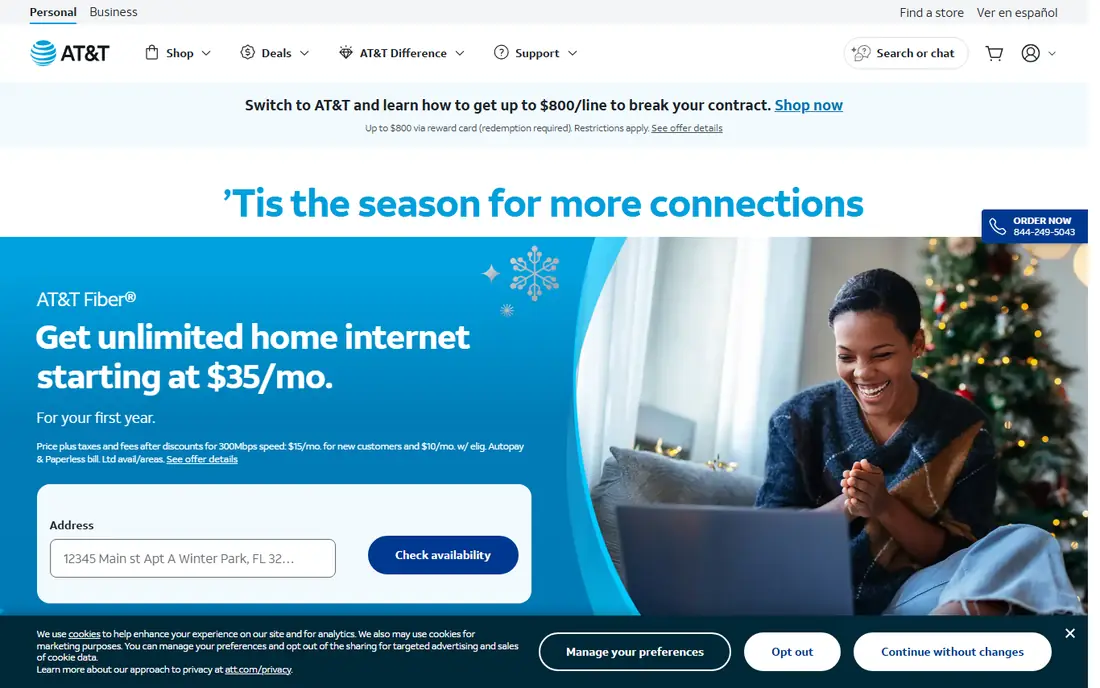
AT&T Fiber is the strongest all round pick where it is available, because fiber gives you the same speed up and down, which matters for video calls, cloud backup, and gaming. Plans run from a few hundred megabits per second to multi gigabit speeds, so a small household and a large household can both find a fit without paying for speed they will never use. AT&T also includes unlimited data on fiber plans, which removes one of the most common bill surprises.
The limit is coverage. Many AT&T addresses still only get slower legacy service, and the fiber experience in one city does not guarantee fiber at your street. Check your exact address on the AT&T site and confirm whether the quoted price is for fiber or for a slower service. If fiber is available, it is hard to beat for work from home and for homes with many connected devices.
- Matching upload and download speeds
- No data cap on fiber plans
- Wide fiber speed range
- Fiber is not available at every AT&T address
- Older DSL areas are much slower
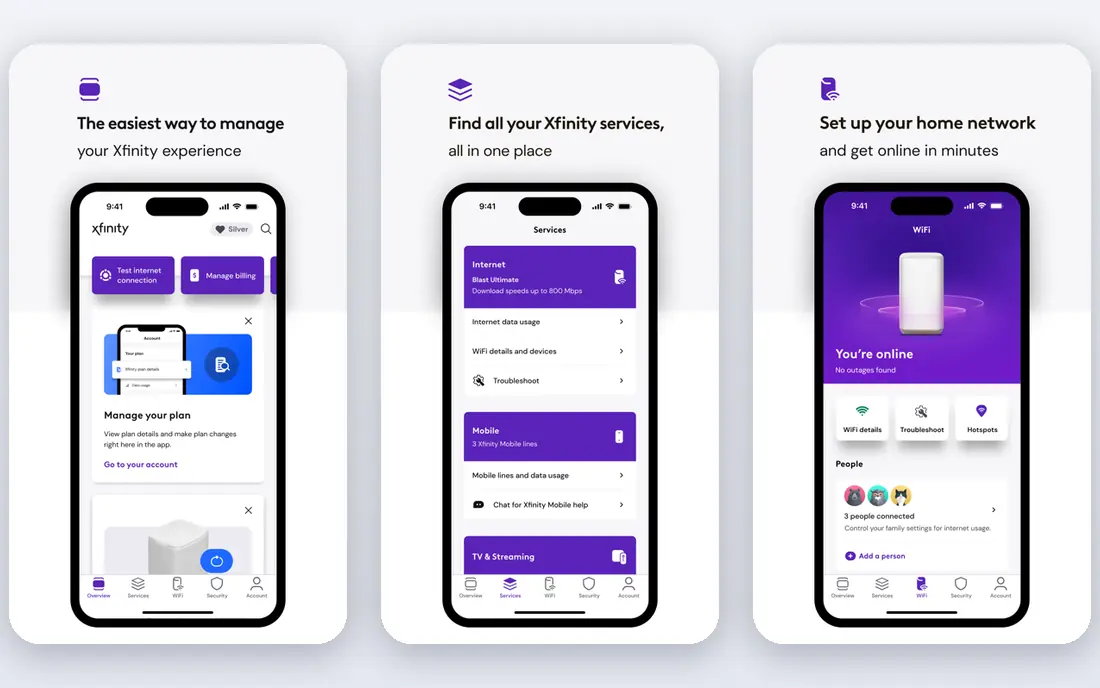
Xfinity, from Comcast, is the cable provider most US households can actually get, and that availability is its main advantage. Download speeds are high on most plans, and the range runs from a low cost starter plan to gigabit service, so you can start small and upgrade as your household grows. Xfinity also offers bundles with mobile and TV, which can lower the combined bill for some households.
The honest drawbacks are upload speed and data policy. Cable uploads are far slower than downloads, which shows up on video calls and large uploads, and many Xfinity plans include a data cap that can be lifted only with an add on. Ask about the cap, the gateway rental fee, and the price after the promotion before you sign, because those items decide whether the low starting price stays low.
- Available in many states
- Very fast download speeds
- Broad plan range
- Upload speeds lag fiber
- Data cap applies on many plans
- Equipment fees add up
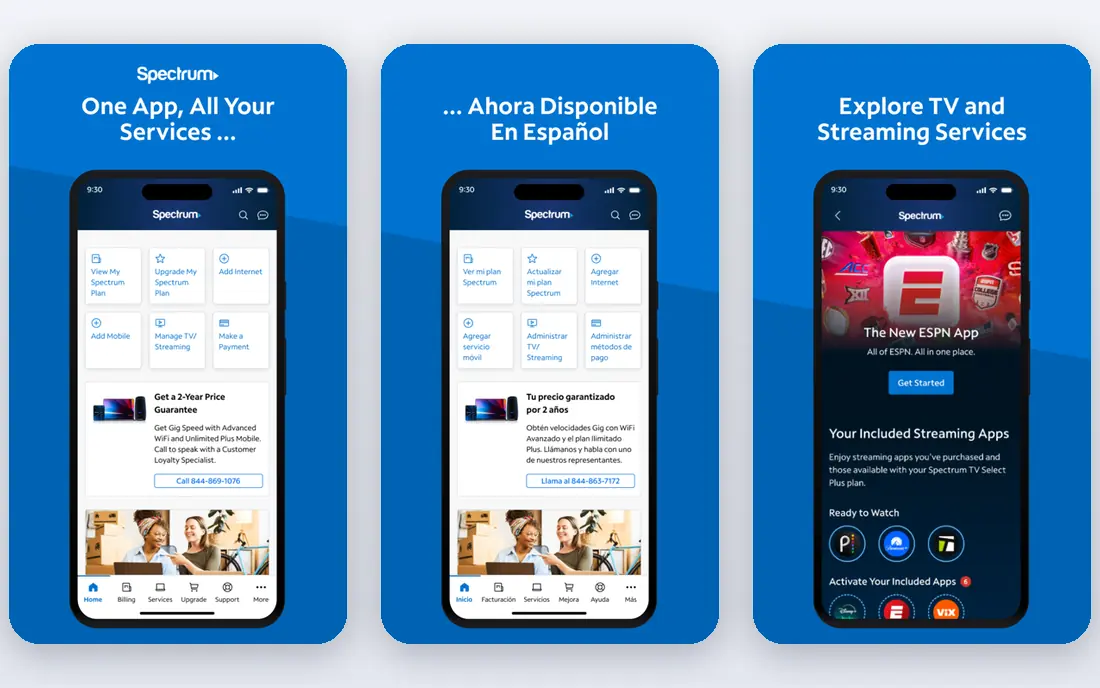
Spectrum, from Charter, is a strong cable choice for households that stream a lot and do not want to watch a data meter. Its internet plans do not carry data caps and do not require a contract, which removes two common frustrations. Coverage spans many states, so it is often the main alternative to a phone company provider in the same town.
The trade off is the same as with other cable services: uploads trail downloads, and the price you pay in year two is often higher than the introductory price. Spectrum also charges for some equipment in certain plans, so confirm the full monthly total. For a household that mainly streams, browses, and works on video calls, Spectrum is a practical and simple pick where fiber is not an option.
- No data caps
- No contracts on internet plans
- Wide cable footprint
- Upload speeds are lower than fiber
- Standard rates rise after promotions
- Modem fees may apply
Verizon Fios is the fiber service many Northeast households compare everything else against, because it pairs fast downloads with fast uploads and no data cap. That combination suits remote work, gaming, and homes where several people stream in 4K at once. Verizon also offers discounts for customers who bundle Fios with Verizon mobile service, which can make the total household bill more attractive.
The main limit is geography. Fios fiber covers only part of the country, and Verizon 5G Home Internet, which is available more widely, is a different product with different speeds and limits. Make sure you know which one is offered at your address before you judge the price. If Fios fiber is available, it belongs at the top of your shortlist.
- Matching fiber speeds
- Strong reliability record
- No data cap on Fios plans
- Limited to parts of the Northeast and Mid Atlantic
- 5G home service differs from Fios fiber
Google Fiber is known for simple pricing: a gigabit plan with matching speeds, no data cap, and equipment included in many markets, without the maze of promotions and fees that other providers use. That simplicity is a real advantage, because the price you see is much closer to the price you pay. Speeds are also among the fastest available to homes, which suits large households and heavy uploaders.
The catch is availability. Google Fiber serves a limited set of cities, so most readers will not be able to order it. If it is available where you live, compare it directly with any other fiber provider at your address and pay attention to installation and router details. For everyone else, it is a useful benchmark for what a clean fiber plan should look like.
- Simple pricing with no data cap
- Fast matching speeds
- Equipment included on many plans
- Available in a limited number of cities
- Fewer plan tiers for very light users
T-Mobile Home Internet uses the 5G network to bring broadband into homes without a cable or fiber line, and setup is usually as simple as placing a gateway near a window. Pricing is flat, with no data cap and no annual contract, which appeals to renters and to households that want to avoid installation visits and equipment rental surprises. It is also a useful backup or primary option where cable is slow or overpriced.
Speed is the honest variable. 5G home speeds depend on signal strength, tower load, and time of day, so two homes in the same town can get different results. T-Mobile offers a trial period in many cases, so test it during your normal usage hours before you cancel another service. If your work depends on very low latency gaming or large uploads, fiber or cable may still be the safer choice.
- No data cap
- No annual contract
- Easy self setup with a gateway
- Speeds vary by signal and congestion
- Not ideal for competitive gaming
- Availability is address by address
Frontier Fiber has expanded steadily into areas where fiber was once scarce, and its fiber plans offer the same matching speeds and no data cap pattern that makes fiber attractive. Some plans are advertised with a price lock, which helps households that are tired of promotion prices that jump after a year. For a household moving from slow DSL or congested cable to fiber, the difference in video calls and uploads is usually obvious.
The limit is that Frontier still serves a mix of fiber and legacy areas, and the experience depends entirely on which network reaches your home. Check your address carefully and confirm that the plan quoted is fiber, not DSL. Also confirm installation fees and the length of any price lock in writing, because those terms vary by market and offer.
- Fiber speeds with matching uploads
- Price lock offers in some markets
- No data cap on fiber
- Coverage is still expanding
- Older DSL areas are not comparable to fiber
- Availability varies widely
Starlink, from SpaceX, uses low orbit satellites to serve homes that have no good cable or fiber option, and for many rural households it is the first service that makes video calls and streaming practical. The hardware kit is self installed, usually with a clear view of the sky, and speeds are far above older geostationary satellite services. That makes it a genuine option, not just a last resort, for remote work from a rural home.
The drawbacks are price and variability. The monthly cost and the upfront hardware cost are higher than cable or fiber, and speeds can dip in bad weather or during peak hours. Starlink is also not the best pick where fiber or cable already exists, because those services are cheaper and more stable. For a rural household with no other fast option, though, it can change what working and learning from home is possible.
- Available where cable and fiber do not reach
- Much faster than old satellite services
- Self install kit
- Higher monthly cost and hardware cost
- Speeds vary with weather and congestion
- Not a first choice in cities
How we picked these
We compared official provider pages, plan ranges, and public availability information for the main US home internet technologies: fiber, cable, 5G fixed wireless, and satellite. We favored providers with a large footprint or a clear advantage for a specific household, such as rural coverage or simple pricing. Prices shown are starting prices from provider and comparison sources, and they vary by address and promotion, so we treat them as a starting point for an address check, not a final quote.
How to choose the right speed and plan
Start with your household, not the headline speed. A home with one or two people browsing and streaming in HD can manage well on 100 to 300 megabits per second, while a home with four or more people, 4K streams, gaming, and video calls at the same time should look at 500 megabits or gigabit service. Upload speed matters more than most ads suggest, because video calls, cloud photos, and game streaming all push data upward.
Read the full monthly cost
Add equipment rental, taxes, and fees to the advertised price, and ask what the price becomes after the promotion ends. A plan that looks cheap for 12 months can become the most expensive plan in year two. Also check the data cap, if any, and what happens when you exceed it, because a cap that fits a light household will not fit a home that streams in 4K all day.
Test before you commit fully
Where a provider offers a trial or a short term option, use it during your busiest hours and run your normal work and streaming at the same time. If you rely on a wired connection for work, test with an ethernet cable as well as Wi-Fi, because a weak router placement can hide a good connection. Keep your old service until the new one proves itself for a full week, so a switch does not leave you offline.
Frequently asked questions
Which home internet service is the best for most households?
For most households, fiber is the best choice where it is available, because it gives matching upload speeds and no data cap on many plans. Where fiber is not available, cable from Xfinity or Spectrum is usually the best in home internet service, with 5G home internet as a strong alternative for renters and lighter users. The right answer still starts with an address check.
What is the best internet service for home working?
The best internet service for home working is one with stable uploads, low latency, and enough headroom for video calls while others stream. Fiber from AT&T, Verizon Fios, Google Fiber, or Frontier is ideal for that use, while cable is workable if the upload speed is at least 20 to 35 megabits per second. Test video calls during peak hours before you rely on a new plan for work.
Which home internet service is the best for rural homes?
For rural homes, Starlink is often the best option where cable and fiber do not reach, because it offers speeds that older satellite services cannot match. T-Mobile Home Internet is worth checking first if 5G signal is strong at your address, because it costs less and is simpler to set up. Check both, and also check any local fiber expansion, because a new fiber line changes the answer completely.
What are the best internet services for home gaming?
The best internet services for home gaming are fiber plans with low latency and matching speeds, followed by cable plans with fast downloads and a wired connection. 5G home internet and satellite can work for casual gaming, but latency and variability make them less reliable for competitive play. Use an ethernet cable for gaming whenever you can, because Wi-Fi adds latency even on a fast plan.
Should I buy my own router and modem?
Buying your own compatible router can save rental fees over time and often improves Wi-Fi coverage, but check the provider compatibility list first. Some fiber providers require their own gateway, while cable providers allow approved third party modems. If you are unsure, start with the provider equipment, test coverage in every room, and then decide whether your own hardware is worth the upfront cost.
Sources we checked (8)

Online Jobs is an independent blog about careers, online work, learning new skills and the tools that help people earn. More about us.
Keep reading
All posts
iPhone Alternatives
Looking for iPhone alternatives in 2026? Compare 9 Android phones from Samsung, Google, OnePlus, and more, with cameras, battery life, and honest trade-offs.
Who Has the Best Home Internet Service
Find who has the best home internet service for your address, with fiber, cable, 5G, and satellite providers compared on price, speed, and coverage here.

Best Robotics Companies
Compare the best robotics companies in 2026, from humanoids to factory robots, with focus areas, deployments, and honest limits for buyers and pilots.