Best Hiring Software in 2026: 8 Platforms Compared

How we put this together: we compare official feature and pricing pages, app store listings, privacy policies and public user reviews. Prices change, so check the provider's site before you pay.
Key takeaways
- Workable suits small teams that want published pricing and a full hiring workflow, while Greenhouse suits larger teams that need structured interviews.
- Lever and Ashby suit teams that want recruiting CRM and analytics, while JazzHR and Breezy HR suit smaller budgets.
- BambooHR suits firms that want hiring plus HR in one system, and SmartRecruiters suits larger enterprise hiring.
- Pricing varies by seats, headcount or quote, so compare the price for your team size and hiring volume, not just the headline rate.
Quick comparison
| Name | Who it suits | Starting price | Free option | |
|---|---|---|---|---|
 Workable | Small teams | See website | Free trial | Visit |
 Greenhouse | Structured hiring | See website | See website | Visit |
 Lever | Recruiting CRM | See website | See website | Visit |
 Ashby | Analytics and scheduling | See website | See website | Visit |
 JazzHR | Small business hiring | See website | Free trial | Visit |
 Breezy HR | Budget teams | See website | Yes | Visit |
 BambooHR | Hiring plus HR | See website | Free trial | Visit |
 SmartRecruiters | Enterprise hiring | See website | See website | Visit |
The best hiring software
Hiring software, often called an applicant tracking system, posts jobs, collects applications, moves candidates through stages, schedules interviews and helps teams make offers. Good hiring software should reduce inbox chaos, keep interview feedback in one place and give candidates a clear experience. We compared official feature pages, pricing pages and public product descriptions for platforms that serve US employers, including remote teams. The list below covers small team tools and enterprise platforms, so you can match the tool to your hiring volume.
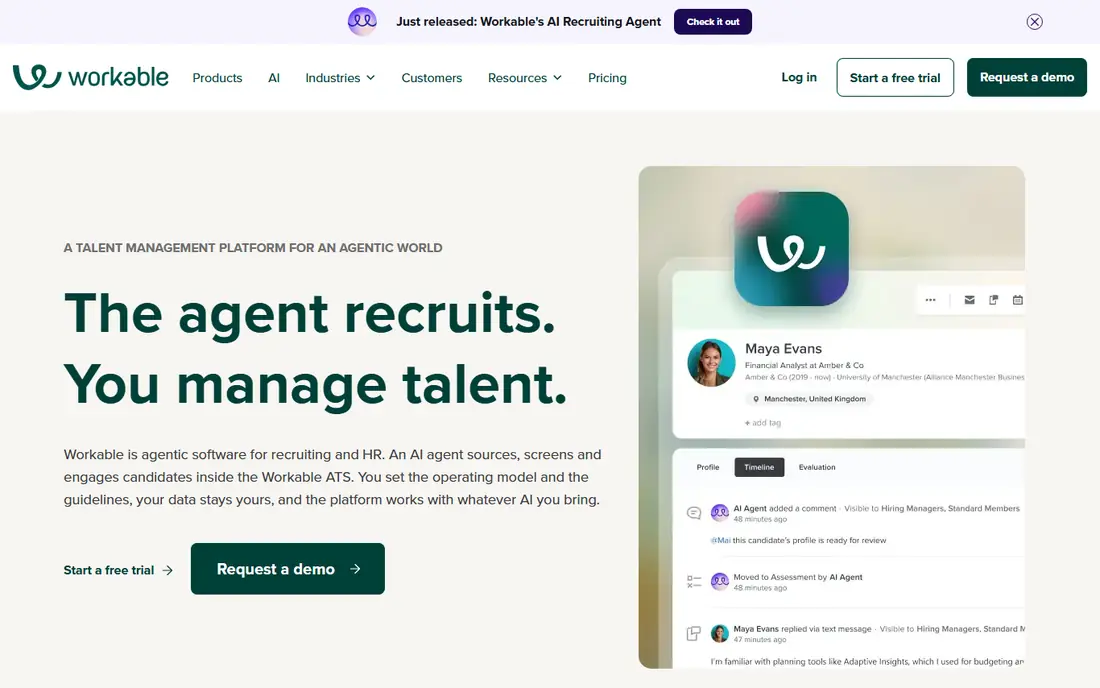
Workable is our pick for many small teams because it covers the full hiring workflow in one tool. You can post to job boards, collect applications, move candidates through stages, schedule interviews and send offers. Optional HR features can be added, which suits firms that want recruiting and basic HR in one place. Published pricing for small headcount bands makes it easier to budget than quote-only rivals.
The catch is add-ons. Texting, video interviews and assessments cost extra on the entry plan, so add those to the price if you need them. Price also rises with total headcount, even if hiring volume is low. For a team hiring a few roles a year with a clear budget, Workable is a strong starting point.
- Published pricing for small headcount bands
- Job posting to many boards
- AI and assessment add-ons
- Texting, video and assessments are add-ons on lower plans
- Price rises with headcount
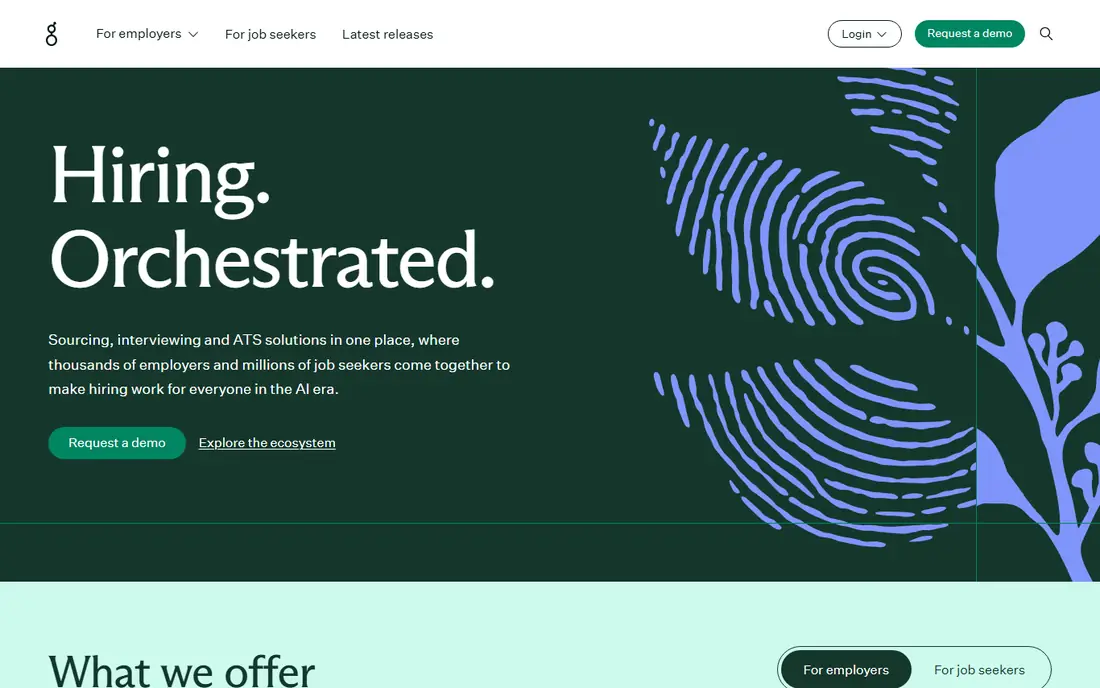
Greenhouse suits mid-size and larger teams that want consistent, fair hiring. Interview plans and scorecards help every interviewer ask the same core questions and record feedback in the same format. That structure improves comparison between candidates and gives managers a clearer record of why a hire was made. Reporting and a large integration library support teams that hire at scale.
Greenhouse is priced by quote, so small firms cannot see a simple monthly rate on the site. It is also more system than a team hiring one role a year needs. For a growing company that wants structured interviews and governance across many hiring managers, Greenhouse is a leading choice.
- Structured interview plans and scorecards
- Strong reporting
- Large integration library
- Pricing by quote
- More system than a very small team needs
Lever combines an applicant tracking system with a recruiting CRM, so teams can manage both active applicants and future candidates they want to nurture. Sourcing tools, talent pools and analytics help recruiters build pipelines for hard-to-fill roles, not just react to applications. That CRM focus suits firms that hire repeatedly for similar roles.
Pricing is by quote, and the full value shows most for teams with dedicated recruiters. Smaller teams may find a simpler ATS enough. For a team that sources proactively and wants one system for applicants and pipeline candidates, Lever is worth a demo.
- ATS plus recruiting CRM
- Sourcing and nurture tools
- Analytics for hiring teams
- Pricing by quote
- Implementation needs planning for larger teams
Ashby suits startups and growing firms that want hiring analytics without spreadsheets. It combines ATS, CRM, sourcing and scheduling, with reports that show pipeline health, time to hire and interviewer load. Scheduling automation reduces back-and-forth emails, which helps remote teams across time zones.
Pricing is published in bands for smaller companies, but moves to quote for larger firms, so check the current bands on the vendor site. Some advanced features also sit on higher plans. For a data-driven hiring team that wants one system for recruiting and reporting, Ashby is a strong contender.
- Strong analytics and reporting
- Scheduling automation
- ATS, CRM and sourcing in one system
- Pricing moves to quote above certain company sizes
- Advanced features need higher plans
JazzHR is built for small businesses that need a clear ATS without enterprise complexity. Teams can post jobs, collect applications, move candidates through stages and collaborate on feedback. The interface is straightforward, which helps hiring managers who do not recruit full time.
JazzHR is less deep on analytics and CRM than larger platforms, so firms that need detailed reporting may outgrow it. For a small business hiring a few roles at a time, JazzHR offers a practical balance of price and function. Check the current plan prices and trial terms on the vendor site.
- Simple ATS for small businesses
- Job posting and candidate stages
- Affordable entry plans
- Less deep analytics than Ashby or Greenhouse
- Add-ons for some features
Breezy HR suits small teams on a tight budget, because it offers a free plan for a single open job and flat pricing for unlimited users on paid plans. The drag and drop pipeline is easy to use, and teams can post jobs, review candidates and schedule interviews without a complex setup. That simplicity helps firms where every manager needs access.
The free plan is limited to one job, so firms hiring several roles at once will need a paid plan. Advanced features such as automation and reporting also sit on higher tiers. For a small team hiring one role at a time, Breezy HR is a low cost way to move off spreadsheets.
- Free plan for one open job
- Unlimited users on some plans
- Simple drag and drop pipeline
- Free plan is limited
- Advanced features need paid plans
BambooHR is not only a hiring tool. It is an HR system that includes applicant tracking, onboarding, eSignatures and employee records. That combination suits growing US firms that want one system from job posting to new hire paperwork and ongoing HR. Hiring managers can move a candidate to employee without re-entering data.
The trade-off is price structure. Hiring sits inside a wider HR subscription, so firms that only need an ATS may pay for HR features they do not use. Payroll and benefits pricing is by quote. For a firm that wants hiring plus HR in one place, BambooHR is a strong choice.
- Applicant tracking plus HR, onboarding and eSignatures
- Employee records in one system
- Many integrations
- Hiring is part of a wider HR price
- Payroll and benefits pricing is by quote
SmartRecruiters suits larger enterprises that hire across countries and need a system that can handle high volume, many hiring managers and complex workflows. Its marketplace offers integrations for sourcing, assessments, background checks and other hiring tools. Global hiring support and compliance features help firms with teams in several regions.
Small firms will likely find SmartRecruiters more system and cost than needed, and pricing is by quote. For an enterprise team that needs scale, governance and a broad integration set, SmartRecruiters belongs on the shortlist alongside Greenhouse and Lever.
- Enterprise ATS with marketplace integrations
- Global hiring support
- Strong compliance and workflow tools
- Pricing by quote and enterprise focus
- Too much system for small firms
How we picked these
We compared official feature pages, pricing pages and public product descriptions for hiring platforms that serve US employers. We looked for tools that post jobs, track applicants, schedule interviews and support offers, with extra credit for CRM, analytics and remote hiring features. We included small team, mid-market and enterprise tools, and we noted where pricing is by quote. We did not claim hands-on testing, and where a vendor does not publish a simple price, we wrote See website.
What to check before you buy
Start with hiring volume and team size. A firm hiring two roles a year needs a simple ATS, while a firm hiring fifty roles needs structured interviews, analytics and scheduling automation. Next, check job board reach and candidate experience. Apply for a test job yourself, and note how long the form takes and whether mobile apply works well. A hard application form will lose good candidates.
Also check interview and offer workflows. Can hiring managers leave scorecard feedback easily, schedule without email chains, and send offers with eSignatures. Check integrations with your HR system, calendar, email and background check provider. Finally, compare total price for your seats or headcount, including add-ons for texting, video and assessments. Ask for a written quote that lists those items.
Hiring for remote teams
Remote hiring needs extra care on scheduling, time zones and interview fairness. Choose a tool that shows interviewer availability across zones, records structured feedback, and keeps candidate messages in one thread. Use video interview add-ons where they help, but keep the process human: a clear timeline, prompt updates and a named contact improve the candidate experience more than extra automation.
Frequently asked questions
What hiring software is best?
The best hiring software depends on team size and hiring volume. Workable fits small teams, Greenhouse fits structured mid-market hiring, and SmartRecruiters fits enterprise hiring. Start with how many roles you hire each year, then compare price and features.
What are the best hiring software platforms for remote teams?
Workable, Greenhouse, Lever and Ashby all support remote hiring with scheduling, video interview options and structured feedback. Ashby and Greenhouse are strong on analytics and scheduling, while Workable is simpler for small remote teams.
What is the best recruiting software for remote teams?
For remote teams, choose a tool with good scheduling, clear candidate communication and structured interview feedback. Greenhouse and Ashby lead on structure and reporting, while Breezy HR and JazzHR suit smaller remote teams on a budget.
What are the best apps for recruiters?
Recruiters often use Lever for CRM and sourcing, Ashby for analytics, and Workable or Greenhouse for day to day applicant tracking. The best app depends on whether the recruiter sources proactively or mainly manages inbound applications.
What are the best hiring platforms for small businesses?
Small businesses often do best with Workable, JazzHR or Breezy HR, because those tools offer clear pricing, simple pipelines and trials or free plans. BambooHR is a good choice if the firm also wants HR and onboarding in the same system.
What is the best hiring platform for enterprise hiring?
Enterprise teams often shortlist Greenhouse, Lever and SmartRecruiters for scale, governance, integrations and reporting. Compare implementation time, support and total contract cost, and run a pilot with one department before rolling out company wide.
Sources we checked (8)

Online Jobs is an independent blog about careers, online work, learning new skills and the tools that help people earn. More about us.
Keep reading
All posts
n8n Alternatives
n8n alternatives compared for 2026, with Zapier, Make, Activepieces, and more, covering visual builders, code steps, self-hosting, and pricing models.

ZoomInfo Alternatives
The best ZoomInfo alternatives in 2026, compared on price, free plans, data coverage, and which tool fits small teams or large sales teams best in detail.
Zoom Alternatives for Webinars
Compare Zoom alternatives for webinars in 2026, from browser-based rooms to enterprise events, with prices, attendee limits, features and honest trade-offs.