Best GRC Software Platforms in 2026: 8 Platforms Compared

How we put this together: we compare official feature and pricing pages, app store listings, privacy policies and public user reviews. Prices change, so check the provider's site before you pay.
Key takeaways
- Vanta and Drata suit smaller teams chasing a first SOC 2 or ISO 27001 certificate, while AuditBoard and ServiceNow suit larger programs with internal audit work.
- LogicGate and Hyperproof sit in the middle, with flexible workflows for teams that run several frameworks at once.
- Most GRC pricing is quoted, so ask every vendor for the same scope, including frameworks, users and add-ons, before you compare totals.
- A platform only helps if owners update controls and evidence on time, so pick the tool your team will actually maintain.
Quick comparison
| Name | Who it suits | Starting price | Free option | |
|---|---|---|---|---|
 Vanta | Startups chasing SOC 2 fast | See website | No | Visit |
 Drata | Automated compliance monitoring | See website | No | Visit |
 LogicGate | Flexible risk workflows | See website | No | Visit |
 AuditBoard | Internal audit and SOX programs | See website | No | Visit |
 Secureframe | Guided first-time compliance | See website | No | Visit |
 Hyperproof | Mid-market multi-framework programs | See website | No | Visit |
 OneTrust | Privacy-led governance programs | See website | No | Visit |
 ServiceNow GRC | Large enterprises on ServiceNow | See website | No | Visit |
The best GRC software platforms
Governance, risk and compliance software replaces scattered spreadsheets with one place for controls, risks, evidence, audits and issues. The best choice depends less on the longest feature list and more on your size, your frameworks and who will run the program day to day. We compared official feature pages, pricing pages and public product documentation for the platforms below.
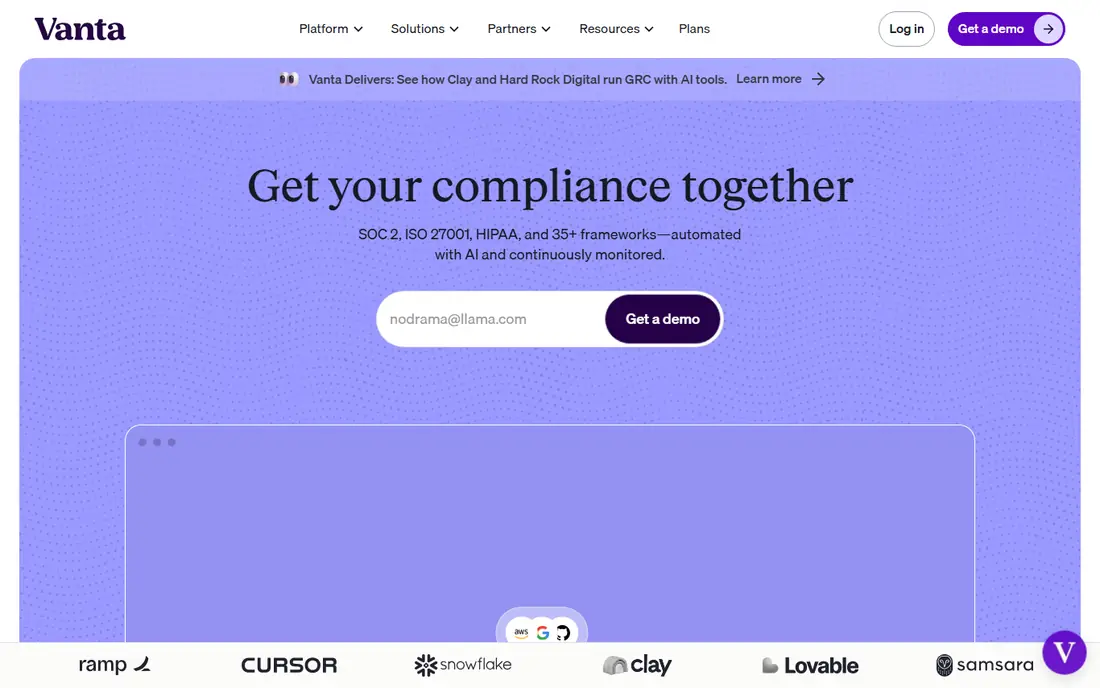
Vanta is built around automated compliance. It connects to cloud services, identity tools and HR systems, pulls evidence on a schedule and flags controls that drift out of place. That automation is the main reason smaller SaaS teams pick it for a first SOC 2, ISO 27001 or HIPAA program. The platform also includes policy templates, task tracking and a customer-facing trust center, which helps when buyers ask for security documents during a sale.
The catch is cost clarity. Vanta does not publish a simple price list, so a quote depends on headcount, frameworks and the modules you add. Teams should confirm what is included in the base quote, what counts as an add-on and how renewal pricing works. Vanta also works best when someone owns the program. Automation reduces manual collection, but it does not remove the need to fix failed controls and answer auditor questions.
- Broad integration library
- Automated evidence collection
- Trust center for sharing security posture with customers
- Pricing is quoted rather than published
- Costs can rise as frameworks and add-ons stack up
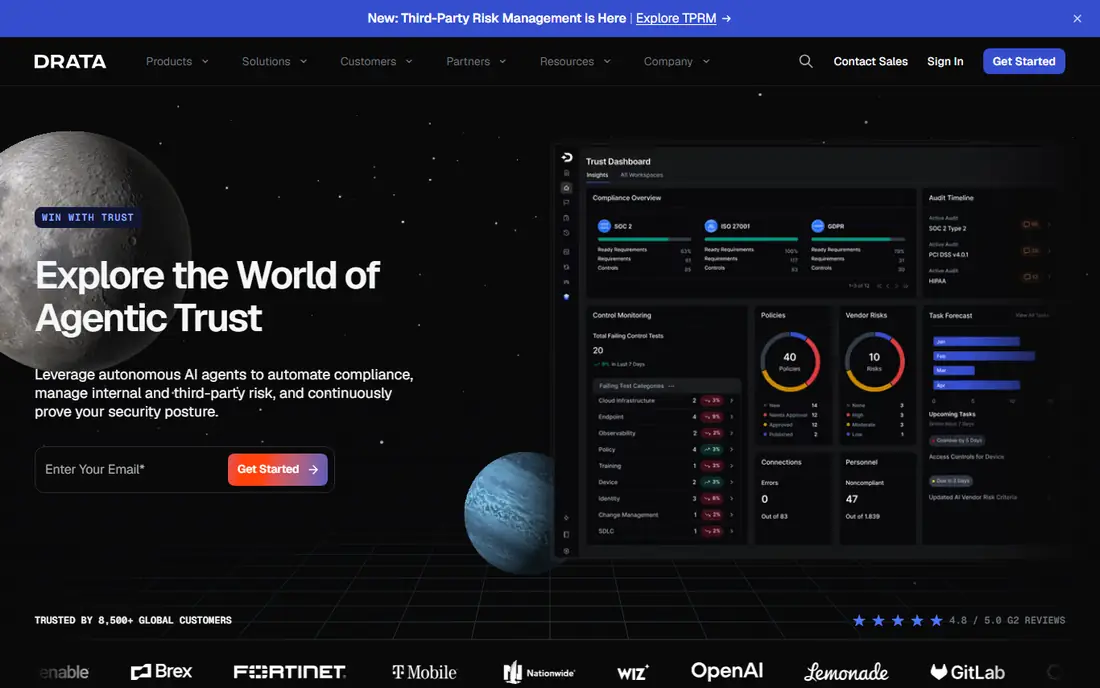
Drata takes a similar automation-first approach, with continuous monitoring of controls across common frameworks such as SOC 2, ISO 27001, HIPAA and PCI DSS. Its dashboard shows control status in one view, and evidence tasks are assigned to owners with due dates. For teams without a dedicated compliance lead, that structure makes the work easier to follow than a folder of documents.
Drata also puts effort into audit preparation, with evidence organization and auditor access built into the workflow. The trade-off is the same as with most vendors in this space. Final pricing depends on company size and scope, so two companies can receive quite different quotes for similar-looking plans. Ask for a written breakdown by framework and module, and test how long evidence collection takes on your own systems during a demo.
- Continuous control monitoring
- Wide framework library
- Clear audit preparation workflow
- Pricing is quoted
- Some advanced features sit on higher tiers
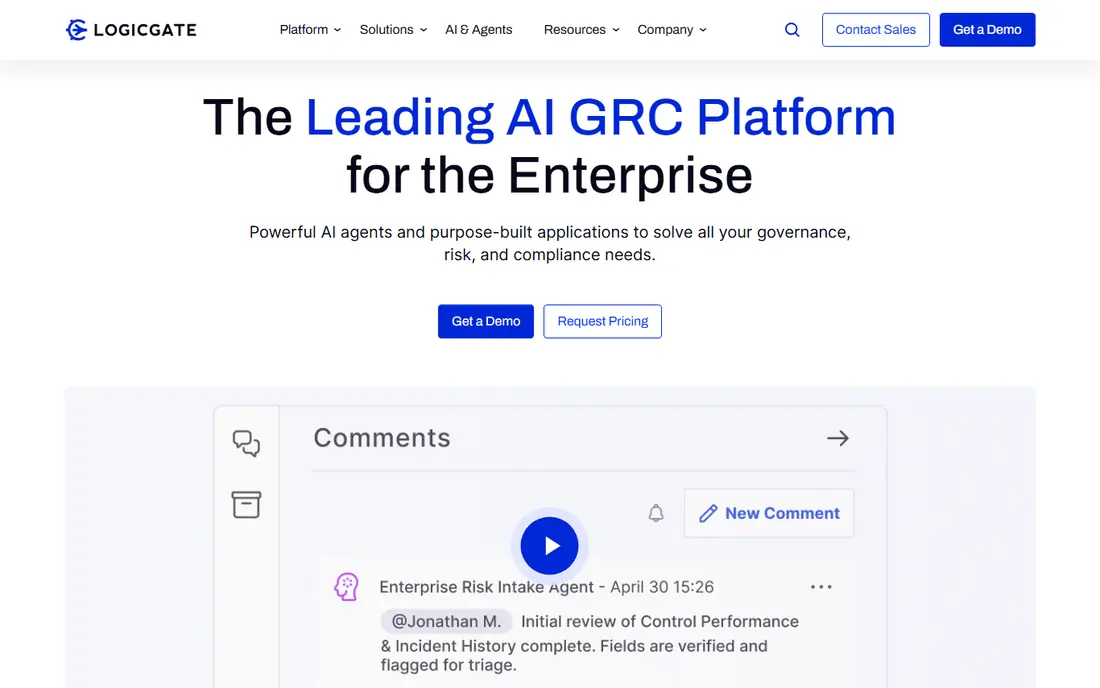
LogicGate is less of a fixed compliance checklist and more of a toolkit for building governance, risk and compliance processes. Teams can design risk assessments, control testing workflows, incident processes and third-party reviews to match how they already work. That flexibility suits organizations that need more than a standard SOC 2 template, including companies with operational risk, vendor risk or internal control programs that do not fit a single framework.
Flexibility brings a planning cost. A team that buys LogicGate without a clear process design can spend weeks deciding on fields, stages and approvals. It works best when risk owners are involved early and the first use case is narrow, such as a risk register plus control testing, before the platform expands to other areas. Pricing is quoted, so scope the number of users and workflows before signing.
- Highly configurable workflows
- Strong risk register and assessment tools
- No-code process building
- Configuration takes time and planning
- Pricing is quoted
AuditBoard started with audit management and has grown into a wider GRC suite covering risk, compliance and controls. It is a natural fit for companies with a formal internal audit function, SOX requirements or a board that expects structured reporting. Workpapers, testing, issue tracking and remediation can live in one system, which reduces the email and spreadsheet chains that often slow an audit.
That depth comes with enterprise weight. Implementation, training and ongoing administration take more effort than a startup-focused compliance tool, and pricing reflects that scope. Smaller companies that only need SOC 2 are likely to find AuditBoard more complex and more expensive than they need. Larger companies, by contrast, may value having audit, risk and compliance connected rather than split across separate tools.
- Strong audit management and SOX controls
- Connected risk and compliance modules
- Reporting for leadership
- Enterprise pricing and implementation effort
- More than small teams need
Secureframe positions itself as a guided route to compliance for growing companies. It offers automated tests and evidence collection across frameworks such as SOC 2, ISO 27001, HIPAA and PCI DSS, plus policy templates and task guidance. Teams that are new to compliance often value the step-by-step structure, because it turns a vague goal like getting SOC 2 into a list of owned tasks.
As with Vanta and Drata, the headline quote is only part of the story. Features such as a trust center and questionnaire automation may sit on higher plans or as add-ons, so compare the full package you would actually use. Secureframe is a sensible shortlist option for a first framework, but companies that later need deep enterprise risk management may outgrow it or pair it with a broader GRC tool.
- Guided setup and training resources
- Automated evidence collection
- Questionnaire automation on higher plans
- Pricing is quoted
- Add-ons can raise the total cost
Hyperproof focuses on managing controls and proof across many frameworks without duplicating work. A single control can map to requirements in SOC 2, ISO 27001 and other standards, so evidence collected once can support several audits. That reuse matters for mid-market teams that face overlapping customer and regulatory demands and do not want to run each framework as a separate project.
The platform is practical rather than flashy, with task assignments, proof collection and audit collaboration at its core. It still needs a thoughtful setup. Teams should map their controls and frameworks before importing data, or they risk recreating spreadsheet chaos inside a new tool. Pricing is quoted, and the value case is strongest when you genuinely run two or more frameworks.
- Reusable controls across frameworks
- Clear proof and task tracking
- Good fit for several frameworks at once
- Pricing is quoted
- Setup needs a clear control map
OneTrust is best known for privacy management, including consent, data subject requests, data mapping and privacy assessments. Its wider platform also covers third-party risk, ethics and compliance workflows. That mix suits companies where privacy regulation is the main driver, such as businesses handling customer data across several regions and needing to show how data flows through vendors and systems.
The breadth is also the weakness for smaller buyers. OneTrust is a large suite, and a team that only needs SOC 2 will find simpler and cheaper options. It fits better when privacy, vendor risk and governance are all part of one program and when there is staff time to configure and maintain it. Expect a quoted price tied to modules and scale, and ask which privacy modules are included in the first year.
- Deep privacy and data governance tools
- Broad regulatory coverage
- Strong third-party risk features
- Broad suite can feel complex
- Pricing is quoted and enterprise-oriented
ServiceNow GRC is part of the wider ServiceNow platform, which already handles IT service management for many large companies. That connection is its main strength. Risk, policy, audit and third-party processes can tie into incident, change and asset workflows that IT teams already use, giving leadership one system for operational and compliance work. It also scales well for global companies with many entities and regulators.
The downside is commitment. ServiceNow GRC works best for organizations already invested in ServiceNow, with administrators who understand the platform. Implementation can take months, and licensing plus services can be a major budget line. Companies without ServiceNow should not buy it for GRC alone. Companies already on the platform, however, may find it more coherent than adding a separate enterprise GRC suite.
- Deep integration with ServiceNow workflows
- Strong policy, risk and audit modules
- Scales across large organizations
- Requires ServiceNow expertise
- Implementation can be long and costly
How we picked these
We compared official product and pricing pages, framework coverage and the typical buyer for each platform, rather than relying on vendor claims alone. We favored tools that are actively sold and supported in 2026, cover recognized frameworks or risk processes, and fit a distinct size or use case. Where pricing was not published, we wrote See website instead of repeating third-party estimates as fact. We did not claim hands-on testing, and we treated quoted pricing as a reason to get a written scope from each vendor.
What to check before you buy GRC software
Start with your frameworks and your audit calendar. List every standard you must meet in the next year, who audits it and what evidence they expect. A tool that covers SOC 2 well may not suit SOX testing, and a privacy suite may not replace an audit workpaper system. Bring that list to every demo and ask vendors to show, not just describe, how each framework is handled.
Next, test ownership and effort. Ask who collects evidence, who fixes failed controls and how much manual work remains after automation. A demo with clean sample data can hide the effort of connecting your real systems. Run a short proof of concept on one framework and one system integration, and measure how long setup and evidence review actually take.
Finally, price the full program. Confirm the base license, per-user or per-framework charges, add-ons such as trust centers or questionnaire automation, implementation services and renewal terms. Get the same scope in writing from each finalist, so the comparison is based on equal coverage rather than different quote assumptions. A cheaper first-year quote that excludes a module you need is not cheaper.
Frequently asked questions
What is GRC software?
GRC software brings governance, risk and compliance work into one system, covering policies, controls, risks, evidence, audits and issues. It replaces scattered spreadsheets and email threads with assigned tasks, due dates and a shared record for auditors. The exact modules vary, so check whether a tool covers your frameworks or mainly supports one type of program.
What is the best GRC software for a small company?
For a small SaaS company chasing a first SOC 2 or ISO 27001 certificate, Vanta, Drata or Secureframe are common starting points because they automate much of the evidence work. Larger companies with internal audit or SOX needs often look at AuditBoard or ServiceNow GRC instead. The right pick depends on your frameworks, headcount and who will run the program.
How much does GRC software cost?
Pricing varies widely and is often quoted rather than published. Startup-focused compliance tools can cost far less than enterprise GRC suites, which may also need implementation services. Always ask for a quote based on your headcount, frameworks and modules, and confirm renewal terms before you sign.
Do I need GRC software for SOC 2?
You can complete SOC 2 with spreadsheets and documents, but it takes more manual effort to collect evidence and track controls. GRC or compliance automation software reduces that manual work and gives auditors organized access to proof. It does not replace an auditor, and you still need staff to fix gaps and maintain controls.
What is the difference between GRC software and compliance automation?
Compliance automation focuses on preparing for a specific framework, often with automated evidence collection and monitoring. GRC software is broader, covering risk management, governance and audit alongside compliance. Some products do both, while others specialize in one area, so match the product to the work you actually need to do.
Sources we checked (8)

Online Jobs is an independent blog about careers, online work, learning new skills and the tools that help people earn. More about us.
Keep reading
All posts
Workday Alternatives
We compared the best workday alternatives for HR, payroll, and global hiring, from BambooHR and Gusto to Rippling, Deel, and HiBob for growing teams in 2026.
Which SaaS Tools Have the Best Customer Support
Which SaaS tools have the best customer support? Compare eight popular tools on help centres, live help, response options and overall support quality.
Top AI Helpdesk Software
Searching for top AI helpdesk software in 2026? We compared 8 AI helpdesks on automation, pricing, channels and ease of setup for small and growing teams.