Best Fulfillment Companies in 2026: 9 Companies Compared

How we put this together: we compare official feature and pricing pages, app store listings, privacy policies and public user reviews. Prices change, so check the provider's site before you pay.
Key takeaways
- ShipBob is the best all-round pick for direct-to-consumer brands that want wide warehouse coverage and strong Shopify integrations.
- ShipMonk is the best pick for subscription boxes and kitting, while Red Stag suits heavy, bulky, and high-value goods.
- Fulfillment by Amazon suits Amazon-first sellers, but it is not the cheapest or most flexible route for off-Amazon orders.
- Most providers price by quote, not by a flat rate, so compare total cost per order, including receiving, storage, pick and pack, shipping, and returns.
- Always ship test orders to yourself before committing, since packaging quality and delivery speed matter as much as price.
Quick comparison
| Name | Who it suits | Starting price | Free option | |
|---|---|---|---|---|
 ShipBob | DTC brands at scale | See website | No | Visit |
 ShipMonk | Subscription boxes and kitting | See website | No | Visit |
 Fulfillment by Amazon | Amazon-first sellers | See website | No | Visit |
 Red Stag Fulfillment | Heavy and high-value goods | See website | No | Visit |
 ShipHero | Flat-rate pricing for growing brands | See website | No | Visit |
 eFulfillment Service | First-time outsourcers | See website | No | Visit |
 Shipfusion | High-volume DTC accuracy | See website | No | Visit |
 Stord | Tech-first omnichannel brands | See website | No | Visit |
 Flexport | Importers and marketplace sellers | See website | No | Visit |
The best fulfillment companies
The best fulfillment company for your brand depends on order volume, product size, sales channels, and how much control you want over packaging. The companies below all serve US ecommerce brands, and they differ in warehouse networks, minimums, pricing style, and special strengths.
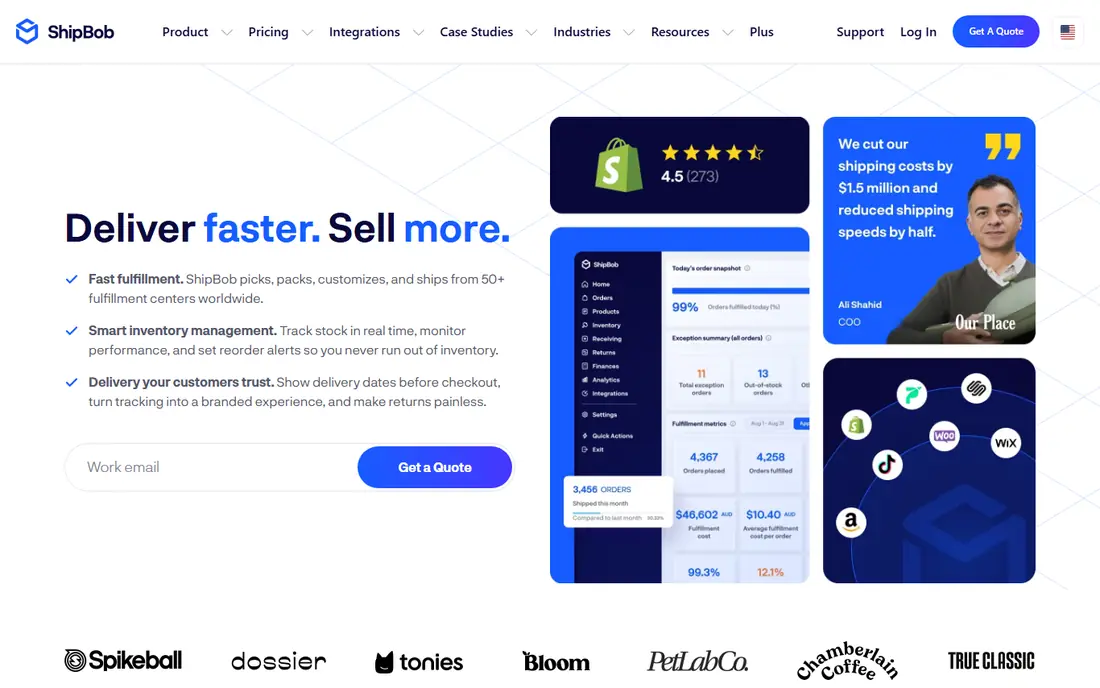
ShipBob is our pick for most direct-to-consumer brands that have outgrown shipping from a garage or a spare room. Its network spans dozens of locations in the US and abroad, which helps place inventory closer to customers and cut delivery times. Integrations with Shopify, WooCommerce, and other platforms pull orders in automatically, and its dashboard shows inventory, orders, and shipments in one place.
The catch is cost structure. ShipBob applies a monthly minimum, reported at $275 per month in recent comparisons, and onboarding can carry a fee on some plans. Receiving, storage, and fulfillment are billed separately, and shipping is quoted per order, so the total cost per order is the figure to compare, not any single fee line. Request a quote on your real order profile before judging ShipBob against a rival.
- Large network across the US and abroad
- Strong Shopify and WooCommerce integrations
- Itemized receiving, storage, and fulfillment pricing
- Monthly minimum applies
- Onboarding can cost extra on some plans
- Shipping is quoted per order, not flat
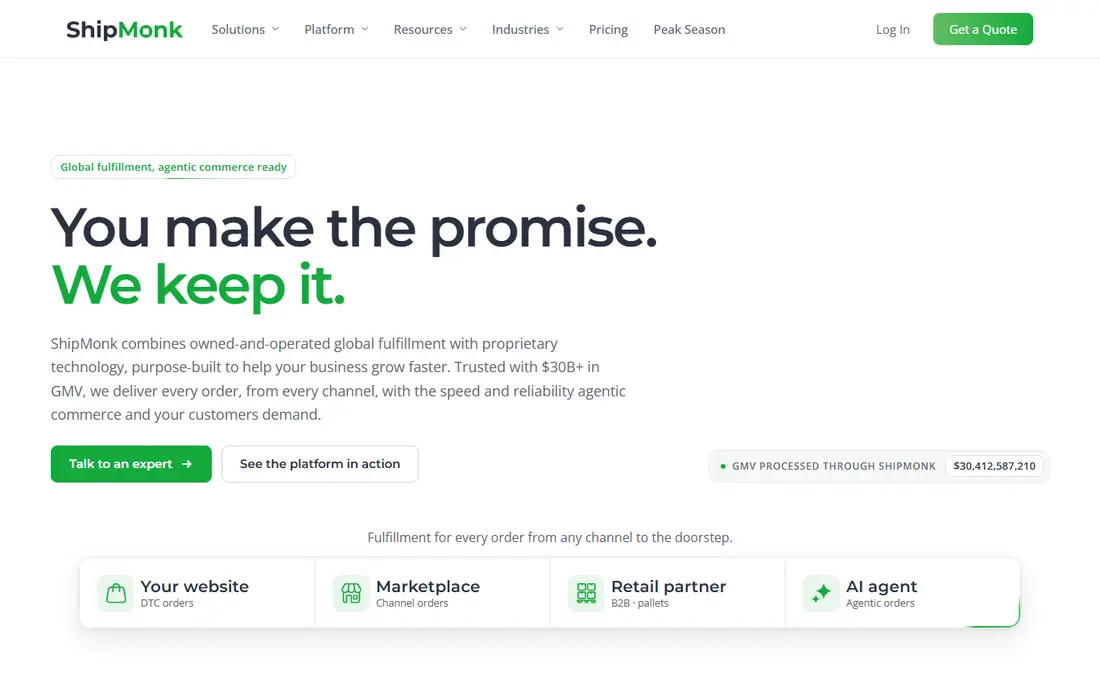
ShipMonk is the best pick for brands built around subscription boxes, bundles, and recurring shipments. Kitting, where several items are packed as one box, is a core strength, and its warehouses in the US, Canada, and Europe support brands selling across regions. The platform handles multichannel orders, so a brand selling on Shopify, Amazon, and its own site can route orders through one provider.
The trade-off is pricing complexity. ShipMonk charges across separate cost centers for picking, packing, materials, and shipping, and its monthly minimum is reported at $250 per month. That split can make quotes harder to compare at a glance, so ask for a total cost per order on your exact product mix, including materials and returns, before signing.
- Strong for subscription boxes, kitting, and bundling
- Multiple US warehouses plus Canada and Europe
- Dedicated account support at lower tiers in some plans
- Monthly minimum applies
- Fees are split across cost centers, which can feel complex
- Packaging materials cost extra
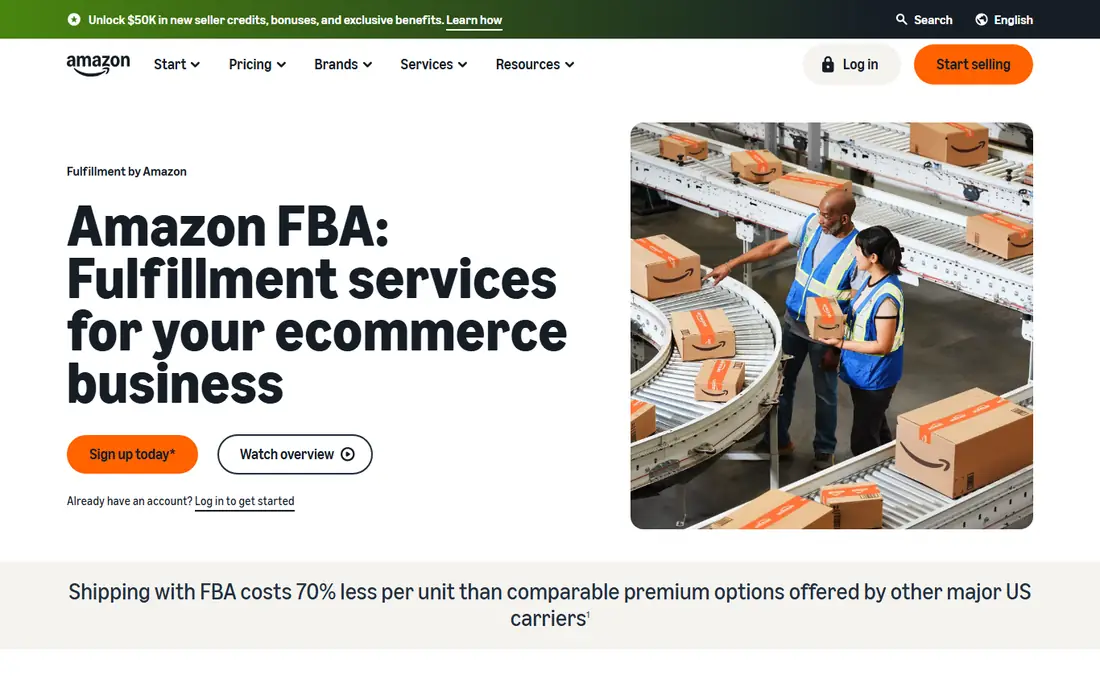
Fulfillment by Amazon, known as FBA, is the obvious pick for sellers whose main channel is Amazon. Products stored in Amazon centers gain Prime eligibility, which can lift conversion on Amazon listings, and Amazon handles picking, packing, shipping, and customer service for those orders. For an Amazon-first brand, that scale is hard to match.
The limit is flexibility. FBA packaging is Amazon-branded by default, custom inserts and brand experiences are limited, and the fee structure is built around Amazon's rules. Amazon also offers Multi-Channel Fulfillment for off-Amazon orders, but dedicated 3PLs often beat it on brand control and cost for those orders. Use FBA for Amazon volume, and compare a 3PL for everything else.
- Huge Amazon warehouse network
- Prime eligibility for Amazon orders
- Trusted delivery experience for Amazon buyers
- Amazon-branded packaging by default
- Less flexible for custom brand packaging
- Fees and rules favor Amazon orders
Red Stag Fulfillment is the specialist pick for heavy, bulky, fragile, and high-value products. Where many 3PLs cap parcel weight at 50 pounds, Red Stag handles larger and heavier goods, and it backs accuracy with a zero-shrinkage guarantee, which matters when a single lost or damaged item costs far more than a typical parcel. Its warehouses in Knoxville, Tennessee, and Salt Lake City, Utah, serve US brands from two hubs.
The catch is fit. Red Stag suits brands shipping 200 or more orders per month in recent comparisons, and its two-warehouse network offers less geographic spread than ShipBob. Light, small parcels will usually cost less elsewhere. If your products are heavy, fragile, or valuable, Red Stag deserves a quote before you pick a generalist.
- No weight limit in practice for heavy goods
- Zero-shrinkage guarantee
- Strong for bulky, fragile, and high-value items
- Order minimum of 200 or more per month in recent comparisons
- Only two US warehouses
- Higher cost per order for light goods
ShipHero appeals to brands that want pricing they can forecast. Its flat-rate approach, combined with its own warehouse management software, suits growing brands that are tired of surprise line items. The platform handles multichannel orders and gives brands visibility into inventory and shipments without a separate software purchase.
The trade-off is entry cost and scale. ShipHero's monthly minimum is reported at $500 per month, higher than ShipBob or ShipMonk, so very small brands may find it steep. Its warehouse count is also smaller than the largest networks. For a brand past the startup stage that values predictable pricing, ShipHero is worth comparing.
- Flat-rate pricing model
- Strong warehouse management software
- Good for growing multichannel brands
- Monthly minimum reported at $500 per month
- Fewer warehouses than ShipBob
- Custom needs still need a quote
eFulfillment Service is the friendliest pick for a brand outsourcing fulfillment for the first time. There is no order minimum, onboarding is straightforward, and its single warehouse in Traverse City, Michigan, keeps the operation simple to understand. For a small brand shipping a modest volume, that simplicity can matter more than a sprawling network.
The limit is geography and scale. One warehouse means longer transit times for customers far from Michigan, and very high-volume brands will outgrow the setup. If you ship a few dozen to a few hundred orders per month and want a low-risk first 3PL, eFulfillment Service is a sensible starting point. Move to a multi-warehouse provider when delivery speed becomes a conversion problem.
- No order minimum
- Single US warehouse with simple onboarding
- Reported accuracy of 99.9 percent
- One warehouse limits delivery speed for far-flung customers
- Less suited to very high volume
- Smaller network than large rivals
Shipfusion suits high-volume direct-to-consumer brands where accuracy is the deciding factor. A wrong item in a box costs a brand a return, a replacement, and a frustrated customer, so Shipfusion's reported accuracy of 99.99 percent is a meaningful selling point. Its US and Canada warehouses support brands selling across North America.
The catch is volume. Shipfusion suits brands shipping 500 or more orders per month in recent comparisons, so startups and small shops will not fit its model. Pricing is by quote only, so prepare a detailed order profile, including SKU count, average items per order, and return rate, before asking for numbers. For a brand at scale, that homework pays off.
- Reported accuracy of 99.99 percent
- Strong for high-volume DTC brands
- US and Canada warehouses
- Order minimum of 500 or more per month in recent comparisons
- Less suited to tiny brands
- Pricing by quote only
Stord is the tech-first pick for omnichannel brands that sell direct, on marketplaces, and into retail. Its platform unifies inventory and orders across channels, and its multi-node US network, plus EU and UK coverage, helps brands that sell abroad. For a brand juggling several channels and a growing SKU count, that unified view reduces manual work.
The trade-off is fit and cost. Stord suits mid-market brands more than startups, and pricing is by quote only, so small brands may find the conversation ends early. Onboarding also needs a solid handover of product data, order history, and packaging rules. If your brand is omnichannel and growing fast, Stord is worth a quote. If it is single-channel and small, start with a simpler provider.
- Tech-first platform with a multi-node US network
- Omnichannel and retail support
- EU and UK coverage as well
- Pricing by quote only
- Better suited to mid-market brands than startups
- Onboarding needs a real data handover
Flexport, which acquired Deliverr's fulfillment network, suits importers who want freight and fulfillment from one provider. A brand importing goods can move freight, clear customs, and fulfill orders through the same system, and marketplace sellers can gain fast delivery badges on some channels. All-in per-unit pricing on some plans simplifies cost math for brands that qualify.
The catch is the minimum. Flexport's minimum monthly fulfillment spend is reported at $5,000 since January 2026, which puts it out of reach for small brands. Brands that only need domestic fulfillment, without freight, will also find simpler and cheaper options elsewhere. For an importer at scale, Flexport's combined service is a real advantage.
- Freight forwarding plus fulfillment under one provider
- Marketplace delivery badges
- All-in per-unit pricing in some plans
- Minimum monthly fulfillment spend reported at $5,000 since January 2026
- Complex for brands that only need domestic fulfillment
How we picked these
We compared warehouse networks, order minimums, reported accuracy, pricing style, and channel strengths, and we checked recent 2026 fulfillment comparisons that pull those same figures together. We favored providers that are current, serve US ecommerce brands, and publish enough detail to compare fairly. Where pricing is by quote only, we say so and list the minimum where it is reported, rather than inventing a flat rate that would not hold for every brand.
How to choose a fulfillment company
Start with your numbers, not a brand ranking. List monthly orders, average items per order, SKU count, product dimensions and weight, sales channels, and return rate. Send that same profile to two or three providers and compare total cost per order, including receiving, storage, pick and pack, materials, shipping, and returns.
Match the provider to your product
Light, small parcels suit ShipBob, ShipMonk, or ShipHero. Heavy, bulky, or high-value goods suit Red Stag. Subscription boxes suit ShipMonk. Amazon-first sales suit FBA. A mismatch here costs more than any fee difference, since the wrong provider will struggle with your product type from day one.
Test before you commit
Ship test orders to yourself and to friends in different regions, and check packaging quality, delivery speed, and accuracy. Ask for references from brands in your category and volume range. Read the contract for minimums, termination terms, and who pays for errors, since those clauses matter more than a sales call suggests.
Plan for growth and returns
Check how storage fees change with inventory levels, how peak season is handled, and how returns are processed and restocked. A provider that is cheap at 100 orders per month can become expensive at 1,000, and a provider that handles returns poorly will cost you customers. Ask both questions before signing, not after peak season arrives.
Frequently asked questions
What is the best ecommerce fulfillment company?
ShipBob is the best all-round pick for most direct-to-consumer brands, thanks to its large network and strong platform integrations. ShipMonk is best for subscription boxes, Red Stag is best for heavy goods, and Fulfillment by Amazon is best for Amazon-first sellers. The best company depends on your volume, product type, and channels.
How much does ecommerce fulfillment cost?
Most providers price by quote, based on receiving, storage, pick and pack, materials, shipping, and returns. Typical total costs for small parcels often land in the $5 to $9 per order range before shipping in some comparisons, but your product size, order profile, and volume change that figure a lot. Get quotes on your real numbers for an accurate total.
What is the best fulfillment company for small businesses?
eFulfillment Service suits first-time outsourcers with no order minimum, while ShipBob and ShipMonk suit small brands ready for a monthly minimum of around $250 to $275 per month. Start with a provider that fits your current volume, and move to a larger network when delivery speed or volume demands it.
Is ShipBob or ShipMonk better?
ShipBob is better for general direct-to-consumer brands that want wide warehouse coverage and simple platform integrations. ShipMonk is better for subscription boxes, kitting, and bundling, where its packing strengths matter most. Compare total cost per order on your product mix, since their fee structures split costs differently.
Should I use Fulfillment by Amazon or a 3PL?
Use Fulfillment by Amazon if Amazon is your main channel and Prime eligibility matters most. Use a 3PL such as ShipBob or ShipMonk if you want brand-controlled packaging, flexible off-Amazon fulfillment, and a provider that is not tied to Amazon's rules. Many brands use both: FBA for Amazon orders and a 3PL for everything else.
What should I ask before signing with a 3PL?
Ask for total cost per order on your exact profile, including receiving, storage, pick and pack, materials, shipping, and returns. Ask about minimums, contract length, termination terms, error responsibility, peak-season handling, and returns processing. Ship test orders before committing, and get references from brands like yours.
Sources we checked (9)

Online Jobs is an independent blog about careers, online work, learning new skills and the tools that help people earn. More about us.
Keep reading
All posts
n8n Alternatives
n8n alternatives compared for 2026, with Zapier, Make, Activepieces, and more, covering visual builders, code steps, self-hosting, and pricing models.

ZoomInfo Alternatives
The best ZoomInfo alternatives in 2026, compared on price, free plans, data coverage, and which tool fits small teams or large sales teams best in detail.
Zoom Alternatives for Webinars
Compare Zoom alternatives for webinars in 2026, from browser-based rooms to enterprise events, with prices, attendee limits, features and honest trade-offs.