Best Freelancing Platforms for Beginners in 2026: 9 Platforms Compared

How we put this together: we compare official feature and pricing pages, app store listings, privacy policies and public user reviews. Prices change, so check the provider's site before you pay.
Key takeaways
- Upwork now charges a variable freelancer fee of 0 to 15 percent per contract, typically around 10 percent, plus Connects for proposals.
- Fiverr charges a flat 20 percent commission, the highest here, but clients find you through gig listings instead of bidding.
- Freelancer.com charges 10 percent or 5 dollars minimum per project, and Contra charges no percentage commission on earnings.
- Beginners should start on one or two platforms, not five, and pick based on whether their work sells better as proposals or as packaged gigs.
- Toptal charges freelancers nothing but accepts only a small share of applicants, so treat it as a later goal, not a first step.
Quick comparison
| Name | Who it suits | Starting price | Free option | |
|---|---|---|---|---|
 Upwork | Proposal-based work | Variable 0-15% fee | Yes | Visit |
 Fiverr | Packaged gigs | 20% commission | Yes | Visit |
 Freelancer.com | Bidding on projects | 10% commission | Yes | Visit |
 PeoplePerHour | UK and European clients | Tiered fees | Yes | Visit |
 Guru | Long-term clients | 5-9% fees | Yes | Visit |
 Contra | Zero-commission portfolio | See website | Yes | Visit |
 Toptal | Elite later goal | Free for freelancers | No | Visit |
 99designs | Design contests | 15% commission | Yes | Visit |
 TaskRabbit | Local task work | See website | Yes | Visit |
The best freelancing platforms for beginners
Starting freelance work is mostly about getting the first few clients, and platforms help by bringing buyers to you. The options below differ on fees, how clients find you, and how hard it is to get started. We compared official fee pages, feature lists, and platform documentation to sort them for someone starting from zero.
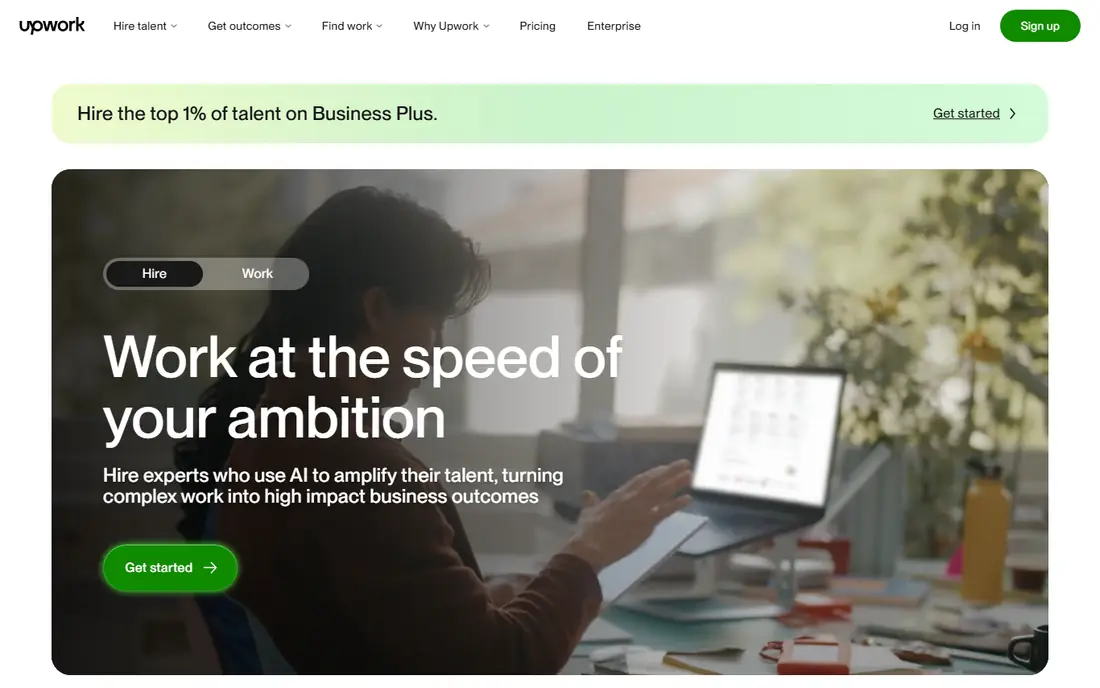
Upwork is the biggest freelance marketplace and our pick for most beginners. You build a profile, browse posted jobs, and send proposals using Connects, which cost about 15 cents each. Since May 2025, Upwork charges a variable freelancer fee of 0 to 15 percent per contract, disclosed before you accept and locked for that contract, with most freelancers reporting rates around 10 percent. Escrow protection means clients fund milestones before work starts.
The competition is the honest catch. New profiles compete with established freelancers on every popular job, and proposal costs add up if you apply widely. Start with a narrow niche, a complete profile, and a few small jobs to earn reviews, and Upwork becomes steadily easier as your history grows.
- Largest freelance marketplace
- Escrow payment protection
- Many categories from writing to development
- Variable fee disclosed per contract
- Connects cost money for proposals
- Competition is intense
Fiverr flips the model. Instead of bidding, you create gigs, which are fixed service packages with clear prices and delivery times, and clients come to you through search. That removes proposal costs and cold outreach entirely, which suits freelancers with a service that packages well, like logo design, voiceover, or resume writing. The commission is a flat 20 percent of every order.
The fee is the highest on this list, and crowded categories push prices down, so a new seller needs a sharp gig title, good samples, and competitive opening prices. Once reviews accumulate, Fiverr can deliver steady inbound work with far less selling effort than proposal platforms.
- Clients find you through search
- No proposal costs
- Gig packages make pricing simple
- Flat 20 percent commission
- Price pressure in crowded categories
- 14-day payment clearance
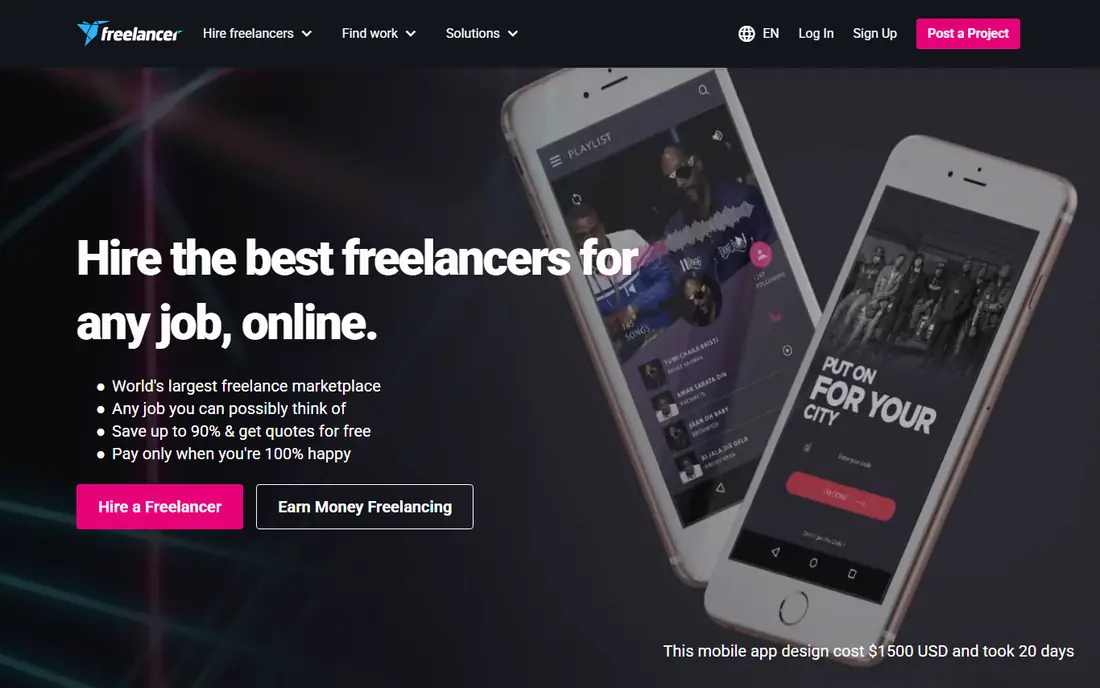
Freelancer.com runs on bidding, like Upwork, with a very large volume of posted projects. Freelancers pay 10 percent commission or a 5 dollar minimum per project, whichever is greater, and clients pay a separate fee. Contests let designers, writers, and namers compete for prizes, which can build a portfolio even before winning paid work.
Quality varies more here than on Upwork. Many projects carry low budgets, and membership plans are pushed hard. Beginners who bid selectively on well-described projects with realistic budgets can still find solid early work, especially in writing, data entry, and design.
- Huge project volume
- Contests for designers and writers
- Milestone payments
- 10 percent or 5 dollar minimum fee
- Many low-budget projects
- Membership upsells
PeoplePerHour is popular with UK and European clients, which makes it useful for freelancers targeting those markets or working in European time zones. You can offer hourly services or fixed-price offers, and the platform matches proposals to posted projects. Fees are tiered, starting higher on early earnings with a client and falling as the relationship grows.
The tiered structure takes care to understand, and US buyers are fewer than on Upwork or Fiverr. For a beginner in Europe, or one happy to work UK hours, PeoplePerHour is a strong second platform alongside a global one.
- Strong UK and European client base
- Hourly and project work
- AI-matched proposals
- Tiered fee structure is complex
- Smaller US presence
Guru charges freelancers 5 to 9 percent depending on membership, which undercuts both Upwork and Fiverr for many sellers. Its workrooms organize tasks, files, milestones, and messages for each project, and the platform encourages longer client relationships rather than one-off gigs. Categories cover programming, design, writing, and business services.
The marketplace is smaller, so job volume is lower, and the interface shows its age next to newer rivals. For a beginner who wants lower fees and steady clients rather than maximum job volume, Guru is a worthwhile alternative to the big two.
- Lower fees than Fiverr
- Workrooms for managing projects
- Long-term client relationships
- Smaller marketplace than Upwork
- Interface feels dated
Contra takes a different approach: it charges no percentage commission on freelancer earnings, instead offering paid plans for extra features. Profiles are portfolio-first, which suits designers, writers, videographers, and other creatives whose work sells visually. Clients can hire directly from a portfolio, and the platform handles contracts and payments.
The client base is smaller than Upwork or Fiverr, so inbound work is less certain, and some features need a paid plan. For a creative beginner building a public portfolio anyway, Contra is a smart free home base that can also bring in clients without a commission cut.
- No percentage commission on earnings
- Portfolio-first profiles
- Good for creatives
- Smaller client base
- Some features require a paid plan
Toptal charges freelancers nothing, which sounds ideal until you meet the screening. Applicants pass language, skill, and live exercise stages, and only a small share are accepted. Clients pay premium rates for that vetting, and accepted freelancers work on substantial projects in development, design, and finance.
We include Toptal as a goal, not a starting point. A beginner should build skills and a track record on Upwork or Contra first, then apply once they can pass a demanding screen. Treating Toptal as day-one platform only leads to a rejected application and lost time.
- No freelancer commission
- High-paying clients
- Rigorous vetting signals quality
- Very selective screening
- Not a beginner platform
- Long application process
99designs serves designers through contests and direct projects. Clients post a brief, designers submit concepts, and the winner gets paid, with the platform taking 15 percent on paid work through contests. For a new designer, contests offer real briefs and a fast way to build a portfolio, even before winning regularly.
The catch is unpaid work. Most contest entries earn nothing, so beginners should treat contests as portfolio building with a strict time limit, then move to direct projects as soon as clients start inviting them. For design beginners, it remains one of the best places to practice on real briefs.
- Contest model builds a portfolio fast
- Design-only focus
- Clear briefs from clients
- 15 percent commission on paid work
- Unpaid contest entries
- Crowded contests
TaskRabbit is the odd one out here because the work is local and physical: furniture assembly, moving help, cleaning, mounting, and errands. Taskers set rates and schedules, choose tasks in supported cities, and get paid through the platform. For a beginner who wants income this week without building an online portfolio, it is the fastest path to a first paid job.
It only works in supported cities, and the work is physical rather than digital, so it does not build an online freelancing career. Still, many freelancers use TaskRabbit for cash flow while building an online practice, and that combination is a practical starting strategy.
- Local, in-person task work
- Quick first jobs
- Flexible scheduling
- Limited to supported cities
- Service fee on tasks
- Physical work only
How we picked these
We compared official fee pages, feature lists, and platform documentation for marketplaces that accept new freelancers today. Fees are the standard published rates from each platform's own site, and where fees vary by contract or membership we say so rather than publishing a single number. We favored platforms with real buyer volume, payment protection, and a realistic path to a first job, while flagging selective platforms honestly.
What to check before you choose
Start with how your service sells. Packaged services like logos or voiceovers fit Fiverr, proposal-based services like development or consulting fit Upwork, and local services fit TaskRabbit. Picking the wrong model costs more time than picking the wrong fee rate.
Price for the fee, not around it
A 20 percent commission means a 100 dollar gig pays 80 dollars, while a 10 percent fee pays 90 dollars. Set your prices from what you need to earn after fees, not from what competitors charge before them. Raising prices slightly beats working twice as many hours.
Build the profile before applying widely
A complete profile with samples, a clear headline, and a focused niche beats dozens of generic proposals. Spend your first week on samples and profile copy, then apply to a small number of well-matched jobs. Early reviews matter more than early volume.
Protect yourself on every job
Use platform escrow or milestone payments, keep communication inside the platform until trust is established, and never start large work without funded milestones. Payment protection is the main reason to use a platform at all, so do not give it away by moving off-platform too early.
Frequently asked questions
What is the best freelancing platform for beginners?
Upwork is our pick for most beginners because of its size, escrow protection, and range of categories. Fiverr suits beginners with a service that packages neatly into gigs, while Contra suits creatives who want no commission. Start on one or two platforms and build reviews before spreading out.
What are the best freelancing platforms for beginners with no experience?
Fiverr and TaskRabbit offer the fastest first jobs, since Fiverr needs only a good gig listing and TaskRabbit needs only local availability. Upwork and Freelancer.com also accept new profiles, but expect to start with small jobs to earn reviews. A portfolio on Contra helps everywhere, since clients check samples before hiring.
How much do freelancing platforms charge?
Upwork charges a variable 0 to 15 percent per contract, typically around 10 percent. Fiverr charges a flat 20 percent, Freelancer.com charges 10 percent or 5 dollars minimum, Guru charges 5 to 9 percent, and Contra charges no percentage commission. Always check the fee page, since platforms change structures regularly.
Can beginners really earn on Upwork?
Yes, but the first jobs are the hardest. New profiles should target small, well-described jobs in a narrow niche, price competitively, and write proposals that address the client's actual problem. Reviews from those first jobs make later proposals far more effective, and most successful Upwork freelancers started exactly this way.
Is Fiverr or Upwork better for beginners?
Fiverr is better if your service packages into a fixed gig and you prefer inbound clients, while Upwork is better if you want to pitch varied projects and build long-term clients. Many beginners use both: Fiverr for packaged work and Upwork for proposal-based projects. Fees differ, with Fiverr at 20 percent and Upwork typically around 10 percent.
Do I need experience to join Toptal?
Toptal accepts only a small share of applicants after a rigorous screening process covering language, skills, and live exercises. Beginners should build experience on other platforms first and treat Toptal as a later goal. Applying too early usually ends in rejection, though you can reapply after gaining experience.
Sources we checked (9)

Online Jobs is an independent blog about careers, online work, learning new skills and the tools that help people earn. More about us.
Keep reading
All posts
Workday Alternatives
We compared the best workday alternatives for HR, payroll, and global hiring, from BambooHR and Gusto to Rippling, Deel, and HiBob for growing teams in 2026.

Which SaaS Tools Have the Best Customer Support
Which SaaS tools have the best customer support? Compare eight popular tools on help centres, live help, response options and overall support quality.
Top AI Helpdesk Software
Searching for top AI helpdesk software in 2026? We compared 8 AI helpdesks on automation, pricing, channels and ease of setup for small and growing teams.