Best Free Message App in 2026: 9 Apps Compared

How we put this together: we compare official feature and pricing pages, app store listings, privacy policies and public user reviews. Prices change, so check the provider's site before you pay.
Key takeaways
- WhatsApp is our pick for most people, because it is free, encrypted by default and already used by the people you need to reach.
- Signal is the best free message app for privacy, run by a nonprofit with minimal metadata collection and no ads.
- Telegram suits huge groups and channels, while Messenger suits anyone whose contacts already live on Facebook.
- Google Messages and iMessage are excellent free defaults on Android and Apple devices, with no extra app to install.
- The best message app is usually the one your contacts already use, so keep a mainstream app for reach and a private app for sensitive chats.
Quick comparison
| Name | Who it suits | Starting price | Free option | |
|---|---|---|---|---|
 WhatsApp | Most people | Free | Yes | Visit |
 Signal | Privacy and simplicity | Free | Yes | Visit |
 Telegram | Large groups and channels | Free | Yes | Visit |
 Messenger | Facebook contacts | Free | Yes | Visit |
 Google Messages | Android default texting | Free | Yes | Visit |
 iMessage | Apple-to-Apple chats | Free | Yes | Visit |
 Viber | International calls and chats | Free | Yes | Visit |
 Element | Open, self-hosted messaging | Free | Yes | Visit |
 Session | Messaging without a phone number | Free | Yes | Visit |
The best free message apps
A free message app has one job above all else: reaching the people you actually talk to. Encryption, group size and desktop support matter too, but they mean little if your family, friends or colleagues are on a different app. We compared official feature pages, privacy policies and app store listings, judging each app on cost, encryption, group chats, voice and video calls, desktop support and how many people already use it.
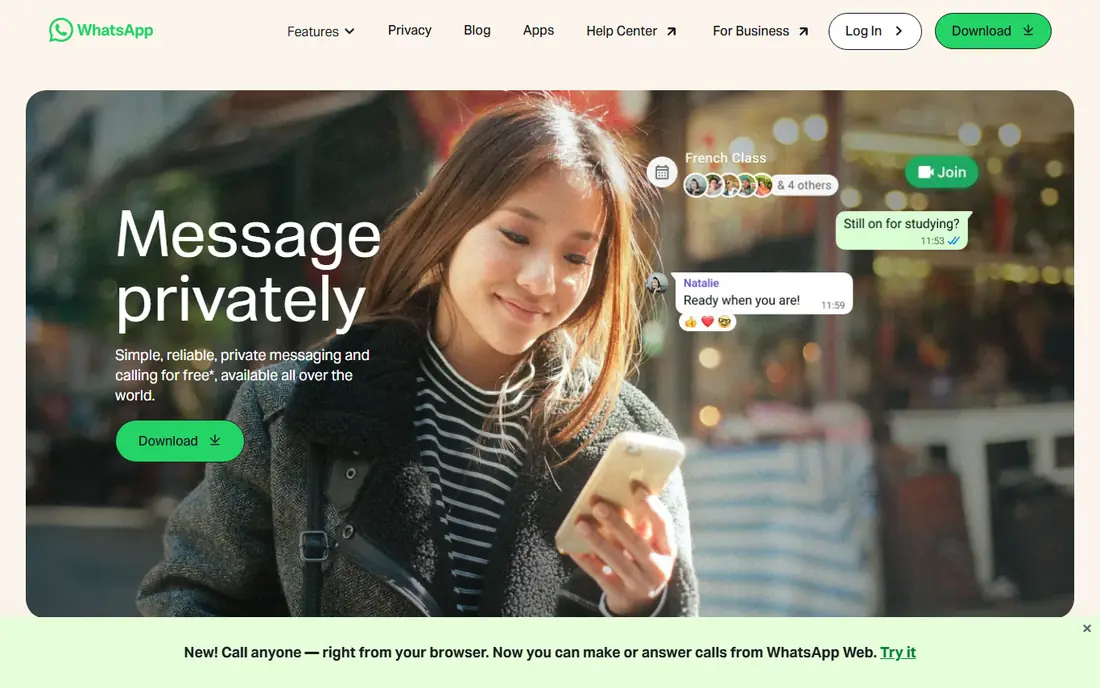
WhatsApp is our pick for most people for a practical reason: it is where your contacts already are. It is free, it encrypts messages by default, and it handles group chats, voice calls, video calls and file sharing without fuss. Desktop apps for Windows and Mac mean long conversations are easy at a keyboard.
The honest catch is ownership. WhatsApp is owned by Meta, and while message content is encrypted, metadata about who you message and when is a different matter. If that trade-off bothers you, pair WhatsApp for everyday reach with Signal for sensitive chats, which is what many privacy-conscious users already do.
- Free messages and calls worldwide
- End-to-end encryption by default
- Huge user base and desktop apps
- Owned by Meta, which collects metadata
- Needs a phone number to sign up
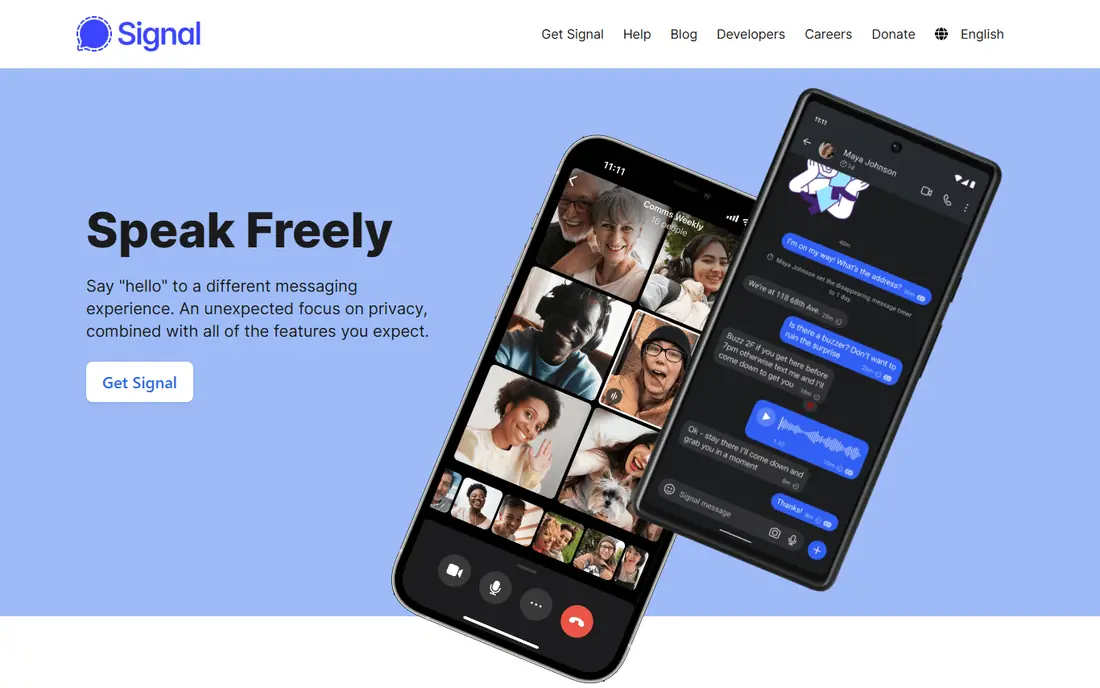
Signal is the best free message app for privacy, full stop. It encrypts messages and calls by default, its code is open source, and it is run by a nonprofit funded by donations, so there are no ads and no data to sell. It also collects far less metadata than mainstream rivals, a point it has demonstrated in legal responses.
The price of that purity is reach. Fewer of your contacts will already have Signal, and it lacks Telegram's channels and stickers culture. For one-to-one chats that matter, though, Signal is the app we would trust first, and it costs nothing to keep alongside WhatsApp.
- End-to-end encryption by default
- Open source and independently audited
- Nonprofit with no ads or tracking
- Smaller user base than WhatsApp
- Needs a phone number
- Fewer playful extras than Telegram
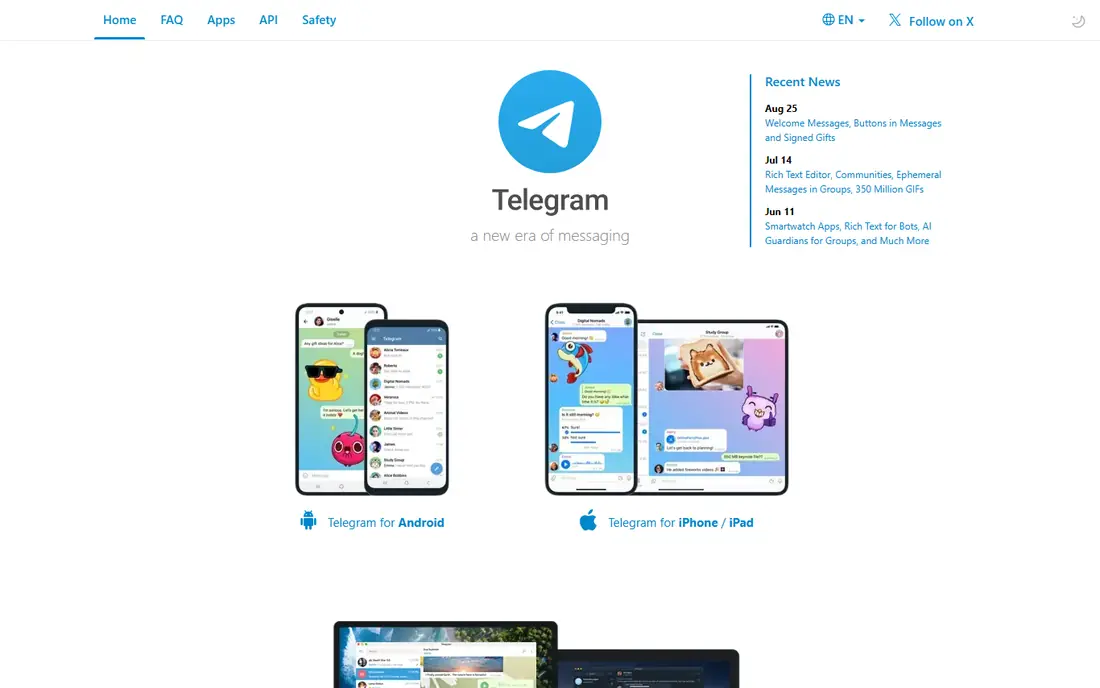
Telegram is the best free message app for large communities. Groups can hold huge numbers of members, channels broadcast to unlimited subscribers, and cloud sync means your chats appear instantly on every device you own. Media sharing is fast, and bots add everything from polls to payments.
The privacy catch is real and often missed: ordinary Telegram chats use server-side encryption, not end-to-end encryption. Only Secret Chats are end-to-end encrypted, and they must be started deliberately. If you use Telegram for community and fun, that is fine; for sensitive one-to-one chats, Signal or WhatsApp is the safer choice.
- Huge groups and public channels
- Cloud sync across many devices
- Fast media sharing and bots
- Default chats are not end-to-end encrypted
- Secret chats must be started manually per conversation
Messenger wins on convenience for Facebook users. Your contacts are already there, sign-up needs no new account, and messages, voice calls and video calls are all free. It also handles group chats, reactions and media sharing smoothly, and it works well on desktop.
Privacy is the weak point. Encryption coverage has improved over time, but it is not as simple or as complete as Signal's default, and Meta's metadata collection is extensive. For casual chats with people you already know on Facebook, Messenger is excellent; for sensitive conversations, choose a more private app.
- Free messages, calls and video chats
- Huge existing contact base through Facebook
- No phone number needed for many users
- End-to-end encryption is not the default in every chat type
- Meta collects substantial metadata
Google Messages is the default texting app on many Android phones, and for Android-to-Android chats with RCS enabled, it is genuinely good: typing indicators, read receipts, high-quality photos and encryption in supported conversations, all with nothing to install. It also pairs with a web app for desktop typing.
The limits appear at the edges. If a chat falls back to SMS, encryption disappears, and chats with iPhones depend on RCS support and carrier behaviour. It is the best free message app for Android users who mainly text other Android users, and a solid default for everyone else.
- Free and preinstalled on many Android phones
- RCS brings typing indicators, high-quality media and encryption in supported chats
- Encryption depends on both sides using RCS
- SMS fallback is unencrypted
- IPhone chats fall back to SMS or RCS with limits
iMessage is the best free message app for people whose circle is mostly on Apple devices. It is built in, it encrypts chats between Apple users end to end, and it handles groups, reactions, media and apps inside the conversation. There is nothing to install and nothing to pay.
The boundary is the platform wall. Chats with Android users lose iMessage's encryption and polish, falling back to SMS or RCS depending on setup. If your contacts mix iPhone and Android, WhatsApp is the more consistent choice; if they are mostly Apple, iMessage is already perfect.
- Free and built into every Apple device
- End-to-end encrypted between Apple users
- Rich media and group features
- Apple only
- Messages to Android phones fall back to SMS or RCS without the same encryption
Viber is a strong free message app for international contacts, especially in Eastern Europe and parts of Asia where it has a large base. Messages and calls are free, encryption is on by default, and its desktop apps make long chats easy. Group chats, channels and stickers round out a capable package.
In the US and UK, its user base is smaller than WhatsApp or Messenger, so it works best as a second app for specific contacts rather than a main one. If your family or colleagues already use Viber, though, it is a capable and private-enough everyday choice.
- Free messages and calls
- End-to-end encryption by default
- Strong in Eastern Europe and parts of Asia
- Smaller user base in the US and UK
- Some features push toward paid extras
Element is the best free message app for people who want control. It runs on Matrix, an open, decentralised protocol, so you can join public servers or run your own, and chats can move between servers rather than being locked to one company. Encryption is available, and the app is open source.
The trade-off is polish. Element's interface and setup feel rougher than WhatsApp or Signal, and encryption setup has edge cases that can confuse new users. It suits technical users, communities and organisations that value independence over convenience.
- Built on the open Matrix protocol
- End-to-end encryption
- Organisations can run their own server
- Rougher interface than mainstream apps
- Setup can confuse non-technical users
Session is the pick when even Signal asks for too much. It needs no phone number and no email: you sign up with a randomly generated ID, and messages route through a decentralised network designed to hide metadata. For journalists, activists and anyone who wants anonymity, that design is the point.
Everyday users will notice the costs: fewer contacts use it, features are thinner than WhatsApp or Telegram, and delivery can feel slower. Session is a specialist tool, not a mainstream replacement, but for the job it is built for, it has no equal at this price.
- No phone number or email needed
- Routes messages through a decentralised network
- Free and open source
- Smaller user base
- Fewer features than mainstream apps
- Message delivery can be slower
How we picked these
We compared official feature pages, pricing pages, privacy policies and app store listings, and we judged each app on whether basic messaging is truly free, whether encryption is on by default, how groups and calls work, and whether desktop support exists. We treated "free to install" carefully: an app can be free to download yet charge for extras, so we checked that core chatting is free in each case. We did not claim hands-on testing, and we did not invent user counts or ratings.
Which free message app should you actually use
Start with the app your contacts use, because a message app without your people is just an icon. For most readers, that is WhatsApp, with Signal added for private chats. If your circle is on Facebook, Messenger may already cover you; if it is on Apple devices, iMessage may be enough on its own.
Then check encryption for the chats that matter. Signal encrypts everything by default, WhatsApp encrypts message content by default, and Telegram only encrypts Secret Chats end to end. That distinction matters more than any feature list, and it is worth a minute of your time before you move a sensitive conversation to a new app.
Saving money and staying safe
All nine apps here let you message for free over Wi-Fi or mobile data, which already saves the cost of SMS, especially internationally. Watch for two costs: mobile data on large media, and paid extras such as stickers or premium tiers that are never required for basic chats. On safety, turn on disappearing messages where offered, verify safety numbers or codes for important contacts, and never share verification codes with anyone who asks for them.
Frequently asked questions
What is the best free message app?
WhatsApp is the best free message app for most people, because it is free, encrypted by default and widely used. Signal is the best choice for privacy, while Telegram suits large groups and channels.
What is the best message app for privacy?
Signal is the strongest pick for privacy, thanks to default end-to-end encryption, open-source code and a nonprofit model with no ads. Session goes further on anonymity by needing no phone number at all.
Is WhatsApp really free?
Yes, WhatsApp is free to download and use for messages, voice calls and video calls. You need an internet connection, so mobile data charges from your carrier can still apply, but WhatsApp itself charges nothing for basic use.
Are Telegram chats encrypted?
Telegram's Secret Chats are end-to-end encrypted, but ordinary chats use server-side encryption instead. If you want end-to-end encryption on Telegram, start a Secret Chat deliberately for that conversation.
What is the best message app for Android?
Google Messages is the best default for Android-to-Android texting with RCS, while WhatsApp is the best cross-platform choice for Android users with iPhone contacts. Signal is the best privacy pick on either platform.
Can I use a message app on my computer?
Yes. WhatsApp, Signal, Telegram, Messenger, Google Messages, Viber, Element and Session all offer desktop or web versions, so you can type long messages at a keyboard and keep chats in sync with your phone.
Sources we checked (9)

Online Jobs is an independent blog about careers, online work, learning new skills and the tools that help people earn. More about us.
Keep reading
All posts
Zoom Alternatives
Zoom alternatives compared for 2026: Google Meet, Microsoft Teams, Webex, Jitsi and more for free calls, large meetings and webinars for teams and classrooms.

Workday Alternatives
We compared the best workday alternatives for HR, payroll, and global hiring, from BambooHR and Gusto to Rippling, Deel, and HiBob for growing teams in 2026.

WordPress Alternatives
WordPress alternatives guide: we compare 8 platforms for builders, designers, stores, and publishers to leave WordPress without losing your full site content.