Best File Sharing Apps in 2026: 8 Apps Compared

How we put this together: we compare official feature and pricing pages, app store listings, privacy policies and public user reviews. Prices change, so check the provider's site before you pay.
Key takeaways
- Storage apps suit teams that edit and revisit files, while transfer apps suit one-off sends to people outside your team.
- Free storage ranges from 2 GB to 15 GB, so the free tier alone rarely settles the choice for video work.
- Link expiry, password protection, and download limits matter more than headline storage for client sharing.
- Check the paid starting price and the per-user rule, since business plans often charge per seat, not per account.
Quick comparison
| Name | Who it suits | Starting price | Free option | |
|---|---|---|---|---|
 Dropbox | team file sharing | $11.99 per month | Yes | Visit |
 Google Drive | Google Workspace collaboration | $1.99 per month | Yes | Visit |
 WeTransfer | one-off large transfers | $10 per month | Yes | Visit |
 Box | secure business sharing | See website | Yes | Visit |
 Microsoft OneDrive | Microsoft 365 users | $1.99 per month | Yes | Visit |
 pCloud | one-time payment storage | See website | Yes | Visit |
 Sync.com | private client sharing | See website | Yes | Visit |
 Send Anywhere | quick sends without an account | See website | Yes | Visit |
The best file sharing apps
File sharing apps split into two groups: storage services where files live long term, and transfer services built for one-off sends. The eight apps below cover both groups, so you can pick one for daily collaboration and another for large video files if needed.
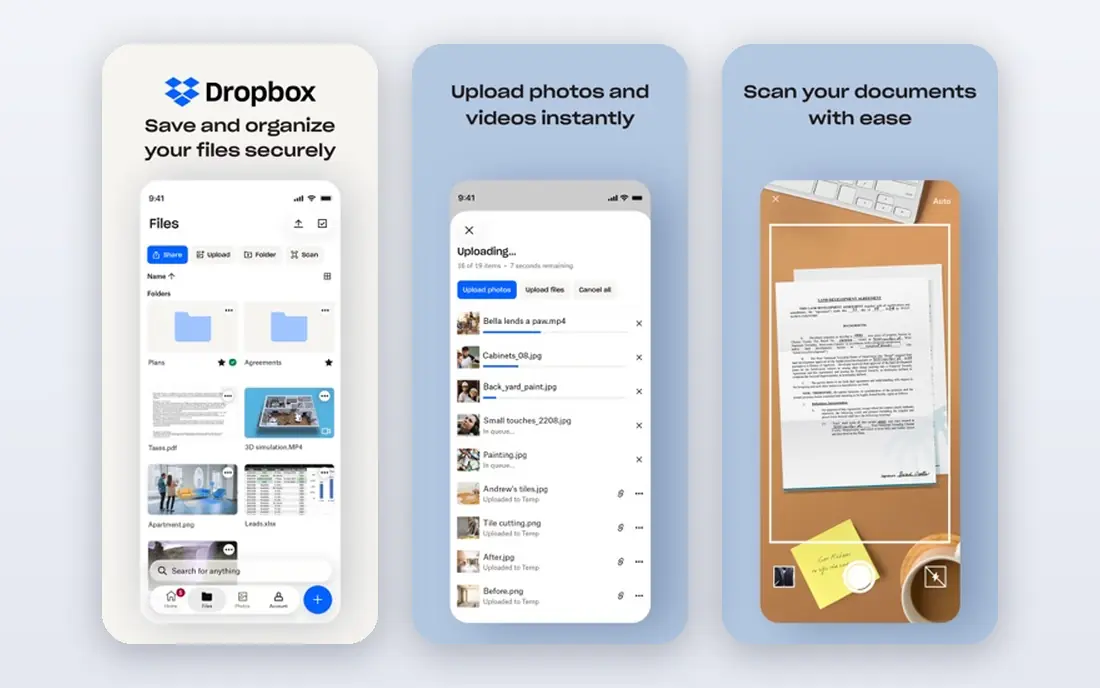
If team file sharing is the priority, Dropbox deserves a close look. Dropbox suits freelancers and teams who share files with clients every day and need links that just work. In practice, that means simple shared links and folders that work across devices and file requests let clients send files to you without an account. What stands out most is Its file request feature and clear folder sharing make it easy to collect work from people outside your team. Strong previews and version history for common file types That combination is why it earns a place in this list, rather than sitting as an also-ran. The honest catch is The catch is the small free tier, so most regular users need a paid plan sooner than with larger free rivals. Free storage is only 2 GB, which fills fast with video Paid plans can cost more than rivals for the same storage Check that trade-off against your own workload before you commit, and confirm the current plan on the vendor site.
- Simple shared links and folders that work across devices
- File requests let clients send files to you without an account
- Strong previews and version history for common file types
- Free storage is only 2 GB, which fills fast with video
- Paid plans can cost more than rivals for the same storage
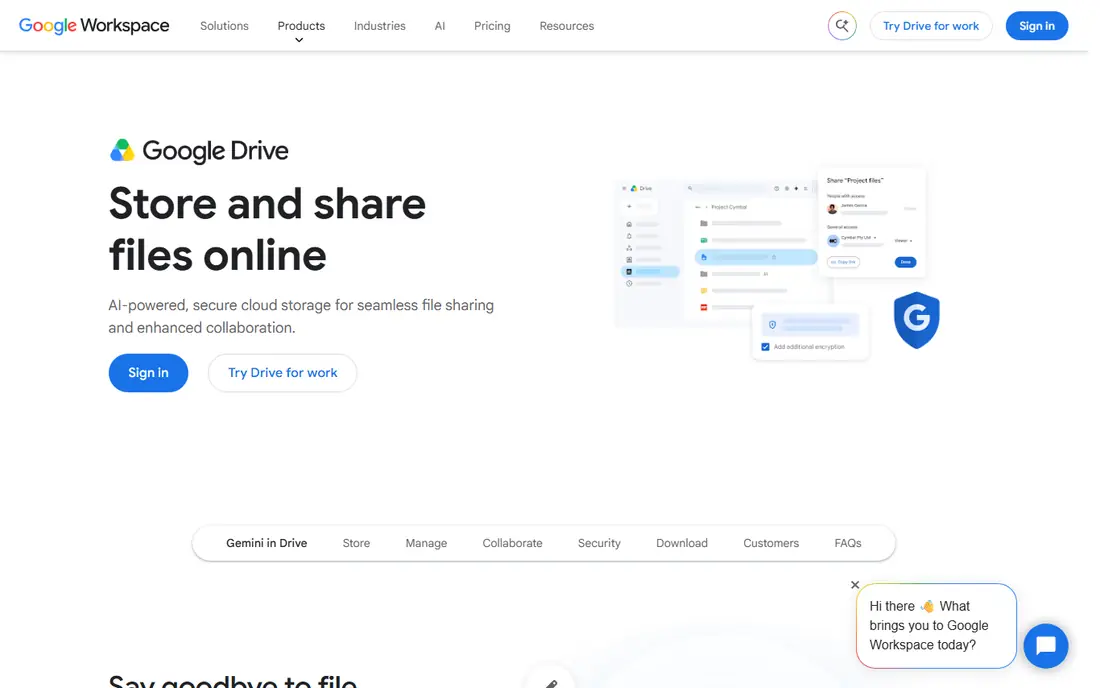
Google Drive takes a practical route to Google Workspace collaboration, with less setup fuss than many rivals. Google Drive suits teams already using Gmail and Google Docs, since sharing and editing sit in the same place. In practice, that means 15 GB of free storage shared across Google services and real-time editing in Docs, Sheets, and Slides. The strongest point here is Its search and real-time editing remove the need to email versions back and forth during a project. Strong search across file names and document text That combination is why it earns a place in this list, rather than sitting as an also-ran. The trade-off to weigh is The limit is pooled storage, so heavy Photos or Gmail use can eat into the space you planned for work files. Storage is shared with Gmail and Photos, so it fills from several places Privacy controls need care on shared drives Check that trade-off against your own workload before you commit, and confirm the current plan on the vendor site.
- 15 GB of free storage shared across Google services
- Real-time editing in Docs, Sheets, and Slides
- Strong search across file names and document text
- Storage is shared with Gmail and Photos, so it fills from several places
- Privacy controls need care on shared drives
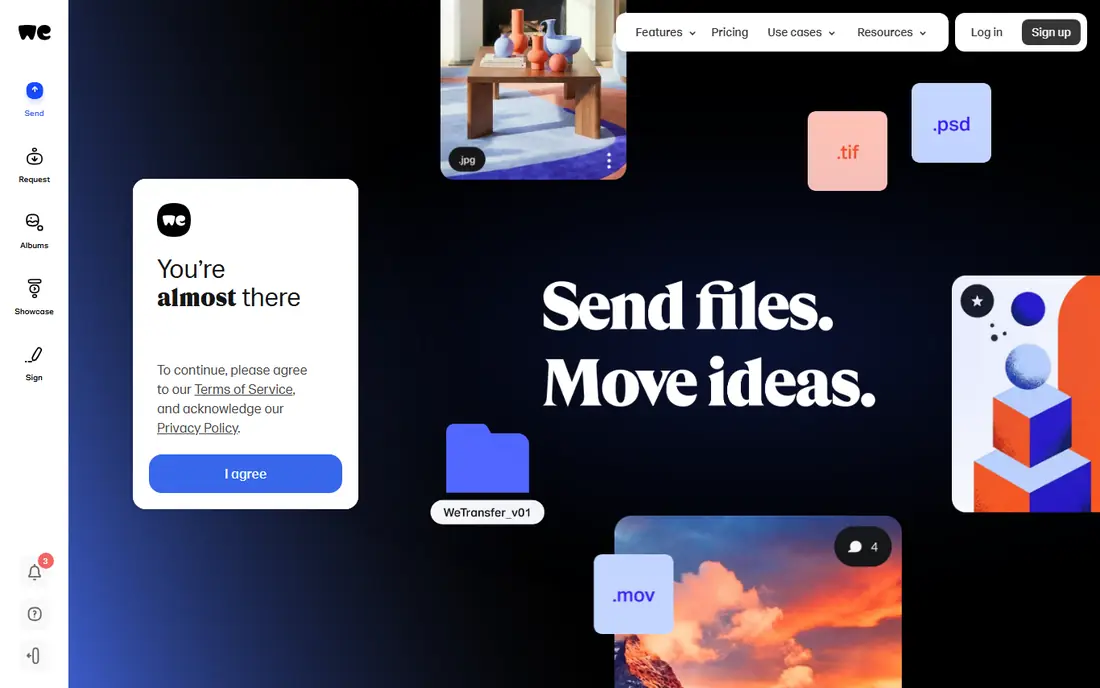
For teams focused on one-off large transfers, WeTransfer offers a clear and direct fit. WeTransfer suits anyone who needs to send a large finished file to a client or colleague without setup. In practice, that means simple transfers without a storage setup and paid plans allow larger files and longer link life. Where this tool pulls ahead is Its plain upload and link flow means recipients can download quickly, even if they have never used the service. Password protection and branded pages on paid tiers That combination is why it earns a place in this list, rather than sitting as an also-ran. The limit to check first is The catch is expiry, since free links do not stay live for long, so recipients must download promptly. Free transfers expire after a few days It is not built for long-term storage or team editing Check that trade-off against your own workload before you commit, and confirm the current plan on the vendor site.
- Simple transfers without a storage setup
- Paid plans allow larger files and longer link life
- Password protection and branded pages on paid tiers
- Free transfers expire after a few days
- It is not built for long-term storage or team editing
Box earns its place here through secure business sharing, rather than through headline features alone. Box suits businesses that need control over who sees, edits, and downloads sensitive files. In practice, that means strong admin controls and audit trails for business files and compliance features suit regulated teams. The detail that matters most is Its permission controls and activity logs help managers prove who accessed a document and when. Integrations with common office and workflow tools That combination is why it earns a place in this list, rather than sitting as an also-ran. The drawback that matters is The trade-off is complexity and cost, since small teams may not need the full governance feature set. Business pricing often needs a quote and a minimum seat count The interface can feel heavy for simple personal sharing Check that trade-off against your own workload before you commit, and confirm the current plan on the vendor site.
- Strong admin controls and audit trails for business files
- Compliance features suit regulated teams
- Integrations with common office and workflow tools
- Business pricing often needs a quote and a minimum seat count
- The interface can feel heavy for simple personal sharing
When Microsoft 365 users matters most, Microsoft OneDrive is one of the stronger options in this list. OneDrive suits households and teams already paying for Microsoft 365, since storage and Office apps arrive together. In practice, that means deep links to Word, Excel, and Teams and personal Vault adds extra protection for sensitive files. A closer look shows Its Windows backup and Office integration make it a natural default on Windows computers. Automatic backup for Windows folders on paid plans That combination is why it earns a place in this list, rather than sitting as an also-ran. The watch-out here is The limit is the small free tier, and users outside the Microsoft system may prefer a more neutral service. Free storage is 5 GB, which is small for video libraries Best value comes inside a Microsoft 365 plan, not alone Check that trade-off against your own workload before you commit, and confirm the current plan on the vendor site.
- Deep links to Word, Excel, and Teams
- Personal Vault adds extra protection for sensitive files
- Automatic backup for Windows folders on paid plans
- Free storage is 5 GB, which is small for video libraries
- Best value comes inside a Microsoft 365 plan, not alone
pCloud is best understood as a tool for one-time payment storage, built around that single job. pCloud suits users who want to pay once for storage instead of a monthly fee that never ends. In practice, that means lifetime payment options for people who dislike subscriptions and file versioning and sharing links on paid plans. The main strength is Its lifetime option appeals to people with a stable storage need and no wish to manage renewals. Apps for desktop, mobile, and the web That combination is why it earns a place in this list, rather than sitting as an also-ran. The compromise is The catch is the up-front cost, so check the storage size carefully before you commit to a lifetime plan. Lifetime plans need a larger payment up front Some advanced features sit only on higher tiers Check that trade-off against your own workload before you commit, and confirm the current plan on the vendor site.
- Lifetime payment options for people who dislike subscriptions
- File versioning and sharing links on paid plans
- Apps for desktop, mobile, and the web
- Lifetime plans need a larger payment up front
- Some advanced features sit only on higher tiers
Buyers who need private client sharing should start with Sync.com and compare outward from there. Sync.com suits professionals who share client documents and want strong privacy controls by default. In practice, that means zero-knowledge encryption for stored files and shared folders with password and expiry controls. What gives this option its edge is Its encryption model means even the provider cannot read your files, which matters for sensitive client work. Team plans for client-facing work That combination is why it earns a place in this list, rather than sitting as an also-ran. The point to test before buying is The trade-off is editing, since it focuses on storage and sharing rather than live document collaboration. Free storage is 5 GB, so paid plans are needed for larger libraries Collaboration editing is thinner than in Google or Microsoft tools Check that trade-off against your own workload before you commit, and confirm the current plan on the vendor site.
- Zero-knowledge encryption for stored files
- Shared folders with password and expiry controls
- Team plans for client-facing work
- Free storage is 5 GB, so paid plans are needed for larger libraries
- Collaboration editing is thinner than in Google or Microsoft tools
Send Anywhere rounds out this list for quick sends without an account, with a balance of price and features. Send Anywhere suits quick sends between your own devices or to a friend who needs a file now. In practice, that means direct device-to-device transfers for large files and link sharing without forcing recipients to sign up. The part worth noting is Its key code and link options avoid the setup of a full storage account for a single transfer. Simple apps for phone and desktop That combination is why it earns a place in this list, rather than sitting as an also-ran. The weakness to plan around is The limit is that it is a transfer tool, not a home for files you need to keep and revisit later. Link downloads have size and time limits on free use It lacks long-term storage and team folders Check that trade-off against your own workload before you commit, and confirm the current plan on the vendor site.
- Direct device-to-device transfers for large files
- Link sharing without forcing recipients to sign up
- Simple apps for phone and desktop
- Link downloads have size and time limits on free use
- It lacks long-term storage and team folders
How we picked these
We compared official feature pages, pricing pages, and app store listings for each product, then checked privacy policies and public reviews where they clarified limits, free tiers, or plan rules. We did not claim hands-on testing we did not carry out, and we treated vendor claims with care where a plan page was vague. Where pricing was not published on the vendor site, we wrote See website rather than guessing a figure. Prices and plan limits change often, so use this guide to shortlist two or three options, then confirm the current price, free tier, and feature set on the vendor site before you buy.
How to choose a file sharing app for your files
Start with the largest file you send in a normal month, and how long the recipient needs access. Those two facts narrow the list fast.
Storage or transfer first
If recipients need to edit, comment, and return files, choose a storage app with folders and version history. If you only need to deliver a finished video or a large folder, a transfer app is simpler and often cheaper for that single job.
Check limits before you pay
Look for the maximum file size per transfer, the storage cap, and whether links expire. Video files and design folders hit limits first. A plan that looks cheap can fail on the one file that matters most.
Protect shared links
Use passwords, expiry dates, and view-only links for client work and personal documents. Turn off public link sharing where you can, and review shared folders each month to remove access you no longer need.
Frequently asked questions
What is the best file sharing service for large videos?
For large videos, a transfer service with a high per-file limit often works better than a storage plan with a small free tier. Check the maximum file size, the link expiry period, and whether the recipient needs an account to download.
Are free file sharing tools safe to use?
Reputable free tools use encryption in transit and offer password protection on paid plans, but free tiers may lack expiry controls and admin logs. Avoid sending sensitive documents through a service that does not let you set a password or an expiry date.
What is the best software for file sharing inside a team?
Storage apps with shared folders, comments, and version history suit team work best, because everyone edits the same file instead of emailing copies. Choose the app that already connects to your email, documents, and chat tools.
Which file sharing platform is best for clients?
A platform with branded links, download tracking, and password protection gives a more professional client experience. Storage apps suit repeat clients, while transfer apps suit one-off deliveries to new contacts.
Do I need an account to receive a shared file?
It depends on the service. Transfer apps often let recipients download without an account, while storage apps may ask the recipient to sign in for editing or for large folders. Confirm this before you send a time-sensitive file.
Sources we checked (8)

Online Jobs is an independent blog about careers, online work, learning new skills and the tools that help people earn. More about us.
Keep reading
All posts
Zoom Alternatives
Zoom alternatives compared for 2026: Google Meet, Microsoft Teams, Webex, Jitsi and more for free calls, large meetings and webinars for teams and classrooms.

Which Software Is Best for Data Entry
Compare the best data entry software for forms, OCR scanning, and spreadsheets, with free plans, pricing, and honest limits for each tool before you commit.

What Is the Best Free Tool to Rotate a PDF
What is the best free tool to rotate a PDF? We compare eight free rotation tools on per-page control, limits, privacy and saved output quality in detail.