Best Feature Flag Tools in 2026: 8 Tools Compared

How we put this together: we compare official feature and pricing pages, app store listings, privacy policies and public user reviews. Prices change, so check the provider's site before you pay.
Key takeaways
- LaunchDarkly is the most complete enterprise option, with deep targeting, governance, and experimentation, but its pricing scales with usage.
- Flagsmith, GrowthBook, and Unleash give open source teams a strong path, including self-hosting for full control over data.
- ConfigCat is our pick for teams that want simple, reliable flags without a heavy platform to learn.
- Statsig and PostHog suit teams that want flags tied closely to analytics and experiments in the same system.
- Start on a free tier, prove the rollout workflow on one real feature, and only then commit to a paid plan.
Quick comparison
| Name | Who it suits | Starting price | Free option | |
|---|---|---|---|---|
 LaunchDarkly | Enterprise feature management | Free | Yes | Visit |
 Flagsmith | Open source teams on a budget | Free | Yes | Visit |
 GrowthBook | Flags plus experiments | Free | Yes | Visit |
 Unleash | Self-hosted enterprise flags | Free | Yes | Visit |
 ConfigCat | Simple reliable flags | Free | Yes | Visit |
 Statsig | Flags with analytics | Free | Yes | Visit |
 PostHog | Startups wanting flags and analytics | Free | Yes | Visit |
 Split | Experimentation-led delivery | See website | Free trial | Visit |
The best feature flag tools
Feature flags let a team turn a feature on or off without a new deployment, roll it out to a small group first, and roll it back fast if something breaks. The best feature flag tools add targeting, audit trails, and experiment support on top of that core switch. We compared official pricing and feature pages for tools that are live today, with a mix of enterprise, open source, and analytics-led options.
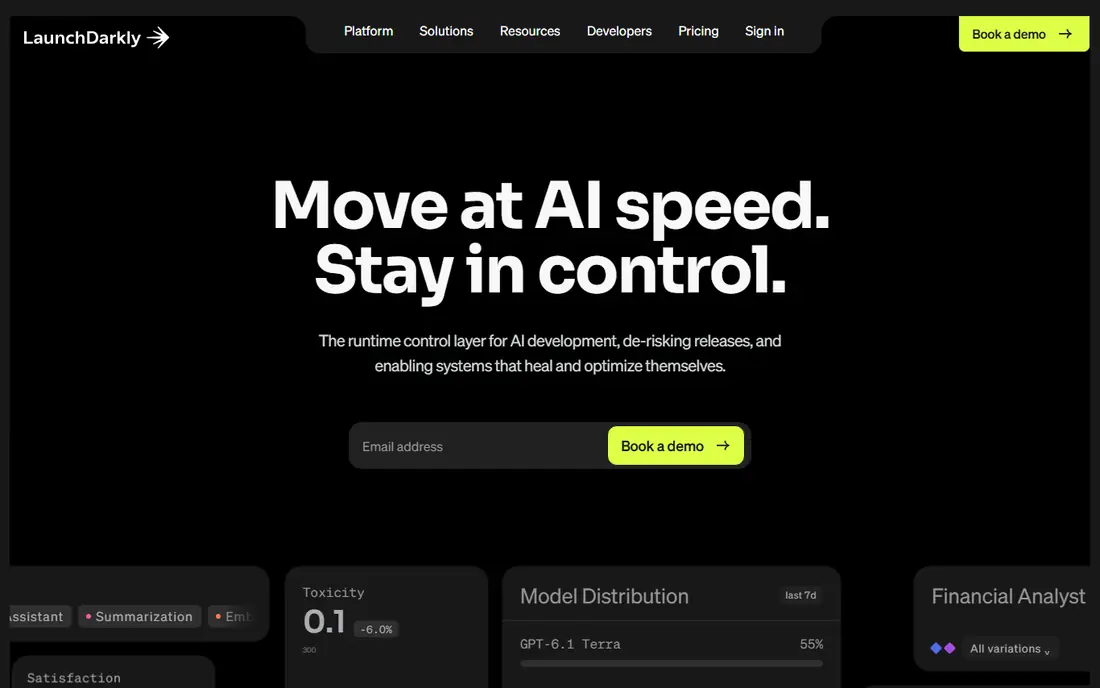
LaunchDarkly is the standard choice for large engineering organisations that ship often and need control. Flags can target by user attributes, percentage rollouts, and segments, and changes are audited so a team can see who changed what and when. Guardrail metrics and automatic rollback options on higher tiers help a team catch a bad release before it affects every user.
The downside is cost at scale, because the pricing model follows usage rather than a simple seat count. A small team can start on the free Developer tier, but a growing product should model its expected volume before committing. For governed, high-volume releases, LaunchDarkly remains the deepest option here.
- Very wide SDK coverage
- Strong targeting, governance, and audit tools
- Built-in experimentation options
- Pricing scales with service connections and usage, so costs can climb
- More platform than a small team needs
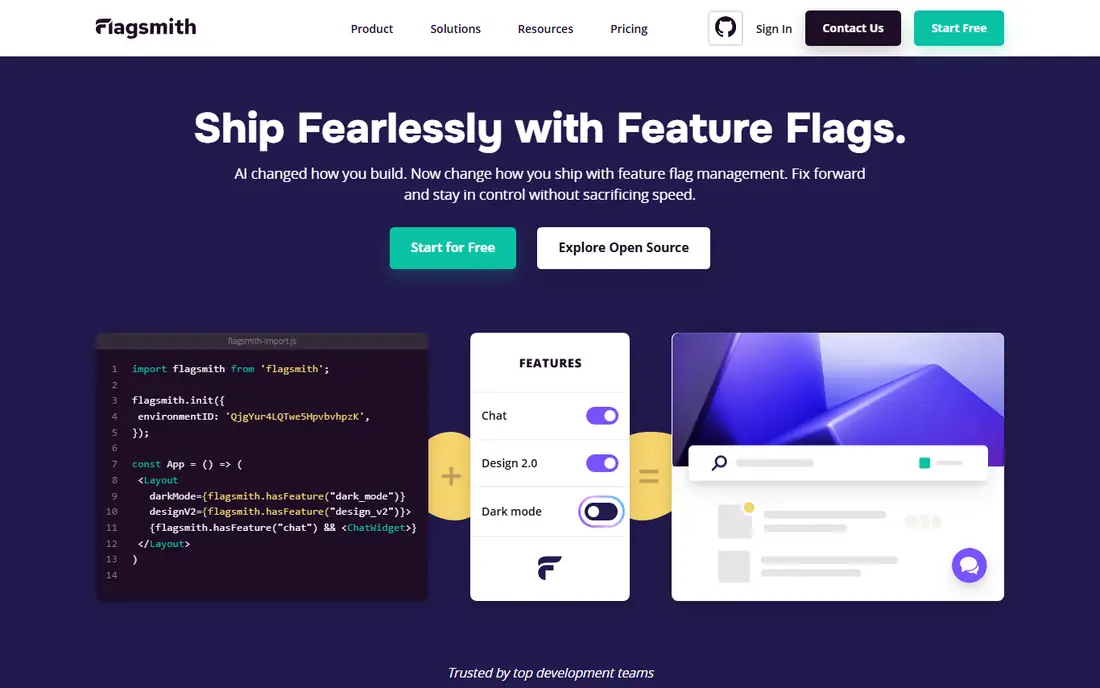
Flagsmith appeals to teams that want open source control without giving up a hosted option. It covers boolean flags, percentage rollouts, user targeting, and remote configuration, so a team can change copy or limits without a deployment as well as switch features on and off. Hosting choices include cloud, private cloud, and self-hosted deployments.
The catch is that Flagsmith is a feature management tool first, not a full experimentation suite. Teams that run constant A/B tests may pair it with an analytics tool. For straightforward, well-governed flags at a fair price, it is hard to beat.
- Open source core with hosted and self-hosted options
- Remote configuration alongside flags
- Clear entry pricing
- Experimentation features are thinner than specialist tools
- Enterprise features sit behind paid tiers
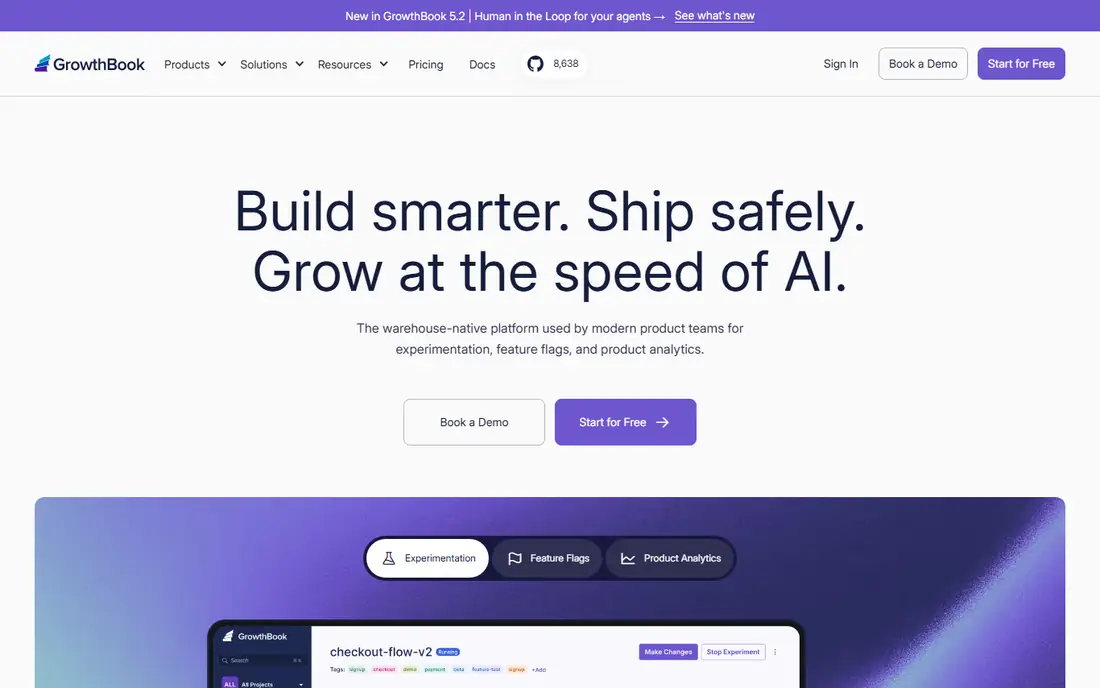
GrowthBook is the pick for a product team that wants feature flags and experiments without buying two tools. You can roll a feature out gradually, then run an A/B test on it using the built-in stats engine, which handles common pitfalls such as checking results too early. The open source version can be self-hosted, while the cloud version adds managed hosting and premium features.
The trade-off is that experiment setup still needs thought about metrics and sample size, and no tool removes that work. GrowthBook makes the mechanics easier, but a team still needs a clear hypothesis for each test. For teams that test often, the combined tool saves real time.
- Open source with flags and A/B testing in one tool
- Strong stats engine
- Self-hosted option
- Paid cloud pricing is per seat, so larger teams pay more
- Setup for experiments takes care
Unleash is built for organisations that need progressive delivery with control over where their data lives. The open source version covers core flags and strategies, while enterprise tiers add governance, audit logs, and advanced targeting. Self-hosting suits regulated teams that cannot send flag data to a vendor cloud.
The downside is that the most useful governance features cost more, and a small team may find the setup heavier than a simpler tool. Unleash makes most sense for a medium or large organisation with compliance needs, or a team that already self-hosts other infrastructure.
- Open source core
- Self-hosted and cloud options
- Strong governance on enterprise tiers
- Enterprise cloud pricing is per user
- The interface takes time to learn
ConfigCat is our pick for teams that want flags to just work. Setup is quick, SDKs cover the main languages and platforms, and the free tier lets a small team start without a sales call. The dashboard stays focused on flags and configuration, which keeps the learning curve short for new developers.
The limit is scope. If you want deep experimentation, warehouse-native analytics, or complex guardrails, you will need another tool or a higher tier. For most product teams, though, reliable flags with targeting and percentage rollouts are the main need, and ConfigCat covers that well.
- Easy setup and clear documentation
- Global content delivery for fast flag checks
- Simple pricing model
- Less built-in experimentation than GrowthBook or Statsig
- Advanced governance needs higher tiers
Statsig suits data-led teams that want to see the effect of a flag, not just switch it on. Because flags and analytics share one SDK, a team can roll out a feature, measure its impact, and adjust targeting without stitching tools together. Sequential testing and holdout support help teams run experiments with more rigour.
The caution is pricing. Metered events can grow with traffic, so a team should check its event volume against the paid tiers before scaling. For a team that already thinks in metrics, Statsig is a strong combined choice. For a team that only needs a switch, a simpler tool costs less attention.
- Flags, experiments, and analytics on one SDK
- Strong stats options
- Generous free developer tier
- Metered pricing needs careful volume planning
- The platform is broad for a team that only wants flags
PostHog is a good fit for a startup that wants one tool for flags, analytics, and user insight. Feature flags sit next to trends, funnels, and session replay, so a team can watch how a new feature is actually used after rollout. The open source core and free usage tier make it easy to start without a budget discussion.
The trade-off is focus. PostHog is a broad product platform, and a team that only wants flags may find the extra features noisy. If your team already uses PostHog for analytics, adding flags is an easy win. If not, compare it with a dedicated flag tool first.
- Flags plus product analytics, session replay, and surveys
- Open source option
- Generous free usage
- The wider platform can distract from simple flag work
- Self-hosting needs maintenance
Split, now part of Harness, is designed for growth-stage teams that treat feature delivery as experimentation. Flags can be tied to impact metrics, so a team can see whether a rollout helped or hurt the numbers that matter. That link between delivery and measurement is the core strength of the platform.
The limits are pricing and hosting. Plans are quoted rather than published, and there is no self-hosted option for teams that need one. For a team that already invests in experimentation, Split is worth a demo. For a team that only needs safe rollouts, a cheaper tool will do.
- Strong experimentation and impact analysis
- Feature delivery tied to metrics
- Mature platform
- Pricing is quoted
- SaaS only, with no self-hosted option
How we picked these
We compared official pricing pages, feature documentation, and SDK coverage for tools that offer feature flags as a core product today. We kept a mix of enterprise, open source, and analytics-led tools, and we favoured tools with a free tier or trial, clear targeting options, and audit or governance features. Where a vendor quotes pricing, we wrote See website rather than guessing a number.
Choosing the right feature flag tool
A flag tool is only useful if developers trust it in production and product managers can use it without developer help for every change. Test the tool on a real rollout, not just a demo flag, before you commit a whole product to it.
Start with rollout safety, not experiments
The first job of a flag is to let you release safely: a kill switch, a percentage rollout, and a fast rollback. Check that these work in your stack, that flag checks are fast, and that a flag service outage does not break your app. Experiments are valuable, but they matter less if the basic safety net is weak.
Check SDKs, targeting, and audit trails
Confirm SDK support for every language and platform you ship, including mobile and edge runtimes if you use them. Test targeting by user attributes and segments, and check that every flag change is logged with who made it and when. For a regulated team, these audit features are not optional extras.
Model the price at your real scale
Flag pricing varies by seats, requests, events, or monthly active users, and the cheapest tool at ten users may not be cheapest at a hundred thousand. Estimate your flag checks, active users, and team size for the next year, and ask the vendor to confirm the tier. A free tier is a good start, but a surprise bill after growth is a common complaint.
Frequently asked questions
What is the best feature flag tool?
LaunchDarkly is the most complete enterprise option, while ConfigCat is our pick for simple, reliable flags. Open source teams should compare Flagsmith, GrowthBook, and Unleash, and data-led teams should look at Statsig or PostHog.
What is the best feature flag software for a small team?
ConfigCat or Flagsmith suit a small team well, because both offer a free tier, quick setup, and clear paid pricing. Start with one, prove the rollout workflow on a real feature, and only add experimentation tools if you run tests often.
Is there a free feature flag tool?
Yes, LaunchDarkly, Flagsmith, GrowthBook, Unleash, ConfigCat, Statsig, and PostHog all offer a free tier or a free open source version. Free tiers usually limit seats, requests, or features, so check the limits against your team size and traffic.
What is the best feature flag platform for self-hosting?
Flagsmith, GrowthBook, and Unleash all offer open source versions that can be self-hosted. Unleash is the strongest pick for enterprise governance in a self-hosted setup, while Flagsmith is often simpler for a smaller team.
Do feature flags replace A/B testing tools?
No, flags control who sees a feature, while A/B testing measures which version performs better. Tools such as GrowthBook and Statsig combine both, but a flag-only tool will need an analytics or testing tool alongside it for proper experiments.
How do I avoid flag sprawl?
Name flags clearly, set an owner and an expiry review date for each one, and remove flags once a feature is fully rolled out. Most tools in this list offer stale-flag detection or audit views, and a monthly cleanup habit matters more than any single feature.
Sources we checked (8)

Online Jobs is an independent blog about careers, online work, learning new skills and the tools that help people earn. More about us.
Keep reading
All posts
n8n Alternatives
n8n alternatives compared for 2026, with Zapier, Make, Activepieces, and more, covering visual builders, code steps, self-hosting, and pricing models.

ZoomInfo Alternatives
The best ZoomInfo alternatives in 2026, compared on price, free plans, data coverage, and which tool fits small teams or large sales teams best in detail.
Zoom Alternatives for Webinars
Compare Zoom alternatives for webinars in 2026, from browser-based rooms to enterprise events, with prices, attendee limits, features and honest trade-offs.