Best Expense Management Software for Businesses in 2026: 8 Tools Compared

How we put this together: we compare official feature and pricing pages, app store listings, privacy policies and public user reviews. Prices change, so check the provider's site before you pay.
Key takeaways
- Ramp and Brex both offer free tiers built around corporate cards, which makes them the cheapest starting point for startups that qualify.
- Expensify suits teams that want to keep their existing cards, while Navan suits companies that want travel and expenses in one place.
- SAP Concur and Airbase fit larger companies with complex policies, multi-entity structures and strict audit needs.
- Zoho Expense and BILL Spend and Expense offer low-cost options for smaller teams, including genuinely free plans.
- Card-first tools work best when you adopt their cards, so check card eligibility before choosing on price alone.
Quick comparison
| Name | Who it suits | Starting price | Free option | |
|---|---|---|---|---|
 Ramp | Free card-first spend management | Free | Yes | Visit |
 Brex | Free spend management for startups | Free | Yes | Visit |
 Expensify | Keeping your existing cards | $5 per user per month | Yes | Visit |
 Navan | Travel plus expenses together | Free | Yes | Visit |
 Zoho Expense | Budget teams and Zoho users | See website | Yes | Visit |
 BILL Spend and Expense | Free spend controls | Free | Yes | Visit |
 SAP Concur | Large enterprise policies | See website | No | Visit |
 Airbase | Procure-to-pay control | See website | No | Visit |
The best expense management software for businesses
Expense software saves time when receipts, approvals and accounting line up without manual chasing, but the right tool depends on your company size and whether you want corporate cards. Some tools are built around their own cards, while others work with cards you already have. We compared official pricing pages, feature documentation and accounting integrations to build this list.
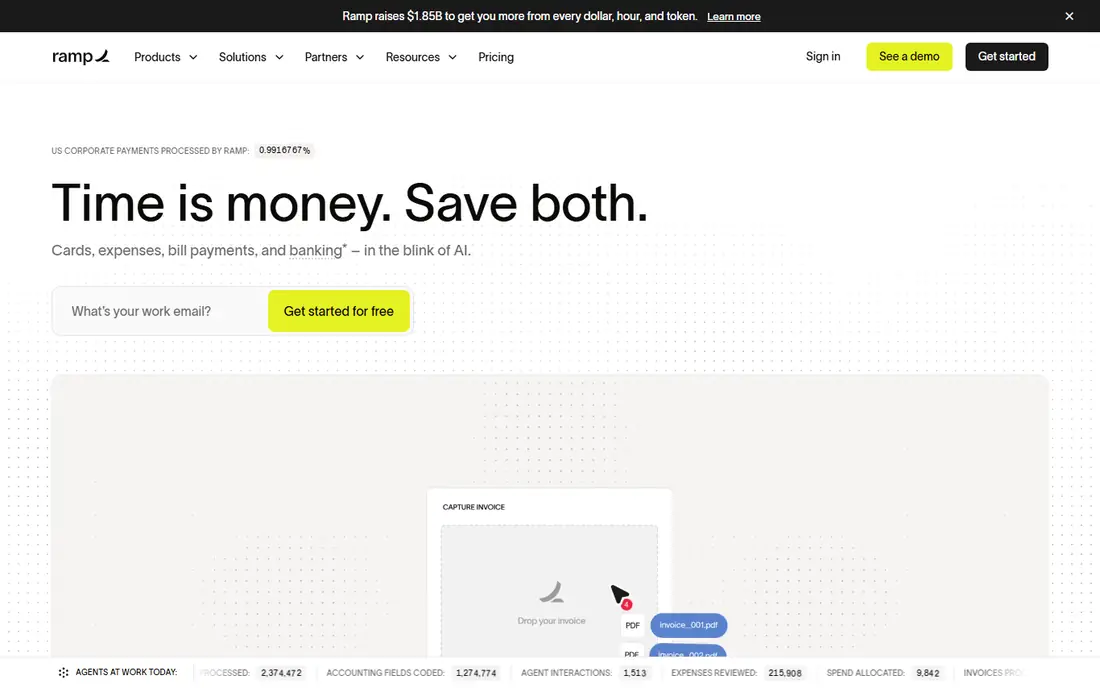
Ramp is the default shortlist pick for many startups because its free tier covers corporate cards, expense management and bill pay at no per-user cost for qualifying companies. Receipt capture, approvals and accounting sync are built in, so finance teams spend less time chasing paperwork. Integrations cover QuickBooks, Xero, NetSuite and other common systems.
The catch is the card-first design. Ramp works best when your team actually uses Ramp cards, and companies that cannot qualify for cards will get less value. Paid tiers add advanced controls and a platform fee. If your team can adopt the cards, Ramp is hard to beat on value.
- Free tier includes cards, expenses and bill pay
- Strong spend controls and automation
- Wide accounting integrations
- Works best when you adopt Ramp cards
- Paid Plus tier adds a platform fee on top of per-user pricing
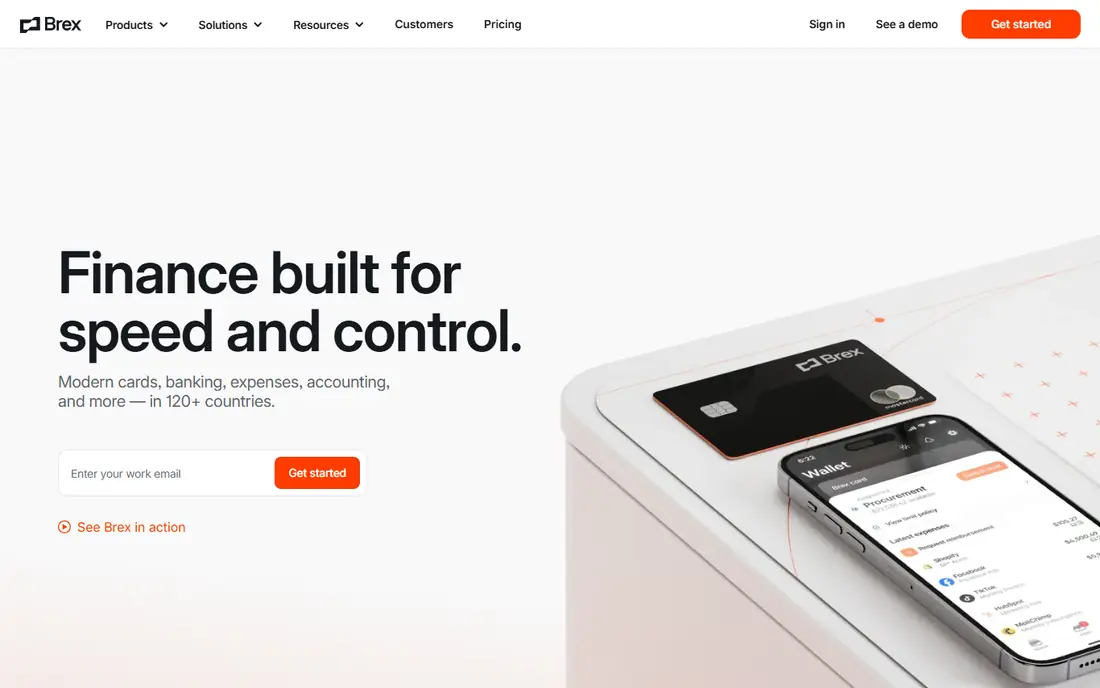
Brex competes directly with Ramp on free spend management. Its Essentials plan costs nothing per user and includes corporate cards, expense reimbursements, accounting integrations and travel booking, which covers the core needs of a growing startup. The Premium tier adds advanced controls and features for larger teams.
Watch the extras. Business account and bill pay fees follow Brex's fee schedule, so read it before assuming everything is free. Brex also suits startups and mid-market companies best; very large enterprises with complex procurement may need a heavier tool. For most startups, Brex and Ramp are the two free options to compare head to head.
- Free Essentials plan includes cards and reimbursements
- Travel booking included
- Strong accounting integrations
- Premium features sit on a paid tier
- Business account and bill pay fees may apply
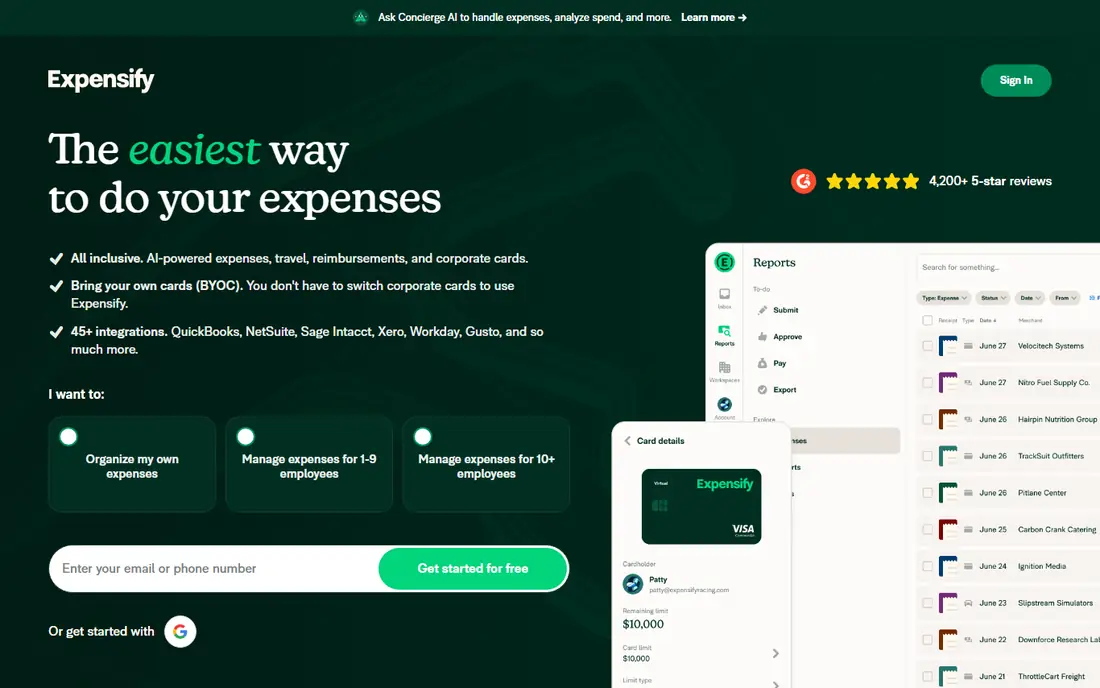
Expensify is the pick when you do not want to switch cards. Its Collect plan starts at $5 per member per month and automates receipt capture, expense reports and reimbursements, while a basic free tier covers individuals. That flexibility suits teams with existing card programs or mixed spending habits.
The trade-off is that advanced controls, multi-level approvals and deeper integrations cost more, and card-first rivals give away more on their free tiers. If your team already has cards it likes, Expensify's flexibility wins. If you are starting fresh, compare it with Ramp and Brex first.
- Works with cards you already have
- Strong receipt scanning and automation
- Long track record with small teams
- Advanced approvals and integrations sit on higher tiers
- Card-first rivals offer more free
Navan, formerly TripActions, combines travel booking with expense management, so a trip booked in the platform flows into expenses without re-entry. For companies under 300 employees, the first five monthly expensing users are free, with a per-user charge beyond that. That structure suits small teams that travel regularly.
The cost rises once you pass the free users, and the value depends on using Navan for travel as well as expenses. Companies that book travel elsewhere may get less benefit. If travel and expenses belong together in your company, Navan is the natural pick.
- Travel booking and expenses in one platform
- First expensing users free for smaller companies
- Strong policy controls
- Full expense plan costs per user beyond the free users
- Best value needs travel adoption
Zoho Expense is the budget pick for teams that want solid expense automation without a card program. A free version covers small teams, and paid plans add automation, approvals and integrations at a low per-user cost. It works especially well alongside Zoho Books and other Zoho products.
The absence of its own corporate cards is the main limit: if you want card-first spend controls, Ramp or Brex fit better. Zoho Expense also reserves some advanced features for higher tiers. For small businesses that reimburse expenses rather than issuing cards, it offers strong value.
- Low-cost plans with a free version for small teams
- Strong automation for receipts and approvals
- Fits Zoho Books users
- No corporate card program of its own
- Advanced features sit on higher tiers
BILL Spend and Expense, formerly Divvy, gives small teams free spend controls built around BILL corporate cards. Budgets, approvals and real-time transaction data help managers see spending as it happens, and the tool connects with BILL's wider bill pay platform for companies that already use it.
As with other card-first tools, the value depends on adopting the cards. Teams that want to keep existing cards should look at Expensify instead. For small teams starting fresh with cards and budgets, BILL is a credible free option.
- Free plan with BILL corporate cards
- Budgets and spend controls built in
- Ties into BILL bill pay
- Works best with BILL cards
- Accounting depth varies by plan
SAP Concur is the enterprise standard for travel and expense, built for companies with complex policies, many entities and strict audit needs. It handles multi-level approvals, detailed reporting and global tax and compliance rules that simpler tools cannot match. Large companies with thousands of travelers rely on it for a reason.
The cost is quote-based, and setup takes longer than a self-serve tool. Small teams will find it heavy and expensive. For enterprises where policy control and audit trails matter more than a quick start, SAP Concur remains the benchmark.
- Deep policy, audit and compliance controls
- Handles complex travel and expense at scale
- Broad global coverage
- Quote-based pricing
- Implementation and learning curve are heavier than simpler tools
Airbase suits mid-market companies that want procurement and expenses in one system. Purchase requests, approvals, corporate cards and bill pay flow through the same platform, which gives finance teams control over spending before money leaves the company, not just reporting after it.
Pricing is quote-based and there is no free plan, only a trial, so smaller teams may find it costly. For growing companies where procurement control matters as much as expense reporting, Airbase is a strong choice.
- Combines spend management with procurement and bill pay
- Strong approval workflows
- Good mid-market fit
- Quote-based pricing
- Free trial rather than a free plan
How we picked these
We compared official pricing pages, feature documentation and accounting integrations for each tool, and we favored products with clear expense capture, approvals and reporting for businesses. Where pricing is quote-based, we wrote "See website" rather than inventing a figure. We did not claim hands-on use of these tools; our view comes from the published pricing and documentation we reviewed.
How to choose expense software for your business
Card-first or card-flexible
Card-first tools such as Ramp and Brex give the most free value but need you to adopt their cards. Card-flexible tools such as Expensify work with cards you already have. Decide this first, since it narrows the list fast.
Match the tool to your size
Startups do well with free tiers, mid-market companies need procurement and multi-level approvals, and enterprises need audit depth and global policy support. Buying too big wastes money, while buying too small creates a painful switch later.
Check accounting integrations
Confirm the tool syncs cleanly with your accounting system, including how it handles categories, departments and multi-entity books. A weak integration wipes out the time savings.
Trial with real expenses
Run a trial with real receipts, real approvers and a real month-end close. That test reveals capture accuracy, approval friction and reporting quality better than any demo.
Frequently asked questions
What is the best expense management software for businesses?
Ramp and Brex lead for startups thanks to free tiers, Expensify leads for teams keeping existing cards, and SAP Concur leads for large enterprises. Match the tool to your size, card strategy and accounting system rather than picking on price alone.
What is the best business expense management software for small businesses?
Ramp, Brex, Zoho Expense and BILL Spend and Expense all offer free or low-cost plans that suit small teams. Compare card eligibility, receipt capture and accounting integrations, and trial your top two with real expenses before committing.
Is there free expense management software?
Yes. Ramp, Brex, BILL Spend and Expense and Zoho Expense all offer free plans or free tiers, though card-first tools need you to adopt their cards to get full value. Navan also offers free expensing for a small number of users at smaller companies.
How much does expense management software cost?
Free tiers exist, paid plans commonly range from a few dollars per user per month for basic tools to quote-based enterprise pricing. Card-first tools may add platform fees on paid tiers, so read the pricing page for your team size.
Does expense software replace an accountant?
No. It automates capture, approvals and syncing, but accountants still handle policy, tax treatment and month-end review. The software saves time and reduces errors; it does not remove the need for financial oversight.
What is the difference between expense management and spend management?
Expense management focuses on reporting and reimbursing spending after it happens, while spend management adds controls before spending, such as cards, budgets and approvals. Many modern tools combine both, which is why card-first platforms have become popular.
Sources we checked (8)

Online Jobs is an independent blog about careers, online work, learning new skills and the tools that help people earn. More about us.
Keep reading
All posts
n8n Alternatives
n8n alternatives compared for 2026, with Zapier, Make, Activepieces, and more, covering visual builders, code steps, self-hosting, and pricing models.

ZoomInfo Alternatives
The best ZoomInfo alternatives in 2026, compared on price, free plans, data coverage, and which tool fits small teams or large sales teams best in detail.
Zoom Alternatives for Webinars
Compare Zoom alternatives for webinars in 2026, from browser-based rooms to enterprise events, with prices, attendee limits, features and honest trade-offs.