Best ETL Tools in 2026: 8 Tools Compared

How we put this together: we compare official feature and pricing pages, app store listings, privacy policies and public user reviews. Prices change, so check the provider's site before you pay.
Key takeaways
- Fivetran and Stitch suit teams that want managed connectors with little maintenance, while Airbyte suits teams that want open source control and a large connector library.
- Talend and Informatica style enterprise tools fit large organisations with complex data quality and governance needs, not small teams moving one database.
- AWS Glue and Azure Data Factory make sense when your data already lives in AWS or Azure, because they pair closely with those cloud warehouses.
- Hevo and Matillion sit in the middle, with guided setup for common sources and stronger transformation options than a basic loader.
- Check pricing by rows, credits or compute before you sign up, because ETL bills rise with data volume and sync frequency, not just with seat count.
Quick comparison
| Name | Who it suits | Starting price | Free option | |
|---|---|---|---|---|
 Fivetran | Managed connectors | See website | Free trial | Visit |
 Airbyte | Open source pipelines | Free | Yes | Visit |
 Talend | Enterprise data integration | See website | Free trial | Visit |
 Stitch | Simple managed loading | See website | Free trial | Visit |
 Hevo Data | Guided no code pipelines | See website | Free trial | Visit |
 Matillion | Cloud warehouse transformation | See website | Free trial | Visit |
 AWS Glue | AWS data preparation | See website | No | Visit |
 Azure Data Factory | Azure data movement | See website | No | Visit |
The best ETL tools
ETL tools extract data from apps and databases, transform it into a usable shape, and load it into a warehouse where analysts can query it. The right tool depends less on the number of connectors on a marketing page and more on how much maintenance your team can handle, how often data must refresh, and where your warehouse lives. We compared official product pages, connector lists, pricing models and documentation, and we kept only tools that are actively sold and supported today. The list moves from managed loaders to enterprise platforms and cloud native services.
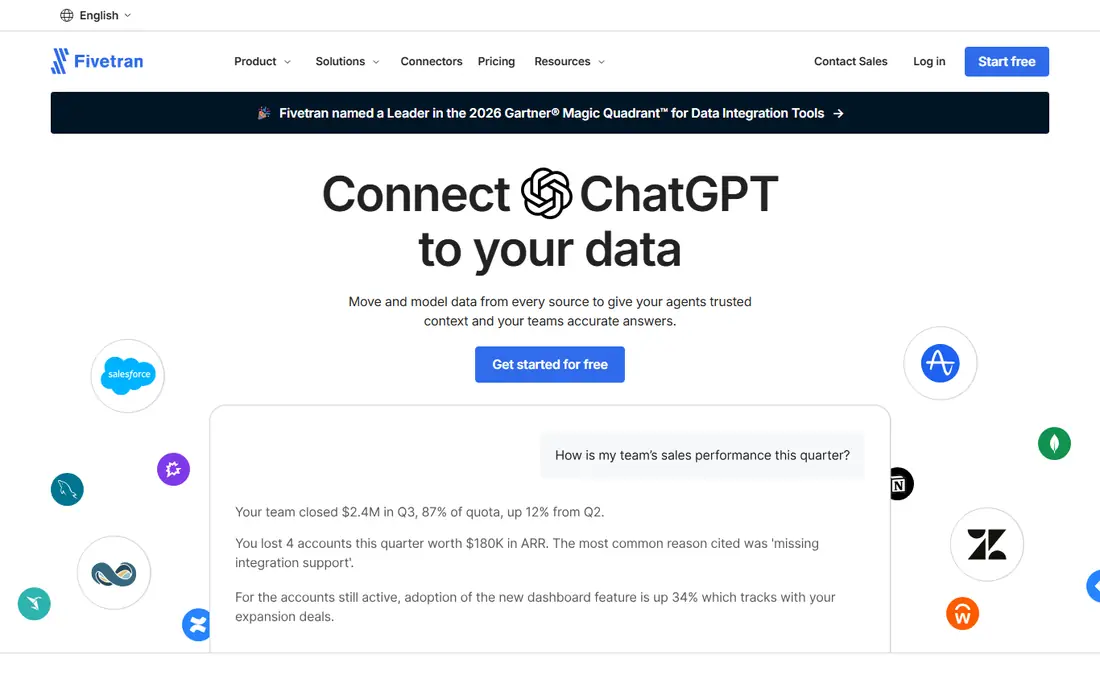
Fivetran is our pick for teams that want data pipelines to run without a dedicated engineer watching them. You connect a source such as Salesforce, a Postgres database or Google Ads, choose a destination warehouse, and Fivetran handles extraction, loading and many schema changes for you. That managed approach saves time when you have dozens of sources and no appetite for maintaining custom scripts.
The trade off is cost control and flexibility. Fivetran prices by monthly active rows or credits depending on plan, so a high volume source that syncs often can raise the bill quickly. Custom transformations are possible through partner tools and dbt, but Fivetran itself is mainly a loader, not a full transformation studio. If your team values reliability over fine control, it is a strong first choice.
- Large managed connector library
- Automatic schema changes handled
- Strong reliability for common sources
- Pricing by usage can grow fast
- Less control over custom logic
- Some niche sources need workarounds
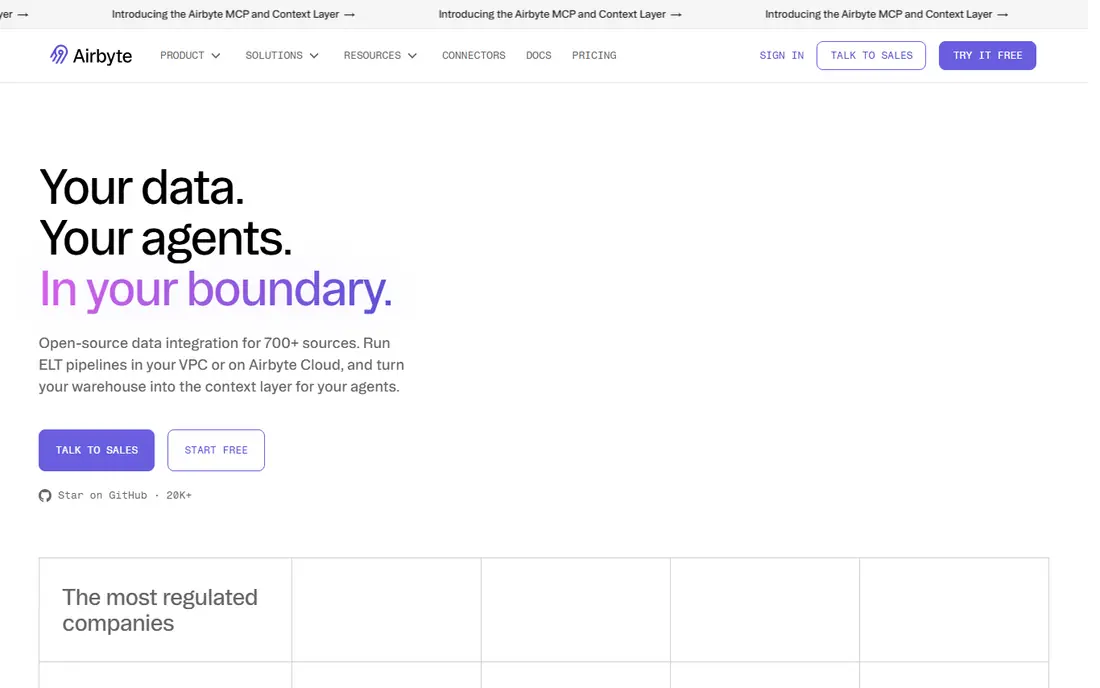
Airbyte suits teams that want to own their pipelines and avoid being locked into one vendor pricing model. The open source version can run on your own infrastructure, and the connector catalogue covers databases, APIs, files and warehouses, with community connectors adding more. You can build a custom connector when a source is missing, which is a real advantage for internal tools.
Self hosting is not free in effort, even though the software itself is free. You need to run, monitor and upgrade it, and troubleshoot failed syncs yourself unless you pay for Airbyte Cloud or a support plan. For startups and data teams with engineering capacity, that control is worth it. For a small team with no data engineer, a managed loader may be simpler.
- Open source core you can self host
- Large connector catalogue
- Flexible deployment options
- Self hosting needs engineering time
- Managed cloud pricing varies
- Support depends on plan
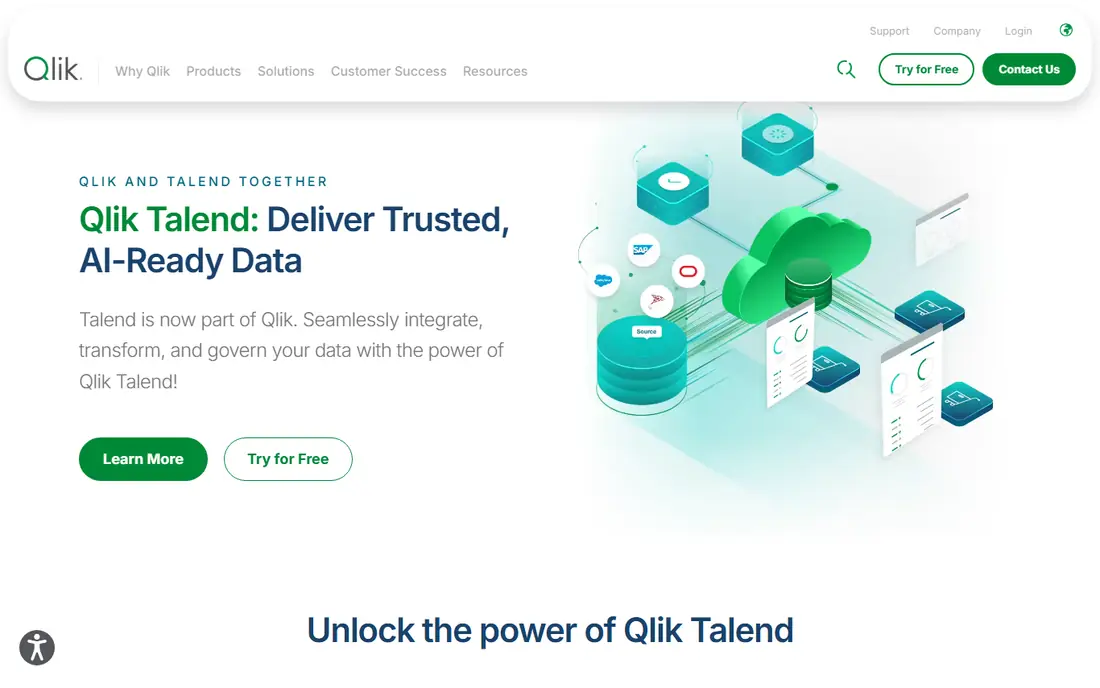
Talend is built for organisations where data quality, masking and governance matter as much as moving rows. Its visual studio lets engineers design jobs that clean, join and validate data before it reaches a warehouse, and its platform includes profiling, stewardship and lineage features. That depth helps banks, health firms and large retailers that must prove where data came from and how it was changed.
The cost is complexity and price. Talend plans are quote based, and a small team that only needs to load a CRM into BigQuery will find the setup heavy. Training time is real, and you will likely need someone who owns the platform. For complex enterprise work, though, Talend remains one of the most complete options on this list.
- Broad data quality and governance tools
- Visual job design
- Strong enterprise support
- Pricing is quote based
- Learning curve is steep
- Overkill for simple loading jobs
Stitch, now part of Talend, is a managed loader aimed at teams that want a warehouse fed quickly without building pipelines. Setup is guided, replication can be set to full or incremental, and the interface stays simple even as you add sources. Analysts who mainly need clean tables in Snowflake, BigQuery or Postgres will find it easy to use.
Stitch is not a transformation platform. If you need heavy cleaning, joining or business logic before loading, you will pair it with dbt or a warehouse transformation tool. Its connector list is smaller than Fivetran or Airbyte, so check your exact sources before committing. For straightforward loading at a modest scale, Stitch is a practical and low fuss choice.
- Fast setup for common sources
- Clear replication options
- Good for small analytics teams
- Fewer connectors than larger rivals
- Transformation is limited
- Usage pricing needs watching
Hevo Data targets business and analytics teams that want pipelines without writing code for every source. You pick a source and destination, map fields, add simple transformations, and Hevo handles scheduling and error alerts. It covers common SaaS apps, databases and files, and it supports near real time sync on suitable plans, which helps dashboards that must stay current.
Pricing is based on events and plan tier, so teams with high volume event streams should test with real data before choosing a tier. Very custom logic, such as complex API pagination or unusual data shapes, may still need engineering help. For a team that wants a guided setup and a clear pipeline view, Hevo is a friendly middle ground between a basic loader and an enterprise platform.
- No code setup for many sources
- Built in transformations
- Real time options on higher plans
- Pricing scales with events
- Advanced cases need custom work
- Smaller community than open rivals
Matillion is best understood as an ELT tool, because it loads data into a cloud warehouse and then transforms it inside that warehouse. Its visual jobs let analysts build transformations without writing large amounts of SQL, while still pushing work down to Snowflake, BigQuery, Databricks or Redshift. That design keeps large jobs fast and avoids moving data through a separate engine.
The catch is fit. Matillion shines when your warehouse is already in the cloud and your team works in ELT style. It is less useful if you need a standalone on premises ETL server or a simple loader with no transformation. Pricing is often quote based, so get a clear estimate based on your warehouse and job count. For cloud warehouse teams, it is a strong and focused choice.
- Strong visual transformation for cloud warehouses
- Pushdown processing
- Good for ELT workflows
- Tied closely to cloud warehouses
- Pricing is quote based for many teams
- Learning curve for new users
AWS Glue is the natural pick when your data, warehouse and apps already live in AWS. It crawls S3 and databases to build a data catalog, runs serverless extract and transform jobs, and feeds Redshift, Athena and Lake Formation. You do not manage servers for jobs, and scaling follows the size of the job rather than a fixed cluster.
Glue is not a friendly first ETL tool for non AWS teams. Its console and job design suit engineers who know AWS services, IAM and Spark concepts, and its pay per use compute model needs cost monitoring for large or frequent jobs. If your stack is already AWS, Glue removes a vendor layer and keeps data movement inside one cloud. If it is not, a cloud neutral loader will be simpler.
- Deep AWS integration
- Serverless scaling
- Built in crawlers and data catalog
- AWS only in practice
- Pricing by compute can surprise
- Interface suits engineers more than analysts
Azure Data Factory is Microsoft's cloud service for moving and transforming data, and it fits best in a Microsoft and Azure estate. Pipelines can copy data from on premises databases, SaaS apps and files into Azure SQL, Synapse and Data Lake, with a visual designer, scheduling and monitoring built in. Integration with Azure security and identity controls helps larger firms meet internal rules.
Pricing is based on pipeline activities, data movement and compute, so a busy set of pipelines needs a cost estimate before launch. Teams outside Azure will find a neutral tool easier, because Data Factory's strengths grow when paired with other Azure services. For Azure shops, it is a capable and well supported option that avoids adding another vendor.
- Strong Azure and Microsoft integration
- Visual pipeline designer
- Good scheduling and monitoring
- Azure centred
- Complex pricing by activity
- Best with other Microsoft data tools
How we picked these
We compared official connector lists, pricing models, deployment options and documentation for tools that are actively sold in 2026. We favoured tools with a clear current product page, a supported cloud or self hosted option, and a realistic fit for business analytics, not just a demo connector list. We checked homepages to confirm they load and belong to each product, and we used See website for pricing where plans are quote based or vary by usage, rather than inventing a flat price.
We did not claim hands on testing of live pipelines. Our method is a comparison of official feature pages, pricing pages and public documentation, plus the practical trade offs that appear when teams run these tools at scale.
How to choose an ETL tool
Start with your destination warehouse and your team's skills, not with a connector count. If your warehouse is Snowflake or BigQuery and you have no data engineer, a managed loader such as Fivetran or Stitch will get you running fastest. If you have engineers and want control, Airbyte gives you that control at the cost of maintenance. If your warehouse is in AWS or Azure, the cloud native tool usually wins on integration and security.
Watch volume, frequency and transformation needs
ETL costs follow three drivers: how much data moves, how often it syncs, and how much cleaning happens before loading. A source that syncs every five minutes costs far more than one that syncs nightly, even with the same rows. List your sources, estimate rows per month, and test a trial with real data before you pick a tier.
Plan for failures and schema changes
Every pipeline breaks eventually, when an API changes, a column is renamed, or a source goes down. Choose a tool with clear alerts, retry options and a way to handle schema changes without rebuilding every job. Document who owns each pipeline, how often it should run, and what a failed sync means for dashboards that depend on it.
Frequently asked questions
What is the best data transformation tool?
For transformation after loading, dbt and Matillion are common choices, while Talend covers transformation before loading in an enterprise setting. The best pick depends on whether your team writes SQL, prefers a visual builder, or needs governance features. Many teams pair a loader such as Fivetran with dbt for transformation.
What is the best tool for ETL?
There is no single best tool for every team. Fivetran suits managed reliability, Airbyte suits open source control, and AWS Glue or Azure Data Factory suit cloud native stacks. Match the tool to your warehouse, volume and engineering capacity, and trial it with your own sources.
What is the best ETL platform for small teams?
Small teams usually do best with a managed loader such as Stitch or Hevo, because setup is guided and maintenance is low. Keep the source list short, sync nightly where possible, and add transformation later only when dashboards need it. Avoid enterprise platforms until data quality rules force you to need them.
Is Airbyte really free?
Airbyte open source is free to download and self host, but you still pay for servers, storage and engineering time. Airbyte Cloud and support plans are paid, and they remove much of that maintenance burden. Treat self hosting as a trade of licence cost for staff time.
How much does Fivetran cost?
Fivetran pricing is usage based and varies by plan and monthly active rows, so we list it as See website. High volume sources and frequent syncs raise the bill, while small nightly loads cost far less. Ask for a quote based on your actual sources and row counts before you commit.
Sources we checked (8)

Online Jobs is an independent blog about careers, online work, learning new skills and the tools that help people earn. More about us.
Keep reading
All posts
ZoomInfo Alternatives
The best ZoomInfo alternatives in 2026, compared on price, free plans, data coverage, and which tool fits small teams or large sales teams best in detail.

Workday Alternatives
We compared the best workday alternatives for HR, payroll, and global hiring, from BambooHR and Gusto to Rippling, Deel, and HiBob for growing teams in 2026.

Which SaaS Tools Have the Best Customer Support
Which SaaS tools have the best customer support? Compare eight popular tools on help centres, live help, response options and overall support quality.