Best ETF Apps in 2026: 8 Apps Compared

How we put this together: we compare official feature and pricing pages, app store listings, privacy policies and public user reviews. Prices change, so check the provider's site before you pay.
Key takeaways
- Fidelity and Schwab are the best all-round picks for research, low-cost ETFs, and long-term accounts.
- Vanguard suits buy-and-hold investors who want low-cost index ETFs and do not need a flashy app.
- M1 Finance suits hands-off investors who want automated pies and rebalancing across ETFs.
- Robinhood and Webull suit mobile-first investors who want fast trades and fractional shares.
- Compare ETF expense ratios and account fees, not just the app, since fund costs matter over decades.
Quick comparison
| Name | Who it suits | Starting price | Free option | |
|---|---|---|---|---|
 Fidelity | All-round ETF investing and research | Free | Yes | Visit |
 Charles Schwab | Research and low-cost ETFs | Free | Yes | Visit |
 Vanguard | Buy-and-hold index ETFs | Free | Yes | Visit |
 M1 Finance | Automated ETF pies and rebalancing | Free | Yes | Visit |
 Robinhood | Mobile-first ETF trading | Free | Yes | Visit |
 Webull | Active traders who want charting | Free | Yes | Visit |
 SoFi | ETF investing plus banking | Free | Yes | Visit |
 E*TRADE | Solid ETF trading from Morgan Stanley | Free | Yes | Visit |
The best ETF apps
ETF apps differ less on trading cost, since most now offer commission-free ETF trades, and more on research, automation, fractional shares, and account support. This is not financial advice, and trading carries risk. ETF prices can fall, and past performance does not guarantee future results.
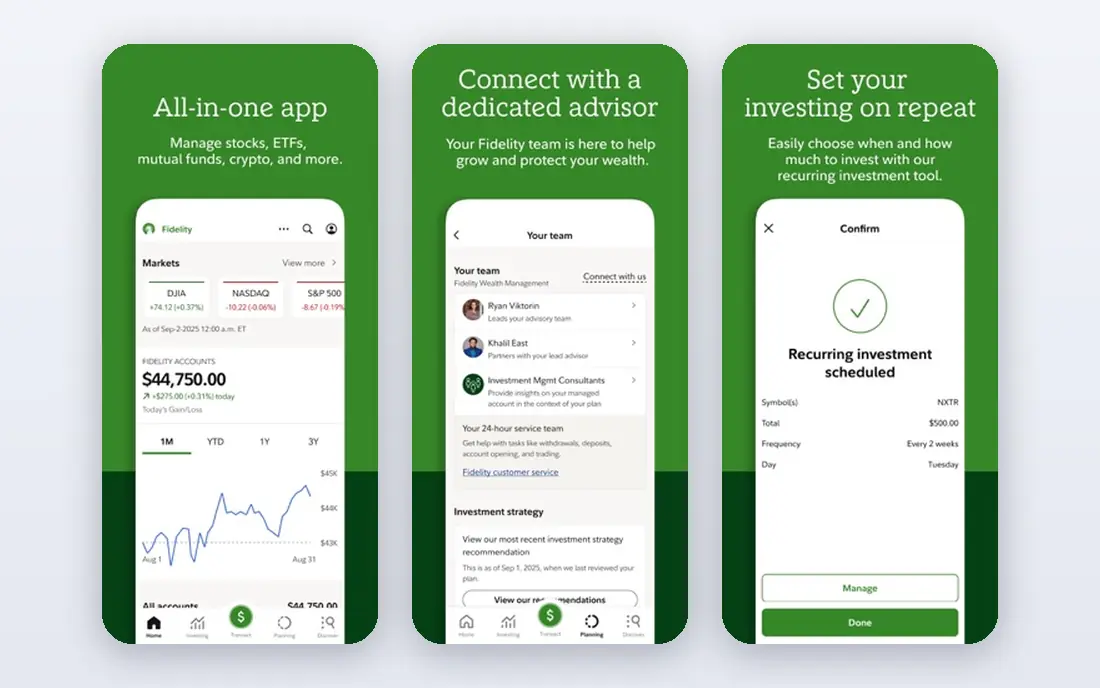
Fidelity fits investors who want research, low-cost ETFs, and account choice in one app. You can screen ETFs by expense ratio, holdings, and performance, buy fractional shares, and hold ETFs in taxable, IRA, and other account types. Its zero-expense-ratio funds and broad ETF range help long-term investors keep costs low.
The catch is breadth. The app covers so much that new investors can feel lost at first, so start with a shortlist of broad index ETFs and learn the research tools gradually. For most ETF investors, Fidelity is the safest all-round starting point.
- Commission-free ETF trades
- Strong research and ETF screeners
- Fractional shares and retirement accounts
- App has many features to learn
- Some advanced tools need time
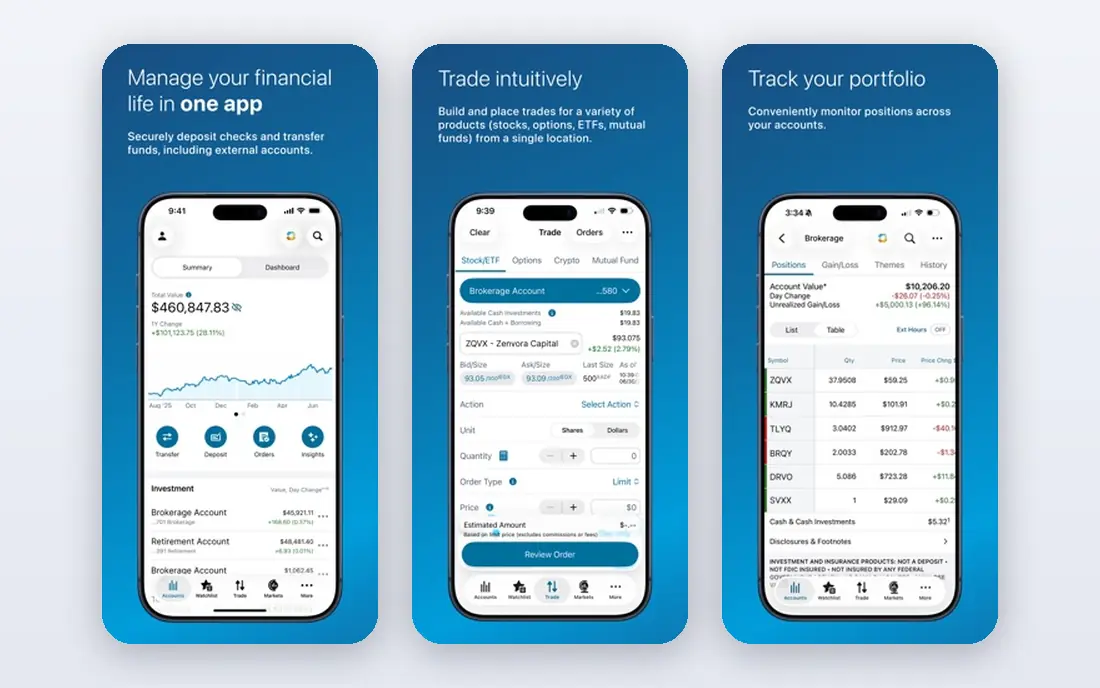
Charles Schwab fits investors who want research depth plus low-cost Schwab ETFs. Screeners, portfolio tools, and education help you compare expense ratios, holdings, and risk, while Stock Slices allow fractional ETF investing from small amounts. Banking and branch support add help when you need a person, not just an app.
The catch is app density. There are many options, and a new investor should focus on the screener, watchlist, and portfolio view first. For long-term ETF investors who value research and support, Schwab is a strong pick.
- Commission-free ETF trades
- Strong research and education
- Fractional shares from $5 in Stock Slices
- App can feel busy for beginners
- Cash yield on uninvested cash is modest
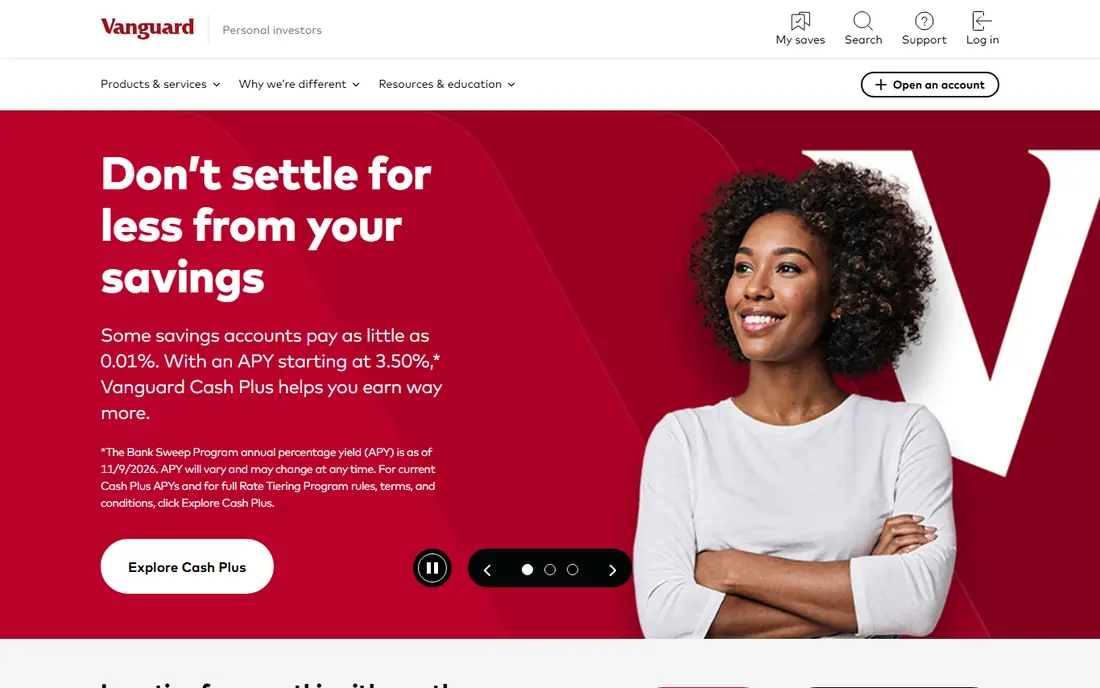
Vanguard fits buy-and-hold investors who want low-cost index ETFs and do not need advanced trading tools. Its own ETFs cover broad markets at low expense ratios, and the app supports long-term accounts and automatic investing. For an investor who buys a few broad ETFs and holds them, that simplicity is a feature.
The catch is the app experience. It feels dated and slower than Fidelity, Schwab, or Robinhood, and active trading tools are basic. If you value low fund costs and a long-term focus over app polish, Vanguard still earns its place.
- Low-cost Vanguard ETFs
- Simple long-term investing focus
- Retirement account support
- App feels dated next to rivals
- Trading tools are basic
M1 Finance fits hands-off investors who want to build an ETF portfolio once and let automation maintain it. Pies hold ETFs in set percentages, deposits spread across the pie, and rebalancing brings allocations back in line. That structure helps investors who want diversification without placing each trade by hand.
The catch is trading windows. M1 executes trades during set windows each trading day, so it is not built for fast intraday trading. Check the platform fee rules for your balance, and use M1 for long-term pies, not for active trading.
- Pie-based ETF portfolios
- Automatic rebalancing and deposits
- Fractional shares across pies
- Trades run in set windows, not instantly
- Some features carry a platform fee
Robinhood fits mobile-first investors who want a simple app for ETF trades. Fractional shares from $1 let you start small, the interface is easy to learn, and you can trade ETFs, stocks, options, and crypto in one app. For a new investor who wants to start with a broad ETF, the low friction helps.
The catch is research depth and support. Research tools are lighter than Fidelity or Schwab, and support is mainly through chat and email. Use Robinhood for simple ETF buying, and use an independent screener or guide for research before you invest.
- Commission-free ETF trades
- Fractional shares from $1
- Very simple mobile app
- Research tools are limited
- Customer support is mainly chat and email
Webull fits active investors who want charting and market data next to ETF trades. Advanced charts, screeners, and paper trading help you practise and test ideas before using real money. Fractional shares and a desktop platform add flexibility for traders who watch markets closely.
The catch is beginner fit. The interface can overwhelm a new investor, and retirement planning depth is lighter than Fidelity or Schwab. For ETF investors who trade actively and want chart tools, Webull is strong. For set-and-forget investing, a simpler app may suit better.
- Commission-free ETF trades
- Advanced charting and paper trading
- Fractional shares
- Interface can overwhelm beginners
- Less retirement and planning depth
SoFi fits investors who want banking and ETF investing in one app. You can hold cash, invest in ETFs with fractional shares, and set up automated investing, all next to SoFi banking and loan products. That single-app view suits younger investors who want money tools together.
The catch is research depth. ETF screeners and analysis are lighter than Fidelity or Schwab, and the fund range is narrower. For simple ETF investing alongside banking, SoFi works well. For deep ETF research, pair it with an independent screener.
- Commission-free ETF trades
- Banking, loans, and investing in one app
- Fractional shares and automation
- ETF research is lighter than specialist brokers
- Fund range is narrower
E*TRADE fits investors who want a solid, established broker for ETF trades. Commission-free ETF trading, screeners, and research cover the core job, and retirement accounts plus managed options suit investors who want help as their portfolio grows. Morgan Stanley ownership adds scale and support depth.
The catch is consistency. The mobile and desktop experiences differ, and some tools take time to learn. For an investor who wants a dependable broker with research and account choice, E*TRADE remains a credible pick.
- Commission-free ETF trades
- Research and screeners
- Retirement and managed options
- App experience varies by platform
- Some tools need learning
How we picked these
We compared apps on ETF trading cost, fractional shares, research and screeners, automation, account types, and app ease. We checked whether each app supports retirement accounts and automatic investing, since those matter for long-term ETF holders. We favoured apps that are available now, offer commission-free ETF trades, and suit a clear investor type, over apps that only offer stock trading with ETFs as an afterthought.
We did not rank apps by returns or by hot ETF tips. ETF choice should start with diversification, expense ratio, and your time horizon, not with recent performance alone. That is why the guide stresses fund costs and regular investing over picking a single winning ETF.
How to choose an ETF app
Start with your ETF plan, not the app design. Decide whether you want broad index ETFs, sector ETFs, or a mix, and how often you will invest. Then check expense ratios, since a small annual difference compounds over decades. A good app should make it easy to see holdings, expense ratio, and past performance without hiding fees.
Next, test automation and accounts. Confirm fractional shares, recurring investments, and retirement account support if you need them. Check whether the app offers rebalancing or automatic deposits, and test a small trade during a trial period. If the app makes regular, diversified investing easy, it fits the job better than a flashy trading app you rarely open.
A final check is to write down your investing plan before you open an account. Decide how much you will invest each month, which broad ETFs fit that plan, and how often you will rebalance, then stick to that schedule through market falls as well as rises. A clear plan matters more than app design, and it helps you judge an app by whether it supports regular investing.
Frequently asked questions
What is the best ETF app for beginners?
Fidelity and Schwab are best for beginners who want research plus low costs, while Robinhood is simplest for a first mobile trade. Vanguard suits beginners who want low-cost index ETFs and do not mind a dated app. Start with broad index ETFs and small, regular amounts.
Can I buy ETFs with $1?
Yes, on apps that offer fractional shares, such as Fidelity, Schwab through Stock Slices, Robinhood, and M1 Finance, subject to each app minimums. Fractional shares let you buy part of an ETF, which helps small investors diversify without waiting for a full share price.
Are ETF trades free?
Most major US brokers now offer commission-free online ETF trades, including Fidelity, Schwab, Vanguard, Robinhood, Webull, SoFi, and E*TRADE. You still pay the ETF expense ratio inside the fund, and other fees such as transfer or advisory fees may apply, so check the fee schedule.
What is the best ETF platform for long-term investing?
Fidelity, Schwab, and Vanguard are strong for long-term ETF investing because of low costs, research, and retirement accounts. M1 Finance adds automation for hands-off portfolios. Long-term success depends more on diversification and regular investing than on app choice alone.
Is ETF investing risky?
Yes, ETF prices can fall, and some sector or used ETFs carry higher risk than broad index ETFs. Diversified broad-market ETFs spread risk across many holdings, but they can still fall in a market downturn. This article is not financial advice, and trading carries risk, so consider your horizon and risk tolerance.
Sources we checked (8)

Online Jobs is an independent blog about careers, online work, learning new skills and the tools that help people earn. More about us.
Keep reading
All posts
n8n Alternatives
n8n alternatives compared for 2026, with Zapier, Make, Activepieces, and more, covering visual builders, code steps, self-hosting, and pricing models.
eBay Alternatives
Looking for ebay alternatives? We compared 9 marketplaces for sellers on fees, buyer reach, categories and ease of listing, to help you sell with confidence.

ZoomInfo Alternatives
The best ZoomInfo alternatives in 2026, compared on price, free plans, data coverage, and which tool fits small teams or large sales teams best in detail.