Best ERP Software for Manufacturing in 2026: 8 Systems Compared

How we put this together: we compare official feature and pricing pages, app store listings, privacy policies and public user reviews. Prices change, so check the provider's site before you pay.
Key takeaways
- SAP S/4HANA is our pick for large manufacturers with complex plants, global operations and strict compliance needs.
- Oracle NetSuite suits growing manufacturers that want a cloud system covering finance, inventory and production in one place.
- Epicor Kinetic and Infor CloudSuite are strong choices for mid-size manufacturers with discrete or process production needs.
- Odoo and Acumatica fit smaller manufacturers that need a lower entry cost and a faster setup.
- An ERP switch is a major project, so price implementation, training and data migration alongside the subscription, not instead of it.
Quick comparison
| Name | Who it suits | Starting price | Free option | |
|---|---|---|---|---|
 SAP S/4HANA | Large, complex manufacturers | See website | No | Visit |
 Oracle NetSuite | Growing cloud manufacturers | See website | No | Visit |
 Microsoft Dynamics 365 | Manufacturers in the Microsoft stack | See website | No | Visit |
 Infor CloudSuite | Mid-size process and discrete makers | See website | No | Visit |
 Epicor Kinetic | Mid-size discrete manufacturers | See website | No | Visit |
 Acumatica | Smaller firms wanting cloud flexibility | See website | No | Visit |
 Sage X3 | Mid-size firms with global needs | See website | No | Visit |
 Odoo | Small manufacturers on a budget | See website | Free trial | Visit |
The best erp software for manufacturing
Manufacturing ERP software ties together production planning, inventory, purchasing, shop floor work, quality and finance. A good system shows what to make, what materials you need, what capacity you have and what each job really costs. We compared official product pages and documentation for systems that are live and widely used by manufacturers in 2026, across factory sizes and production types.
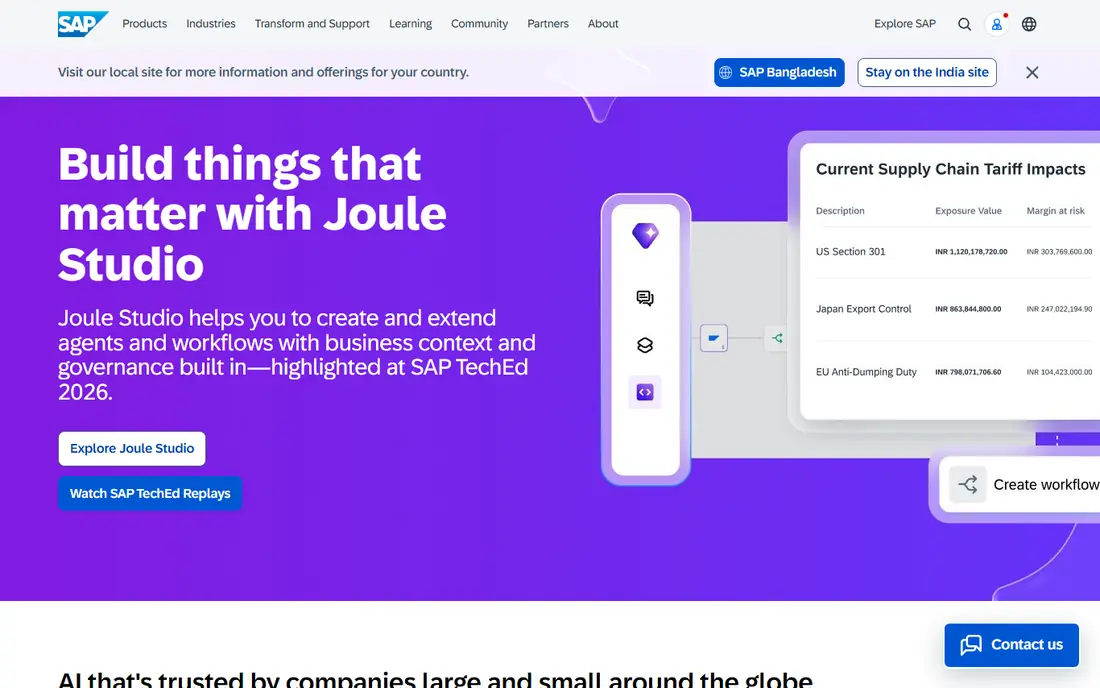
SAP S/4HANA is the system large manufacturers choose when complexity is the main problem. It covers advanced planning, production execution, quality, warehouse management and finance in one platform, with support for multiple plants, countries and currencies. For a company with complex bills of material, regulated processes or global supply chains, that depth is hard to match.
The cost is equally serious. Implementation takes months or longer, and it needs strong project leadership and experienced consultants. Smaller manufacturers will find it more system than they need, and the total cost can distract from simpler wins. Choose SAP when scale and complexity justify a major program, not when a simpler cloud ERP would cover your shop.
- Deep production, planning and finance coverage
- Strong fit for multi-plant and global operations
- Broad partner and integration ecosystem
- High cost and long implementation
- Needs experienced internal and partner teams
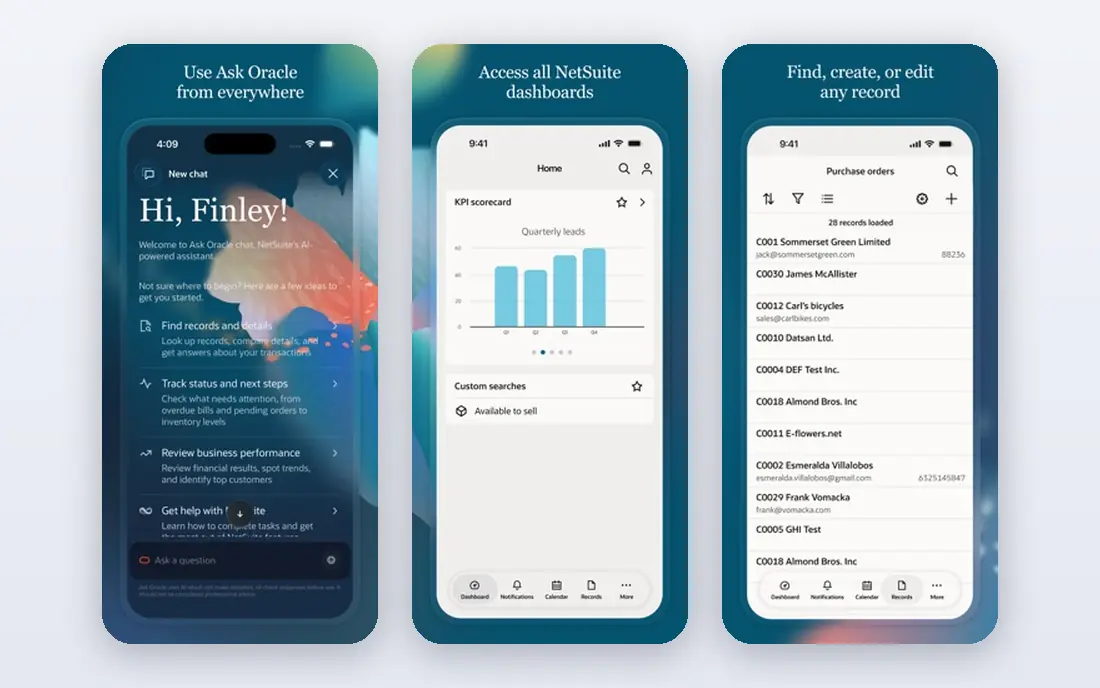
Oracle NetSuite is a cloud ERP that many growing manufacturers pick when they outgrow separate accounting and inventory tools. It covers financials, order management, inventory, procurement and manufacturing, including work orders, assemblies and demand planning. Because it is cloud-based, updates and multi-subsidiary handling are simpler than with an older on-premise system.
The honest catch is that NetSuite is still an ERP project. Implementation, data cleanup and training take real time, and heavy customization can raise costs and slow future updates. It fits manufacturers that are growing, adding sites or selling through several channels, and that want one cloud system rather than a patchwork of tools.
- Cloud finance, inventory and manufacturing in one system
- Good fit for growing multi-site firms
- Regular updates without on-premise upgrades
- Customization and implementation add cost
- Some advanced shop floor needs require partners
Microsoft Dynamics 365
Who it suits: Manufacturers in the Microsoft stack
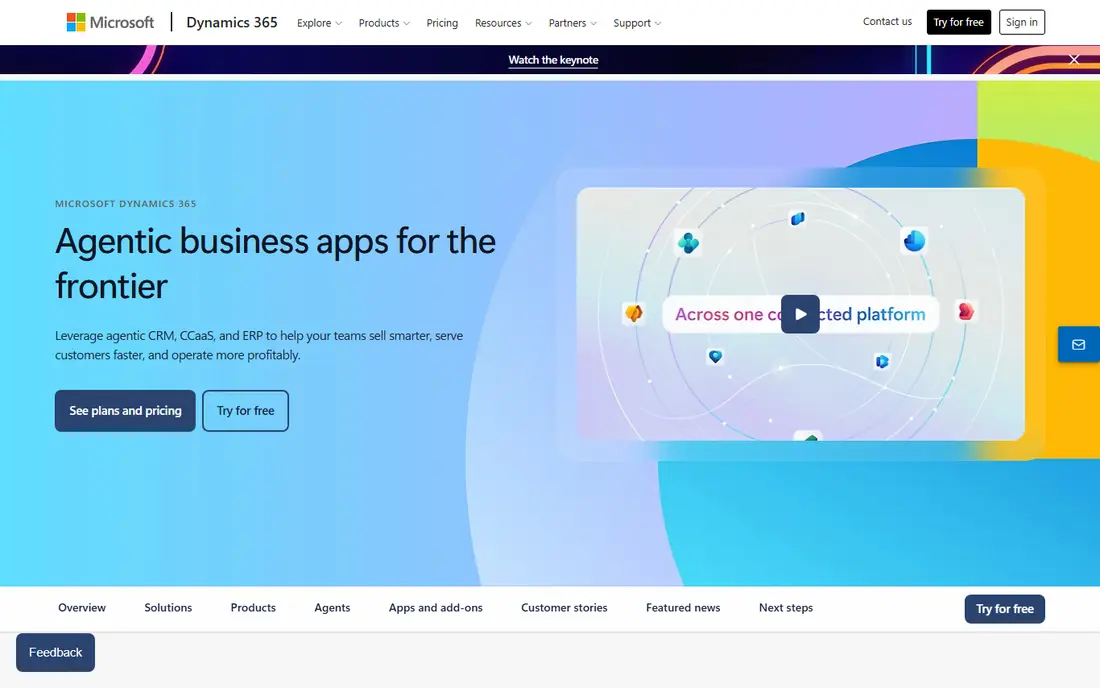
Microsoft Dynamics 365 Supply Chain Management, paired with its finance modules, is a practical choice for manufacturers already running Microsoft 365, Teams and Power BI. Staff often learn it faster, reporting connects well to familiar tools, and the partner network covers many manufacturing niches. It handles planning, production, warehouse and procurement for mid-size to large firms.
Licensing needs care, because different modules and user types carry different costs, and a poor partner choice can lead to a long, costly rollout. Ask for a clear scope, a named implementation team and references from manufacturers like yours. For a Microsoft-centered company, Dynamics 365 is a coherent and capable ERP path.
- Strong supply chain and finance modules
- Familiar tools for teams already using Microsoft products
- Broad partner network for manufacturing
- Licensing and modules can be confusing
- Implementation quality varies by partner
Infor CloudSuite covers several manufacturing editions, including options tuned for industrial, food and beverage, fashion and other sectors. That industry focus is its main appeal: workflows, planning and quality tools reflect how those factories actually run, rather than forcing a generic model onto a specific process. Mid-size manufacturers often find a closer fit here than in a general ERP.
The range of Infor products can confuse buyers, so confirm exactly which CloudSuite edition and modules are in your quote. Pricing is custom, and implementation still needs planning and training time. If your industry has specific traceability, batch or compliance needs, ask for a demo using your own production scenarios.
- Industry-specific editions for manufacturing
- Strong planning, scheduling and quality tools
- Cloud delivery with industry workflows
- Pricing is custom and sales-led
- Product choice within Infor needs careful guidance
Epicor Kinetic, formerly Epicor ERP, is designed around discrete manufacturers that make, assemble and configure products. It covers estimating, job management, scheduling, materials and quality, with costing tools that help managers see which jobs make money. That manufacturing focus shows in the day-to-day screens, which reflect shop floor work rather than generic finance.
It is priced for mid-size firms, so very small shops may find the total cost high, and implementation still needs a careful project plan. For a mid-size discrete manufacturer that wants a system built for its kind of work, Epicor Kinetic is one of the strongest options on this list.
- Built for discrete manufacturing workflows
- Strong job costing, scheduling and inventory tools
- Cloud and on-premise deployment options
- Custom pricing through sales
- Smaller firms may find it more than they need
Acumatica appeals to smaller and mid-size manufacturers that want cloud ERP without per-user pricing pressure. Its licensing is based on usage and resources rather than a strict per-seat charge, which can help firms with many occasional users on the shop floor. Manufacturing, distribution, inventory and finance modules cover the core needs of a growing maker.
As with any partner-delivered ERP, the implementation partner matters a great deal. Check references, confirm who will lead training, and test the system with your own bills of material and routings. For a growing manufacturer that wants cloud flexibility and a lower entry barrier than the largest ERPs, Acumatica is worth a close look.
- Cloud ERP with usage-based licensing
- Manufacturing, inventory and finance in one system
- Easier scaling for growing firms
- Partner quality affects the rollout
- Some advanced features need add-ons
Sage X3 is a proven ERP for mid-size manufacturers, especially those with multiple sites, companies or currencies. It covers production management, inventory, purchasing, sales and finance, with tools for planning and costing. Companies that need solid financial control alongside manufacturing execution often find Sage X3 a good balance.
The system is not the newest-looking cloud product, and implementation still takes planning and training. Firms that want the most modern interface or the simplest signup may prefer a newer cloud ERP. But for a mid-size manufacturer with international or multi-site complexity, Sage X3 remains a dependable choice.
- Strong finance, inventory and production coverage
- Multi-company, multi-currency and multi-site support
- Long track record with mid-size firms
- Implementation can be lengthy
- Interface feels less modern than some cloud rivals
Odoo is the budget-friendly entry point on this list. Its modular design lets a small manufacturer start with inventory, manufacturing and accounting, then add sales, purchasing or quality apps as needed. That flexibility keeps the initial cost down and lets a small team grow into the system gradually.
The limit is depth and discipline. Odoo can handle straightforward manufacturing well, but complex planning, advanced scheduling or regulated traceability may need customization or extra apps. Keep the module list tight, document your workflows, and test production scenarios before you go live. For a small manufacturer that needs a working ERP without an enterprise budget, Odoo is a practical start.
- Modular apps for manufacturing, inventory and sales
- Lower entry cost than enterprise ERPs
- Large app ecosystem for extra functions
- Manufacturing depth varies by setup
- Needs care to avoid a sprawling app patchwork
How we picked these
We compared official vendor pages, product documentation and public information for ERP systems that are live in 2026 and used by manufacturers of different sizes. We included large enterprise systems, mid-size specialists and a budget option, because a ten-person shop and a multi-plant group need very different systems. We favored systems with clear manufacturing modules for planning, inventory, production and costing, rather than general accounting tools with a manufacturing label added on.
We did not claim hands-on factory testing, and we did not invent prices or performance claims. Where a vendor does not publish a price, we wrote See website. Get a written quote that covers licenses, implementation, data migration, training and support, since those items often cost more than the first year of subscription.
What to check before you buy a manufacturing ERP
An ERP decision lasts for years, so test the system against your real factory work, not a generic demo.
Test your own products and routings
Bring your bills of material, routings, lead times and a few real jobs to the demo. Watch how the system plans materials, schedules capacity and costs a job, including scrap, rework and overtime. A system that handles a simple assembly well may still struggle with your most complex product.
Price the full project
Add implementation, partner fees, data migration, integration with machines or warehouse tools, training and support. Ask how long a rollout usually takes for a company your size, and what happens if the scope grows. A low license quote means little if the project runs twice as long as planned.
Plan for change on the shop floor
ERP success depends on operators, planners and warehouse staff using the system every day. Check mobile and shop floor usability, offline handling if relevant, and training options. Involve shop floor leads early, since they will spot workflow problems that managers miss.
Frequently asked questions
What is the best ERP software for manufacturing?
SAP S/4HANA fits large, complex manufacturers, while Oracle NetSuite suits growing cloud-based firms. Epicor Kinetic and Infor CloudSuite are strong for mid-size manufacturers, and Odoo fits smaller shops on a budget. The best choice depends on factory size, production type and how much implementation help you can support.
What are the top ERP software systems for manufacturing?
The top names include SAP S/4HANA, Oracle NetSuite, Microsoft Dynamics 365, Infor CloudSuite, Epicor Kinetic, Acumatica, Sage X3 and Odoo. Each serves a different size and production style, from global multi-plant groups to small single-site makers. Shortlist by your production type first, then compare cost and partner fit.
What is the best manufacturing ERP software for small businesses?
Small manufacturers often do best with Odoo or Acumatica, because entry costs are lower and setup is faster than with enterprise systems. The right pick depends on whether you need simple assembly and inventory control, or more advanced planning and costing. Test both with your own products before you commit.
Is NetSuite good for manufacturing?
NetSuite works well for growing manufacturers that want cloud finance, inventory, order management and production in one system. It covers work orders, assemblies and demand planning, and it scales across sites and subsidiaries. It is less suited to very small shops or to factories with highly specialized shop floor needs that require heavy customization.
How long does a manufacturing ERP implementation take?
Timelines vary widely by size and complexity. A small manufacturer may go live in a few months, while a mid-size or large rollout can take a year or more. Data cleanup, process changes and training usually take longer than software setup, so build buffer time into any plan and avoid cutting training to hit a date.
Sources we checked (8)
- https://www.sap.com/products/erp/s4hana.html
- https://www.netsuite.com/portal/products/erp.shtml
- https://dynamics.microsoft.com/en-us/erp/
- https://www.infor.com/products/cloudsuite-industrial
- https://www.epicor.com/en-us/products/erp/kinetic/
- https://www.acumatica.com/
- https://www.sage.com/en-us/sage-business-cloud/sage-x3/
- https://www.odoo.com/

Online Jobs is an independent blog about careers, online work, learning new skills and the tools that help people earn. More about us.
Keep reading
All posts
ZoomInfo Alternatives
The best ZoomInfo alternatives in 2026, compared on price, free plans, data coverage, and which tool fits small teams or large sales teams best in detail.

Workday Alternatives
We compared the best workday alternatives for HR, payroll, and global hiring, from BambooHR and Gusto to Rippling, Deel, and HiBob for growing teams in 2026.
Which SaaS Tools Have the Best Customer Support
Which SaaS tools have the best customer support? Compare eight popular tools on help centres, live help, response options and overall support quality.