Best Enterprise Asset Management Software in 2026: 9 Platforms Compared


Large asset-intensive enterprises · Starting price: See website
How we put this together: we compare official feature and pricing pages, app store listings, privacy policies and public user reviews. Prices change, so check the provider's site before you pay.
Key takeaways
- IBM Maximo, SAP EAM and Oracle EAM are the true enterprise tier, built for tens of thousands of assets and complex compliance needs.
- Mid-market platforms like Fiix, UpKeep, MaintainX and Limble cover most maintenance work at a fraction of the enterprise cost and setup time.
- Enterprise pricing is almost always quoted, so budget for implementation and training on top of the licence, not just the subscription.
- The right pick follows your existing ERP: SAP shops gain most from SAP EAM, Oracle shops from Oracle EAM, and everyone else should weigh Maximo against a mid-market tool.
Quick comparison
| Name | Who it suits | Starting price | Free option | |
|---|---|---|---|---|
| IBM Maximo | Large asset-intensive enterprises | See website | No | Visit |
 SAP EAM | Companies already on SAP S/4HANA | See website | No | Visit |
 Oracle EAM | Companies on Oracle Fusion Cloud | See website | No | Visit |
 Hexagon HxGN EAM | Asset-intensive mid-market to enterprise | See website | No | Visit |
 Fiix | Manufacturing teams moving off spreadsheets | $45 per user per month | Yes | Visit |
 UpKeep | Multi-site maintenance teams | See website | Free trial | Visit |
 MaintainX | Mobile-first frontline teams | Free | Yes | Visit |
 Limble | Teams that need deep asset hierarchies | See website | Free trial | Visit |
 eMaint | Mid-market industrial operations | See website | Free trial | Visit |
The best enterprise asset management software
Enterprise asset management software tracks the full life of physical assets, from purchase and installation through maintenance, repair and replacement. It differs from a simple work order tool by adding lifecycle costing, compliance records and capital planning, which matter when downtime stops production.
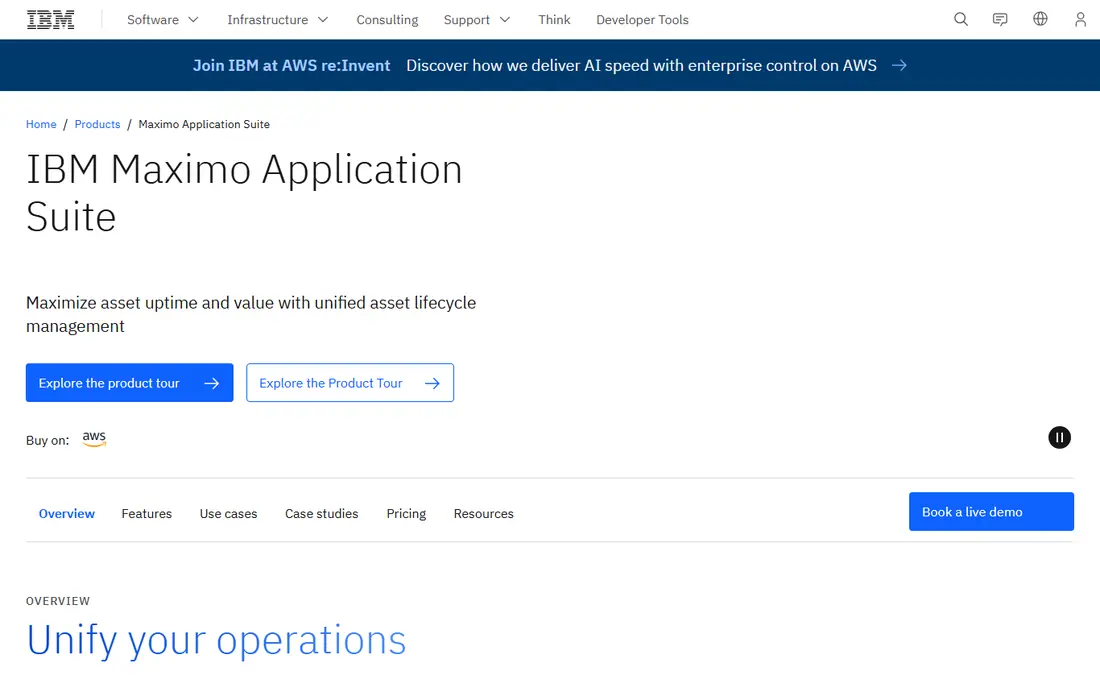
IBM Maximo is the benchmark most enterprise buyers measure against, with asset lifecycle management, preventive and predictive maintenance, safety management and inventory control in one suite. Utilities, transport, manufacturing and energy companies use it to track large fleets of assets with audit trails that stand up to regulators. Its predictive monitoring tools help teams spot failing equipment before it stops a line.
That depth comes with weight. Licensing uses IBM AppPoints and is quoted, implementation usually needs consultants and months of work, and total cost rises quickly for large user counts. Buy Maximo when the portfolio genuinely needs that scale. Smaller operations will find a mid-market tool faster and cheaper.
- Deepest lifecycle coverage
- Reliability and safety modules
- Scales across many sites
- Quote-based licensing
- Long partner-led implementation
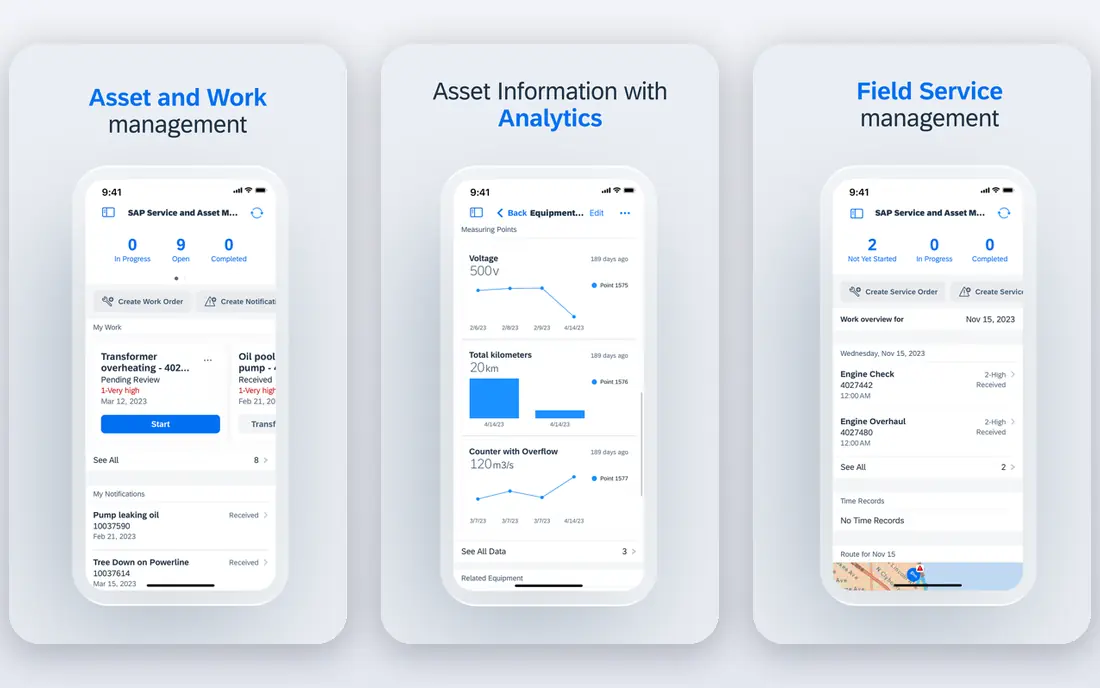
SAP EAM makes most sense inside a company that already runs SAP, because maintenance, materials, finance and procurement then share one system of record. Plant maintenance, asset lifecycle costing and shutdown planning tie directly to SAP data, which avoids duplicate entry and reconciliation. For a global manufacturer on S/4HANA, that integration is the main reason to choose it.
Outside SAP, the case weakens. Pricing is custom and ERP-led, projects run long, and a standalone buyer gets less value for the effort. If your company is not already committed to SAP, compare Maximo and the mid-market options before signing an ERP project to get asset management.
- Native fit with SAP finance and supply chain
- Strong plant maintenance
- Global scale
- Custom ERP-led pricing
- Heavy implementation for non-SAP shops
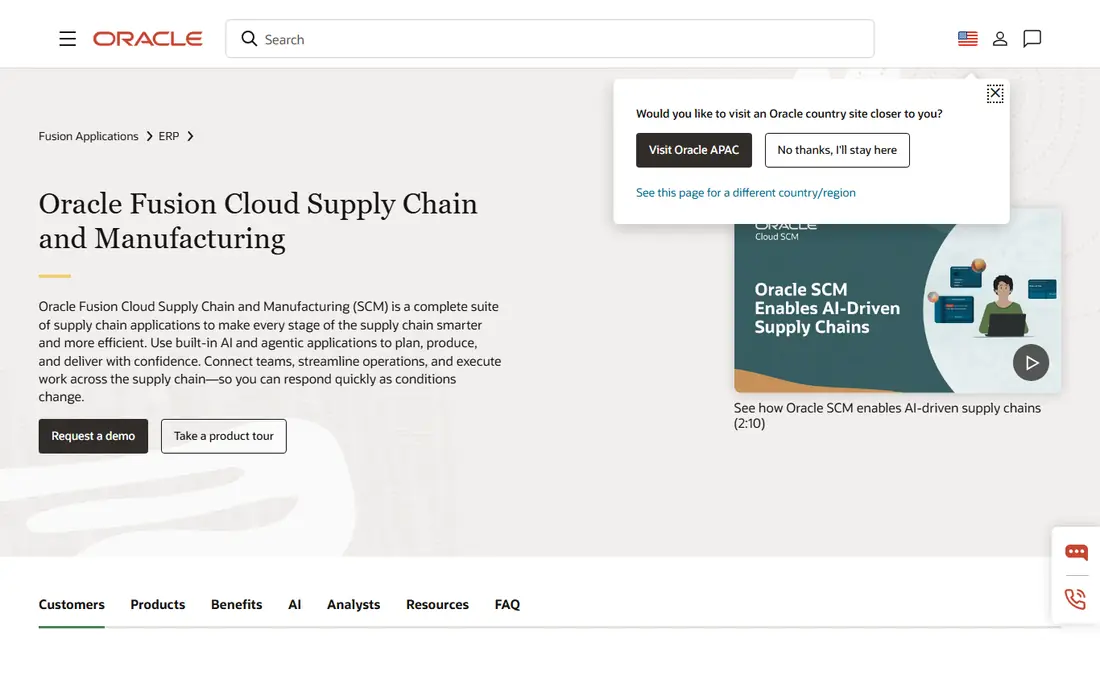
Oracle EAM suits enterprises already on Oracle Fusion Cloud Supply Chain Management, where maintenance, inventory and finance need to stay connected. Asset tracking, work management and maintenance planning sit alongside procurement and costing, which helps finance teams see true asset cost. Mining, manufacturing and metals companies with Oracle backbones are its natural audience.
Reviewers often note a steep interface and heavy training needs, and connecting to non-Oracle systems takes more work than with standalone tools. The pick is clearest for Oracle shops. Others should test whether the integration benefit outweighs that friction.
- Tight fit with Oracle ERP and supply chain
- Strong asset tracking
- Analytics links
- Custom pricing
- Integration outside Oracle can be harder
HxGN EAM, formerly known by its earlier name in the Hexagon portfolio, serves asset-intensive operations that need enterprise controls without a full ERP project. Utilities, facilities and public sector teams use it for work management, preventive maintenance and asset performance tracking across sites. Deployment options include cloud and on-premise, which matters for regulated operators.
It is still an enterprise purchase, with quoted pricing and a planned rollout, so small teams should look further down this list. For a mid-market operator that needs compliance depth and multi-site control, it sits between Maximo and the simpler CMMS tools.
- Strong for utilities and public sector
- Configurable workflows
- Cloud or on-premise options
- Quote-based pricing
- Implementation still needs planning
Fiix is the practical step up from spreadsheets for a manufacturing or facilities team that needs work orders, preventive maintenance and parts tracking without an enterprise project. The free plan lets a small team start, and published pricing makes budgeting simple. Mobile work orders with photos help technicians close jobs from the floor.
It does not match Maximo on capital planning or complex reliability modelling, and large multi-site portfolios may need more governance. For a single plant or a small portfolio, that trade is worth it, since the team can be live in weeks rather than months.
- Published pricing with a free plan
- Clear work order and preventive maintenance tools
- Fast setup
- Lacks full enterprise lifecycle depth
- Advanced analytics need higher tiers
UpKeep targets growing maintenance teams in manufacturing, property and hospitality that want a mobile-first tool without a six-month project. Technicians create and complete work orders on a phone, attach photos, and build an asset history that managers can search. Preventive maintenance by time, meter or condition keeps routine work on schedule.
Pricing varies by tier and module, so request a quote at your user count before budgeting. It fits teams that have outgrown spreadsheets but are not ready for enterprise EAM, and it scales across sites better than a basic CMMS.
- Mobile-first work orders
- Asset history in one view
- Good for regulated sites
- Pricing not fully published
- Costs rise with users and modules
MaintainX wins on adoption, because frontline teams actually use it. The free basic plan covers work orders and requests, and paid tiers add preventive maintenance, parts and reporting. Multi-shift operations benefit from clear task lists and messaging around each job, which reduces handover gaps.
It is a CMMS at heart, so capital planning and deep reliability analysis are lighter than in enterprise EAM suites. For most maintenance teams, that is fine. Choose MaintainX when getting technicians onto the system quickly matters more than enterprise modelling.
- Free basic plan
- Simple mobile work orders
- Requester accounts at no cost
- Enterprise controls are thinner than Maximo
- Higher tiers needed for advanced reporting
Limble suits maintenance teams that manage complex equipment trees, where a pump belongs to a line that belongs to a plant, and history must follow that structure. Asset hierarchies, preventive schedules and parts tracking are its core strengths, and setup is faster than enterprise tools. Small and mid-size teams often pick it for that balance of depth and ease.
The main drawback is pricing transparency, since full tier prices need a conversation with sales. Teams that need deep SAP or Oracle integration should also check that fit early, since Limble is strongest as a standalone maintenance system.
- Detailed asset hierarchies
- Strong preventive maintenance
- Approachable setup
- Pricing requires a quote for full tiers
- Less ERP depth than enterprise suites
eMaint has served mid-market manufacturing and industrial teams for years, with configurable work orders, preventive maintenance and inventory tools. Its strength is flexibility: forms, workflows and reports can be shaped to a plant's existing process rather than forcing a new one. That matters for teams with established compliance paperwork.
Newer tools look fresher on mobile, and eMaint pricing needs a quote, so budgeting takes a sales call. For an industrial team that values configurability and a proven record over a modern interface, it remains a solid shortlist option.
- Configurable forms and workflows
- Solid preventive maintenance
- Long market history
- Interface feels dated next to newer rivals
- Pricing is quoted
How we picked these
We compared official product pages, pricing pages and documentation for each platform, plus public buyer reviews. We kept tools that manage full asset lifecycles or, for the mid-market tier, cover work orders, preventive maintenance and asset history at a level that can grow into enterprise use. Where pricing is quoted, we wrote See website instead of repeating third-party estimates as fact.
What to check before you choose
Start by mapping your asset count, site count and compliance needs, since those decide whether you need enterprise EAM or a strong CMMS. A single plant with a few hundred assets rarely needs Maximo, while a utility with thousands of regulated assets does. List the integrations you cannot live without, especially ERP, finance and inventory, and confirm each one with the vendor in writing.
Total cost, not just licence cost
Enterprise projects often cost more in implementation, data migration and training than in the first year of licences. Ask for a full first-year estimate, including partner hours, and check how long similar customers took to go live.
Adoption on the shop floor
The best asset data comes from technicians who complete work orders on time. Trial the mobile app with real technicians, not just managers, and check offline behaviour in areas with weak signal.
Compliance and reporting
If regulators audit your maintenance history, confirm audit trails, approval workflows and report exports meet your rules. A tool that cannot produce a clean history on demand will cost more in audit time than it saves in licence fees.
Frequently asked questions
What is the best EAM software for a large enterprise?
IBM Maximo is the most widely used enterprise benchmark, while SAP EAM and Oracle EAM lead for companies already on those ERP platforms. The best choice follows your existing systems and asset complexity, not a single ranking.
What is the difference between EAM and CMMS software?
A CMMS focuses on work orders, preventive maintenance and parts. EAM adds full lifecycle costing, capital planning, risk and compliance depth across the asset life. Many modern tools blur the line, so judge by the features you need rather than the label.
What are the best enterprise asset management platforms for mid-market companies?
Fiix, UpKeep, MaintainX and Limble cover most mid-market needs at lower cost and faster setup than enterprise suites. They suit teams with up to a few thousand assets and a handful of sites.
How much does enterprise asset management software cost?
Mid-market tools often start from free or around $45 per user per month, while enterprise suites are quoted and can reach six figures a year for large deployments. Always budget implementation on top of the licence.
Does EAM software integrate with IoT sensors?
Enterprise suites and several mid-market tools support sensor data and condition monitoring, but the depth varies. Confirm which sensor platforms and data feeds each vendor supports before buying for predictive maintenance.
Can small teams use EAM software?
Yes, through a CMMS tier such as MaintainX or Fiix, which offer free plans and simple setup. Small teams should start there and move up only when asset count or compliance needs demand it.
Sources we checked (9)
- https://www.ibm.com/products/maximo
- https://www.sap.com/products/scm/enterprise-asset-management.html
- https://www.oracle.com/scm/maintenance/
- https://hexagon.com/products/hxgn-eam
- https://www.fiixsoftware.com/pricing
- https://upkeep.com/pricing
- https://www.maintainx.com/pricing
- https://limblecmms.com/pricing
- https://www.emaint.com

Online Jobs is an independent blog about careers, online work, learning new skills and the tools that help people earn. More about us.
Keep reading
All posts
n8n Alternatives
n8n alternatives compared for 2026, with Zapier, Make, Activepieces, and more, covering visual builders, code steps, self-hosting, and pricing models.

ZoomInfo Alternatives
The best ZoomInfo alternatives in 2026, compared on price, free plans, data coverage, and which tool fits small teams or large sales teams best in detail.

Workday Alternatives
We compared the best workday alternatives for HR, payroll, and global hiring, from BambooHR and Gusto to Rippling, Deel, and HiBob for growing teams in 2026.