Best English Speaking Practice Apps in 2026: 9 Products Compared


Pronunciation and accent drills · Starting price: $11.99 per month
How we put this together: we compare official feature and pricing pages, app store listings, privacy policies and public user reviews. Prices change, so check the provider's site before you pay.
Key takeaways
- Speaking time matters more than lesson count, so we favour apps that get you talking in every session.
- AI tutors suit daily low-pressure practice, while live tutors suit learners who need real conversation and correction.
- Free plans are useful for a habit, but live tutor time and detailed feedback usually sit behind a paid plan.
- A short daily session you actually keep is worth more than a long plan you abandon after a week.
Quick comparison
| Name | Who it suits | Starting price | Free option | |
|---|---|---|---|---|
| ELSA Speak | Pronunciation and accent drills | $11.99 per month | Yes | Visit |
 Cambly | Live video talk with native speakers | $39 per month | Free trial | Visit |
 Speak | Structured AI speaking lessons | $17.99 per month | Free trial | Visit |
 italki | Choosing your own live tutor | See website | Free trial | Visit |
 Preply | Regular lessons with one tutor | See website | Free trial | Visit |
 Duolingo | Free daily habit for beginners | Free | Yes | Visit |
 HelloTalk | Free language exchange with native speakers | Free | Yes | Visit |
 Tandem | Language exchange with tutor options | Free | Yes | Visit |
 Speechling | Recorded practice with coach feedback | See website | Yes | Visit |
The best english speaking practice apps
English speaking improves when you speak often, not when you only read about speaking. We compared AI tutors, live tutor marketplaces, and language exchange apps on speaking time, feedback, and price.
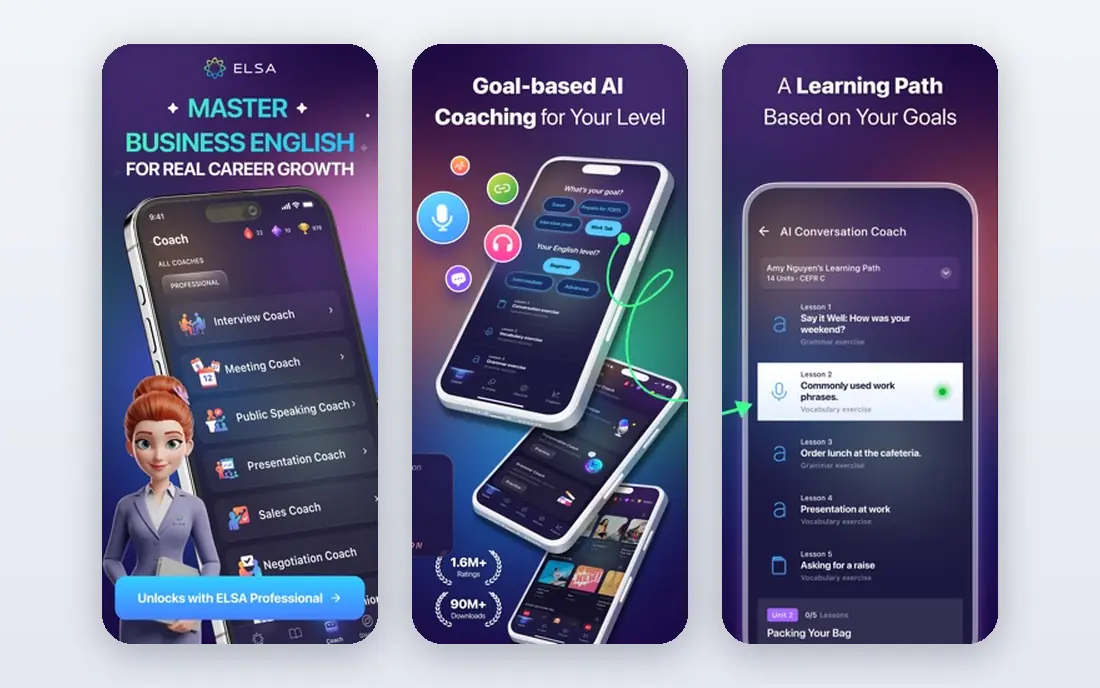
ELSA Speak fits learners whose main problem is pronunciation rather than vocabulary. The app listens to single sounds, words, and sentences, then points to where your version differs from its model.
It suits short daily practice, because lessons are brief and you can repeat a drill until the sound feels more natural. That structure helps if you know which sounds cause trouble in meetings or calls.
The catch is that it does not replace conversation. Use it to clean up sounds, then practise those sounds in real talk with a tutor or exchange partner. Before you subscribe, check the vendor pricing page for the current plan, because prices and plan inclusions change, and confirm that the features you need sit on the plan you will actually buy. A short trial with your own data or daily routine will tell you more than a feature list alone.
- Focused pronunciation feedback
- Short daily lessons
- Free plan to try
- Feedback is limited to set exercises
- Not a live conversation app
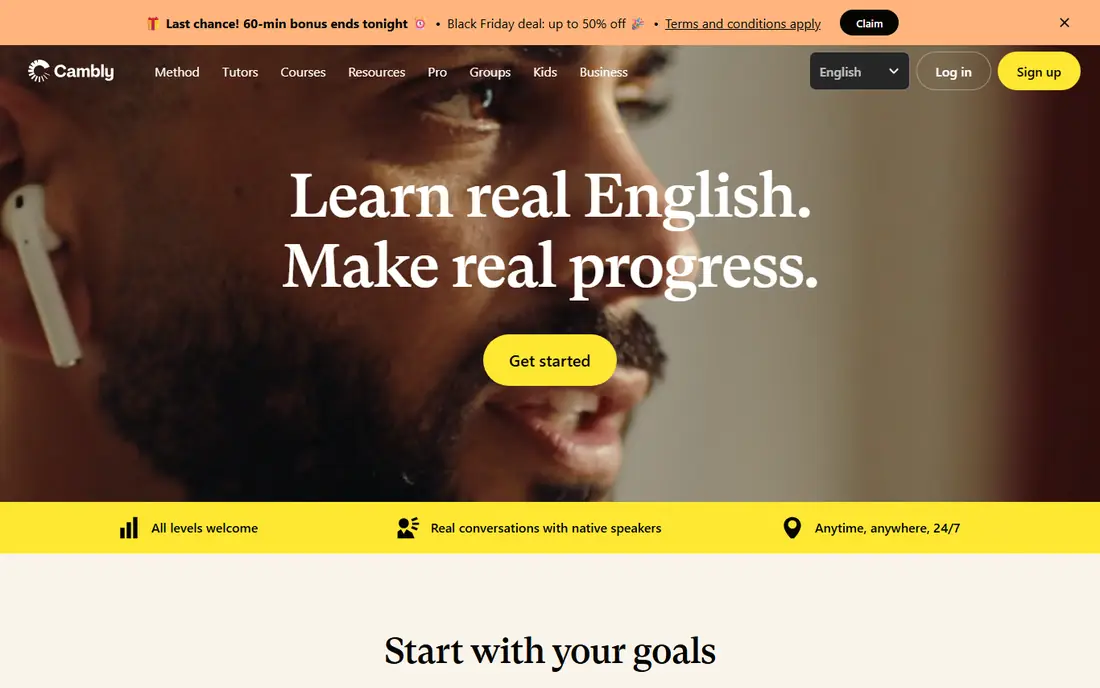
Cambly fits learners who want live video conversation without booking far ahead. You can join a tutor when you have time, talk about a topic you choose, and get correction in real time.
It suits intermediate and advanced learners who already have basic grammar and want fluency, work talk, or interview practice. The video format adds body language and listening cues that audio-only practice misses.
The catch is price and variation. Tutors differ in style, so try a few early on, and check how many minutes your plan actually gives you each week. Before you subscribe, check the vendor pricing page for the current plan, because prices and plan inclusions change, and confirm that the features you need sit on the plan you will actually buy. A short trial with your own data or daily routine will tell you more than a feature list alone.
- On-demand live tutors
- Video conversation
- Flexible scheduling
- Higher cost than AI apps
- Tutor quality varies by tutor
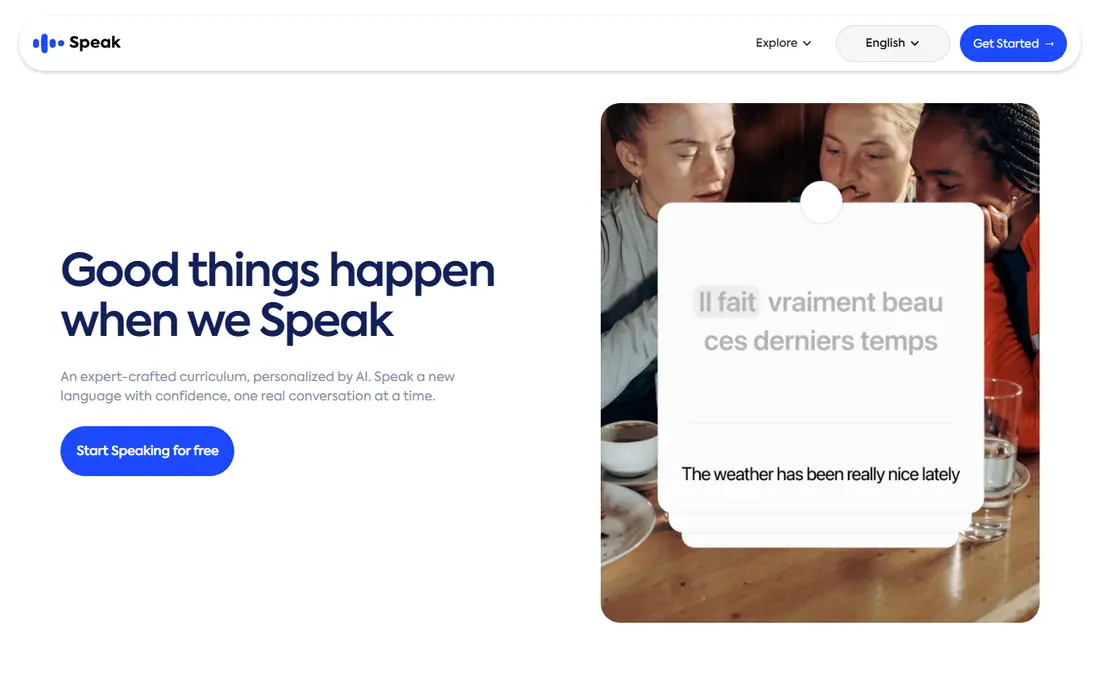
Speak fits learners who want a guided path rather than open chat. Lessons follow a structure, the AI tutor asks questions, and you answer in full sentences instead of tapping multiple-choice options.
It suits daily practice when live tutors are too costly or hard to schedule. The instant feedback helps you notice grammar and word choice errors soon after you make them.
The catch is that AI conversation can feel predictable after a while. Pair it with real conversation when you can, so your speaking stays natural under real time pressure. Before you subscribe, check the vendor pricing page for the current plan, because prices and plan inclusions change, and confirm that the features you need sit on the plan you will actually buy. A short trial with your own data or daily routine will tell you more than a feature list alone.
- Guided AI conversation
- Lesson structure
- Instant feedback
- AI only, so no human nuance
- Plan cost adds up over a year
italki fits learners who want control over tutor, price, and schedule. You pick a tutor by language, price, and reviews, then book single lessons instead of committing to a monthly plan.
It suits learners with irregular schedules or specific goals, such as exam prep, job interviews, or presentation practice. A good tutor can build lessons around your work and correct recurring errors over time.
The catch is choice overload. Read tutor profiles and trial lessons carefully, and keep notes after each lesson so the next session builds on the last one. Before you subscribe, check the vendor pricing page for the current plan, because prices and plan inclusions change, and confirm that the features you need sit on the plan you will actually buy. A short trial with your own data or daily routine will tell you more than a feature list alone.
- Pay per lesson
- Huge tutor choice
- No fixed subscription needed
- Prices vary widely by tutor
- You must manage your own schedule
Preply fits learners who want a regular tutor and a steady weekly routine. After matching, you meet the same tutor, which helps the tutor learn your errors and track your progress.
It suits learners preparing for an exam or a work goal, where consistency matters more than one-off chats. Regular sessions build confidence because the tutor knows what you practised last week.
The catch is commitment. If your schedule changes often, a pay-per-lesson marketplace may fit better than a regular weekly plan. Before you subscribe, check the vendor pricing page for the current plan, because prices and plan inclusions change, and confirm that the features you need sit on the plan you will actually buy. A short trial with your own data or daily routine will tell you more than a feature list alone.
- Structured tutor matching
- Regular weekly lessons
- Progress tracking
- Subscription model suits regular learners best
- Tutor fit still matters
Duolingo fits beginners who need a free, low-friction daily habit. Short lessons, streaks, and reminders help you return each day, and speaking exercises appear alongside listening and reading tasks.
It suits learners starting from zero or rebuilding basics, and it works well as a warm-up before a tutor session. The free tier means you can test whether daily practice fits your routine without paying.
The catch is depth. Speaking prompts are short and scripted, so you will need conversation practice elsewhere once you can form basic sentences. Before you subscribe, check the vendor pricing page for the current plan, because prices and plan inclusions change, and confirm that the features you need sit on the plan you will actually buy. A short trial with your own data or daily routine will tell you more than a feature list alone.
- Free tier
- Gamified streaks
- Short lessons
- Speaking practice is limited
- Not enough alone for fluency
HelloTalk fits learners who want free conversation with native speakers and are happy to help others learn their language in return. You can chat by text, send voice messages, and arrange calls.
It suits social learners who enjoy meeting people and talking about daily life. The community is large, so you can often find partners in your time zone and at your level.
The catch is that partners are not trained tutors. Corrections may be brief or missing, so bring your own questions and note errors to review later. Before you subscribe, check the vendor pricing page for the current plan, because prices and plan inclusions change, and confirm that the features you need sit on the plan you will actually buy. A short trial with your own data or daily routine will tell you more than a feature list alone.
- Free exchange with native speakers
- Text, voice, and calls
- Large community
- Partners are learners, not teachers
- Correction quality varies
Tandem fits learners who want language exchange with the option to book a tutor when they need structured help. The free exchange side keeps costs low, while tutors add guidance for specific goals.
It suits learners who like talking about real topics and who can keep a regular exchange going. A steady partner can become a useful weekly speaking habit if you both show up.
The catch is reliability. Exchange partners may cancel or drift away, so have a backup plan, such as an AI app, for weeks when no partner is available. Before you subscribe, check the vendor pricing page for the current plan, because prices and plan inclusions change, and confirm that the features you need sit on the plan you will actually buy. A short trial with your own data or daily routine will tell you more than a feature list alone.
- Free exchange
- Community features
- Optional paid tutors
- Exchange quality varies
- Tutors cost extra beyond the free plan
Speechling fits learners who want feedback but feel shy about live calls. You record sentences, a coach reviews them, and you hear corrections you can repeat.
It suits learners who need pronunciation and sentence rhythm work in a calm setting. The repetition format helps you fix sounds without the pressure of a live conversation.
The catch is that recorded practice is not the same as thinking on your feet. Use it to build accuracy, then add live talk so you can handle unplanned questions. Before you subscribe, check the vendor pricing page for the current plan, because prices and plan inclusions change, and confirm that the features you need sit on the plan you will actually buy. A short trial with your own data or daily routine will tell you more than a feature list alone.
- Coach feedback on recordings
- Sentence repetition
- Free tier
- Feedback is not live
- Practice is more scripted than free conversation
How we picked these
We compared apps that focus on speaking, not only vocabulary or grammar, and we checked each vendor pricing page and app store listing for the starting price and free option shown here. We looked at format, feedback style, tutor choice, and how easy it is to practise daily. We did not claim to test every tutor, and prices can vary by region and billing period, so check the vendor page before you subscribe.
How to pick an English speaking app
Start with how much real speaking time you get. Some apps give you short drills and a lot of listening, while others put you in conversation for most of the session. If your goal is fluency, count the minutes you spend talking, not the number of lessons you finish.
Next, decide between AI and human feedback. AI tutors are patient, always available, and good for repetition, but they cannot always catch the tone and context a human tutor can. Human tutors cost more, but they can correct you in the moment and adapt to your job, exam, or daily life.
Then check the level and the topics. Beginners need simple prompts and slow, clear models, while intermediate learners need debate, work talk, and longer answers. Look for topic lists, role plays, and exam-style tasks that match your reason for learning, rather than a generic course.
Finally, test the habit before you pay for a year. Use a free plan or a short trial for a week, note how often you open the app, and check whether the feedback helps you fix the same mistake twice. A plan that fits your schedule and budget will beat a larger plan you stop using.
Frequently asked questions
What is the best free app to practise English speaking?
Duolingo, HelloTalk, and Tandem all offer free ways to practise, but they work in different ways. Duolingo suits beginners building a daily habit, while HelloTalk and Tandem connect you with other learners for exchange. If you need structured feedback, a free plan alone may not be enough.
Are AI tutors as good as live tutors?
AI tutors are good for frequent, low-pressure repetition and pronunciation drills, and they are available at any hour. Live tutors are better for natural conversation, cultural context, and feedback on longer answers. Many learners use both: AI for daily drills and a live tutor for weekly conversation.
How much time should I practise each day?
A focused session of 15 to 30 minutes a day is a realistic target for most learners, with longer sessions on days when you have time. Short, regular speaking beats one long session a week, because fluency depends on recall under time pressure. Track speaking minutes, not just app streaks.
Do I need to be intermediate to use a live tutor?
No, many tutors work with beginners, and some platforms let you filter by level and topic. Tell the tutor your level in the first message, and ask for slow speech and simple questions at the start. If a tutor moves too fast, try another tutor rather than giving up on live practice.
Can an app fix my pronunciation?
An app can help you hear and repeat sounds, stress, and intonation, and AI feedback can flag sounds that differ from its model. It cannot replace a trained ear for every accent issue, so record yourself and compare your version with the model. For persistent problems, a live tutor or coach can give targeted drills.
Sources we checked (9)

Online Jobs is an independent blog about careers, online work, learning new skills and the tools that help people earn. More about us.
Keep reading
All posts
Best Free Language Apps
Compare the best free language apps in 2026, from Duolingo to HelloTalk, and find the free plan that fits your goals, time, and language level right now.

Best Apps to Learn Portuguese
Compare the best app to learn Portuguese in 2026, from free daily practice and structured courses to audio lessons, tutors, and Brazilian or European options.

9 Best Apps to Learn Italian for Travel, Study and Conversation
Compare the best apps to learn Italian, from Duolingo and Babbel to italki and Pimsleur, with free options, speaking practice and travel tips included.