9 Best Apps to Learn Italian for Travel, Study and Conversation

How we put this together: we compare official feature and pricing pages, app store listings, privacy policies and public user reviews. Prices change, so check the provider's site before you pay.
Key takeaways
- Duolingo is the best free Italian language app for starting a daily habit, while Babbel suits learners who want grammar explained.
- Pimsleur and italki suit speaking and listening, while Memrise and LingQ suit vocabulary and reading.
- No app alone makes you fluent, so pair a core app with real conversation when you can.
- The best app to learn Italian fast for travel is not the same as the best app for long-term study, so pick by goal.
Quick comparison
| Name | Who it suits | Starting price | Free option | |
|---|---|---|---|---|
 Duolingo | Free daily habit | Free | Yes | Visit |
 Babbel | Structured grammar and dialogue | See website | No | Visit |
 Rosetta Stone | Immersion-style lessons | See website | No | Visit |
 Pimsleur | Audio speaking practice | See website | No | Visit |
 Busuu | Native speaker feedback | Free | Yes | Visit |
 Memrise | Vocabulary and recall | Free | Yes | Visit |
 italki | Live tutor lessons | See website | No | Visit |
 Mondly | Gamified variety and chat practice | Free | Yes | Visit |
 LingQ | Reading and listening | Free | Yes | Visit |
The best apps to learn italian
We compared official feature pages, pricing pages, app store listings and public reviews to find the best apps to learn Italian. The best app to learn Italian, the best apps for learning Italian and the best platform to learn Italian all depend on your goal, your level and how much time you can give each day.
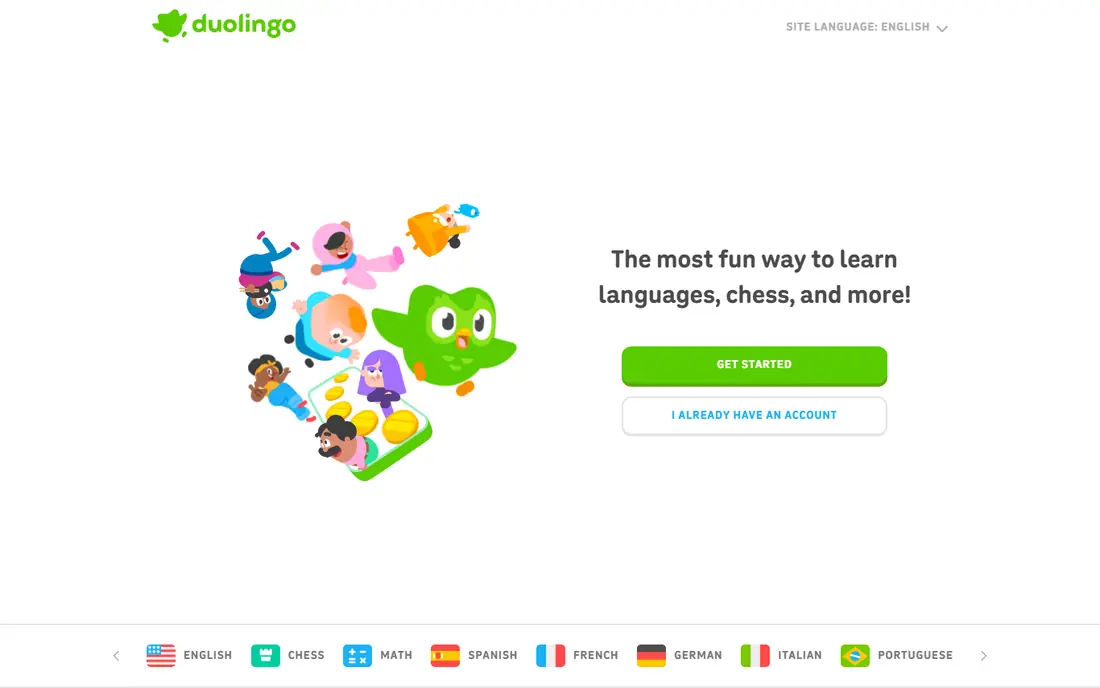
Duolingo fits absolute beginners who want to start Italian today without paying. Lessons are short, visual and gamified, with vocabulary, sentence building and listening in small steps. That low-pressure format helps learners who have struggled to keep a study routine in the past. What stands out is the free core course, which makes it the best free Italian language app for trying the language. The honest catch is depth: Duolingo teaches patterns more than it explains grammar, and it will not carry you to confident conversation alone. Use it for daily basics, then add speaking practice when you are ready.
- Full core course free with ads
- Short gamified lessons
- Streaks and reminders support a daily habit
- Grammar explanations can be thin
- Speaking practice is limited
- Advanced Italian content is thinner than beginner content
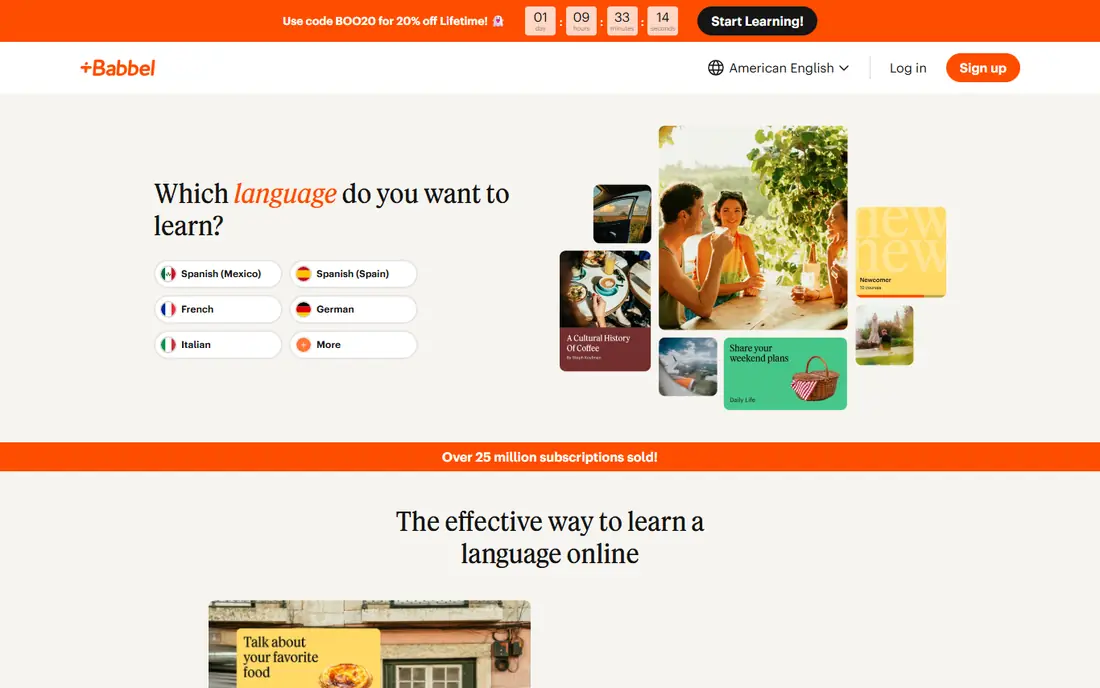
Babbel fits learners who want structure and clear explanations, not just guessing from examples. Lessons follow everyday situations, such as ordering food, asking directions and talking about work, with grammar notes woven into each unit. Review sessions revisit words and phrases at intervals. What stands out is the teaching method, which suits learners who like to understand why a sentence works. The honest catch is cost and access: only the first lesson of each course is free, so real progress needs a subscription. If you study regularly and value grammar, that cost is easier to justify.
- Lessons built around realistic dialogues
- Grammar explained in context
- Review and speaking practice included
- No permanent free plan beyond first lessons
- Fewer languages than some rivals
- Content can feel formal at times
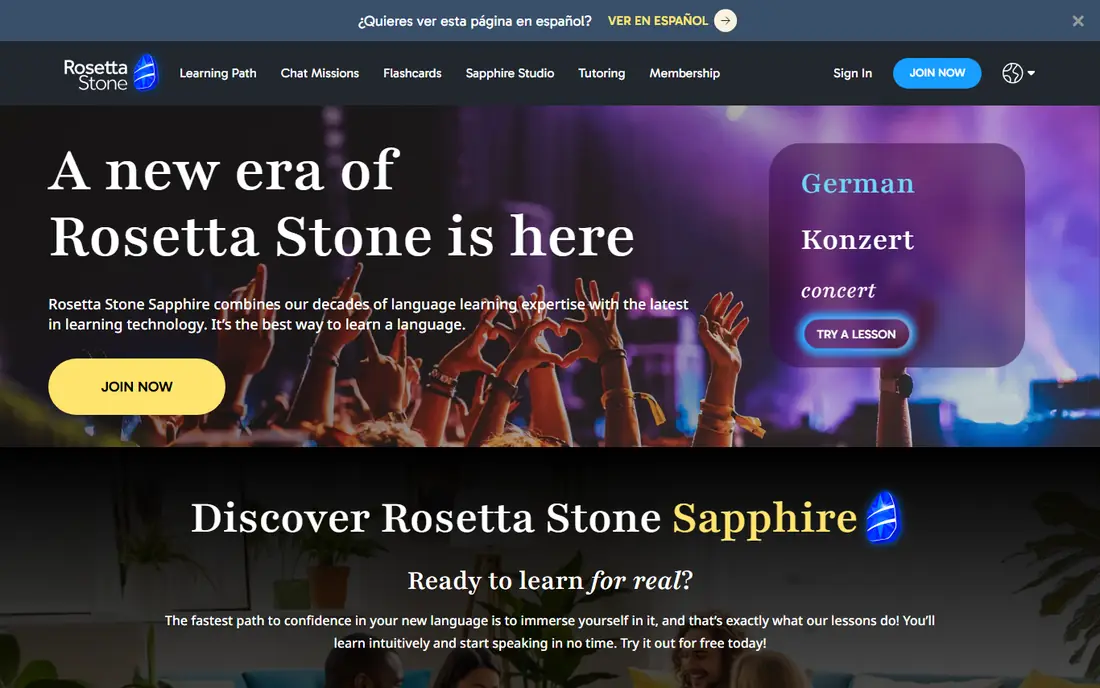
Rosetta Stone fits learners who prefer to learn Italian the way children learn a first language, through images, sounds and context rather than translation. Lessons avoid English explanations, which forces you to connect Italian words directly to meanings. Pronunciation tools give feedback on spoken words and phrases. What stands out is the consistent immersion approach, which suits visual and auditory learners. The honest catch is that grammar rules are never spelled out, so learners who want clear explanations may feel lost. It works best for patient learners who enjoy learning by pattern and repetition.
- Immersion method with images and audio
- Pronunciation feedback
- Lifetime option available in some plans
- No permanent free plan
- Grammar is taught by immersion, not explanation
- Some learners find the pace slow
Pimsleur fits commuters, drivers and walkers who want to speak Italian without staring at a screen. Each thirty-minute audio lesson builds phrases step by step, asks you to respond aloud, and revisits earlier material at intervals. That spoken focus helps with pronunciation and recall for travel phrases. What stands out is how well it fits hands-free learning, which few other apps match. The honest catch is balance: reading, writing and grammar get less attention than speaking, and the subscription costs more than a gamified app. Pair it with a reading app if you also want to read Italian menus, signs and messages.
- Thirty-minute audio lessons suit commutes
- Focus on speaking and listening
- Spaced recall built into lessons
- No permanent free plan, only a trial
- Less reading and writing practice
- Monthly cost is higher than some rivals
Busuu fits learners who want human feedback on their Italian, not just automated scores. You complete exercises, then native speakers can correct your writing and speaking, and you can return the favour for learners of your language. Structured courses cover grammar, vocabulary and conversation topics. What stands out is the community correction, which gives you real-world phrasing and error notes. The honest catch is that feedback depends on other users being active, so corrections are not instant. Still, for learners who value human input without paying for a tutor, Busuu is a strong middle ground.
- Free plan for basic lessons
- Native speakers correct written and spoken exercises
- Structured courses with grammar
- Full course and offline mode need a paid plan
- Feedback speed varies
- Some advanced content is limited
Memrise fits learners who want to build and keep Italian vocabulary, especially for travel and everyday topics. Spaced repetition schedules reviews just before you are likely to forget a word, which helps long-term recall. Video clips of native speakers also show how words sound in real speech. What stands out is vocabulary retention, which supports every other skill. The honest catch is scope: Memrise is not a full Italian course on its own, and grammar needs another source. Use it alongside Babbel or Duolingo, and let it handle the word-learning job.
- Free core courses
- Spaced repetition for vocabulary
- Native-speaker video clips in some courses
- Grammar teaching is limited
- Paid plan needed for full features
- Course quality varies by topic
italki fits learners who have hit a plateau with apps and need real conversation with a person. You choose a teacher or community tutor, book a video lesson, and focus on your goals, whether that is travel phrases, grammar gaps or exam preparation. Paying per lesson means you control the pace and cost. What stands out is personal feedback, which no app can match for pronunciation and natural phrasing. The honest catch is variation: tutors differ in style and price, so a poor first match does not mean italki is wrong for you. Book trial lessons with two or three tutors before settling on one.
- Wide choice of professional teachers and community tutors
- Pay per lesson, no subscription needed
- Lessons tailored to your goals
- Prices vary by tutor
- Quality varies, so trial lessons matter
- Scheduling needs planning across time zones
Mondly fits learners who like variety and game-style practice, and who want a lighter alternative to a structured course. Daily lessons, vocabulary builders and a chatbot for conversation practice keep sessions short and varied. The app also covers many languages, which suits households learning more than one. What stands out is the range of exercise types in a single app. The honest catch is depth: grammar and long-form conversation get less attention than in Babbel or italki. Use Mondly as a fun supplement for daily practice, rather than your only Italian course.
- Free version for basic lessons
- Chatbot conversation practice
- Augmented reality and varied exercises in some plans
- Depth is less than Babbel for grammar
- Some features need a paid plan
- Content can feel repetitive over time
LingQ fits intermediate learners who want to read and listen to real Italian, from articles and stories to podcasts. You import or choose content, click unknown words to save them, and review them later, which builds vocabulary in context. That method suits learners who already know basics and want to expand. What stands out is learning from content you enjoy, rather than only from textbook dialogues. The honest catch is the learning curve: the interface has many options, and beginners may find it confusing. Start with graded content, save words steadily, and add speaking practice elsewhere.
- Free plan with limits
- Learn from real texts and audio
- Vocabulary tracking and spaced review
- Interface can feel complex at first
- Free plan limits imports and features
- Speaking practice needs another tool
How we picked these
We compared official feature pages, pricing pages, app store listings and public reviews, and we weighted course structure, speaking practice, grammar depth, free access and feedback options. We included free apps, structured courses, audio courses and live tutoring, since no single format covers every learner. We did not claim hands-on testing, and we treated prices as a snapshot to verify on each vendor site.
How to learn Italian faster with an app
An app works best when it matches your goal and your daily routine. Use the steps below to get more from the time you already have.
Pick one core app and one speaking tool
Choose a core app for grammar and vocabulary, such as Babbel or Duolingo, and add a speaking tool, such as Pimsleur or italki, for conversation. Two apps used well beat five apps used rarely, and the mix covers both knowledge and speaking. Set a daily target you can keep, such as fifteen minutes, rather than an ambitious hour you will drop.
Learn Italian for travel with phrases first
If you travel soon, focus on greetings, ordering, directions, numbers, transport and polite phrases before you study verb tables. Pimsleur and Memrise suit this goal, since they prioritise spoken phrases and recall. Practise aloud, even alone, since speaking confidence matters more than perfect grammar on a short trip.
Keep going past the beginner plateau
Many learners stall after basic phrases, when progress feels slower. At that point, add reading with LingQ, feedback with Busuu, or a tutor on italki to push past memorised phrases. Change the input, not just the app, by listening to Italian music, news or shows with subtitles when you have time.
Frequently asked questions
What is the best app to learn Italian for beginners?
Duolingo is the best free starting point for beginners, since its short gamified lessons build vocabulary and basic sentences without cost. Babbel suits beginners who want grammar explained and realistic dialogues from the start. Try Duolingo free for two weeks, then add Babbel or a tutor if you want more structure.
What is the best app to learn Italian fast?
For fast spoken progress, Pimsleur suits daily audio practice, while italki gives the fastest feedback through live lessons. A gamified app alone will not make you fluent quickly, since speaking needs practice with real responses. Combine a core app with daily speaking, even for ten minutes, for the fastest gains.
What is the best app to learn Italian for travel?
Pimsleur and Memrise suit travel best, since they focus on spoken phrases, listening and vocabulary recall. Learn greetings, ordering, directions and transport phrases first, and practise them aloud before you leave. A phrasebook app can help on the trip, but spoken practice beforehand builds confidence.
Is there a best free Italian language app?
Yes, Duolingo offers the fullest free core course, while Busuu, Memrise, Mondly and LingQ offer free plans with limits. Free plans usually include ads or capped features, so check what is included before you commit to one app. For a free-only routine, pair Duolingo with Busuu feedback and Memrise vocabulary.
Can I learn Italian with an app alone?
You can reach a solid beginner or intermediate level with apps, but confident conversation usually needs real speaking practice. Apps build vocabulary, grammar and listening, while tutors and language exchange partners build fluency and natural phrasing. Use apps for daily study and add conversation as soon as you can form simple sentences.
What is the best platform to learn Italian for serious study?
Babbel suits serious structured study, italki suits personalised tutoring, and LingQ suits reading and listening at intermediate level. Serious learners often combine all three: a structured course for grammar, reading for vocabulary, and tutoring for speaking. Set a weekly study plan and review progress monthly, rather than switching apps each week.
Sources we checked (9)

Online Jobs is an independent blog about careers, online work, learning new skills and the tools that help people earn. More about us.
Keep reading
All posts
Zoom Alternatives
Zoom alternatives compared for 2026: Google Meet, Microsoft Teams, Webex, Jitsi and more for free calls, large meetings and webinars for teams and classrooms.

Workday Alternatives
We compared the best workday alternatives for HR, payroll, and global hiring, from BambooHR and Gusto to Rippling, Deel, and HiBob for growing teams in 2026.
WordPress Alternatives
WordPress alternatives guide: we compare 8 platforms for builders, designers, stores, and publishers to leave WordPress without losing your full site content.