Best Email Marketing Platforms for Ecommerce in 2026: 8 Platforms Compared


Data-heavy Shopify and direct-to-consumer stores · Starting price: $20 per month
How we put this together: we compare official feature and pricing pages, app store listings, privacy policies and public user reviews. Prices change, so check the provider's site before you pay.
Key takeaways
- Klaviyo leads for data-heavy Shopify stores, while Omnisend gives smaller stores email plus SMS at a lower entry price.
- Mailchimp suits general marketing beyond the store, and Brevo suits large lists that send at modest volume.
- Abandoned cart, welcome, and post-purchase flows drive more repeat sales than one-off campaigns, so check automation before price.
- Prices rise with contacts or profiles, so compare the cost at your list size in six months, not only at signup.
Quick comparison
| Name | Who it suits | Starting price | Free option | |
|---|---|---|---|---|
| Klaviyo | Data-heavy Shopify and direct-to-consumer stores | $20 per month | Yes | Visit |
 Omnisend | Smaller stores wanting email, SMS, and push in one place | $16 per month | Yes | Visit |
 Mailchimp | General marketing beyond the online store | $13 per month | Yes | Visit |
 Drip | Direct-to-consumer brands focused on lifecycle revenue | $39 per month | Free trial (14 days) | Visit |
 ActiveCampaign | Teams wanting advanced automation plus a light CRM | $15 per month | Free trial (14 days) | Visit |
 Constant Contact | Small stores and local businesses wanting simple campaigns | $12 per month | Free trial | Visit |
 Brevo | Large lists that send at modest volume | $9 per month | Yes | Visit |
 Kit | Creators and stores built around content and newsletters | $29 per month | Yes | Visit |
The best email marketing platforms for ecommerce
We compared the options below on fit, price, and the work they actually do well. Read the best-for line first, then check the price and the honest catch before you shortlist two or three to try.
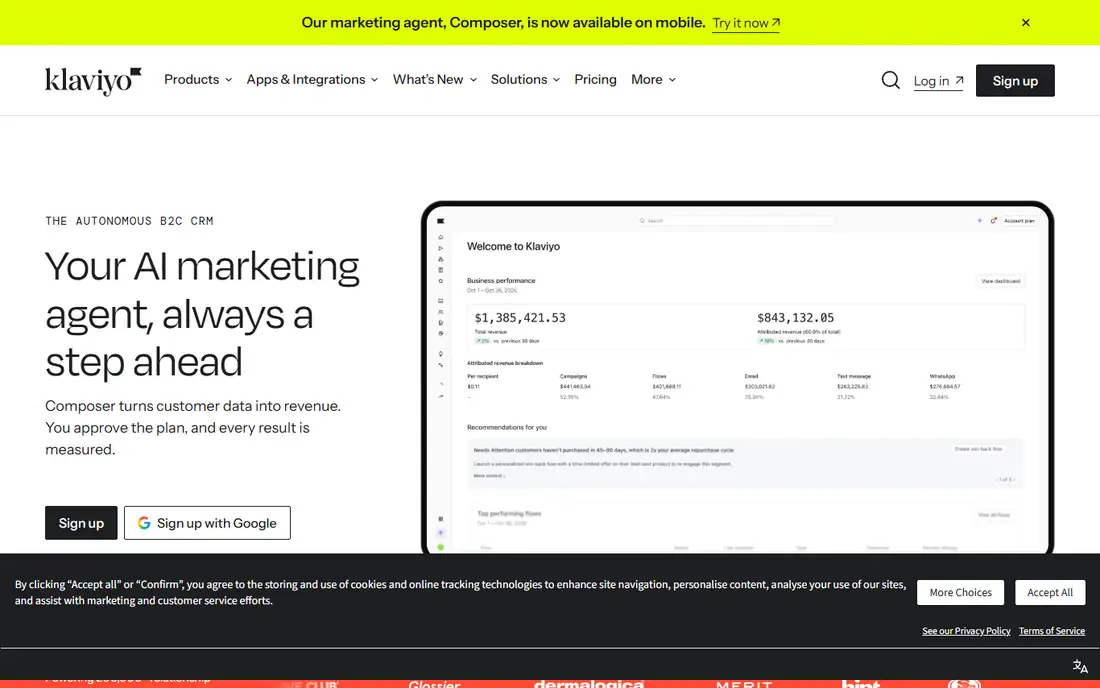
Klaviyo connects store orders, browsing, and product data to email and SMS, which makes its segments far more useful than a simple list upload. A store can target first-time buyers, repeat buyers, and shoppers who viewed a product but did not buy, without building those groups by hand. Its prebuilt flows cover welcome, abandoned cart, browse abandonment, and post-purchase messages.
The catch is cost and complexity. Pricing grows with active profiles, so a list that grows through popups and ads can push the bill up before revenue follows. Smaller stores may find the settings heavier than they need, and SMS adds a separate cost. Klaviyo still earns the top spot for stores that live on repeat orders.
- Deep store data and segmentation
- Strong prebuilt flows
- Predictive tools on paid plans
- Costs rise fast with profiles
- Setup takes time for small teams
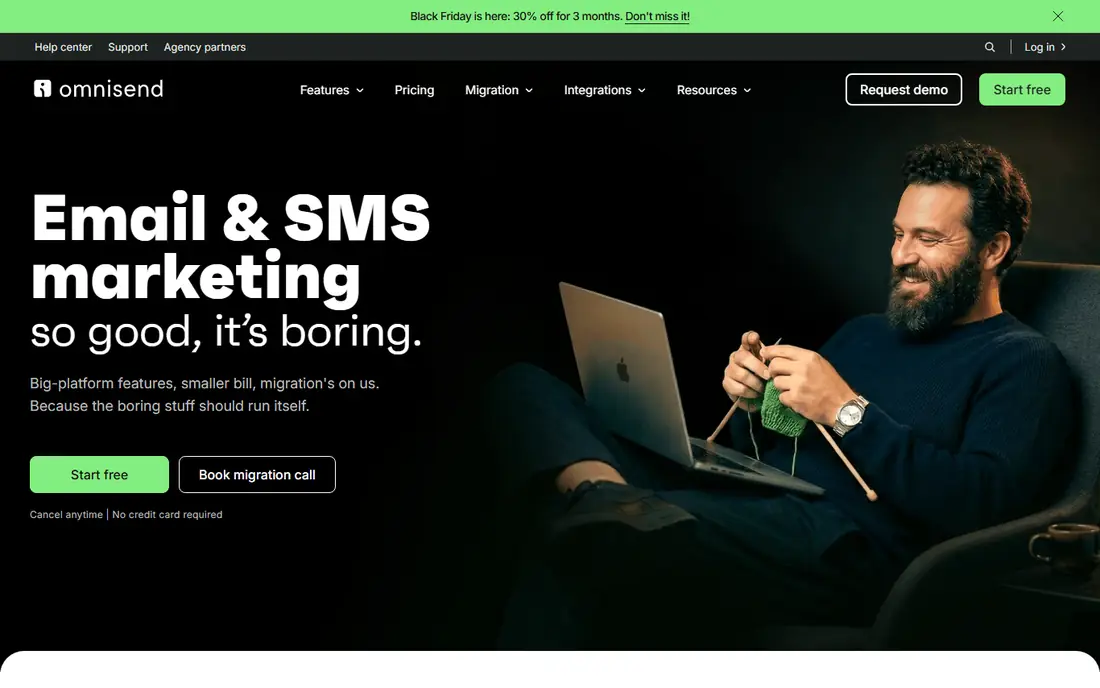
Omnisend is built for ecommerce first, with Shopify, WooCommerce, and BigCommerce connections and flows for welcome, cart recovery, and order follow-up. The editor is direct, the automation templates are practical, and combining email with SMS and web push in one tool saves a small team from juggling three apps.
The tradeoff is depth at the entry level. Some stronger segmentation and reporting options require the higher plan, and SMS credits are an extra cost. Stores that need very advanced predictive work may still prefer Klaviyo. For most small and mid-size stores, Omnisend gives a strong balance of price, speed, and features.
- Prebuilt ecommerce flows
- Email plus SMS and push
- Clear entry pricing
- Best features sit on higher plans
- SMS costs add up
Mailchimp works well when email is one part of a wider marketing plan rather than the whole store engine. It covers campaigns, landing pages, social posting, and basic automation in one account, and its templates help a small team produce clean emails without a designer. Stores can connect orders and use basic cart recovery.
The limit shows up as a store grows. Its segmentation and ecommerce reporting are less deep than Klaviyo or Drip, and pricing still climbs with contacts. A shop that plans detailed lifecycle marketing may outgrow it. A business that wants one familiar tool for email, pages, and social posts will find Mailchimp a sensible choice.
- Wide template and audience tools
- Social and landing page options
- Familiar interface
- Ecommerce depth is lighter than Klaviyo
- Costs rise with contacts
Drip takes a different approach to pricing: every plan includes the full feature set, and sends are unlimited within the contact limit. That makes budgeting simpler for a brand that mails often, and its visual workflow builder handles branching logic, split tests, and goals without forcing an upgrade. Revenue per person reporting helps judge a flow by sales, not only opens.
The starting price is higher than Mailchimp or Omnisend, and there is no free plan, only a trial. That makes Drip a weaker fit for a brand-new store with a tiny list. For an established brand with steady traffic and repeat-purchase products, the all-included model and behavior-based automation can justify the cost.
- All features on every plan
- Unlimited sends
- Revenue-focused reporting
- Higher starting price
- No free plan
ActiveCampaign
Who it suits: Teams wanting advanced automation plus a light CRM
ActiveCampaign suits teams that want detailed customer journeys across email, site behavior, and sales follow-up. Its automation builder supports branching, goals, and scoring, and the built-in CRM keeps sales notes and deals in the same place as marketing history. That helps a store that also sells by phone, chat, or in person.
The price of that power is setup time. New users often need a week or two to build flows well, and ecommerce templates still need tailoring to a real catalog. This is not a set-and-forget tool. Teams willing to invest in setup get one of the most flexible automation systems at this price.
- Powerful automation builder
- Built-in CRM
- Site tracking
- Learning curve is real
- Ecommerce templates need setup
Constant Contact
Who it suits: Small stores and local businesses wanting simple campaigns
Constant Contact is the calm option in this list. Its editor is simple, its templates look clean, and its support team is known for helping small businesses by phone and chat. Event promotion, social posting, and basic automation sit alongside email, which suits a shop that also runs local events or in-store promotions.
The tradeoff is automation depth. Welcome series and cart recovery exist, but they are simpler than Klaviyo, Drip, or ActiveCampaign, and reporting stays basic. A store that wants deep lifecycle marketing should look elsewhere. A small business that wants dependable, easy campaigns without a learning curve will feel at home here.
- Very easy editor
- Event and social tools
- Helpful support
- Automation is basic
- Ecommerce reporting is limited
Brevo prices by monthly email volume rather than by contacts, which changes the math for a store with a large list that mails a few times a month. Unlimited contacts remove the penalty for list growth, and transactional emails for orders and shipping can run through the same account. That makes Brevo a smart budget pick for content-heavy stores.
The editor and ecommerce templates are plainer than Klaviyo or Omnisend, and some advanced flows need more manual setup. Stores that want rich product recommendations out of the box may miss that polish. For a business watching every dollar and mailing steadily rather than daily, Brevo is hard to beat on value.
- Send-volume pricing with unlimited contacts
- Transactional email included
- SMS add-on
- Automation is less ecommerce-specific
- Design tools are plainer
Kit, formerly ConvertKit, is built for creators who sell through content, newsletters, and digital products. Its forms, landing pages, and simple sequences are quick to set up, and the free plan lets a new seller start collecting subscribers without paying. A store that sells courses or downloads alongside content will find the workflow natural.
The catch is ecommerce depth. Cart recovery and product-based segmentation are lighter than the ecommerce-first tools above, and the paid Creator plan starts above some rivals. Kit is not the best pick for a large catalog store. It is a strong pick when content and email drive the business and the store is the second step.
- Simple automation and forms
- Creator-friendly tools
- Free plan for starters
- Ecommerce flows are lighter
- Paid plan starts higher than some rivals
How we picked these
We compared official feature pages, pricing pages, app store listings, privacy policies, and public reviews for each product, and kept only tools that are available now and truly fit the topic. We checked the starting price and free plan on the vendor site where it was published, and wrote See website where the vendor does not publish a price. We did not claim hands-on testing we did not do, and we left out tools that had closed, changed focus, or did not match the topic.
We weighed fit for the stated use first, then day-to-day ease of use, automation or workflow depth, integrations, and total cost as a team or list grows. A strong free plan helps a small user, while clear pricing, support, and upgrade paths matter more as volume rises.
How to choose an ecommerce email platform
Start with your store platform and list size
Check the native connection for Shopify, WooCommerce, or BigCommerce before you check templates. A clean sync for orders, products, and customer behavior saves hours and makes segmentation useful. Then price the tool at your current list size and at double that size, since growth is the point. A tool that is cheap at 500 contacts can become costly at 5,000, so read the pricing tiers carefully.
Judge flows, not only campaigns
Ask whether welcome, abandoned cart, browse abandonment, post-purchase, and win-back flows are prebuilt and easy to edit. A tool that only sends newsletters will leave repeat revenue on the table. Test one flow end to end during a trial, including the discount code and the order confirmation step, and check the report it produces.
Watch deliverability and total cost
Look at sending limits, SMS pricing, and extra charges for users or add-ons. A low headline price can grow once SMS, extra seats, or a higher tier are added. Use a custom sending domain, clean old bounces, and keep signup forms clear about what subscribers will receive. Good list hygiene protects deliverability and keeps costs down.
Frequently asked questions
What is the best email marketing platform for ecommerce?
For most data-heavy stores, Klaviyo is the strongest pick because it ties orders and browsing to segments and flows. Omnisend is the better value pick for smaller stores that want email plus SMS. The right answer depends on catalog size, repeat purchase rate, and team time.
What is the best email marketing software for ecommerce on a budget?
Brevo is a strong budget pick because it prices by send volume and allows unlimited contacts. Mailchimp and Omnisend also have free plans for small lists. Compare the paid price at your expected list size, since free limits are small.
What are the best email marketing tools for ecommerce beyond newsletters?
Look for abandoned cart, browse abandonment, post-purchase, and win-back flows, plus product recommendations and revenue reporting. Klaviyo, Drip, and Omnisend cover those flows well. Test one flow during a trial before you commit.
Is Klaviyo or Mailchimp better for ecommerce?
Klaviyo is better for stores that want deep purchase-based segmentation and lifecycle flows. Mailchimp is better for general marketing that includes email, landing pages, and social posts. A store-first business usually gains more from Klaviyo, while a general small business may prefer Mailchimp.
Do I need SMS as well as email for ecommerce?
SMS can help for cart recovery and time-sensitive offers, but it costs more and needs clear consent. Start with email flows, add SMS for high-intent moments such as abandoned carts, and keep messages short and useful. Always offer an easy opt-out.
Sources we checked (8)

Online Jobs is an independent blog about careers, online work, learning new skills and the tools that help people earn. More about us.
Keep reading
All posts
n8n Alternatives
n8n alternatives compared for 2026, with Zapier, Make, Activepieces, and more, covering visual builders, code steps, self-hosting, and pricing models.

ZoomInfo Alternatives
The best ZoomInfo alternatives in 2026, compared on price, free plans, data coverage, and which tool fits small teams or large sales teams best in detail.
Zoom Alternatives for Webinars
Compare Zoom alternatives for webinars in 2026, from browser-based rooms to enterprise events, with prices, attendee limits, features and honest trade-offs.