Best Ecommerce Platform for SEO in 2026: 8 Platforms Compared

How we put this together: we compare official feature and pricing pages, app store listings, privacy policies and public user reviews. Prices change, so check the provider's site before you pay.
Key takeaways
- WooCommerce gives the most SEO control, thanks to WordPress blogging, plugin choice and full URL control, but speed and security are your responsibility.
- Shopify is the best ecommerce platform for SEO for most hosted stores, because it handles sitemaps, speed and checkout basics without developer help.
- BigCommerce offers strong built-in SEO tools for mid-sized and international stores, with no transaction fee layer on its own plans.
- The best SEO ecommerce platform for your store depends on catalogue size, content plans and how much technical work you can handle in-house.
Quick comparison
| Name | Who it suits | Starting price | Free option | |
|---|---|---|---|---|
 WooCommerce | Full SEO control and blogging | Free | Yes | Visit |
 Shopify | Hosted SEO without developer work | $39 per month | Free trial | Visit |
 BigCommerce | Built-in SEO for scaling stores | $39 per month | Free trial | Visit |
 Squarespace | Clean SEO for small visual stores | $33 per month | Free trial | Visit |
 Wix | Simple SEO for small stores | $29 per month | Free trial | Visit |
 Adobe Commerce | Large, complex catalogues | See website | No | Visit |
 PrestaShop | Self-hosted control on a budget | Free | Yes | Visit |
 Shift4Shop | Built-in SEO with payment processing | See website | Free trial | Visit |
The best ecommerce platform for seo
We compared official feature pages, pricing pages and SEO documentation for platforms that are still actively sold and supported in October 2026. We focused on the features that affect rankings in practice: URL control, meta and schema handling, site speed, mobile rendering, blogging and how much of that work needs code.
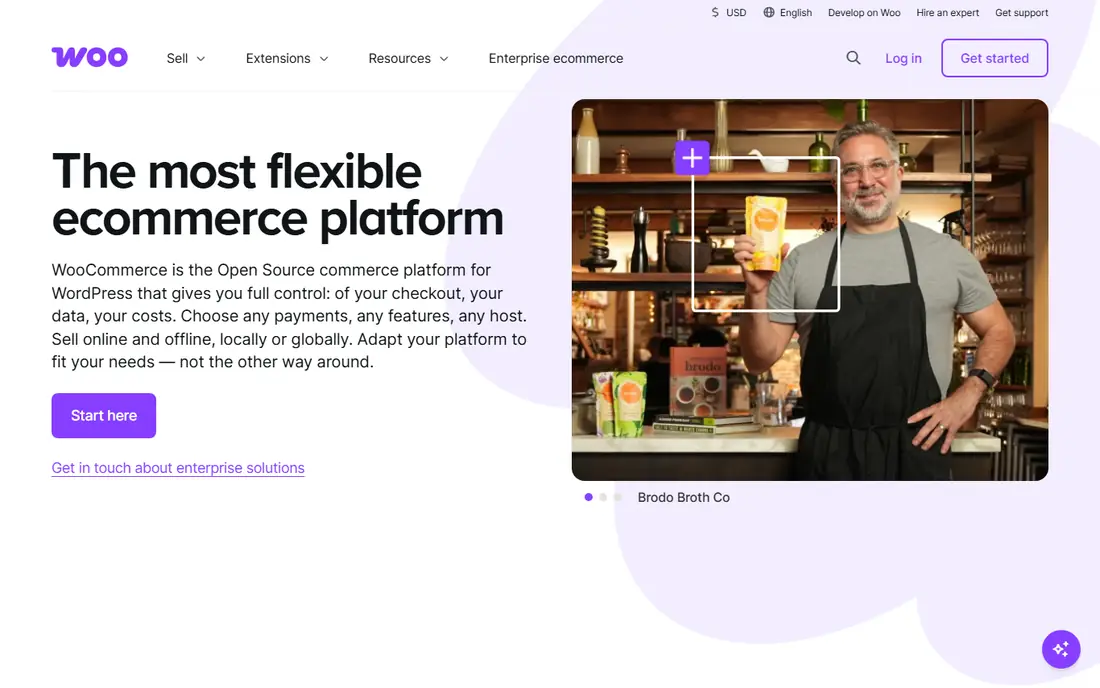
WooCommerce is the best seo ecommerce platform when control matters more than convenience. Because it runs on WordPress, you can shape URL structure, headings, breadcrumbs, schema and internal links without fighting a fixed template. Blogging sits in the same system as the store, so content-led SEO, guides, comparisons and product stories do not need a separate site.
That freedom comes with upkeep. You choose hosting, caching, security and updates, and a bloated plugin stack can hurt the speed that rankings depend on. For stores with a content strategy, a developer, or an agency partner, that trade is worth it. For a solo seller who wants everything managed, a hosted platform may rank just as well with less work.
- Full URL control
- WordPress blogging and content tools
- Yoast SEO and Rank Math plugin support
- Hosting, speed and security are your responsibility
- Too many plugins can slow a store

Shopify is the best ecommerce platform for SEO for most stores that want a hosted setup. It handles hosting, security, mobile themes and automatic sitemaps, and its checkout and page speed are strong out of the box. Product titles, meta descriptions, image alt text and redirects are easy to edit, and the app store adds SEO tools for schema, redirects and audits when needed.
The known limit is URL structure. Product and collection prefixes are fixed, which annoys technical SEOs even though many Shopify stores still rank well with strong content and links. If you can live with that constraint, Shopify offers the best balance of speed, ease and SEO basics. Check the current plan prices on the vendor site, since the entry plan in this guide reflects pricing reported in 2026 comparisons.
- Fast hosted infrastructure
- Automatic sitemaps
- Editable titles, descriptions and image alt text
- Fixed URL prefixes for products and collections
- Deeper SEO tweaks often need apps or code

BigCommerce is often the underrated pick in SEO comparisons, and for good reason. It includes many technical SEO features without a long app stack, including editable URLs, meta controls, sitemaps and structured data support. Stores that sell internationally or manage larger catalogues benefit from its built-in product options, multi-currency tools and catalogue handling.
The trade-off is ecosystem size. You will find fewer themes and apps than on Shopify, and some design or integration work still needs developer time. If your priority is a hosted store with strong built-in SEO and room to scale, BigCommerce is a serious alternative to Shopify, and it is worth a trial with your real catalogue before deciding.
- Strong built-in SEO tools
- No platform transaction fees
- Good support for large catalogues and international selling
- Theme and app ecosystem is smaller than Shopify
- Advanced custom work still needs a developer
Squarespace suits small, visual stores where design and content matter as much as product count. Its templates are clean, its blogging tools are solid, and core SEO controls such as titles, descriptions, sitemaps and mobile rendering are handled well without technical work. For a brand with under a few dozen products and a strong story, that simplicity can be an advantage.
Advanced SEO work is where it falls behind. You have less control over technical details, fewer specialist ecommerce SEO apps, and less flexibility for large catalogues or complex product data. If your store is small and design-led, Squarespace is a credible SEO choice. If you plan heavy content marketing or a large catalogue, WooCommerce or BigCommerce will give you more room.
- Clean templates and good blogging
- Simple meta, sitemap and mobile controls
- Strong visual presentation
- Less advanced SEO control than WooCommerce
- Smaller app ecosystem for ecommerce SEO
Wix has improved its SEO tools a lot in recent years, and for a small store it now covers the basics well. Guided setup, editable meta data, sitemaps, redirects and a simple blog help a new seller get indexed without learning technical SEO first. The drag-and-drop editor also makes landing pages and content pages quick to build.
The limit appears as a store grows. Large catalogues, complex URL needs and advanced schema work are harder than on WooCommerce or BigCommerce, and a heavy template can hurt speed. Wix is best for small, simple stores where ease matters more than deep technical control. If SEO becomes your main growth channel, plan for a possible migration later rather than forcing a small-store tool to do enterprise work.
- Guided SEO setup and checklists
- Easy editing for small stores
- Good blogging basics
- Less control for large or technical SEO projects
- Performance depends heavily on template and app choices
Adobe Commerce, formerly Magento Commerce, is the enterprise end of this list. It gives large stores deep control over catalogue structure, URL rewrites, metadata, schema and multi-store setups, and it handles complex pricing, customer groups and integrations that smaller platforms struggle with. For a large catalogue with a development team, that control is the point.
For most readers, it is too much. Costs, hosting and maintenance are substantial, and even routine changes often need a developer. Small and mid-sized stores will get faster results from Shopify, BigCommerce or WooCommerce. Choose Adobe Commerce only when catalogue complexity, scale or enterprise integration genuinely requires it, and budget for ongoing development from the start.
- Deep control over catalogue, URLs and technical SEO
- Built for large and multi-store operations
- Strong enterprise integrations
- High cost and developer dependence
- Overkill for small stores
PrestaShop is a free, self-hosted alternative for sellers who want control without WordPress. Its core covers product SEO basics, editable URLs and meta data, and its module marketplace adds advanced SEO, schema and performance tools. For a budget-conscious store with technical help, it can deliver strong SEO without a monthly platform fee, beyond hosting and paid modules.
The catch is upkeep and module cost. You manage hosting, updates and security, and the most useful SEO modules are often paid, so the total cost needs careful counting. PrestaShop also has a smaller English-speaking community than WooCommerce, which can make troubleshooting slower. It suits technically confident sellers, especially in markets where PrestaShop is already popular, rather than first-time store owners.
- Free open source core
- Editable URLs and SEO modules
- Large module marketplace
- Hosting and maintenance are your job
- Some useful modules are paid
- Smaller English-language community than WooCommerce
Shift4Shop earns a place as a best platform for SEO for ecommerce sellers who want built-in tools without a large app bill. It includes editable meta data, SEO-friendly URLs, sitemaps and product schema basics, and its pricing model can be attractive when you use Shift4 payment processing. Setup is straightforward, and the core store features cover most small to mid-sized needs.
Blogging is the weak point. Content-led SEO is harder here than on WooCommerce or Squarespace, because the blog tools are more basic. The theme and app range is also narrower than Shopify. If your SEO plan is mainly product pages and category pages, Shift4Shop is a solid, cost-aware pick. If blogging and guides drive your strategy, pair it with a separate content plan or choose a stronger blogging platform.
- Solid built-in SEO tools
- Free plan option with Shift4 payment processing
- Straightforward store setup
- Blogging is basic compared with WordPress
- Design and app ecosystem is narrower than Shopify
How we picked these
We compared official feature pages, pricing pages and SEO documentation for platforms that are still sold and supported in October 2026. We scored URL control, meta and schema handling, speed, mobile rendering, blogging and the amount of code needed for common SEO tasks, and we checked starting prices against vendor pages and recent comparisons. We did not test every platform hands-on for this guide, and prices change, so confirm the current plan and transaction fees before migrating or launching.
Choosing the best tools for SEO for ecommerce
Decide how much content you will publish
If blogging, guides and comparisons will drive traffic, favour WooCommerce, Squarespace or BigCommerce. If product pages will do most of the work, a hosted platform with fast themes and clean category pages may be enough. Content plans should shape platform choice, not the other way round.
Check speed, mobile and schema before you commit
Run a trial store with your real product types, images and categories. Check mobile layout, page speed, category filtering and product schema, and look at how URLs, breadcrumbs and internal links behave. A platform that looks good in a demo can still create duplicate or thin pages with a large catalogue.
Count total cost, not just the headline plan
Add hosting for self-hosted platforms, apps for SEO and schema, theme costs and payment fees. A free core with many paid modules can cost more than a hosted plan, while a hosted plan with app fees can also climb quickly. Compare the full monthly total for your catalogue size.
Frequently asked questions
What is the best ecommerce platform for SEO overall?
WooCommerce offers the most SEO control, while Shopify is the best hosted choice for most stores. The best SEO ecommerce platform for you depends on whether you need full technical control, a strong blog, or a managed setup with less maintenance.
Is Shopify or WooCommerce better for SEO?
WooCommerce is better for deep SEO control and content marketing, thanks to WordPress and plugins such as Yoast SEO and Rank Math. Shopify is better for speed, ease and managed hosting, and it can rank well despite fixed product and collection URL prefixes.
What are the best tools for SEO for ecommerce on Shopify?
Use Shopify built-in meta, redirect and sitemap tools first, then add a reputable SEO app for schema, audits and bulk editing if needed. Keep the app count low, because too many apps can hurt speed and undo the benefit of the SEO work.
Which is the best platform for SEO for ecommerce with a large catalogue?
BigCommerce and Adobe Commerce suit large catalogues, with BigCommerce offering strong built-in tools at a lower complexity level. Adobe Commerce suits very large or complex catalogues with a development team, while WooCommerce can also handle large catalogues with good hosting.
Does URL structure matter for ecommerce SEO?
URL structure matters for clarity, crawling and internal linking, but it is one factor among many. Clean, descriptive URLs help, yet content quality, speed, mobile experience and links usually matter more than a perfect URL pattern alone.
Can a small store rank well on Wix or Squarespace?
Yes, small stores can rank well on Wix or Squarespace when content is strong, pages are fast and product pages are complete. Limits appear mainly with large catalogues, advanced technical SEO and heavy content programmes, where WooCommerce or BigCommerce give more room.
Sources we checked (8)

Online Jobs is an independent blog about careers, online work, learning new skills and the tools that help people earn. More about us.
Keep reading
All posts
Best White Label SEO Companies
We compare the best white label SEO companies and tools in 2026 for agencies, from fulfilment services to branded reporting platforms, margins and prices.

Best Webinar Software
We compared the best webinar software for 2026 on price, attendee limits, automation and ease of use, to help you host better live sessions with confidence.

Best Web Scraping Tools
Compare the best web scraping tools in 2026, from no-code Octoparse and Browse AI to Apify, Firecrawl, Bright Data, Zyte, ScraperAPI and free Scrapy, with prices.