Best Ecommerce Platform for Grocery in 2026: 8 Platforms Compared


Independent and regional grocers · Starting price: See website
How we put this together: we compare official feature and pricing pages, app store listings, privacy policies and public user reviews. Prices change, so check the provider's site before you pay.
Key takeaways
- Local Express, Mercatus, Rosie, and Freshop are built for grocery first, with features for perishables, substitutions, and delivery slots that general platforms lack.
- Instacart Platform suits larger chains that want access to an established delivery network and shopper base.
- Shopify and WooCommerce work for a small specialty food store, but they need extra apps or setup to handle grocery workflows well.
- Most grocery platforms use quoted pricing, so budget for setup, integrations, and ongoing fees, not just a monthly plan price.
- Our pick for an independent grocer is Rosie or Local Express, depending on whether you want a grocery-only system or a wider connected stack.
Quick comparison
| Name | Who it suits | Starting price | Free option | |
|---|---|---|---|---|
| Local Express | Independent and regional grocers | See website | No | Visit |
 Mercatus | Grocery and pharmacy chains | See website | No | Visit |
 Instacart Platform | Large chains and delivery reach | See website | No | Visit |
 Rosie | Independent grocers | See website | No | Visit |
 Freshop | Small grocery chains | See website | No | Visit |
 GrazeCart | Farm and specialty food sellers | See website | No | Visit |
 Shopify | Specialty food retailers | See website | Free trial | Visit |
 WooCommerce | Small stores on WordPress | Free | Yes | Visit |
The best ecommerce platforms for grocery
A grocery store needs more than a checkout page. It needs weight-based pricing, substitutions when an item is out of stock, delivery and pickup slots, and a catalog that can handle thousands of changing products. We compared grocery-built platforms with general ecommerce tools on those practical needs, using official product pages and public platform descriptions.
Local Express is designed as a connected stack for independent and regional grocers, covering the storefront, mobile app, in-store kiosk, and delivery in one platform. That matters because grocery shoppers move between channels, and a single system keeps pricing, promotions, and availability in step. It also offers retail media tools, so a grocer can sell advertising space to brands inside its own storefront.
The main caution is that pricing is quoted and implementation is a project, not a quick signup. A single store with a simple catalog may find the full stack more than it needs at first. For a grocer planning to grow online ordering across several locations, the joined-up approach is a real strength.
- Website, app, kiosk, and delivery tools in one system
- Built for independent grocers
- Retail media options
- Quoted pricing only
- Setup scope can be large for a single small store
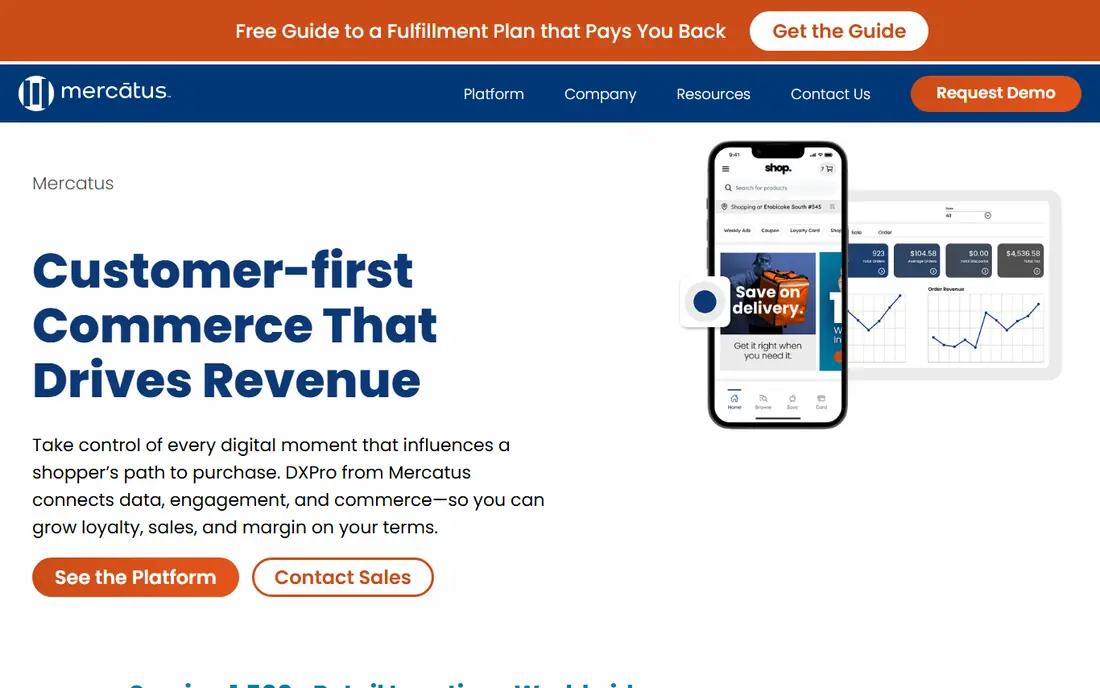
Mercatus has served grocery retailers for years, and that history shows in its integrations with point-of-sale systems, loyalty programs, and product data. A chain can run online ordering across many stores while keeping pricing and promotions tied to its existing systems. That kind of integration is hard to copy with a general platform and a few apps.
The trade-off is fit. Mercatus is aimed at chains and larger retailers, so a small independent store may find the sales process and the price out of reach. For a regional chain, though, the established grocery focus is a safer bet than building the same workflows from scratch.
- Long grocery track record
- Deep point-of-sale and loyalty integrations
- Scalable for chains
- Quoted pricing
- Best suited to larger operations rather than a single shop
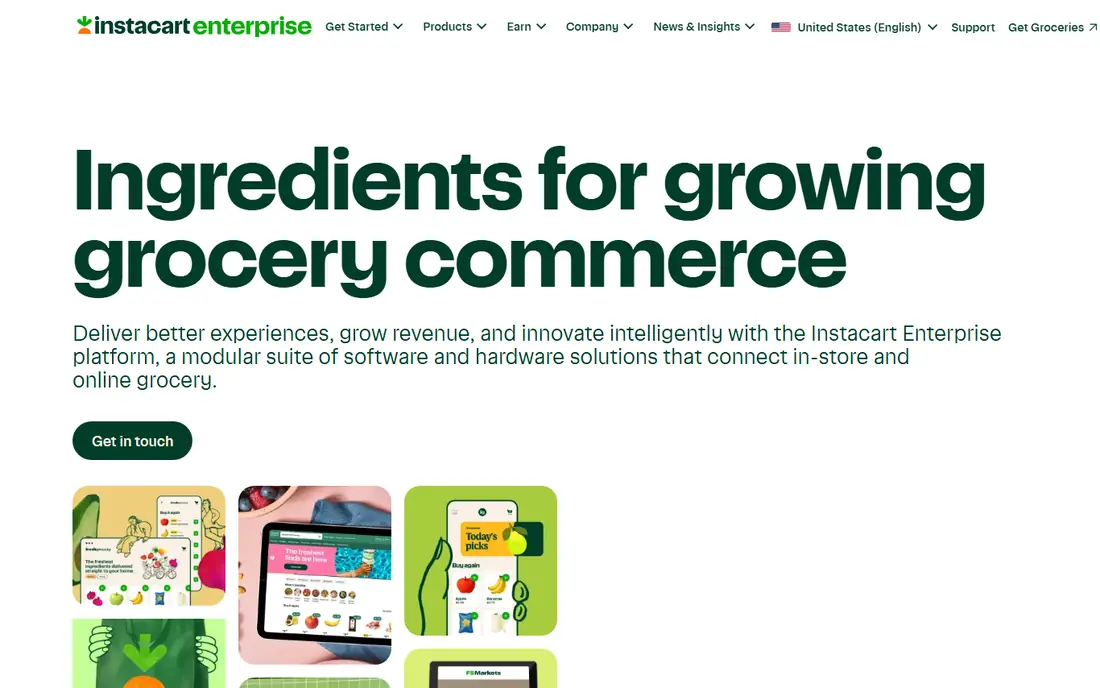
Instacart Platform lets a retailer run its own storefront while drawing on Instacart delivery and fulfilment. For a large chain, that combination can speed up launch, because delivery logistics are already built. Shoppers who already use Instacart may also find the store more easily than a standalone site.
The catch is control. Selling through a marketplace partner means sharing the customer experience and, in some cases, customer data rules with that partner. A retailer that wants full ownership of its brand and customer list should weigh that against the delivery reach on offer.
- Access to Instacart delivery infrastructure
- Large shopper audience
- Storefront and fulfilment tools
- Quoted pricing
- Less control over the customer relationship than an owned storefront
Rosie is built exclusively for independent grocery retailers, and that focus keeps the product close to daily grocery problems. It handles online ordering, delivery, and pickup with features that fit fresh and packaged goods, rather than forcing a general store template to fit. Independent stores often find the onboarding and support more relevant than with a platform built for every retail type.
The limit is scale. A large chain with complex multi-banner needs may outgrow Rosie faster than a chain platform. For a single store or a small group, that focus is a benefit, because you pay attention to grocery workflows rather than features you will never use.
- Built only for independent grocery retailers
- Grocery-specific ordering features
- Simpler scope than chain platforms
- Quoted pricing
- Smaller feature set for very large chains
Freshop, now linked to NCR Voyix, is a grocery ecommerce platform for small chains that need online ordering tied to store operations. It supports pickup and delivery, substitutions, and the kind of catalog work that grocery requires, such as departments, weights, and variable pricing. Stores that already use compatible point-of-sale or inventory systems may find integration smoother.
The honest caveat is change. Ownership changes can shift product plans, so a buyer should ask directly about support, integrations, and future updates during the sales process. On features alone, Freshop remains a practical grocery-first choice for a small chain.
- Grocery-first ordering and fulfilment tools
- Works with common grocery systems
- Pickup and delivery support
- Quoted pricing
- Now part of a larger group, so roadmap details need checking
GrazeCart is aimed at farms, butchers, and specialty food sellers rather than full supermarkets. It handles sell-by-weight products, subscriptions such as weekly boxes, and delivery zones, which are exactly the problems a farm shop faces online. A general platform can be made to do these things, but GrazeCart starts from them.
The limit is scope. A full-range supermarket with tens of thousands of lines will need a broader platform. For a producer selling meat, dairy, or produce direct to customers, GrazeCart is one of the closest fits available.
- Variable-weight and subscription handling
- Delivery zones for fresh goods
- Built for farm and specialty sellers
- Niche focus, not ideal for a full-range supermarket
- Quoted pricing
Shopify is the easiest way for a small specialty food retailer to get selling online quickly. The checkout is polished, payments are simple, and the app store covers most gaps, from subscriptions to delivery booking. A shop selling pantry goods, gift boxes, or a small fresh range can do well here.
The gap appears with true grocery workflows. Weight-based pricing, complex substitutions, and delivery slot management are not core Shopify features, so you will rely on third-party apps and accept their limits. For a full supermarket, that patchwork is a risk. For a specialty seller, it is often good enough.
- Fast to launch
- Huge app store
- Reliable checkout and payments
- Not grocery-native, so perishables, weights, and slots need apps
- Costs rise with added apps
WooCommerce suits a small grocer or food seller that already runs a WordPress site and wants to own the whole storefront. The core plugin is free, and extensions can add subscriptions, bookings, and variable products. Control is the main draw, since there is no monthly platform fee for the core software itself.
The cost is responsibility. Hosting, updates, backups, and security fall to you or your developer, and the extensions needed for a proper grocery workflow add up. A store with no technical help should think carefully before choosing this route, while a store with WordPress skills can build a flexible, low-fee shop.
- Free core plugin
- Full control over the site
- Large extension library for grocery features
- You manage hosting, updates, and security
- Grocery features need paid extensions
How we picked these
We compared official product pages and public platform descriptions for systems that sell groceries online today, and we kept only platforms with a real grocery track record or a clear grocery use case. We favoured grocery-built features such as substitutions, delivery slots, and weight-based pricing, and we included two general platforms because many small food sellers use them in practice. Where a vendor quotes pricing instead of publishing it, we wrote See website.
What to check before you choose a grocery platform
A grocery platform decision is hard to reverse, because your catalog, customer accounts, and fulfilment habits all move with it. Use a trial or a demo with your real products, not a sample catalog, and test the awkward cases first.
Test substitutions, weights, and slots
Add a product sold by weight, mark a popular item out of stock, and place an order for a busy delivery slot. Watch how the system handles substitutions, refunds, and slot capacity. If any of these steps needs a workaround, that workaround will become daily work for your team.
Check integrations with your store systems
Ask how the platform connects to your point-of-sale, inventory, loyalty, and accounting systems, and who owns that integration when something breaks. A clean demo means little if stock levels drift out of step after launch. Get integration costs and timelines in writing before you sign.
Price the whole project, not just the plan
Quoted grocery pricing usually covers the platform, but setup, data migration, training, and ongoing support may sit outside it. Ask for a total first-year cost, including any per-order or transaction fees. A cheaper monthly price can still be the expensive choice if implementation takes months.
Frequently asked questions
What is the best ecommerce platform for a grocery store?
For a full grocery store, a grocery-built platform such as Local Express, Mercatus, or Rosie fits better than a general storefront, because it handles substitutions, weights, and delivery slots as core features. A small specialty food seller can do well on Shopify or WooCommerce instead.
What is the best grocery ecommerce platform for an independent grocer?
Rosie is built only for independent grocers, while Local Express offers a wider connected stack for independents and regional chains. Compare both on your delivery model, your point-of-sale system, and the total quoted cost, rather than on features alone.
Can I use Shopify for a grocery store?
Yes, for a specialty food store or a small fresh range, Shopify works well with the right apps for subscriptions and delivery. For a full supermarket, the lack of grocery-native features for weights, substitutions, and slots makes a dedicated platform a safer choice.
How much does a grocery ecommerce platform cost?
Most grocery-built platforms use quoted pricing, so costs vary with store count, order volume, and integrations. General platforms are clearer, with Shopify and WooCommerce extensions priced openly, but app and hosting costs still add up.
Do grocery platforms handle delivery and pickup?
Yes, the grocery-built platforms in this list support delivery and pickup, including slot management. Check how slots, driver assignment, and substitution messages work in practice, since these details shape the customer experience most.
What should a small grocer do first?
Start by listing your must-have features, such as weight pricing, substitutions, and pickup, then demo two grocery-built platforms with your real catalog. A short pilot in one store will reveal integration and fulfilment problems before a full rollout.
Sources we checked (8)

Online Jobs is an independent blog about careers, online work, learning new skills and the tools that help people earn. More about us.
Keep reading
All posts
n8n Alternatives
n8n alternatives compared for 2026, with Zapier, Make, Activepieces, and more, covering visual builders, code steps, self-hosting, and pricing models.

ZoomInfo Alternatives
The best ZoomInfo alternatives in 2026, compared on price, free plans, data coverage, and which tool fits small teams or large sales teams best in detail.

Zoom Alternatives for Webinars
Compare Zoom alternatives for webinars in 2026, from browser-based rooms to enterprise events, with prices, attendee limits, features and honest trade-offs.