Best DJ Software in 2026: 9 Apps Compared


Scratch and open-format DJs · Starting price: $11.99 per month
How we put this together: we compare official feature and pricing pages, app store listings, privacy policies and public user reviews. Prices change, so check the provider's site before you pay.
Key takeaways
- Serato DJ Pro costs 11.99 dollars per month or 299 dollars one-time, and it remains the top pick for scratch and open-format DJs.
- Rekordbox is the natural choice for club DJs, since it is the native format for Pioneer DJ and AlphaTheta CDJ setups, with a free plan and paid tiers from 12 dollars per month.
- Mixxx is the only fully free, open source option here, with four-deck mixing, timecode vinyl support and no subscription at all.
- VirtualDJ Pro at 19 dollars per month supports the widest range of controllers and adds video mixing and karaoke hosting.
- Your controller often decides for you: many controllers include Serato DJ Pro or rekordbox performance mode at no extra cost.
Quick comparison
| Name | Who it suits | Starting price | Free option | |
|---|---|---|---|---|
| Serato DJ Pro | Scratch and open-format DJs | $11.99 per month | Yes | Visit |
 rekordbox | Pioneer DJ and club CDJ users | $12 per month | Yes | Visit |
 VirtualDJ | Widest hardware support and video mixing | $19 per month | Yes | Visit |
 Traktor Pro 4 | Electronic DJs who love effects and remix decks | See website | Free trial | Visit |
 djay Pro | Mobile and streaming-first DJs | $6.99 per month | Yes | Visit |
 Mixxx | Free, open source DJ software | Free | Yes | Visit |
 Engine DJ | Denon DJ standalone hardware owners | Free | Yes | Visit |
 Cross DJ | Mixing mainly on a phone or tablet | Free | Yes | Visit |
 DEX 3 RE | Event DJs who also host karaoke | $29 one-time | Free trial | Visit |
The best DJ software
DJ software looks similar on the surface, with two or four decks, a mixer and a library, but the differences that matter are hardware support, pricing model and where you actually play. We compared official pricing pages, feature documentation and public user reviews, and we weighed real-world factors like controller bundles, streaming support and stability under live pressure.
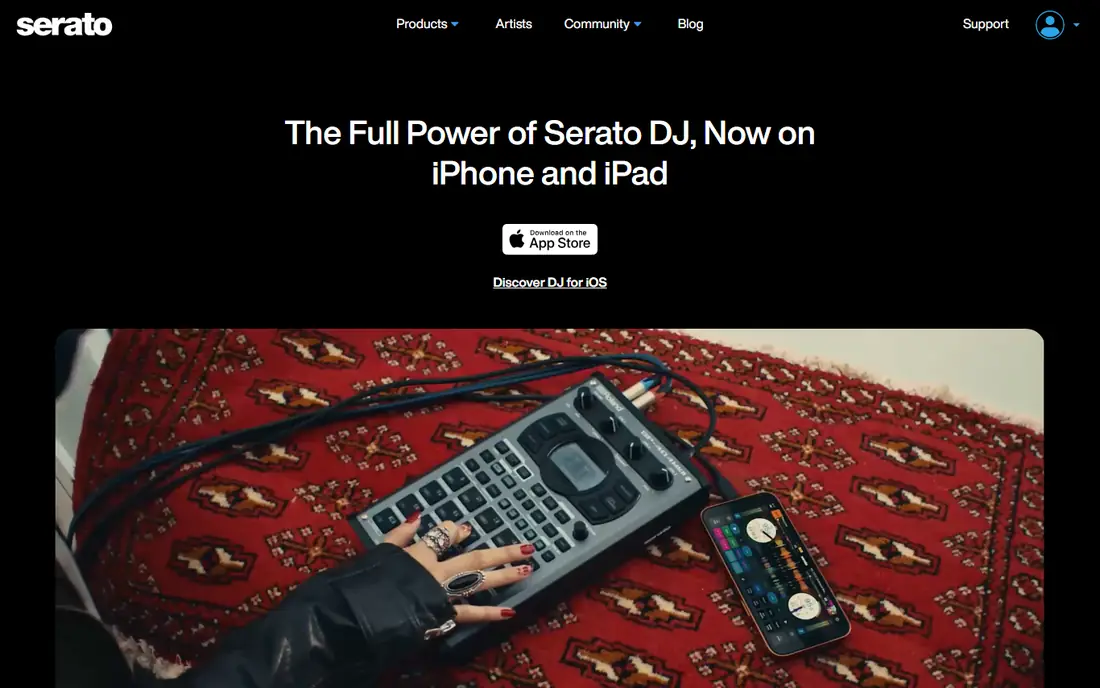
Serato DJ Pro is the workhorse of scratch, hip-hop and open-format DJing. It supports more than 150 mixers, turntables and controllers, and its DVS support for turntablists is the standard other apps are judged against. Real-time stems let you isolate vocals, drums and bass on the fly, and Serato DJ Lite gives beginners a genuinely useful free starting point with practice mode included.
Pricing is flexible: 11.99 dollars per month, or 299 dollars as a one-time license, while DJ Suite at 14.99 dollars per month or 499 dollars one-time adds every expansion pack plus Serato Studio. The honest catch is that video mixing and some expansions sit behind the Suite tier, and DJs who play mainly on club CDJs still need rekordbox for USB export. If your sets run on controllers or turntables, Serato is the safest pick on this list.
- Rock-solid stability in live sets
- Huge controller and mixer support
- Real-time stems and a free Lite version
- Perpetual license costs more upfront than a few months of subscription
- Video features need the Suite tier
- Library tools trail rekordbox for club prep
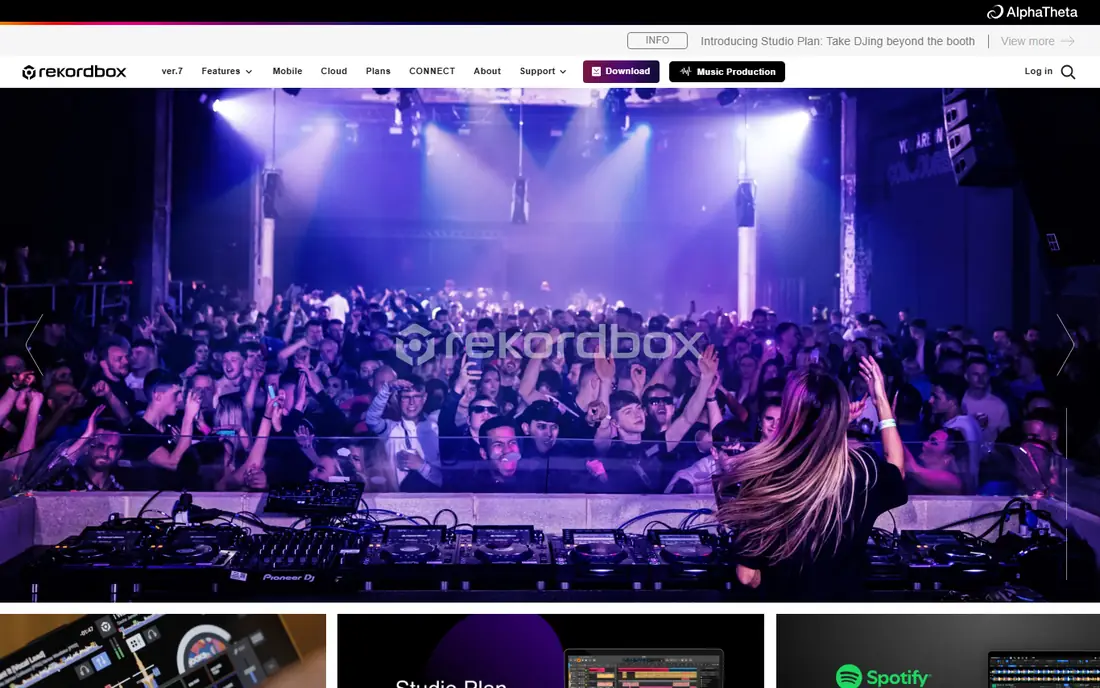
Rekordbox is the software of the club world because it is the native preparation tool for Pioneer DJ and AlphaTheta CDJs. You prepare your library, set cue points and export to USB, then plug into club-standard players that read your work exactly as you set it. The free plan covers library management and basic performance, and paid tiers add cloud library sync, advanced track analysis and DVS.
Core costs 12 dollars per month, Creative 18 dollars per month and Professional 36 dollars per month, and many Pioneer controllers include performance mode at no extra cost. The downside is the subscription-only model: there is no perpetual license to buy once and keep. If you play clubs or plan to, rekordbox is close to mandatory. If you never touch CDJs, Serato or VirtualDJ may suit you better.
- Native format for club CDJs
- Powerful free plan for library management
- Cloud library sync across devices
- Subscription only on paid tiers, with no one-time license
- Full features need the pricier Creative or Professional plans
- Best value is tied to Pioneer hardware
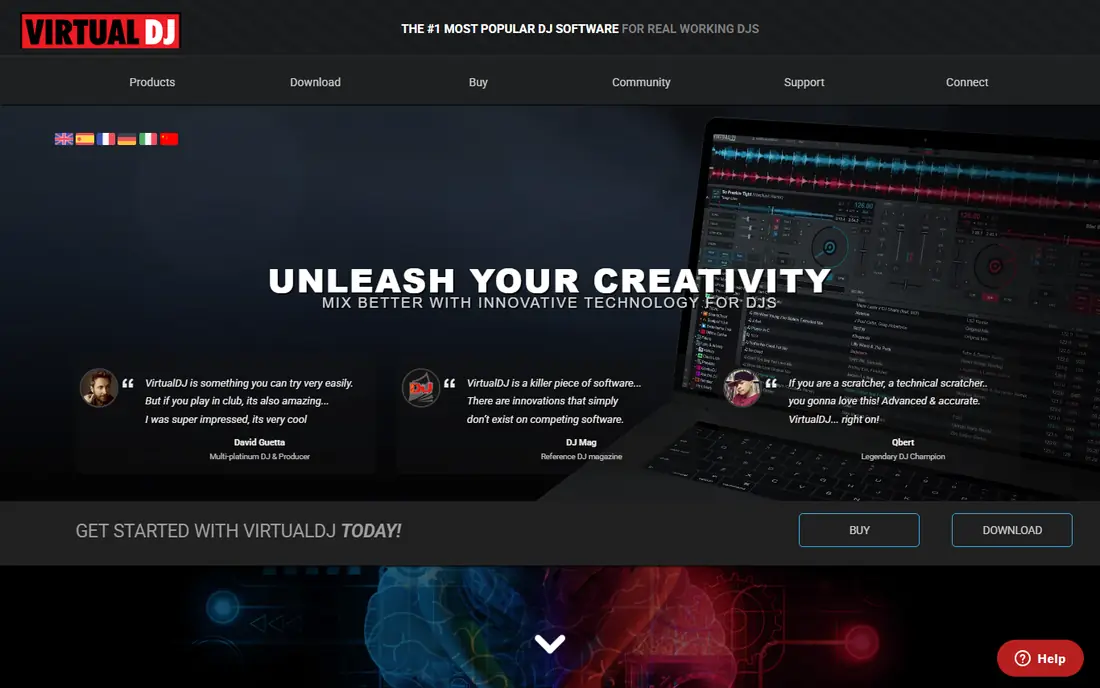
VirtualDJ is the most flexible DJ software on this list. It works with more controllers than any rival, handles video mixing and karaoke hosting without extra apps, and its real-time stems engine is a core feature rather than an add-on. Mobile and event DJs love it because one app can cover a wedding set, a video party and a karaoke night.
Home use is free, while Pro costs 19 dollars per month or 299 dollars one-time for professional use. The interface packs in a lot, which can overwhelm a first-time DJ, and the subscription cost adds up if you gig rarely. For working event DJs who need one tool for many kinds of gigs, VirtualDJ is hard to beat.
- Supports hundreds of controllers
- Video mixing, karaoke and live streaming built in
- Free for non-commercial home use
- Pro subscription adds up over years
- Interface can feel busy to newcomers
- Some advanced features need the paid tier
Traktor Pro 4 is the creative choice for electronic music DJs. Its remix decks let you trigger loops and one-shots like an instrument, its effects section is deeper than most rivals, and the newer stems and pattern player features reward DJs who build sets layer by layer. Native Instruments sells it as a perpetual license, so you pay once and keep it.
The trade-offs are real. Traktor works best with Native Instruments controllers, and support for third-party hardware is narrower than Serato or VirtualDJ. The interface is dense, and new users face a learning curve. If you mix electronic music and want to shape sound rather than just blend tracks, Traktor remains a distinctive and rewarding pick.
- Deep effects and remix decks for creative sets
- One-time license with no subscription
- Strong stems and pattern player
- Hardware support is narrower than Serato or VirtualDJ
- Interface feels dense at first
- Demo version limits sessions to 30 minutes
Algoriddim djay Pro is the DJ app for people who mix on an iPad, iPhone or Mac. Its touch interface is the most natural on this list, and Neural Mix stems let you separate vocals and instruments with a gesture. Streaming integration means you can mix from large catalogs without carrying a local library, and the free version is genuinely usable for casual sets.
Pro costs 6.99 dollars per month or 49.99 dollars per year, which is the cheapest paid tier among the major apps. The catch is depth: for complex club sets or heavy controller work, Serato and rekordbox offer more. For bedroom DJs, mobile DJs and anyone who values a low price and a beautiful interface, djay Pro is an easy recommendation.
- Best touch and mobile experience
- Neural Mix stems across devices
- Streaming integration with major services
- Desktop depth trails Serato and rekordbox
- Full features need the Pro subscription
- Hardware support is more limited
Mixxx proves that free does not have to mean basic. This open source project offers four-deck mixing, BPM and key detection, hot cues, loops, effects chaining, vinyl control with timecode records, and mappings for many controllers. It runs on Windows, macOS and Linux, and it will always be free, since there is no company behind it trying to convert you to a paid tier.
The honest weaknesses are support and polish. Help comes from the community rather than a support desk, the interface is functional rather than beautiful, and you will not get the same streaming integrations as djay or Serato. For DJs on a budget, students, and anyone who values software freedom, Mixxx delivers professional capability at zero cost.
- Completely free with no subscription or locked features
- Four decks, timecode vinyl and MIDI support
- Runs on Windows, macOS and Linux
- No commercial support team
- Interface looks less polished than paid rivals
- Streaming service integration is limited
Engine DJ is the preparation software for Denon DJ and Numark standalone players, and it is free to download. You analyze tracks, set cue points and build playlists on your computer, then export to USB or sync to a standalone player that runs without a laptop. It can import libraries from Serato and rekordbox, which makes switching ecosystems less painful.
The limitation is obvious: Engine DJ exists to serve Denon hardware, and laptop-only DJs gain little from it. If you own or plan to buy Denon standalone gear, it is essential and costs nothing. If you do not, skip it and choose a performance app instead.
- Free desktop software for library prep
- Built for Denon standalone players
- Imports libraries from Serato and rekordbox
- Only makes sense with Denon or Numark hardware
- No standalone performance mode for laptop-only DJs
- Smaller community than Serato or rekordbox
Cross DJ from Mixvibes is built for mobile mixing first. The interface is clean and simple, with accurate beat sync, quantize, slip mode and automix for background sets at parties. Ableton Link support lets you sync with other apps and musicians, which is a nice bonus for collaborative sessions. The free mobile app covers the basics well.
Desktop DJs will find it shallow compared with Serato or Traktor, and the full feature set needs the paid Pro version. Controller support is also narrower. For phone and tablet DJs, or anyone who wants a capable backup app in their pocket, Cross DJ is a solid free starting point.
- Clean mobile-first interface
- Automix for hands-free sets
- Ableton Link support for synced sessions
- Less depth than desktop DJ software
- Some features need the paid Pro version
- Controller support is narrower
DEX 3 RE from PCDJ is the budget pick for event DJs. At 29 dollars one-time, it is the cheapest paid DJ software on this list, and it covers the needs of mobile DJs well: mixing, video support and karaoke hosting in one app. For a DJ starting a mobile business on a tight budget, that combination is genuinely useful.
The downsides are community size and polish. Fewer tutorials, fewer controller mappings and an interface that looks older than Serato or djay mean you may work harder to get set up. If price is the deciding factor and you need karaoke, DEX 3 RE is worth a trial. If you can stretch to a subscription, the bigger apps offer more support and hardware choice.
- Very low one-time price
- Karaoke hosting built in
- Video mixing support
- Smaller user community
- Interface feels dated next to modern rivals
- Fewer controller mappings than the big names
How we picked these
We compared official pricing pages, feature documentation, app store listings and public user reviews for DJ software that works today and truly fits live mixing. We favored apps with clear pricing and real hardware support, and we checked that each vendor homepage belongs to the product. Where prices differ between sources, we used the figure closest to the vendor's own pricing page and marked anything unverifiable as See website.
What to check before you choose
Start with your hardware, not the app. Check whether your controller includes a paid tier for free, since that alone can settle the choice between Serato and rekordbox. If you play clubs, confirm the venue's players and whether you need USB export, which points to rekordbox.
Next, test the free tier before paying. Serato DJ Lite, rekordbox free, VirtualDJ home and Mixxx all let you learn the workflow at no cost, and a few hours of practice reveals more than any feature list. Pay attention to library management, since a messy library hurts every set.
Finally, think about total cost over two years, not just the monthly price. A 299 dollar license beats a 12 dollar subscription after about two years, while a free app like Mixxx costs nothing forever. Match the pricing model to how often you actually play.
Frequently asked questions
What is the best DJ app for beginners?
Serato DJ Lite and Mixxx are the best free starting points, since both are genuinely usable without paying. Serato DJ Lite feels closer to professional club software, while Mixxx gives you four decks and vinyl control at no cost. Djay Pro is also friendly for beginners who mix on a tablet.
What is the best DJ software for club DJs?
Rekordbox is the standard answer, because club CDJs from Pioneer DJ and AlphaTheta read rekordbox USB exports natively. Preparing in rekordbox means your cue points, playlists and beat grids appear exactly as you set them on the club players. Serato is the alternative if the club uses Serato-compatible mixers.
Is there a good free DJ app?
Yes, Mixxx is completely free and open source, with four decks, effects and timecode vinyl support. Serato DJ Lite and the free version of djay are also strong free options inside commercial ecosystems. VirtualDJ is free for non-commercial home use as well.
What is the best DJ mixing software for weddings and events?
VirtualDJ is the strongest event pick, since it combines music mixing with video and karaoke hosting in one app. DEX 3 RE is a cheaper alternative that also covers karaoke. For pure music events, Serato DJ Pro is a reliable and stable choice.
Do I need to pay monthly for DJ software?
Not always. Mixxx and Engine DJ are free, Traktor Pro 4 and DEX 3 RE use one-time licenses, and Serato DJ Pro offers a 299 dollar perpetual license. Rekordbox and djay Pro are subscription-based on their paid tiers, though both have free versions.
Which DJ software works with the most controllers?
VirtualDJ supports the widest range of controllers, followed closely by Serato DJ Pro. If you own an unusual or older controller, check the vendor's hardware list before buying, since support varies more than marketing suggests.
Sources we checked (9)

Online Jobs is an independent blog about careers, online work, learning new skills and the tools that help people earn. More about us.
Keep reading
All posts
Best Music Production Software
Compare the best music production software, from Ableton Live and FL Studio to Logic Pro, Pro Tools, Cubase, and Reaper, on price, platform, and workflow.
Best Music Editing Software
We compared the best music editing software for 2026, from Audacity and GarageBand to Logic Pro, Ableton Live, FL Studio, REAPER and Pro Tools, with prices.

Best Beat Making Software
Find the best beat making software for 2026, with FL Studio, Ableton Live, Logic Pro, BandLab, GarageBand and more on price, platform, workflow and free trials.