Best Delivery App in 2026: 8 Apps Compared

How we put this together: we compare official feature and pricing pages, app store listings, privacy policies and public user reviews. Prices change, so check the provider's site before you pay.
Key takeaways
- DoorDash has the widest restaurant and store coverage in the US, which makes it the best default choice for most people.
- Uber Eats is the strongest alternative, especially if you already use Uber, since accounts, payment and memberships carry across.
- Grubhub is worth checking for local restaurants and deals, even though its coverage is smaller than DoorDash in many cities.
- Instacart and Shipt are grocery-first apps, so they beat food delivery apps for weekly shopping and household essentials.
- Memberships such as DashPass and Uber One can pay off for frequent orders, but compare the order minimums and service fees before subscribing.
Quick comparison
| Name | Who it suits | Starting price | Free option | |
|---|---|---|---|---|
 DoorDash | Widest restaurant and store choice | Free | Yes | Visit |
 Uber Eats | Ordering inside the Uber ecosystem | Free | Yes | Visit |
 Grubhub | Local restaurants and deals | Free | Yes | Visit |
 Instacart | Grocery and household delivery | Free | Yes | Visit |
 Shipt | Grocery delivery with a personal shopper feel | Free | Yes | Visit |
 goPuff | Fast convenience and late-night orders | Free | Yes | Visit |
 Seamless | Ordering in Grubhub's core cities | Free | Yes | Visit |
 ChowNow | Ordering direct from local restaurants | Free | Yes | Visit |
The best delivery apps
The best delivery app depends on what you order and where you live. Restaurant coverage, delivery fees, service fees and speed all vary by city, and the cheapest app for one order can be the priciest for the next. We compared official app descriptions, fee information and public reviews for the apps below, focusing on US availability. All of these apps are free to download, and you pay delivery and service fees per order unless a membership covers them.
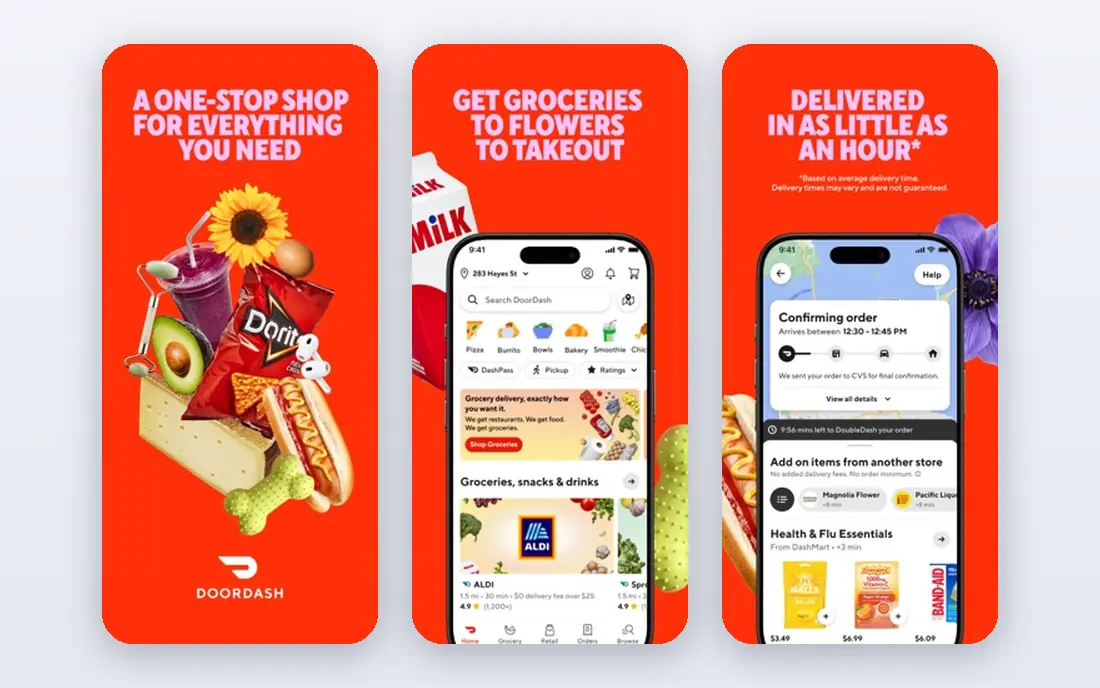
DoorDash is our pick for most people because it simply covers more places than its rivals. Alongside restaurants, it delivers groceries, convenience items, pet supplies and retail goods, so one app can handle a weeknight dinner and a forgotten household item. Its DashPass membership offers free delivery and reduced service fees on qualifying orders, which suits frequent orderers who can meet the order minimum.
The catch is the total bill. Without a membership, delivery fees and service fees can add a large share to a small order, and menu prices on the app are sometimes higher than the same items in store. Check the full total, including fees and tip, before you confirm, and compare it with picking up the order yourself when the restaurant is close. For choice and availability, though, DoorDash is the default to beat.
- Largest restaurant and store coverage in the US
- DashPass membership cuts delivery fees on qualifying orders
- Grocery, convenience and retail delivery beyond restaurants
- Delivery and service fees add up without a membership
- Menu prices can be higher than in-store prices
- Coverage and speed vary by area
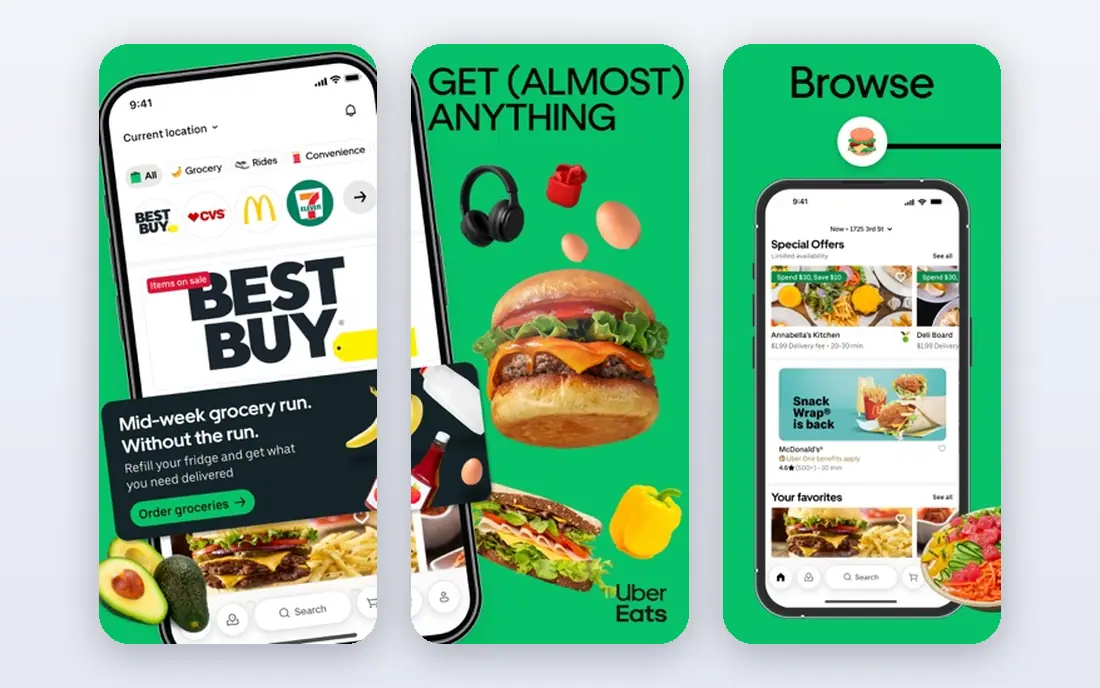
Uber Eats is the strongest alternative to DoorDash, and the best choice if you already use Uber. Your account, payment methods and membership carry across, so ordering food feels like an extension of an app you already know. Coverage is wide in cities and suburbs, with live order tracking and a large range of restaurant types, from fast food to local favorites.
Fees are the usual watch point. Delivery fees move with demand, distance and order size, and service fees apply on most orders, so the same meal can cost different amounts at different times. Uber One membership can reduce those costs for frequent users, but check its order minimums and benefits against how often you actually order. If you live in an area where Uber Eats coverage is strong, it is a close rival to DoorDash.
- Wide restaurant coverage
- Shared account and payment with Uber rides
- Uber One membership offers delivery benefits
- Delivery fees vary with demand and distance
- Service fees apply on most orders
- Restaurant choice is thinner than DoorDash in some towns
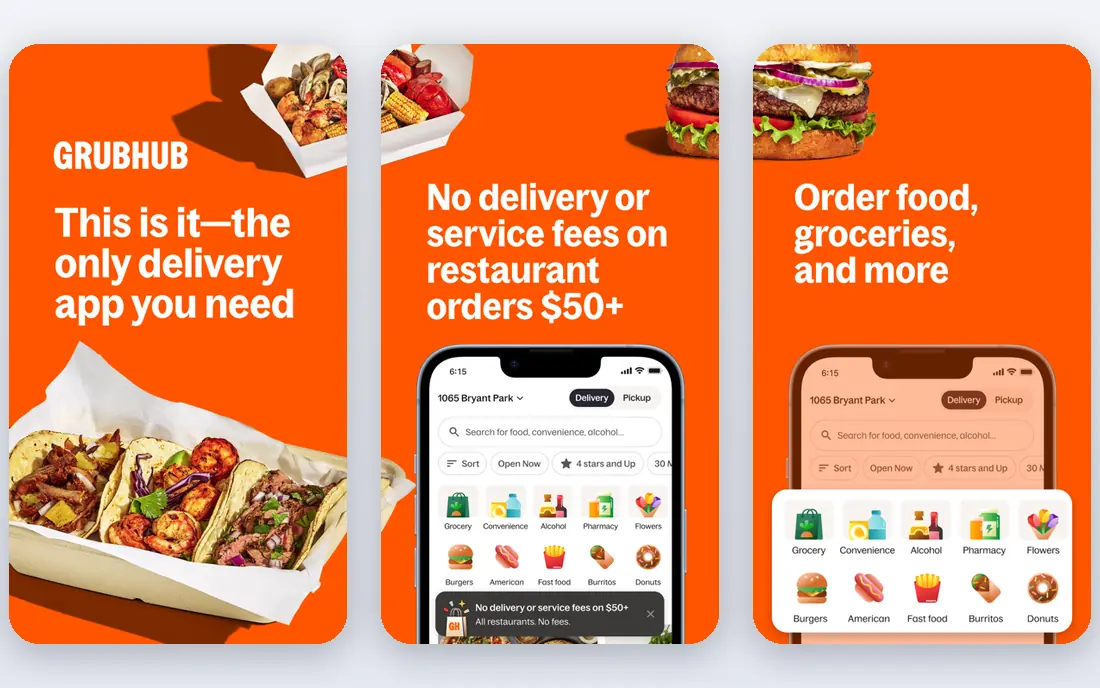
Grubhub is worth checking even if you already use DoorDash, because its restaurant mix and deals often differ. In cities where Grubhub is strong, it lists local restaurants that may not appear elsewhere, and its promotions can make a familiar order cheaper than on a rival app. Grubhub Plus membership offers free delivery benefits on qualifying orders, similar to other memberships here.
The limit is coverage. Outside its core cities, Grubhub's restaurant list thins out, and its grocery and retail delivery is far smaller than DoorDash or Instacart. Fees also vary by restaurant, so the same order can carry different charges depending on where you buy it. Keep Grubhub as a second app to compare prices, especially for local restaurants and deals.
- Strong local restaurant selection in its core cities
- Frequent deals and promotions
- Grubhub Plus membership offers delivery benefits
- Coverage is smaller than DoorDash in many areas
- Fees vary by restaurant and order
- Fewer grocery and retail options
Instacart is the best delivery app for groceries and household shopping. It covers major grocery chains and many local stores, lets you schedule a delivery window or choose same-day delivery, and shows a shopper picking your items with substitution choices when something is out of stock. That control matters for a weekly shop, where a wrong substitution can spoil a meal plan.
Fees depend on order size, delivery timing and membership. Orders above a minimum, often around $35, qualify for lower delivery fees, and Instacart Plus membership offers free delivery benefits on qualifying grocery orders. Watch item prices, which can differ from shelf prices, and check substitution settings before checkout. For food delivery from restaurants, Instacart also offers restaurant options in some areas through a partner, but its strength remains groceries.
- Wide grocery store coverage
- Scheduled delivery windows and same-day options
- Restaurant delivery through a partner in some areas
- Delivery fees and service fees vary by order size and timing
- Item prices can differ from in-store prices
- Heavy items and substitutions need attention
Shipt stands out for the shopping experience itself. Your shopper can message you during the shop about substitutions and out-of-stock items, which feels closer to asking a store employee for help than to a silent order. Same-day delivery windows suit weekly shops and last-minute needs, and the app covers grocery chains plus household and retail stores in its service areas.
Coverage is the limit. Shipt's store list varies by city, so it may not cover your usual grocery store, and without a membership, delivery fees apply per order. It is also a grocery-first app, so restaurant delivery is not its strength. If Shipt covers your stores and you value shopper communication, it is a strong alternative to Instacart for the weekly shop.
- Personal shoppers who communicate during the shop
- Same-day grocery delivery
- Membership option with delivery benefits
- Store coverage varies by city
- Delivery fees apply without a membership
- Smaller restaurant range than food-first apps
goPuff is the pick for quick convenience orders rather than a full shop. It stocks snacks, drinks, household essentials, personal care items and more from its own local facilities, which can mean faster delivery than a grocery store order, including late at night in many cities. The app is simple, since it focuses on convenience rather than thousands of grocery lines.
That focus is also its limit. You cannot do a full weekly grocery shop on goPuff, and prices and fees vary by area and order size. A membership option offers delivery benefits for frequent users, but check how often you order convenience items before subscribing. For a late-night snack run or a forgotten household item, goPuff is hard to beat on speed.
- Fast delivery of snacks, drinks, household items and more
- Late-night availability in many cities
- Simple app focused on convenience
- Product range is convenience-focused, not a full grocery shop
- Delivery fees apply without a membership
- Coverage is city-dependent
Seamless is Grubhub's sister platform, and it remains popular in the cities where it started, especially New York. If you live in one of those areas, its restaurant list is deep, its ordering flow is simple, and it shares deals and membership benefits with Grubhub. Long-time users often stick with it because their favorite restaurants and order history live there.
Outside its core cities, Seamless adds little over Grubhub, since the two platforms share much of the same restaurant network. It also offers far fewer grocery and retail options than DoorDash or Instacart. Treat Seamless as a strong local choice where it is established, and as a backup elsewhere rather than a primary app.
- Long-running ordering platform with a loyal restaurant base
- Similar deals and membership benefits to Grubhub
- Simple ordering flow
- Coverage is concentrated in certain cities, especially New York
- Largely overlaps Grubhub's restaurant list
- Fewer non-restaurant options
ChowNow takes a different approach: it powers ordering direct from local restaurants, rather than listing them in a marketplace that takes a commission on each order. For diners, that can mean menu prices closer to in-store prices, and for restaurants, it means keeping more of each order. If supporting local restaurants matters to you, ChowNow is the most direct way to order from them online.
The trade-off is choice. Coverage is far smaller than DoorDash or Uber Eats, and delivery depends on the restaurant or its delivery partner, so speed and tracking vary. Promotions are also fewer than on large marketplaces. Use ChowNow when your favorite local restaurant offers it, and keep a marketplace app for times when you want to browse widely.
- Orders go direct to the restaurant rather than through a marketplace
- Restaurants keep more of each order
- No marketplace markup model on direct orders
- Restaurant coverage is smaller than marketplaces
- Delivery is handled by the restaurant or a partner
- Fewer promotions than large apps
How we picked these
We compared official app descriptions, fee and membership information and public reviews, focusing on US availability and on apps that real customers use for food and grocery delivery. We included food-first marketplaces, grocery-first apps, a convenience app and a direct-ordering platform, since the best delivery app differs by what you order. We did not claim hands-on testing of deliveries, since we compared published information and public reviews. Where a fee could not be confirmed on the vendor's own site, we described fees as varying rather than giving a fixed number, since delivery and service fees change by city, order size and demand.
How to cut delivery costs without losing convenience
Compare the full total, not the menu price
Delivery fees, service fees, small-order fees and tip can add a large share to a small order. Before you confirm, look at the full total on two apps for the same order, since the cheaper menu can still lose on fees. For small orders, adding an item to pass a free-delivery minimum can cost less than paying the fee, but only if you actually want the item.
Use memberships only if you order often enough
DashPass, Uber One, Grubhub Plus, Instacart Plus and similar memberships cut delivery fees on qualifying orders, but they only save money if you order often enough to cover the monthly cost. Count your orders from the last two months, check each membership's order minimums, and cancel if your ordering slows down. A membership you forget is just another subscription.
Consider pickup for nearby restaurants
When a restaurant is close, pickup removes delivery and service fees entirely and often gets your food faster. Many of these apps offer pickup ordering, and ChowNow's direct ordering is built for it. The saving on a single pickup can cover the tip on your next delivery order.
Check grocery prices and substitutions before checkout
On grocery apps, compare item prices with your store's shelf prices where you can, and set substitution preferences before you order. Choosing a specific replacement, or asking the shopper to skip an item rather than substitute, prevents surprises. Review the final receipt after delivery, since substitutions and weight-based items can change the total.
Frequently asked questions
What is the best delivery app overall?
DoorDash is the best delivery app for most people, thanks to its wide restaurant and store coverage across the US. Uber Eats is the closest alternative, and Instacart is the better choice if most of your orders are groceries rather than restaurant meals.
Which delivery app is the best for delivery drivers?
Drivers often compare DoorDash, Uber Eats, Grubhub, Instacart and Walmart Spark on pay per order, tips and order volume, and the best choice varies by city. DoorDash usually offers the most orders, while Grubhub and Instacart orders can pay more per trip in some areas, so many drivers run more than one app and pick the best-paying order available.
What is the best delivery service to work for?
The best delivery service to work for depends on your vehicle, your city and how many hours you want. Grocery shopping apps suit drivers who like longer, planned batches, while food delivery apps suit drivers who want short, flexible trips, so try more than one app in your area before settling on a favorite.
Which delivery app has the lowest fees?
No single app has the lowest fees everywhere, since delivery and service fees vary by city, restaurant, order size and demand. Compare the full total on two apps for the same order, check membership benefits if you order often, and consider pickup for nearby restaurants to remove delivery fees entirely.
Is a delivery membership worth it?
A delivery membership is worth it if you order often enough that the delivery savings cover the monthly cost and you regularly meet the order minimums. Count your recent orders, compare the membership's benefits with your actual ordering pattern, and cancel during quiet months rather than paying for a benefit you are not using.
Sources we checked (8)

Online Jobs is an independent blog about careers, online work, learning new skills and the tools that help people earn. More about us.
Keep reading
All posts
Best White Label SEO Companies
We compare the best white label SEO companies and tools in 2026 for agencies, from fulfilment services to branded reporting platforms, margins and prices.

Best Webinar Software
We compared the best webinar software for 2026 on price, attendee limits, automation and ease of use, to help you host better live sessions with confidence.
Best Web Scraping Tools
Compare the best web scraping tools in 2026, from no-code Octoparse and Browse AI to Apify, Firecrawl, Bright Data, Zyte, ScraperAPI and free Scrapy, with prices.