Best Debt Consolidation Loan Companies in 2026: 9 Companies Compared

How we put this together: we compare official feature and pricing pages, app store listings, privacy policies and public user reviews. Prices change, so check the provider's site before you pay.
Key takeaways
- SoFi and LightStream suit borrowers with good to excellent credit who want larger loans up to $100,000 with no fees.
- Upgrade and Upstart suit borrowers with fair credit or thin credit files, though APRs can be high and origination fees may apply.
- Discover suits borrowers who want no origination fee and direct payment to creditors on a smaller loan.
- A consolidation loan only helps if its APR is lower than the debts it replaces and if you stop adding new card debt.
- This is not financial advice. Rates, fees, and approval depend on credit, income, and the lender, so get soft-pull prequalification quotes before applying.
Quick comparison
| Name | Who it suits | Starting price | Free option | |
|---|---|---|---|---|
 SoFi | Larger loans with no fees | $5,000 minimum loan | No | Visit |
 LightStream | Excellent credit and no fees | $5,000 minimum loan | No | Visit |
 Upgrade | Fair credit borrowers | $1,000 minimum loan | No | Visit |
 Upstart | Thin credit files | $1,000 minimum loan | No | Visit |
 LendingClub | Co-borrowers and direct pay | $1,000 minimum loan | No | Visit |
 Discover | No origination fee | $2,500 minimum loan | No | Visit |
 Best Egg | Quick funding | $2,000 minimum loan | No | Visit |
 Happy Money | Credit card debt only | $5,000 minimum loan | No | Visit |
 Avant | Short-term smaller loans | $2,000 minimum loan | No | Visit |
The best debt consolidation loan companies
A debt consolidation loan replaces several high-interest debts with one fixed monthly payment. That only improves your finances if the new loan rate beats the rates you already pay, the term fits your budget, and you do not run the cards back up again. The nine companies below are established US personal loan lenders that borrowers commonly use for consolidation, and they cover good, fair, and thin credit profiles.
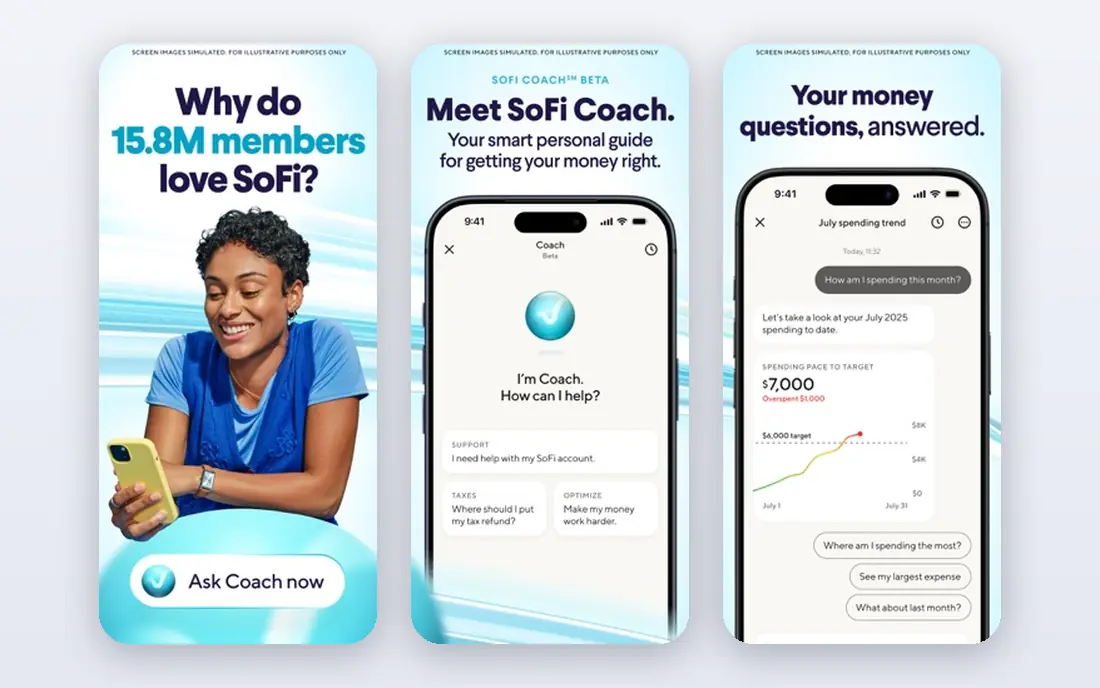
SoFi suits borrowers with good to excellent credit who need a larger consolidation loan. Loan amounts run from $5,000 to $100,000, terms run from two to seven years in published guides, and SoFi charges no fees in those comparisons. That combination helps a borrower with several large card balances who wants one payment and a clear payoff date.
The catch is approval and rate. Published APR ranges for SoFi vary widely by source, from around 7 percent to over 35 percent with discounts and fees noted differently, so your actual offer depends on credit and income. SoFi also offers member benefits such as financial planning and unemployment protection, which some borrowers value. Get a soft-pull quote and compare the total cost, not just the headline rate.
- Loans from $5,000 to $100,000
- No fees in published comparisons
- Direct payment to creditors on some loans
- Best rates need good to excellent credit
- Minimum loan is $5,000, so small debts may not fit
- APR range is wide in published guides
LightStream, a division of Truist Bank, is the low-fee option for borrowers with excellent credit. It charges no fees, offers loans from $5,000 to $100,000, and terms can run up to 240 months depending on purpose in published guides. Same-day funding is possible in some cases, and an autopay discount can lower the rate further.
The limit is selectivity. LightStream rarely approves borrowers with recent late payments or very high utilisation, so a borrower rebuilding credit may be declined. It also does not offer direct payment to creditors in some comparisons, which means you must pay off the cards yourself. If you qualify, LightStream often gives the cleanest total cost; if you do not, a fair-credit lender is a better next step.
- No fees, including no origination or prepayment fees
- Loans up to $100,000
- Same-day funding in some cases
- Selective approval that favours excellent credit
- Minimum loan is $5,000
- No direct payment to creditors in some comparisons
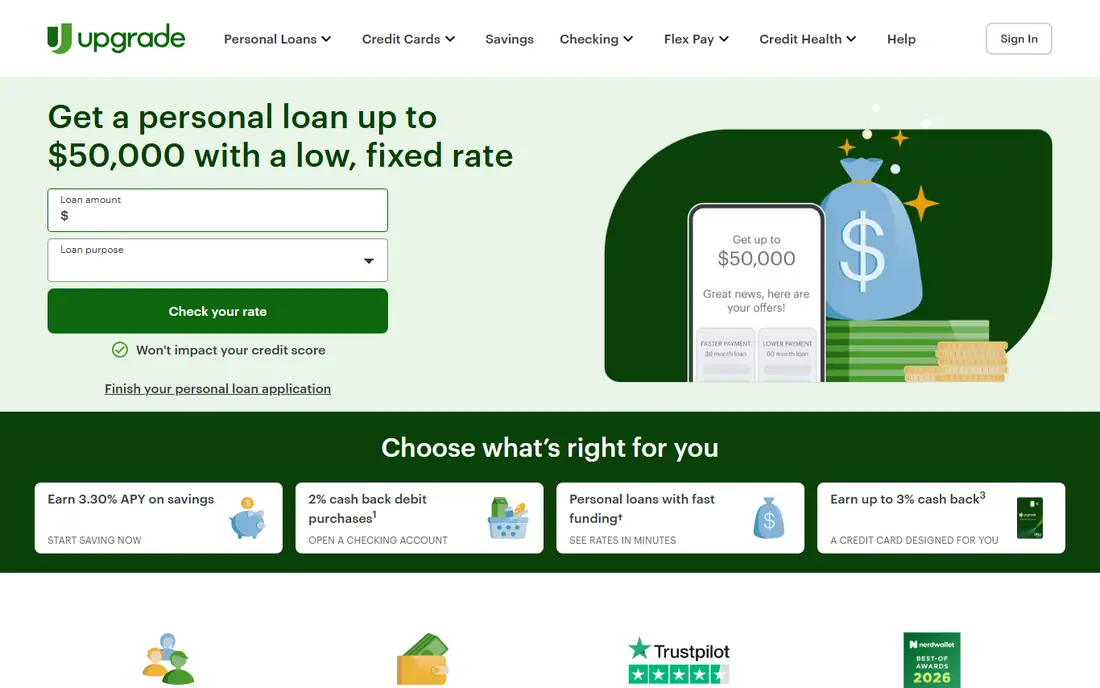
Upgrade is a strong overall option for fair credit borrowers, because it accepts a wider credit range than SoFi or LightStream and offers direct payment to creditors, which ensures the old debts are actually cleared. Loan amounts run from $1,000 to $50,000, and published APR ranges start around 7.74 percent and reach 35.99 percent, depending on credit.
The cost to watch is the origination fee, which can reduce the amount you receive or raise the total cost. A borrower at the high end of the APR range may gain little over card rates, so compare the Upgrade offer against your current card APRs before accepting. For a fair-credit borrower who needs a mid-size loan with direct payoff, Upgrade is a sensible first quote.
- Loans from $1,000 to $50,000
- Direct payment to creditors available
- Flexible terms for fair credit
- Origination fee may apply
- APR can reach 35.99 percent for weaker credit
- Smaller maximum loan than SoFi or LightStream
Upstart suits borrowers with thin credit files, because its underwriting considers education, employment history, and income alongside a credit score. That gives a chance to borrowers who might be declined by a traditional lender, and loan amounts reach $75,000 in some published guides, with $1,000 minimums in others. Terms are mainly three or five years, which keeps the payoff horizon clear.
The trade is cost. Origination fees can reach 12 percent in published guides, and weaker-credit borrowers can face APRs near 35.99 percent, which may not beat card rates. Upstart is worth a quote if your credit file is thin, but only accept if the APR and fee together leave you clearly better off than your current debts.
- Uses education and employment history alongside credit
- Loans from $1,000 to $75,000 in some guides
- Accessible for thin files
- Origination fee up to 12 percent in published guides
- APR can reach 35.99 percent
- Terms are mainly three or five years
LendingClub, now operating under Happen Bank branding in some guides, suits borrowers who can apply with a co-borrower. A co-borrower with stronger credit can improve approval chances or lower the rate, which matters for a borrower whose own score is borderline. Direct payment to creditors is also available, which simplifies payoff.
Origination fees up to 8 percent apply in published guides, and the APR range reaches 35.99 percent for weaker credit. Rate discounts linked to autopay and direct pay can help, but they should not be assumed in your budget until the offer confirms them. For a borrower with a willing co-borrower, LendingClub deserves a quote alongside Upgrade and Upstart.
- Co-borrower option can improve approval or rate
- Direct payment to creditors
- Loans from $1,000 to $60,000 in recent guides
- Origination fee up to 8 percent in published guides
- APR can reach 35.99 percent
- Rate discounts depend on autopay and direct pay
Discover Personal Loans suit borrowers who want a simple, no-fee consolidation loan without a large balance. There is no origination fee, direct payment to creditors is available, and loans run from $2,500 to $40,000 with terms from 36 to 84 months in published guides. The published APR range is 6.99 percent to 24.99 percent, which is narrower at the top than fair-credit lenders.
The limit is size. A borrower with more than $40,000 in card debt cannot consolidate everything with Discover alone, and the best rates still need good credit. For a mid-size card balance where a no-fee loan and direct payoff matter, Discover is a clean, easy-to-compare option.
- No origination fee
- Direct payment to creditors
- Loans from $2,500 to $40,000 with terms from three to seven years
- Smaller maximum loan than SoFi or LightStream
- APR range still reaches 24.99 percent
- Best rates need good credit
Best Egg suits borrowers who want quick funding for a mid-size consolidation loan. Loans run from $2,000 to $50,000, terms run from three to five years in published guides, and there is no prepayment fee, so you can pay the loan off early without penalty. That flexibility helps a borrower who expects income to rise or a bonus to arrive during the term.
Origination fees may apply, and weaker-credit borrowers can face APRs up to 35.99 percent, so the total cost needs checking. Best Egg is a good quote to add when speed matters, but compare its APR and fee against Discover and Upgrade before choosing on funding speed alone.
- Loans from $2,000 to $50,000
- Quick funding in some cases
- No prepayment fees in published guides
- Origination fee may apply
- APR can reach 35.99 percent
- Best rates need good credit
Happy Money, formerly Payoff, focuses specifically on credit card debt, which makes it a clear fit for the most common consolidation case. Loans run from $5,000 to $50,000 in published guides, direct payment to creditors is available, and the company adds financial wellness tools that aim to help borrowers avoid rebuilding card balances.
The focus is also the limit. Happy Money is not the right lender for consolidating medical, personal, or other non-card debts, and its minimum loan excludes small balances. APRs can reach 35.99 percent for weaker credit, so a borrower should only accept if the rate beats their card rates by a clear margin. For pure card debt, it is a focused option worth quoting.
- Focused on credit card debt payoff
- Direct payment to creditors
- Financial wellness tools alongside the loan
- Minimum loan is $5,000
- APR can reach 35.99 percent in published guides
- Not suited to non-card debt consolidation
Avant suits borrowers with fair to poor credit who need a smaller, shorter consolidation loan. Loans run from $2,000 to $35,000, and published APRs start around 9.95 percent and reach 35.99 percent, with an origination fee possible. Shorter terms can suit a borrower who wants to clear a modest balance quickly rather than stretch it over seven years.
The cost warning applies most strongly here. At the high end of the APR range, a consolidation loan may not improve on card rates at all, and an origination fee raises the total further. Avant is a last-resort quote for borrowers declined elsewhere, not a first choice for good-credit borrowers. Only accept if the total cost is clearly lower than your current debts.
- Loans from $2,000 to $35,000
- Accessible for fair to poor credit
- Shorter terms suit small balances
- Origination fee may apply
- APR starts around 9.95 percent and can reach 35.99 percent
- Smaller maximum loan than rivals
How we picked these
We compared published lender comparisons, loan amounts, fee structures, and APR ranges from 2026 guides, and checked that each homepage loads and belongs to the lender named. We kept lenders that offer personal loans commonly used for debt consolidation in the US, and we covered good, fair, and thin credit profiles. APR ranges vary by source and by borrower, so we present them as published ranges, not as a guaranteed offer, and we used "See website" nowhere in this article except where a field does not apply, because loan minimums are published. We did not claim hands-on testing we did not do. This article is general information, not financial advice.
Choosing a debt consolidation loan safely
Compare at least three soft-pull quotes, and judge each offer on total cost, not on monthly payment alone. A longer term lowers the monthly payment but raises total interest, which can erase the benefit of consolidation.
Check the APR, fee, and term together
Add the origination fee to the interest cost, and check whether the term is three, five, or seven years. A loan with a lower APR but a high fee and a long term can cost more than a slightly higher APR loan with no fee and a shorter term. Ask each lender for the total amount you will repay, and compare that figure across offers.
Use direct payment where you can
Direct payment to creditors ensures the old cards are actually paid off, rather than leaving cash that can be spent elsewhere. If your lender does not offer direct pay, pay the cards off immediately on funding day, and confirm each balance is zero. Then avoid using those cards for new spending while the loan runs.
Have a plan for after consolidation
A consolidation loan does not fix the spending pattern that created the debt. Build a budget for the new single payment, keep an emergency buffer if you can, and seek free nonprofit credit counselling if debts feel unmanageable. If no loan offer beats your current card rates, a different plan, such as a balance transfer or a debt management plan, may serve you better than borrowing at a high rate.
Frequently asked questions
What is the best company for debt consolidation loans?
SoFi and LightStream are strong picks for good to excellent credit, with larger loans and no fees. Upgrade and Upstart suit fair credit or thin files, while Discover suits a no-fee mid-size loan. The best company depends on your credit score, loan amount, and whether you need direct payment to creditors.
What is the best consolidation loan company for fair credit?
Upgrade is a strong fair-credit pick, with loans from $1,000 to $50,000 and direct payment to creditors. Upstart also suits fair credit and thin files, though its origination fee can be high. Get quotes from both, plus Discover if your score is near good credit, and compare total cost.
Do debt consolidation loans hurt your credit?
A soft-pull prequalification does not hurt your score, while a full application usually causes a small, temporary dip from a hard inquiry. Over time, paying a consolidation loan on schedule and lowering card utilisation can help your score, but missing loan payments will hurt it. Only borrow an amount you can repay on the stated term.
How much can I borrow for debt consolidation?
Loan amounts in this list range from $1,000 minimums at Upgrade, Upstart, and LendingClub to $100,000 maximums at SoFi and LightStream. Discover caps at $40,000, while Best Egg and Happy Money cap at $50,000. Your approved amount depends on credit, income, and existing debts.
Is a debt consolidation loan better than a balance transfer card?
A loan gives a fixed payment and a fixed payoff date, which suits borrowers who want certainty. A balance transfer card can offer a low intro rate, but the rate rises after the intro period, and unpaid balances can become expensive. Compare total cost over the full payoff period, not just the first months.
What should I check before accepting a consolidation loan?
Check the APR, origination fee, term, total repayment amount, and whether direct payment to creditors is included. Confirm there is no prepayment penalty if you plan to pay early, and check that the monthly payment fits your budget with room for other bills. If the total cost is not clearly lower than your current debts, do not accept the loan.
Sources we checked (9)

Online Jobs is an independent blog about careers, online work, learning new skills and the tools that help people earn. More about us.
Keep reading
All posts
Best Whole Life Insurance Companies
We compared the best whole life insurance companies on dividends, cash value, riders and financial strength, so buyers can shortlist wisely in 2026 today.
Best Trading Apps for Beginners
Compare the best trading app for beginners, with $0 stock commissions, fractional shares, education, paper trading and account types explained in 2026 now.
Best Trading App
We compared the best trading apps for beginners and active traders on fees, tools, accounts and ease of use, so you can pick a platform that fits your plan.