Best Dating Apps in 2026: 9 Apps Compared

How we put this together: we compare official feature and pricing pages, app store listings, privacy policies and public user reviews. Prices change, so check the provider's site before you pay.
Key takeaways
- Hinge is our pick for relationship-focused dating, because prompt profiles give conversations a better starting point than photos alone.
- Bumble suits daters who want women to control first contact, with photo verification and reporting tools built in.
- Tinder still offers the largest pool, which matters most outside major cities, though match quality varies more.
- Free plans let you test the pool in your area before paying, and paid plans mainly add likes, filters and visibility.
- Users must be 18 or older on these apps. Meet in public places, video chat first, and never send money to someone you have not met.
Quick comparison
| Name | Who it suits | Starting price | Free option | |
|---|---|---|---|---|
 Hinge | Relationship-focused dating | Free | Yes | Visit |
 Bumble | Women-first messaging | Free | Yes | Visit |
 Tinder | Largest dating pool | Free | Yes | Visit |
 OkCupid | Compatibility matching | Free | Yes | Visit |
 eharmony | Marriage-minded matching | See website | No | Visit |
 Match | Daters aged 30 and over | See website | No | Visit |
 Coffee Meets Bagel | Curated daily matches | Free | Yes | Visit |
 Badoo | International dating | Free | Yes | Visit |
 Feeld | Open-minded dating | Free | Yes | Visit |
The best dating apps
Dating apps differ less on technology than on who uses them and how conversations start. We compared official feature pages, pricing pages, app store listings, privacy policies and public reviews, and we weighted profile depth, safety tools, free plan limits and pool size in different regions. Users must be 18 or older to use these apps.
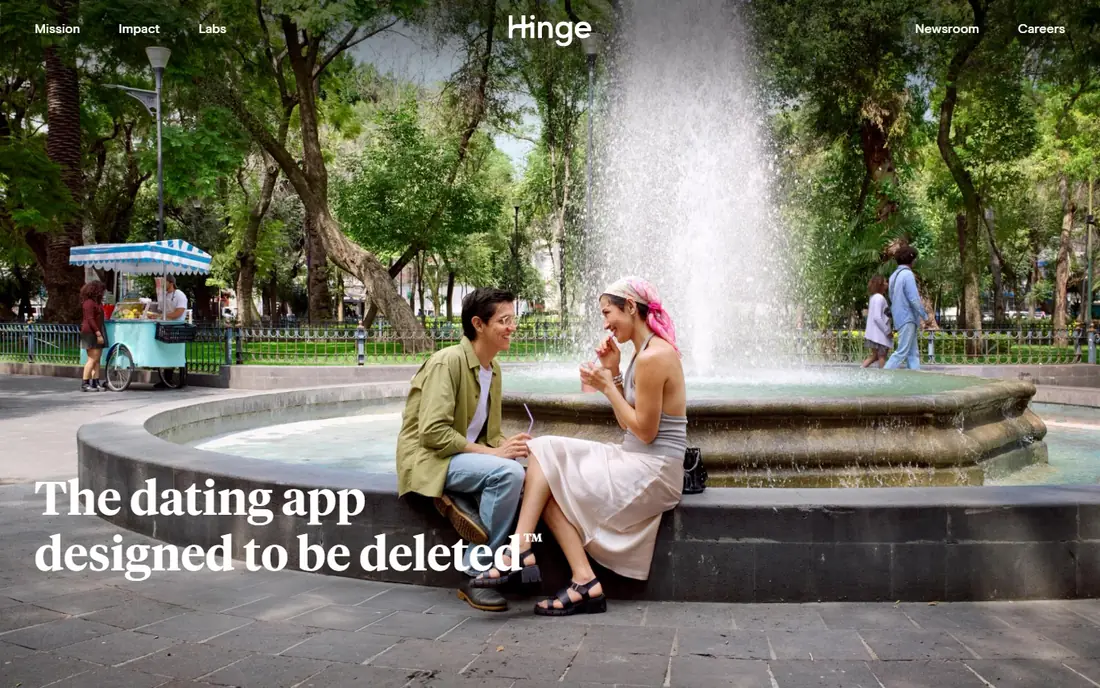
Hinge asks for more than photos. Prompts, voice notes and intention badges push profiles toward conversation, so an opening message can respond to an opinion or a story rather than a single picture. That structure suits daters who want a relationship and who are tired of swiping through profiles with no hook for a first message.
The free plan caps daily likes, which slows heavy users, and the pool is smaller than Tinder in many smaller towns. For daters in cities and suburbs who want quality over volume, Hinge's slower, more deliberate pace is a feature, not a flaw.
- Prompt profiles that give matches something to reply to
- Dating intention badges for clarity
- Photo verification and safety tools in the app
- Free plan limits daily likes
- Smaller pool than Tinder outside major cities
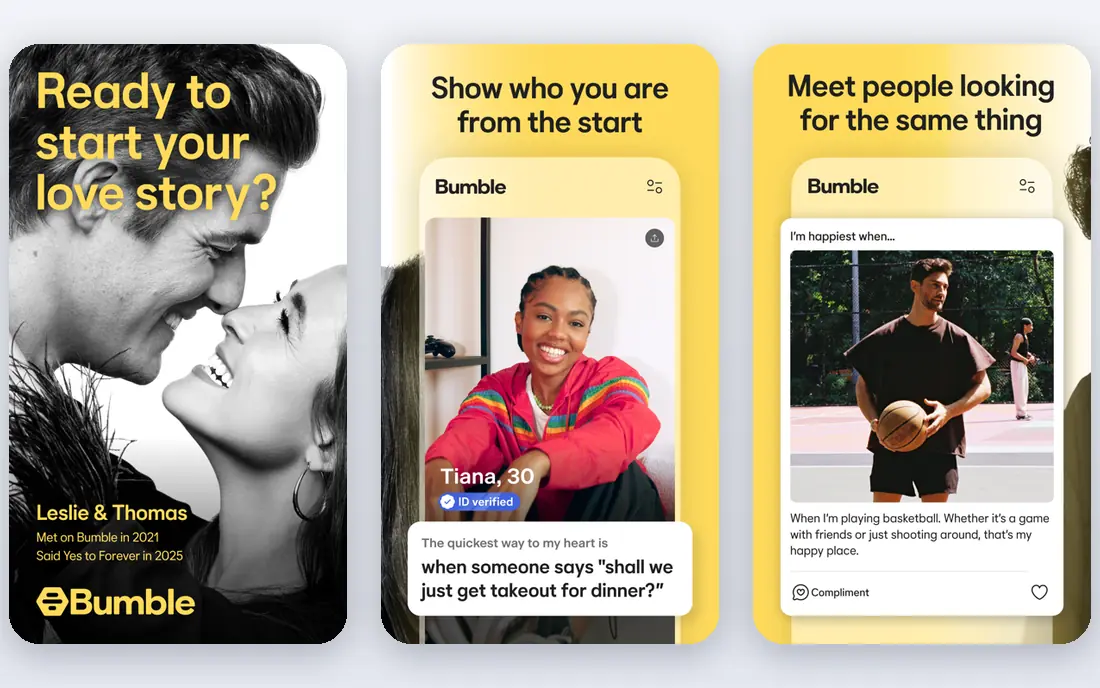
Bumble changes the power balance of first contact. In heterosexual matches, women message first, which reduces unwanted opening messages and gives the recipient control over pace. Photo verification, blocking and reporting tools sit alongside that rule, and the app also offers separate modes for friendship and professional networking.
Time limits cut both ways. A match expires if no message arrives within the window, which can feel rushed on busy days. For women who want more control over who contacts them, and for daters who prefer a calmer inbox, Bumble remains the strongest choice on this list.
- Women send the first message in heterosexual matches
- Photo verification and AI spam detection claims
- Extra modes for friends and networking
- Matches expire if no message is sent in time
- Paid tiers needed for unlimited likes and advanced filters
Tinder still wins on sheer numbers. In smaller towns, rural areas and many countries, it is the app most likely to show you active profiles nearby, and that pool size matters more than any feature when choice is thin. The interface is fast, travel features help before a trip, and boosts can raise visibility for a short period.
Volume brings noise. Intent ranges from casual to serious, profiles are often thin, and the free plan limits likes while showing ads. For daters who want the widest choice and are willing to filter, Tinder is essential. For daters who want depth first, pair it with Hinge or Bumble rather than relying on it alone.
- Largest global pool, especially outside major cities
- Simple, fast matching
- Passport and Boost features for travel and visibility
- Free plan limits daily likes and includes ads
- Match quality and intent vary widely
OkCupid suits daters who care about values, politics, lifestyle and long answers. Its question system builds a match score from shared answers, so you can see where you agree and disagree before messaging. Identity, orientation and pronoun options are broader than on many rivals, which matters for daters who want to be seen accurately.
The app feels busier than Hinge or Bumble, with more fields and filters to manage, and pool size varies sharply by city. For daters who want compatibility data rather than photo-first swiping, OkCupid gives you more to work with than any other free app here.
- Detailed questions and match scores for compatibility
- Wide identity and orientation options
- Free plan covers browsing and messaging with matches
- Interface feels busier than newer rivals
- Pool size varies by region
eharmony targets daters who want a life partner and are willing to invest time upfront. A long questionnaire covers personality, values and lifestyle, and matches are built from that data rather than swiping alone. That formality puts off casual daters, which is exactly the point for its core audience.
Cost and time are the barriers. The free version shows little, messaging requires payment, and the questionnaire takes a real sitting to complete. For marriage-minded daters, especially those aged 35 and over, that investment filters for intent in a way free swiping apps cannot.
- Long compatibility questionnaire for deeper matching
- Focus on long-term relationships
- Verified profile features through the matching flow
- Free version is very limited, with no messaging without payment
- Questionnaire takes time and feels formal
Match has been running longer than any app on this list, and its pool reflects that history, with many daters aged 30 and over who want a serious relationship. Profiles allow more detail than a photo stack, and events and community features give members ways to meet beyond the app itself.
Full messaging requires payment, and the interface feels dated beside Hinge and Bumble. For daters who value a large, older pool and a service with a long track record, Match remains relevant. For younger daters in cities, Hinge or Bumble will usually feel fresher and cheaper to test.
- Long history and large pool of daters aged 30 and over
- Detailed profiles with events and community features
- Identity verification options
- Paid membership needed for full messaging
- Interface feels older than newer apps
Coffee Meets Bagel takes the opposite approach to Tinder. Instead of an endless stack, it sends a small set of curated matches each day, based on preferences and activity. That limit suits daters who feel drained by swiping, since a handful of profiles gets proper attention rather than a split-second verdict.
The same limit frustrates users in areas with a thin pool, where daily matches may be few or repeated. For busy professionals and daters who want a slower pace, the curation is a relief. For users who want volume, it works best as a second app beside a larger pool.
- Daily curated matches reduce endless swiping
- Profiles include more detail than photo-first apps
- Good fit for daters tired of swipe fatigue
- Smaller pool than major rivals
- Daily limit can frustrate users who want more choice
Badoo suits daters with an international focus, whether for travel, relocation or cross-border relationships. Its pool spans many countries, and video chat helps verify a match before meeting, which matters more when distance is involved. Verification badges and reporting tools add a layer of safety to that global reach.
Intent is mixed, since Badoo blends dating with general social networking, and profile quality varies by region. For international daters, it is a practical addition to a mainstream app. For users focused on one city and a serious relationship, Hinge or Bumble will usually give cleaner matches.
- Large international pool across many countries
- Video chat and verification features
- Free plan covers core browsing and matching
- Intent varies widely, from dating to social networking
- Profile quality is uneven across regions
Feeld serves daters whose relationship goals fall outside traditional matching, including couples, solo daters exploring open relationships, and people seeking kink-aware connections. Profiles state desires and boundaries clearly, which reduces awkward guesswork, and privacy controls help users who want discretion about their activity.
The pool is smaller than mainstream apps, especially outside major cities, and the focus will not suit daters seeking conventional monogamous matching. For its audience, though, Feeld's clarity about intent is a genuine advantage, and it avoids forcing open-minded daters into apps that do not fit them.
- Clear options for couples, solo daters and varied relationship styles
- Privacy controls for discreet profiles
- Community focused on honest intent
- Smaller pool than mainstream apps
- Niche focus will not suit daters seeking traditional matching
How we picked these
We compared official feature pages, pricing pages, app store listings, privacy policies and public reviews, and we weighted profile depth, verification and safety tools, free plan limits and regional pool size. We favoured apps with photo verification, blocking and reporting, and clear moderation policies, and we treated user counts and success claims with caution, since providers define those figures differently. Prices vary by country, term and store, so we used See website where the current paid price was not clear from a vendor page.
How to stay safe on dating apps
Verify before you meet
Video chat briefly before meeting in person, even for a few minutes, to confirm the person matches their photos and voice. Keep early conversations inside the app, where blocking and reporting work, rather than moving to personal numbers or other platforms at once. If someone refuses video chat, pressures you to leave the app, or asks for money, end the conversation and report the profile.
Meet in public and tell someone
Choose a public place for first dates, such as a cafe or restaurant, and tell a friend where you are going and when you expect to be back. Arrange your own transport rather than accepting a lift from a new match, and keep control of your drinks and belongings. These steps sound basic, yet they remain the most effective safety habits for in-person dating.
Protect money and personal data
Never send money, gift cards or financial details to someone you have met only online, no matter how convincing the story sounds, since romance scams follow exactly that pattern. Avoid sharing your home address, workplace details or financial information early, and use the app's blocking and reporting tools at once if a match pressures you for any of these.
Frequently asked questions
What is the best dating app?
Hinge is our pick for relationship-focused dating, Bumble suits daters who want women-first messaging, and Tinder offers the largest pool. The best app depends on your goal, location and age group, so test free plans in your area before paying. Pool size in your city matters more than any national ranking.
What are the best dating apps for women?
Bumble leads for women who want control over first contact, since women message first in heterosexual matches, with verification and reporting tools built in. Hinge also suits many women, with prompt profiles and intention badges that filter for serious intent. Test both free plans and keep the app where your inbox feels most manageable.
What is the best dating app for serious relationships?
Hinge, eharmony and Match suit serious relationships best, though they work differently. Hinge uses prompts and intention badges, eharmony uses a long compatibility questionnaire, and Match offers a large pool of daters aged 30 and over. Free plans let you test Hinge first, while eharmony and Match require payment for full messaging.
Is Tinder or Bumble better?
Tinder is better for volume and choice, especially outside major cities, while Bumble is better for message control and a calmer inbox. Many daters run both, using Tinder for breadth and Bumble for more deliberate matches. If you only want one app, choose Tinder for pool size and Bumble for control.
Are dating apps safe?
Dating apps include verification, blocking and reporting tools, but safety also depends on your habits. Video chat before meeting, meet in public, tell a friend your plans, and never send money to an online match. Report suspicious profiles at once, and leave any conversation where you feel pressured or uncomfortable.
What dating app is the best for people over 40?
Match and eharmony suit daters over 40 best, with larger pools in that age group and a focus on long-term relationships. Hinge also works well for daters in their 30s and 40s in cities. Check which app has active profiles in your area before paying, since age mix varies sharply by region.
Sources we checked (9)

Online Jobs is an independent blog about careers, online work, learning new skills and the tools that help people earn. More about us.
Keep reading
All posts
Discord Alternatives
We compared the best Discord alternatives for gaming, communities and teams, checking official pricing, free plans and honest limits before ranking nine apps.
Best Twitter Alternatives
Looking for the best Twitter alternatives? We compared 9 platforms for short posts, from Bluesky and Threads to Mastodon, so you can find your new home.
Best Social Media Management Tools
Compare the best social media management tools for small teams, creators and agencies, with pricing, free plans, features and honest trade-offs. in 2026.