Best Data Integration Tools in 2026: 8 Tools Compared

How we put this together: we compare official feature and pricing pages, app store listings, privacy policies and public user reviews. Prices change, so check the provider's site before you pay.
Key takeaways
- Fivetran suits teams that want managed pipelines with little maintenance, while Airbyte suits teams that want open source flexibility and self-hosting.
- Stitch and Hevo offer simpler entry points for smaller data volumes, but costs rise with rows, events or volume.
- Talend and Informatica suit enterprise teams with complex transformations, data quality needs and governance requirements.
- Always model cost on your real volume and change rate, because the cheapest starter tier can become expensive at scale.
Quick comparison
| Name | Who it suits | Starting price | Free option | |
|---|---|---|---|---|
 Fivetran | Managed ELT with little maintenance | Free | Yes | Visit |
 Airbyte | Open source and flexible deployment | $20 per month | Yes | Visit |
 Stitch | Simple cloud ELT for small teams | $100 per month | No | Visit |
 Qlik Talend Cloud | Enterprise integration and quality | See website | No | Visit |
 Informatica | Enterprise data management | See website | No | Visit |
 Hevo Data | Small teams with SaaS sources | $239 per month | Yes | Visit |
 Matillion | Warehouse-native transformation | See website | Yes | Visit |
 Skyvia | Affordable cloud integration | $79 per month | Yes | Visit |
The best data integration tools
Data integration tools move data from apps, databases and files into a warehouse, lake or business system so teams can analyze it in one place. Some tools focus on managed ELT pipelines, others on visual ETL design, and a few on open source self-hosting. We compared official pricing and product pages, connector coverage and deployment options for the tools below.
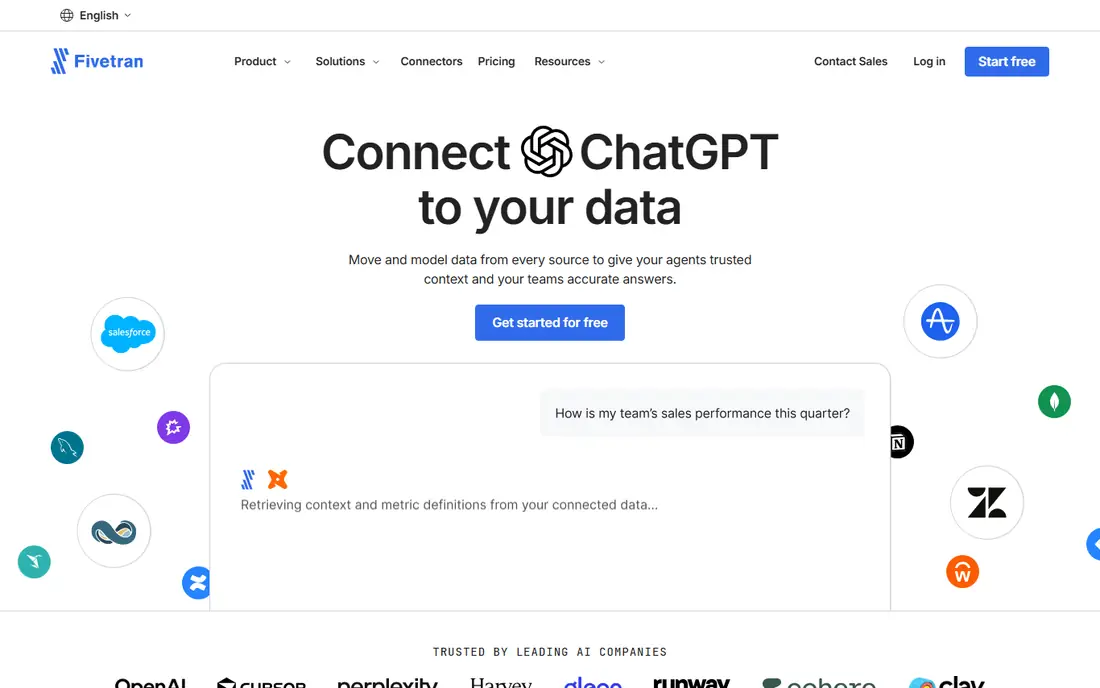
Fivetran is the default shortlist pick for teams that want pipelines to just run. You connect a source, pick a destination warehouse, and Fivetran handles extraction, loading and schema changes with little manual work. It supports hundreds of sources, including SaaS apps, databases and files, and it is widely used for analytics and AI workloads that need fresh, trusted data.
The pricing model needs careful modeling. Fivetran offers a free tier up to 500,000 monthly active rows, but paid pricing is usage-based and depends on rows changed per connection. Tables with frequent updates, deletes or history tracking can cost more than a simple row count suggests. Test with your real tables, not a small sample, and watch the first month closely before committing to a larger contract.
- Large managed connector library
- Automated schema handling
- Strong reliability and monitoring
- Costs are based on monthly active rows and can rise fast with high-change data
- Paid contracts carry an annual minimum in many cases
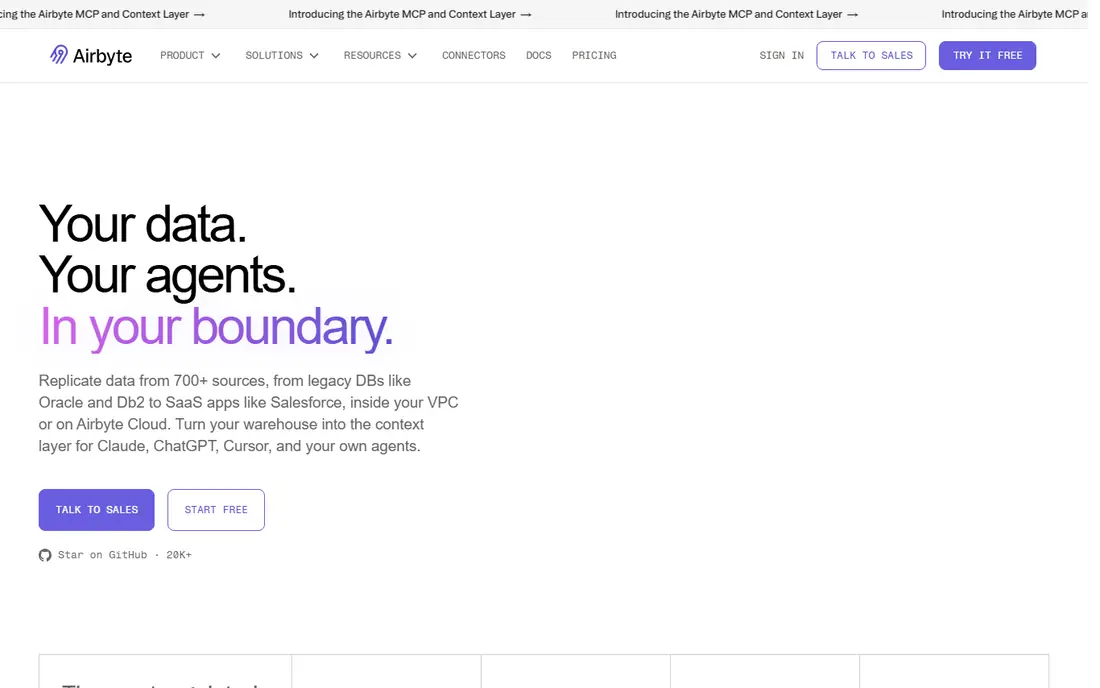
Airbyte gives teams a choice that most managed tools do not. You can self-host the open source version, run it in your own cloud, or use Airbyte Cloud on a paid plan. The connector catalog is broad, and the no-code connector builder plus Python and low-code options make it easier to add a source that is not already covered. That flexibility appeals to data teams that want control over where data runs.
The trade-off is operational effort on the self-hosted route. You own upgrades, monitoring and scaling, which is a real cost even when the software itself is free. On Airbyte Cloud, Standard starts at $20 per month, but volume-based pricing means larger syncs cost more. Airbyte suits teams with data engineering capacity or a clear reason to avoid a fully managed vendor.
- Open source self-hosted option
- Large connector catalog
- Cloud, hybrid and self-hosted deployment
- Cloud costs depend on volume and credits
- Self-hosting needs engineering time to operate
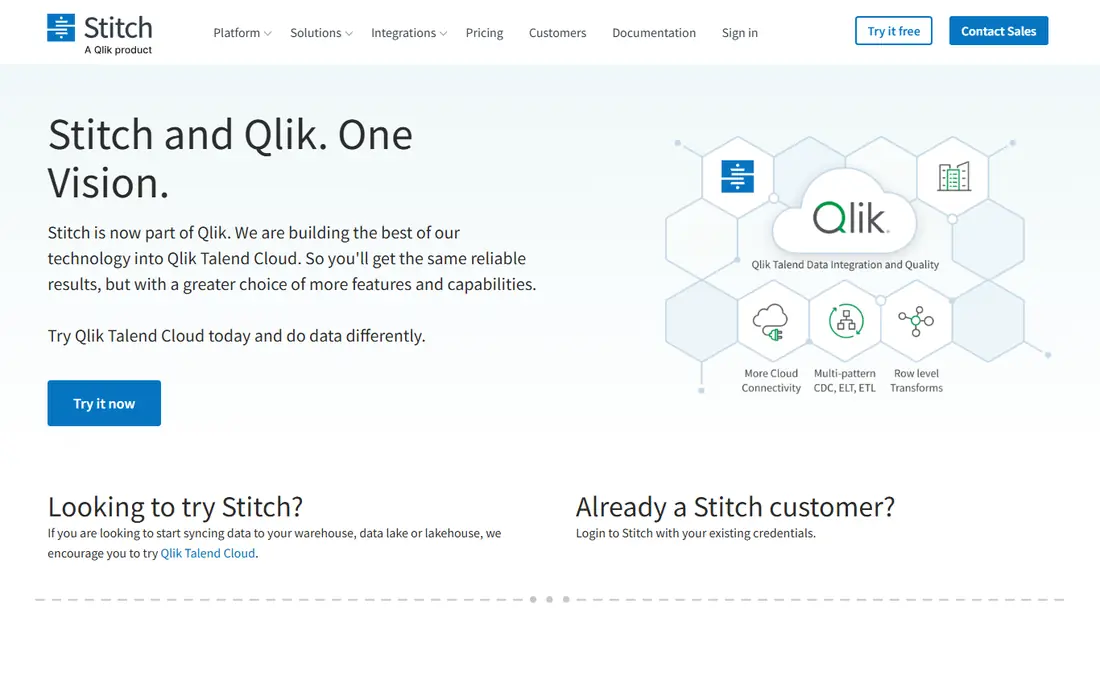
Stitch is a straightforward cloud ELT tool for teams that need to replicate data from SaaS apps and databases into a warehouse without building pipelines by hand. Setup is quick for standard sources, and the tier structure based on rows replicated per month is easy to understand at small scale. Starting at $100 per month, it can be a practical choice for a first warehouse project.
Stitch is less suited to complex transformation or data quality work, which usually happens in the warehouse or a separate tool. Teams should also note that Stitch is being absorbed into Qlik Talend Cloud, so new buyers should ask Qlik about long-term support, migration and pricing for existing Stitch plans before starting a fresh deployment.
- Simple setup for common sources
- Clear row-based tiers
- Part of the Qlik Talend family
- Limited advanced transformation
- Pricing rises with replicated rows
- Product is being folded into Qlik Talend Cloud
Talend, now part of Qlik, is a full data integration platform rather than a simple connector service. It covers data integration, transformation, data quality and governance, with visual design tools for building jobs and managing complex pipelines. Enterprises use it for large, regulated workloads where data must be cleaned, matched and validated before it reaches analysts.
That power comes with weight. Pricing is quote-based and depends on data volume, job executions and tier, so small teams may find it hard to justify. Designers also need time to learn the tool, and projects benefit from a clear data architecture. Talend is a strong fit when integration is a company-wide program, not when you only need a handful of SaaS connectors synced to a warehouse.
- Broad integration, transformation and data quality tools
- Strong enterprise governance
- Visual job design
- Quote-only pricing
- Heavier setup than managed ELT tools
- Learning curve for new designers
Informatica is an enterprise data management platform covering integration, data quality, master data and governance. Large organizations use it to connect many systems, enforce data standards and manage sensitive data across business units. Its cloud platform, Intelligent Data Management Cloud, brings those services together for teams that need a governed, large-scale foundation.
For a small analytics team, Informatica is usually too much. Pricing is enterprise-oriented, implementation takes planning, and the platform rewards teams that already have data governance roles. For a large company with complex sources, regulatory duties and many downstream systems, that depth is the point. Shortlist Informatica when governance and scale matter more than a fast, low-cost first pipeline.
- Deep enterprise data integration and governance
- Broad connector and cloud options
- Strong data quality features
- Enterprise pricing and implementation effort
- More complex than small teams need
Hevo Data is a no-code data pipeline platform aimed at teams that want to move data from SaaS apps, databases and files into a warehouse without writing pipeline code. Its free tier covers up to 1 million events, which is useful for testing or a very small project, and the Starter plan starts at $239 per month. Setup is guided, and basic transformations can be handled inside the platform.
Watch the pricing unit. Hevo charges by events, and high-frequency updates can multiply events beyond what a simple record count suggests. Teams with chatty sources or frequent syncs should model cost on real event volume, including repeats. For a small team with a manageable set of sources, Hevo is a practical middle ground between a free open source setup and an enterprise platform.
- Free tier up to 1 million events
- Simple pipeline setup
- Built-in transformation options
- Event-based pricing can rise with high-frequency updates
- Connector depth varies by source
Matillion is built for cloud data warehouses such as Snowflake, BigQuery and Databricks. Rather than moving data through a separate engine, it runs transformations inside the warehouse, which suits teams that already center their analytics there. Its visual pipeline builder helps analysts and engineers design data flows without writing every step by hand, and it offers a free tier up to 1 million rows per month.
Pricing is credit-based, so the cost depends on usage and workload rather than a flat monthly fee. That model can be efficient for variable workloads, but it also makes budgeting harder without a trial on real jobs. Matillion is strongest when you already have a warehouse strategy. If you do not, a managed ELT tool with a simpler connector focus may get you started faster.
- Warehouse-native design for cloud warehouses
- Visual transformation pipelines
- Free tier up to 1 million rows per month
- Credit-based pricing needs modeling
- Best suited to teams already using a cloud warehouse
Skyvia is a cloud data integration platform that stands out on entry price. Its free tier covers 10,000 records per month, and the Basic plan starts at $79 per month billed annually for 5 million records. That makes it worth a look for small businesses and teams that need regular syncs between common apps and databases without an enterprise budget.
The catalog is narrower than Fivetran or Airbyte, so check your exact sources before committing. Skyvia also offers an on-premises agent for databases behind a firewall, which helps teams that cannot expose a database directly to the cloud. For straightforward, recurring integration work, it offers good value. For very large or highly specialized pipelines, a larger platform may be safer.
- Low entry price for cloud integration
- Free tier up to 10,000 records per month
- On-premises agent for firewalled databases
- Smaller connector catalog than the largest vendors
- Advanced enterprise features are limited
How we picked these
We compared official pricing pages, connector coverage, deployment models and the typical buyer for each tool. We favored tools that are actively maintained in 2026, support common warehouse destinations and fit a distinct need, from managed ELT to enterprise governance. Where pricing was quote-based or unclear, we wrote See website rather than repeating an unverified figure. We did not claim hands-on testing, and we treated third-party price comparisons as a starting point, not a substitute for a vendor quote.
What to check before you buy a data integration tool
Start by listing your sources, destinations and sync frequency. A tool that covers your CRM and ad platforms may not cover a niche database or a file format you rely on. Check whether change data capture is supported for your databases, how schema changes are handled and what happens when a sync fails. Those details matter more in daily use than a headline connector count.
Next, model total cost on real volume. Count rows or events changed, not just rows stored, and include deletes, updates and history mode if the vendor charges for them. Run a trial with production-like data for at least a few weeks, and compare the billed usage against your forecast. A tool that looks cheap on a starter tier can become the most expensive option once sync frequency rises.
Finally, decide who will own the pipelines. Managed tools reduce maintenance but limit control. Open source tools give control but need engineering time. Enterprise platforms add governance but need planning and training. Pick the model your team can support for a year, not just the model that looks best in a demo.
Frequently asked questions
What is the best data integration tool for a small business?
For a small business, Fivetran, Airbyte Cloud or Skyvia are common starting points, depending on volume and budget. Fivetran is the most managed option, Airbyte offers open source flexibility, and Skyvia has a low entry price. Test with your real sources and volume before committing, because pricing models differ.
What is the difference between ETL and ELT?
In ETL, data is transformed before it is loaded into the destination. In ELT, data is loaded first and then transformed inside the warehouse or lake. Modern cloud tools often use ELT, because warehouses can handle transformation at scale and raw data stays available for later use. The right pattern depends on your warehouse, governance needs and team skills.
How much do data integration tools cost?
Costs range from free open source software and low-cost cloud tiers to quote-based enterprise contracts. Managed tools usually charge by volume, rows, events or credits, so total cost depends on how much data changes and how often it syncs. Model cost on real usage and confirm whether deletes, updates and failed syncs are billed.
Can I self-host a data integration tool?
Yes. Airbyte offers an open source self-hosted version, and other tools offer hybrid or on-premises options. Self-hosting removes software license fees but adds server, monitoring and maintenance work. It suits teams with data engineering capacity and a reason to keep data movement inside their own infrastructure.
Do data integration tools replace a data warehouse?
No. A data integration tool moves and prepares data, while a warehouse stores it for analysis. You still need a destination such as Snowflake, BigQuery, Redshift or Databricks, plus a way to model and visualize the data. Some platforms bundle transformation, but they do not replace the warehouse itself.
Sources we checked (8)

Online Jobs is an independent blog about careers, online work, learning new skills and the tools that help people earn. More about us.
Keep reading
All posts
Workday Alternatives
We compared the best workday alternatives for HR, payroll, and global hiring, from BambooHR and Gusto to Rippling, Deel, and HiBob for growing teams in 2026.
Which SaaS Tools Have the Best Customer Support
Which SaaS tools have the best customer support? Compare eight popular tools on help centres, live help, response options and overall support quality.

Top AI Helpdesk Software
Searching for top AI helpdesk software in 2026? We compared 8 AI helpdesks on automation, pricing, channels and ease of setup for small and growing teams.