Best Customer Relationship Management Software in 2026: 8 Tools Compared


Large complex organisations · Starting price: $25 per user per month
How we put this together: we compare official feature and pricing pages, app store listings, privacy policies and public user reviews. Prices change, so check the provider's site before you pay.
Key takeaways
- HubSpot is our pick for most teams because it combines sales, marketing, and service around one free CRM core.
- Salesforce suits large or complex organisations that need deep customisation and a wide app marketplace.
- Zoho CRM and Pipedrive offer strong value for smaller teams, with Zoho leading on automation and Pipedrive on pipeline clarity.
- Microsoft Dynamics 365 suits teams already invested in Microsoft tools, while Capsule suits teams that want simplicity.
Quick comparison
| Name | Who it suits | Starting price | Free option | |
|---|---|---|---|---|
| Salesforce | Large complex organisations | $25 per user per month | Free trial | Visit |
 HubSpot | All-round sales and marketing | Free | Yes | Visit |
 Zoho CRM | Value and automation | $14 per user per month | Yes | Visit |
 Pipedrive | Sales pipeline clarity | $14 per user per month | Free trial | Visit |
 Microsoft Dynamics 365 | Microsoft-based teams | See website | Free trial | Visit |
 Freshsales | Phone and email in one CRM | $9 per user per month | Free trial | Visit |
 monday CRM | Custom workflows and boards | $12 per user per month | Free trial | Visit |
 Capsule | Simple relationship management | $18 per user per month | Yes | Visit |
The best customer relationship management software
Customer relationship management software, or CRM, stores contacts, deals, conversations, and service history in one place, so teams stop losing leads in inboxes and spreadsheets. The best choice depends on team size, sales complexity, and whether you also need marketing or service tools in the same system.
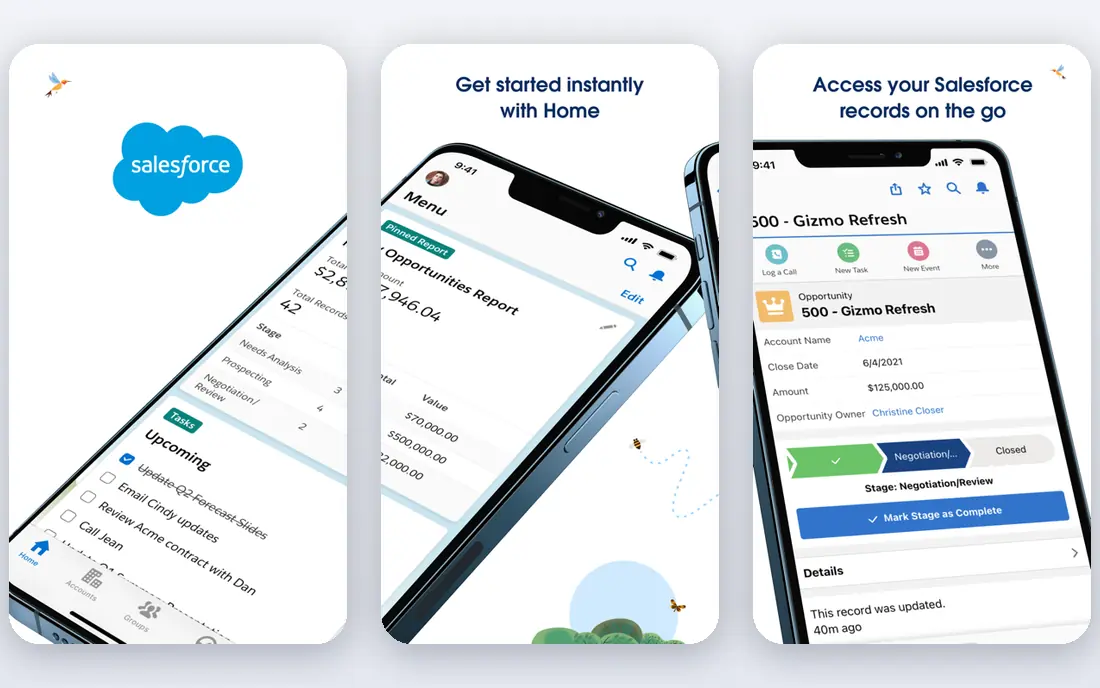
Salesforce remains the most powerful CRM for large and complex organisations. You can customise objects, workflows, approvals, and reporting to match almost any sales process, and the AppExchange marketplace adds thousands of integrations. For a company with several sales teams, complex products, and strict reporting needs, that depth matters.
The trade-off is admin effort and cost. Salesforce usually needs a dedicated admin or partner for a serious implementation, and the price climbs as you add features. Small teams will likely find HubSpot or Pipedrive faster to adopt. For a growing company that expects complexity, Salesforce is built to scale with it.
- Deep customisation and workflow options
- Huge app marketplace
- Strong reporting for large teams
- Steeper learning curve
- Costs rise quickly beyond the starter tier
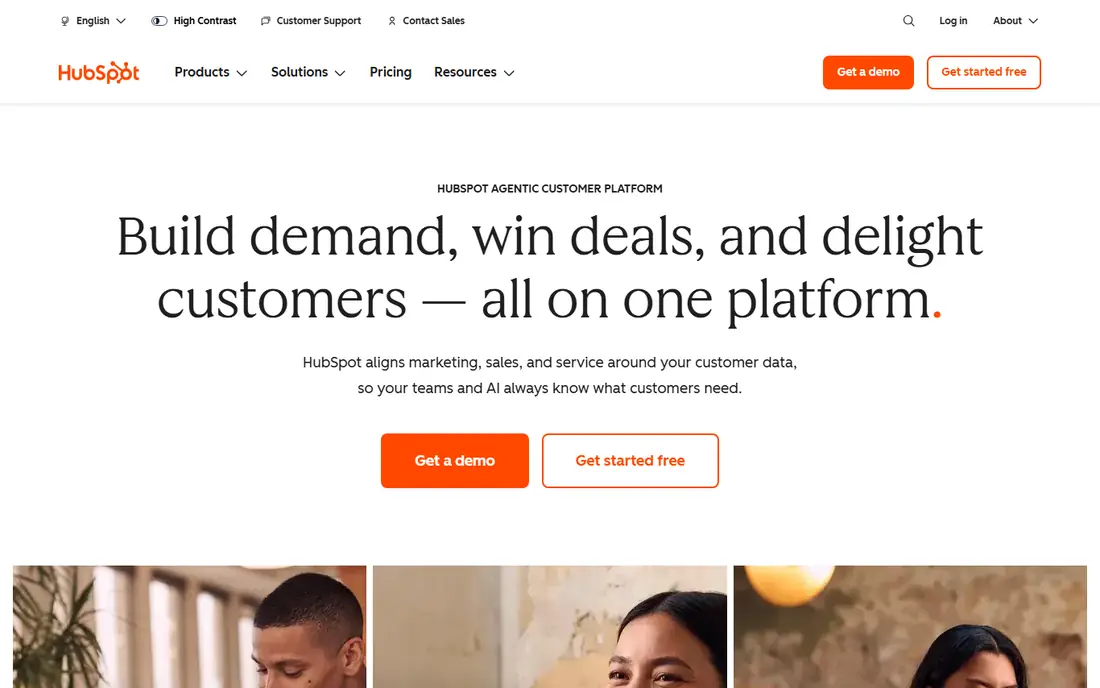
HubSpot is our pick for most teams because it balances power with ease of use. The free CRM covers contacts, deals, and basic sales tools, and paid hubs add marketing automation, service tickets, and reporting without a separate database. A small or mid-sized team can get running in days, not months.
As with the startup list, the price jump to Professional is the main caution. Map the features you will need in a year, check the Professional price, and watch marketing contact limits. For a team that wants sales and marketing in one system without hiring a CRM admin, HubSpot is the most practical choice.
- Free CRM core with contacts and deals
- Marketing, sales, and service hubs share one database
- Easier adoption than Salesforce
- Professional tiers are much pricier than Starter
- Marketing costs rise with contact counts
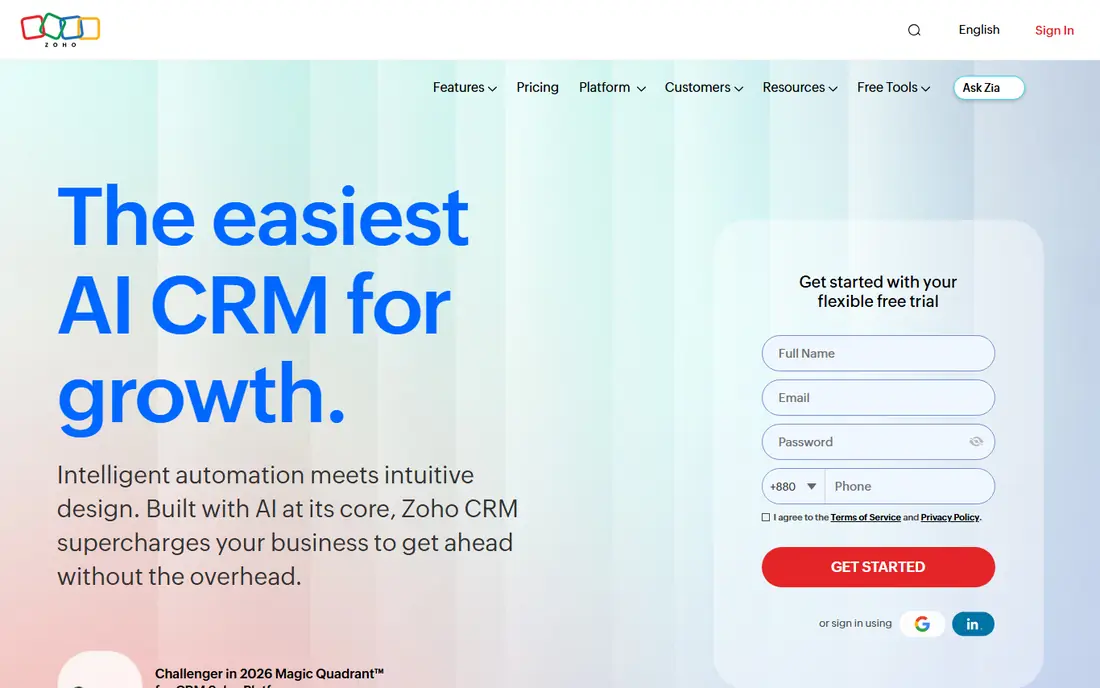
Zoho CRM offers a strong mix of price and power for teams that want automation without enterprise costs. Workflows, custom fields, scoring, and reporting go further at this price than on many rivals, and the free plan helps a small team start. If you already use Zoho apps for email, accounting, or projects, the links between apps add value.
Setup is the main cost in time rather than money. A team willing to configure pipelines and workflows will get a lot from Zoho, while a team that wants a CRM live today may prefer HubSpot or Pipedrive. For value-focused teams with a little setup patience, Zoho CRM is hard to beat.
- Strong automation for the price
- Free plan for up to 3 users
- Wide Zoho app integrations
- Setup takes longer than HubSpot
- Deepest features sit on higher tiers
Pipedrive is the clearest pipeline tool in this list. Deals sit in stages you can see at a glance, activities remind reps to follow up, and reporting shows where deals slow down. That clarity helps sales managers coach a team without digging through reports.
Marketing depth is thinner than HubSpot, so a team that needs email campaigns and lead nurturing in the same tool may need extra software. For a sales-led team that wants a pipeline everyone actually updates, Pipedrive is a strong, focused choice.
- Clear visual pipeline
- Simple activity and follow-up tracking
- Quick setup for sales teams
- No free plan, only a trial
- Marketing features need add-ons
Microsoft Dynamics 365 suits organisations already running on Microsoft 365. Sales and service data link to Outlook, Teams, and Office tools, which reduces copying between apps and keeps customer history close to email and meetings. For a large Microsoft shop, that integration is a real advantage.
Pricing depends on which modules and licences you choose, so get a clear quote for your exact needs rather than relying on a single headline price. Setup can also be involved, especially for complex sales processes. For a Microsoft-based enterprise, Dynamics 365 deserves a place alongside Salesforce on the shortlist.
- Deep links to Outlook, Teams, and Office apps
- Strong for large Microsoft-based organisations
- Sales, service, and marketing modules
- Pricing varies by module and licence
- Setup can be complex
Freshsales is a good value CRM for teams that sell by phone and email. Calling, email, and chat sit inside the contact record, so a rep can see the full conversation without switching tools. The starting price is lower than most rivals here, which helps a team watching budget.
Higher plans add AI scoring and deeper automation, so the entry price is not the whole story if you need those features. For a small or mid-sized sales team that wants communication built into the CRM, Freshsales offers a practical balance of price and features.
- Low starting price
- Built-in phone, email, and chat
- Lead scoring on higher plans
- No free plan, only a trial
- Advanced automation needs higher tiers
monday CRM suits teams whose customer work does not fit a standard sales pipeline. You can build boards for deals, onboarding, renewals, and projects, with automations moving work between them. That flexibility helps service businesses, agencies, and teams that manage a long customer journey after the sale.
The three-seat minimum matters for a solo user, and the breadth can feel less focused than Pipedrive for a pure sales team. If your team already uses monday for work management, the CRM is a natural extension. If you want a strict sales pipeline, choose Pipedrive instead.
- Visual boards adapt to many processes
- Automations link sales, onboarding, and projects
- Good collaboration tools
- Three-seat minimum on paid plans
- Can feel broader than a pure CRM
Capsule closes this list as the simplicity pick. Contacts, deals, tasks, and history are easy to find, and a new user can learn the system quickly. The free plan suits a very small team, and paid plans keep the same straightforward approach without a maze of hubs.
Automation and reporting are lighter than on HubSpot, Zoho, or Salesforce, so a team with complex workflows will outgrow Capsule. For a consultant, agency, or small B2B team that mainly needs to remember relationships and follow-ups, Capsule is a calm, reliable choice.
- Clean, simple interface
- Free plan for small teams
- Good for consultants and small B2B firms
- Less automation than larger CRMs
- Fewer integrations
How we picked these
We compared official pricing pages, free plan limits, and public reviews, and we favoured CRMs that are still actively sold and that cover a distinct buyer type. We included enterprise, all-round, value, pipeline, Microsoft-based, and simple options, so the list works for a solo consultant and a large sales organisation. Prices are per user per month on annual billing where published, and we mark quote-based pricing as See website.
How to choose a CRM
Start with your sales process, not the vendor list. Write down your pipeline stages, who owns each stage, and what happens after a deal closes. A CRM that matches that process will be adopted, while a powerful CRM that fights your process will be ignored.
Sales, marketing, and service together
Decide whether you need sales alone or sales plus marketing and service in one system. HubSpot and Salesforce cover all three, while Pipedrive and Capsule focus on sales and relationships. Buying a full platform for a sales-only need adds cost and complexity you may not use.
Total cost and admin time
Add seat costs, contact or marketing limits, onboarding fees, and admin time. A cheap CRM that needs constant manual work can cost more than a pricier CRM that automates follow-ups and reporting. Trial with real data, involve the people who will use it daily, and check support quality before you sign a yearly plan.
Frequently asked questions
What is the best customer relationship management software overall?
HubSpot is our pick for most teams because it combines a free CRM core with sales, marketing, and service tools that are easy to adopt. Salesforce is best for large, complex organisations, while Zoho CRM offers the best value for smaller teams.
What are the top 5 crm software options?
Our top five are Salesforce, HubSpot, Zoho CRM, Pipedrive, and Microsoft Dynamics 365. Salesforce leads on customisation, HubSpot on all-round ease, Zoho on value, Pipedrive on pipeline clarity, and Dynamics 365 on Microsoft integration.
What are the top 10 customer relationship management software options?
Beyond our top five, Freshsales, monday CRM, and Capsule round out a strong top eight, with Attio and Close as useful additions for modern startups and calling-led teams. The right top ten depends on your size and sales process, so trial two or three before deciding.
What are the best customer relationship management tools for small teams?
HubSpot, Zoho CRM, Pipedrive, and Capsule all suit small teams, with HubSpot and Zoho offering free plans. Pipedrive suits sales-led small teams, while Capsule suits teams that want the simplest possible CRM.
What is the best customer relationship management platform for enterprises?
Salesforce and Microsoft Dynamics 365 lead for enterprises, with deep customisation, reporting, and app ecosystems. Choose Salesforce for the widest marketplace and customisation, or Dynamics 365 if your organisation already runs on Microsoft tools.
What is the best relationship management software for service businesses?
monday CRM and HubSpot suit service businesses that track onboarding and renewals as well as sales. monday CRM adapts well to custom service workflows, while HubSpot adds service tickets and customer history in the same system.
Sources we checked (8)

Online Jobs is an independent blog about careers, online work, learning new skills and the tools that help people earn. More about us.
Keep reading
All posts
DocuSign Alternatives
We compared the best DocuSign alternatives on price, free plans, templates, audit trails and ease of use, including free DocuSign alternatives for small teams.
Best subscription billing software
Looking for the best subscription billing software? We compare 9 platforms for billing, dunning, tax, revenue recognition, and team workflows in 2026.
Best Workforce Management Software
Looking for the best workforce management software? We compare 8 tools for scheduling, time tracking, payroll, and compliance for hourly teams and managers.