Best Customer Experience Platforms in 2026: 8 Platforms Compared


Omnichannel help desk for growing teams · Starting price: $19 per month
How we put this together: we compare official feature and pricing pages, app store listings, privacy policies and public user reviews. Prices change, so check the provider's site before you pay.
Key takeaways
- Customer experience platforms split into two jobs: running support well, and measuring how customers feel across every touchpoint.
- Zendesk and Freshdesk suit support teams that need a strong help desk, while Qualtrics and Medallia suit firms measuring experience at enterprise scale.
- Intercom fits product-led firms that want chat and AI resolution inside the product, and HubSpot fits teams already on HubSpot CRM.
- Quote-only enterprise pricing means a demo and a sales conversation are part of the buying process, not a shortcut around it.
- The best customer service experience usually comes from fast first replies, clear ownership, and follow-up that closes the loop.
Quick comparison
| Name | Who it suits | Starting price | Free option | |
|---|---|---|---|---|
| Zendesk | Omnichannel help desk for growing teams | $19 per month | Free trial | Visit |
 Intercom | Conversation-first support with AI | $29 per month | Free trial | Visit |
 Freshdesk | Budget ticketing that sets up fast | $19 per month | Free trial | Visit |
 HubSpot Service Hub | Support teams on HubSpot CRM | $20 per month | Yes | Visit |
 Salesforce Service Cloud | Enterprises on Salesforce | $25 per month | Free trial | Visit |
 Qualtrics XM | Enterprise experience measurement | See website | No | Visit |
 Medallia | Enterprise feedback across channels | See website | No | Visit |
 Gladly | Conversation-centric support | See website | No | Visit |
The best customer experience platforms
A customer experience platform should help a business in two ways: handle each customer well in the moment, and learn from every interaction so the next one is better. Support tools focus on the first job, while experience management tools focus on the second. The eight platforms below cover both, from help desks a small team can run to enterprise suites that measure experience across stores, sites, and contact centres.
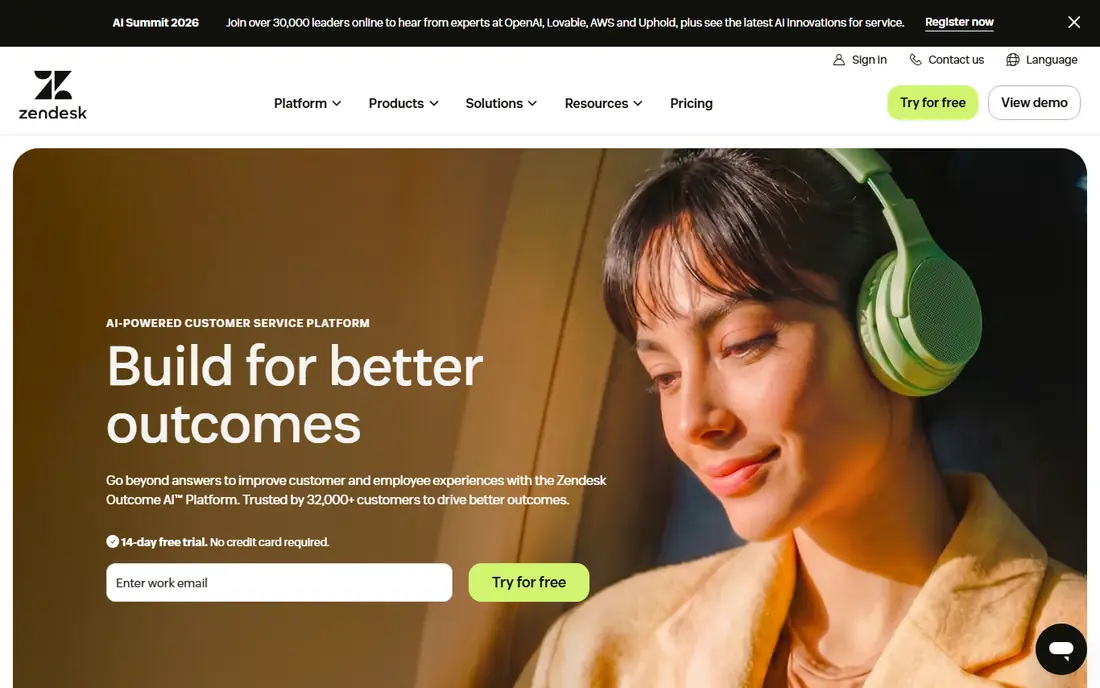
Zendesk remains the default help desk for growing support teams. Email, chat, phone, and social messages land in one queue, agents see customer history in context, and reporting covers response times, resolution rates, and satisfaction. Its app marketplace adds the tools a team outgrows the basics for, from workforce management to advanced analytics.
Per-agent pricing means costs scale with team size, and AI and advanced features sit on higher tiers or add-ons. For a team that needs a dependable, well-documented help desk with room to grow, Zendesk is a safe pick. Small teams should compare total cost against Freshdesk before committing.
- Mature omnichannel help desk
- Strong reporting
- Large app marketplace
- Costs rise with agents and add-ons
- Setup needs care for complex routing
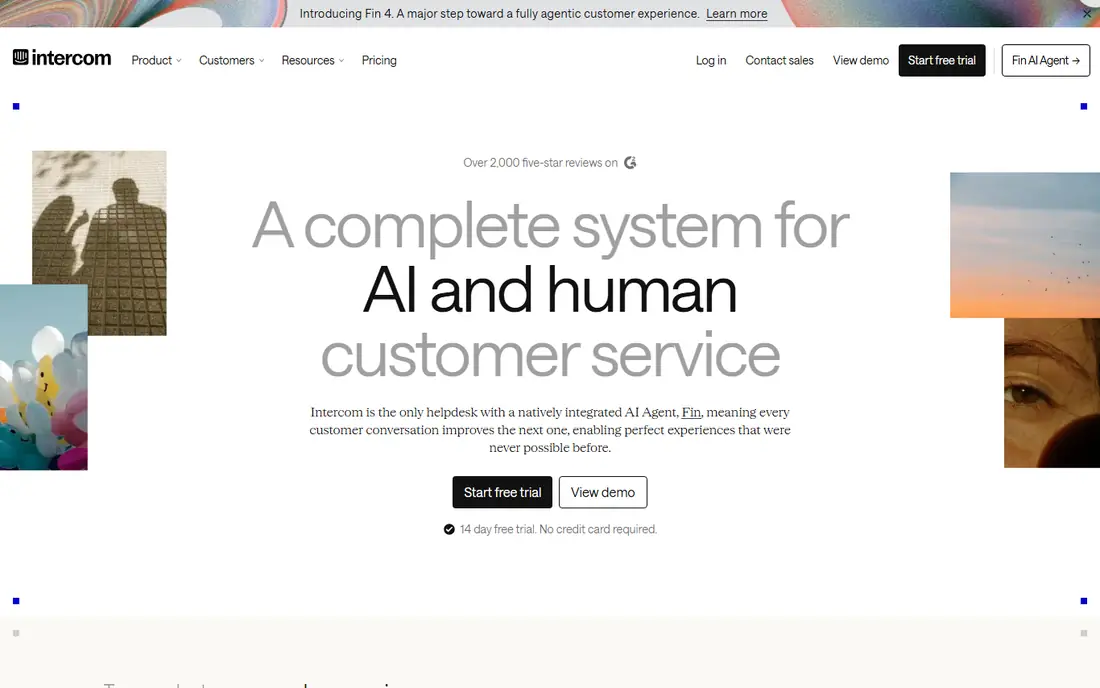
Intercom suits software firms that support customers inside the product. Its messenger, help centre, and AI agent work together: the AI resolves common questions at once, and harder cases pass to a human with full context. Onboarding messages, product tours, and proactive help sit in the same platform, which helps product-led growth.
Pricing combines seats with AI resolution costs, so a team should model both before signing. Phone-heavy operations will find Zendesk or Salesforce stronger. For a SaaS team that wants chat-first support with AI doing the first pass, Intercom is a strong contender.
- In-app chat and messenger
- AI agent that resolves common questions
- Strong product-led onboarding
- Per-seat pricing plus AI resolution fees
- Less suited to phone-heavy contact centres
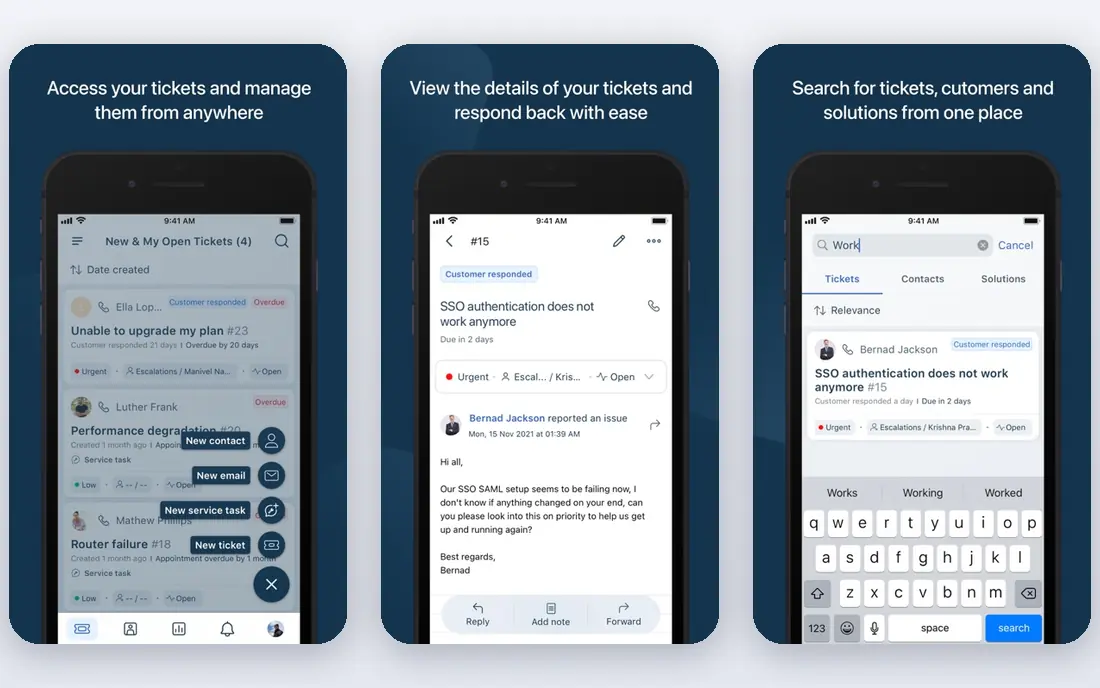
Freshdesk gives small and mid-size teams a full ticketing system without a long implementation. Email, chat, phone, and social tickets share one inbox, automations route and prioritise work, and Freddy AI helps agents draft replies and summarise cases. Setup is genuinely quick, which matters for a team replacing spreadsheets or a shared inbox.
Larger teams may find reporting and customisation thinner than Zendesk, and the best AI features sit on higher tiers. For a team that wants a capable help desk at a fair price with a fast start, Freshdesk is the value pick in this list.
- Fast setup
- Freddy AI across the suite
- Good value at entry tiers
- Advanced features need higher plans
- Reporting is lighter than Zendesk at scale
HubSpot Service Hub fits teams already running HubSpot CRM. Tickets sit on the same customer record as marketing and sales activity, so an agent sees deals, emails, and past tickets without switching systems. A free tier for up to two users lets a tiny team start without paying, and paid seats add automation, routing, and reporting.
Teams outside HubSpot gain less, since the platform value comes from the shared CRM. Advanced service features also need higher tiers. For a HubSpot house, Service Hub gives the cleanest view of the customer journey from first visit to resolved ticket.
- CRM-native ticketing
- Free tools for up to two users
- Shared customer timeline
- Best value only inside HubSpot
- Advanced service features need higher tiers
Salesforce Service Cloud is the enterprise service platform for firms already on Salesforce. Cases, knowledge, chat, and phone share the same customer data as sales and marketing, and routing, approvals, and automation can be built to match complex operations. That depth suits large teams with layered service processes.
Running it well needs Salesforce skills, either in-house or from a partner, and add-ons lift the total cost. For a firm already standardised on Salesforce, Service Cloud gives the most complete customer view. For a firm without Salesforce, a standalone help desk will move faster and cost less.
- Deep CRM data and case management
- Omnichannel routing
- Strong customisation
- Needs Salesforce expertise to run well
- Costs rise with add-ons and seats
Qualtrics XM measures experience rather than running a help desk. It collects surveys across web, email, stores, and contact centres, analyses open text and scores, and routes follow-up actions to owners. Large firms use it to track satisfaction, effort, and loyalty trends over time and across locations.
Pricing is quote-based, and running a serious programme needs owners for survey design, analysis, and follow-up. A small team that only needs a help desk should not buy Qualtrics. A large firm that needs to prove how experience drives revenue will find its depth hard to match.
- Research-grade surveys across customers, employees, and brand
- Strong analytics
- Closed-loop action tools
- Quote-only pricing
- Needs a dedicated programme team
Medallia suits enterprises with always-on experience programmes across stores, sites, apps, and contact centres. It gathers feedback from many sources, analyses text and scores with AI, and assigns follow-up by role so issues do not sit in a report nobody reads. That closed-loop discipline is the point of the platform.
Like Qualtrics, Medallia is quote-priced and needs a programme team, so budget talks come before a usable price. Smaller firms will find survey tools or a help desk enough. For a large firm running experience as a company-wide programme, Medallia offers scale and rigour.
- Always-on feedback across physical and digital channels
- AI text analytics
- Role-based closed-loop reporting
- Quote-only pricing
- Implementation takes weeks and dedicated staff
Gladly takes a different view of support: the customer, not the ticket, is the unit of work. Every chat, call, and email with a person stays in one lifelong conversation, so agents never ask a returning customer to repeat their story. That continuity suits brands where repeat customers and personal service drive loyalty.
Pricing is quote-based, and the app ecosystem is smaller than Zendesk, so check integrations before choosing it. For a brand that wants support to feel like a continuing conversation rather than a queue of cases, Gladly offers a distinct and appealing model.
- Treats customers as people, not ticket numbers
- Lifelong conversation history
- Strong voice and chat
- Quote-based pricing
- Smaller app ecosystem than Zendesk
How we picked these
We searched vendor pricing pages, feature pages, and independent customer experience guides, then filtered for platforms that still operate in October 2026 and cover either support operations or experience measurement at a serious level. We compared starting prices where vendors publish them, and we wrote See website for quote-based enterprise tools. We also weighed channel coverage, AI features, reporting, and integration range, since a platform that cannot see the full customer journey cannot improve it. We did not claim hands-on testing of enterprise deployments.
What makes a great customer experience, in practice
The best customer service experience stories share a pattern: a fast first reply, one owner who stays with the issue, and a follow-up that confirms the fix. Tools help, but ownership and follow-through matter more than any single feature. When you demo a platform, test the full loop: a customer writes in, an agent replies, the issue is resolved, and the customer gets a survey and a follow-up.
Measure what customers actually feel
Track first response time, resolution time, customer satisfaction, and repeat contact rate together, since any one figure alone misleads. Pair those numbers with open-text feedback, and read a sample of comments each week. A platform that only reports averages will hide the worst experiences, which are the ones that lose customers.
Start with support, add measurement later
A small team should fix support first: one inbox, clear routing, and a help centre that answers common questions. Once support runs well, add surveys and experience measurement to learn why customers contact you at all. Buying an enterprise measurement suite before support works is like measuring a leak without fixing the pipe.
Frequently asked questions
What is the best customer experience platform?
Zendesk suits most growing support teams, Freshdesk suits budget teams, Intercom suits product-led SaaS, and HubSpot suits HubSpot CRM users. Qualtrics and Medallia suit enterprises measuring experience at scale. Pick based on whether your main job is running support or measuring experience.
What is the best tool for customer experience for a small business?
Freshdesk and HubSpot Service Hub suit small businesses best. Freshdesk offers fast setup and fair entry pricing, while HubSpot offers free tools for up to two users and a shared CRM view. Both let a small team run a proper help desk without enterprise cost.
What are examples of a great customer service experience?
A great experience usually means a fast first reply, an agent who owns the issue to resolution, and a follow-up confirming the fix. It also means not repeating your story to each new agent, which is why conversation-based tools like Gladly and CRM-linked tools like HubSpot and Salesforce score well on continuity.
How much does customer experience software cost?
Help desk pricing in this list starts around $19 to $29 per agent or seat per month, while enterprise experience suites such as Qualtrics and Medallia are quote-based and cost far more. Always model total cost at your team size, including AI add-ons and higher tiers.
Can a help desk also measure customer experience?
Yes, up to a point. Zendesk, Freshdesk, Intercom, and HubSpot all offer satisfaction surveys and reporting. For deep experience measurement across stores, sites, and contact centres, a dedicated suite such as Qualtrics or Medallia adds survey design, text analytics, and closed-loop programmes that a help desk does not.
Should we buy one platform or two for support and feedback?
Start with one support platform that covers tickets and basic surveys. Add a dedicated feedback platform only when survey volume, channel range, or analysis needs outgrow the help desk. Two platforms need integration work, so the split should earn its keep in insight, not just in features.
Sources we checked (8)

Online Jobs is an independent blog about careers, online work, learning new skills and the tools that help people earn. More about us.
Keep reading
All posts
n8n Alternatives
n8n alternatives compared for 2026, with Zapier, Make, Activepieces, and more, covering visual builders, code steps, self-hosting, and pricing models.

ZoomInfo Alternatives
The best ZoomInfo alternatives in 2026, compared on price, free plans, data coverage, and which tool fits small teams or large sales teams best in detail.

Workday Alternatives
We compared the best workday alternatives for HR, payroll, and global hiring, from BambooHR and Gusto to Rippling, Deel, and HiBob for growing teams in 2026.