Best Crypto Apps in 2026: 10 Apps Compared

How we put this together: we compare official feature and pricing pages, app store listings, privacy policies and public user reviews. Prices change, so check the provider's site before you pay.
Key takeaways
- Coinbase is the easiest starting app for new buyers who want clear guidance and strong regulation in major markets.
- Kraken suits buyers who want lower advanced trading fees and a long security record.
- Binance and Crypto.com offer wide coin choice and lower spot fees, but availability varies by country and state.
- Robinhood Crypto and Cash App suit casual buyers, though spreads can cost more than they appear.
- This is not financial advice. Crypto prices can fall sharply, so only use money you can afford to lose.
Quick comparison
| Name | Who it suits | Starting price | Free option | |
|---|---|---|---|---|
 Coinbase | New buyers | See website | Yes | Visit |
 Kraken | Security and advanced trading | See website | Yes | Visit |
 Binance | Wide coin choice | See website | Yes | Visit |
 Crypto.com | Mobile app and card users | See website | Yes | Visit |
 Gemini | Security focused buyers | See website | Yes | Visit |
 Robinhood Crypto | Simple casual buying | See website | Yes | Visit |
 Cash App | Bitcoin only simplicity | See website | Yes | Visit |
 eToro | Social and copy trading | See website | Yes | Visit |
 KuCoin | Altcoin choice | See website | Yes | Visit |
 Bitstamp | Long established exchange | See website | Yes | Visit |
The best crypto apps
Crypto apps differ in fees, coin choice, regulation and security, and the cheapest headline fee is rarely the full cost. The apps below cover beginners, active traders and casual buyers, with notes on where each one fits and where it falls short.
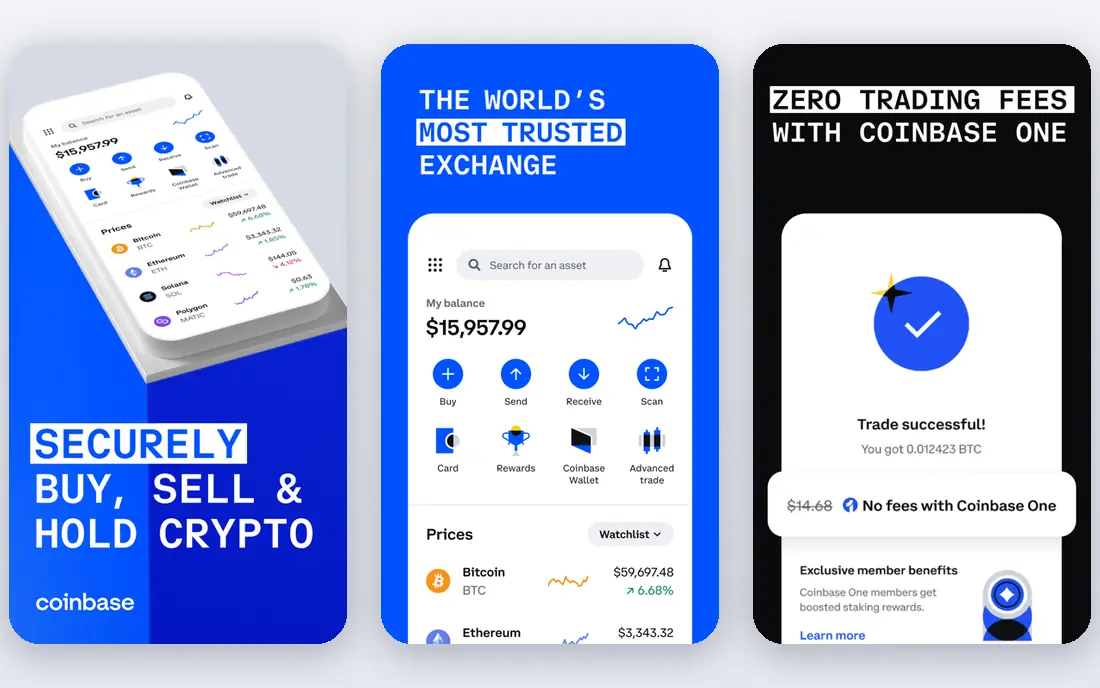
Coinbase is the easiest app for a first purchase. The buy flow shows a preview before you confirm, the interface avoids trading jargon, and guides explain basic terms for new buyers. It is also a publicly listed company with regulation in major markets, which helps buyers who want a familiar and accountable provider.
Simple buys cost more than advanced order book trades, so frequent buyers should learn the Advanced Trade view or compare the full quote before confirming. Coin choice is wide but smaller than Binance or KuCoin. If ease and clarity matter most, Coinbase is our pick for new buyers.
- Clear beginner workflow
- Strong regulation in major markets
- Educational guides in app
- Simple buy fees and spreads can be high
- Advanced fees are lower only on Advanced Trade
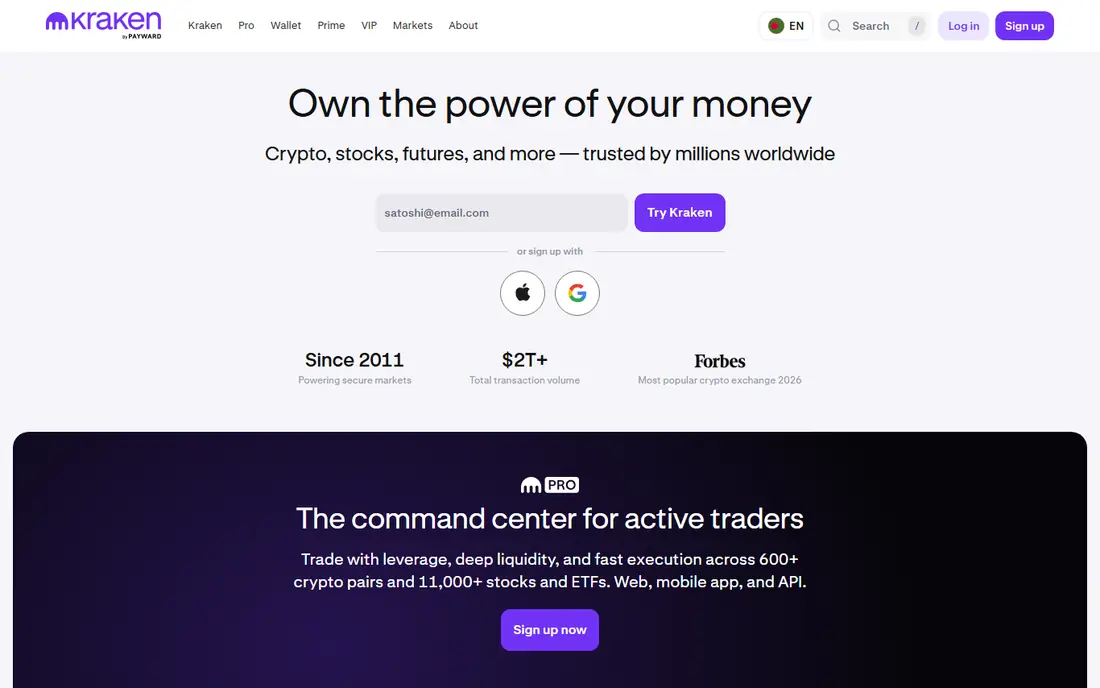
Kraken suits buyers who plan to stay with crypto and want a provider with a long record. Its Pro trading view offers lower fees than simple buys, and fiat deposits through bank transfer are well supported in many regions. Security features include two factor authentication, withdrawal locks and proof of reserves reporting.
New users may find two experiences in one app: simple buys that cost more, and Pro trading that costs less but needs learning. Coin listings are also more selective than altcoin heavy rivals. If you value security and are willing to learn Pro trading, Kraken is a strong choice.
- Long security record
- Lower Pro trading fees
- Strong fiat deposit options
- Beginner app fees are higher than Pro
- Interface can feel dense for new users
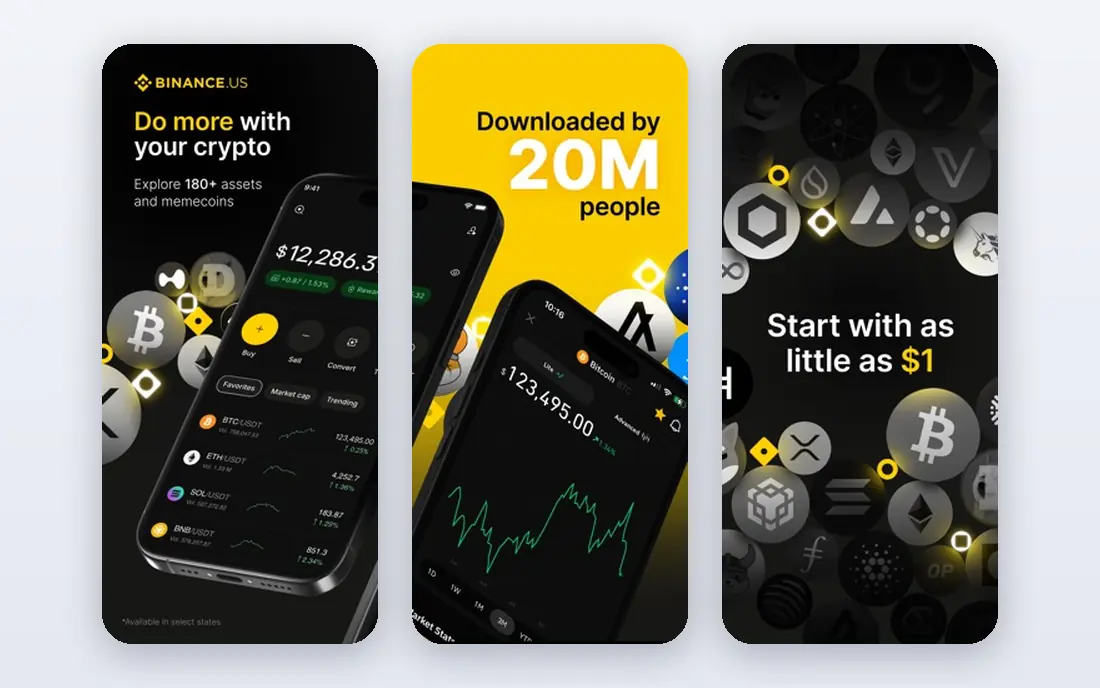
Binance offers one of the widest selections of coins and trading pairs, with low spot fees for active traders and deep liquidity that helps large orders fill cleanly. The app also covers staking, savings style products and a wide range of order types for experienced users.
Availability is the main caveat. The global app is restricted in some countries, and US users must use Binance.US, which has a smaller listing set. Regulatory history also means you should check the exact entity serving your country. If coin choice and low spot fees matter and the service is fully available where you live, Binance is hard to beat.
- Very wide coin and pair choice
- Low spot fees for active traders
- Deep liquidity
- Availability varies by country
- US users need Binance.US with fewer features
Crypto.com is built around its mobile app. Buying, staking, card spending and price alerts sit in one place, which suits users who manage crypto mainly on a phone. Coin choice is wide, and the exchange view offers lower fees than simple app buys for active traders.
Card rewards and some perks depend on staking the platform token, which adds risk and locks funds for a period. Simple buy spreads can also be higher than exchange fees. If you want a polished mobile app and card features, Crypto.com is a good fit, but check the full fee preview before each buy.
- Strong mobile app
- Wide coin choice
- Visa card and rewards options
- Simple app buys can cost more than exchange trades
- Card rewards depend on staking
Gemini appeals to buyers who put regulation and custody first. The exchange is regulated in the United States, uses insured custody arrangements for many assets, and offers clear security controls such as address whitelisting and hardware key support. The app is clean and easy to follow for simple buys.
Coin choice is smaller than Coinbase, Kraken or Binance, and simple buy fees can be high compared with ActiveTrader rates. That makes Gemini best for a focused portfolio rather than hunting new altcoins. If security and regulatory clarity matter most, Gemini deserves consideration.
- Regulated US exchange focus
- Insured custody approach
- Clear security controls
- Smaller coin list than rivals
- Simple buy fees can be high
Robinhood Crypto suits casual buyers who already use Robinhood for stocks. The app is simple, buying takes a few taps, and there is no separate commission line on many trades. That simplicity helps people who buy small amounts occasionally and do not want a full exchange interface.
The catch is spreads. The price you get includes a markup, so the real cost can be higher than a low fee exchange trade, especially on larger orders. Coin choice is also limited, and withdrawal options vary. Use Robinhood for simplicity, not for the lowest cost on frequent trades.
- No commission headline
- Simple app shared with stocks
- Easy for small occasional buys
- Costs sit in spreads
- Coin choice is limited
- No separate wallet withdrawals in some cases
Cash App is the simplest route to Bitcoin for many US users. Buying sits alongside peer payments, so you do not need to learn an exchange interface. Setup is fast, and small recurring buys are easy to schedule for users who want a regular habit.
It is mainly a Bitcoin app, so buyers who want a wide altcoin portfolio will need another platform. Fees are spread based and vary with market conditions, so the full cost is only clear in the trade preview. If Bitcoin simplicity is your goal, Cash App is a practical pick.
- Very simple Bitcoin buying
- Easy peer payments in same app
- Quick setup for US users
- Bitcoin only for most crypto use
- Spreads and fees vary with market conditions
eToro combines investing and social features. You can follow other traders, view their public portfolios and copy trades, which helps new buyers learn by watching experienced users. Stocks, ETFs and crypto in one account also suit investors who want a single portfolio view.
Crypto costs sit mainly in spreads, which can be wider than exchange fees, and withdrawal rules vary by region. Copy trading also carries risk, since past performance does not predict future results. Use eToro for learning and diversification, not as a low fee trading venue.
- Social feed and copy trading
- Stocks and crypto in one account
- Simple interface
- Spreads can be wide
- Crypto withdrawals and wallet options vary by region
KuCoin is known for listing many altcoins early, which attracts traders looking beyond the largest coins. Spot fees are low, trading pairs are numerous, and the app supports a wide range of order types. For a secondary venue to find smaller projects, it is a popular choice.
Regulatory availability varies, and some regions face restrictions, so check whether KuCoin fully serves your country before depositing funds. Smaller altcoins also carry higher risk and lower liquidity. Use KuCoin as a specialist altcoin venue with small balances, not as your only wallet.
- Wide altcoin listings
- Low spot fees
- Many trading pairs
- Availability restricted in some regions
- Regulatory history needs checking
Bitstamp is one of the longest running crypto exchanges, with regulation in major markets and a clear, simple fee schedule. The app covers core buying, selling and staking without the extra products that can overwhelm new users. That restraint suits buyers who want a steady, focused exchange.
Coin choice is smaller than altcoin heavy rivals, and advanced features are more limited. For a core portfolio of major coins, that simplicity is a strength. If you want a long established exchange with a straightforward app, Bitstamp is a reliable option.
- Long operating history
- Regulated in major markets
- Clear fee schedule
- Smaller coin list than Binance or KuCoin
- App features are more basic
How we picked these
We compared official feature pages, fee schedules, app store listings, privacy policies and public reviews for each app. We looked at regulation in major markets, security controls, coin choice, fee transparency, fiat deposit options and ease of use. We did not claim hands-on trading tests, and we treated third party fee roundups as a guide rather than a final price.
We also weighed availability, since an app that is restricted in your country is not useful even with low fees. Fees shown as See website reflect tier, payment method and region differences, so always check the trade preview and official fee page before you buy. This guide is not financial advice, and crypto trading carries risk of loss.
How to buy safely and keep costs down
Start by confirming the app is licensed or registered where you live, then enable two factor authentication, withdrawal address whitelisting and any account lock features offered. Use a strong unique password and keep recovery codes offline. For larger holdings, consider moving coins to a hardware wallet you control, after testing with a small transfer first.
Compare the full trade preview, not only the headline fee. Simple buys, card payments and spreads can cost far more than an advanced order book trade on the same platform. Avoid borrowed funds trading and copy trading until you understand the risks, and never invest money needed for bills or debt payments. Keep records of buys, sells and fees for tax reporting in your country.
Security checks before you deposit
Check the official domain carefully, avoid links from social posts, and confirm deposit addresses inside the app before sending funds. Be wary of anyone promising guaranteed returns or asking you to send crypto to open an account. Those are common scam patterns, and legitimate exchanges will not ask you to do that.
Fees in plain terms
Maker fees apply when you add liquidity with a limit order, while taker fees apply when you take an existing order. Spreads are the gap between buy and sell prices, and they act as a hidden cost on simple buys. Card deposits often add a percentage fee, while bank transfers are usually cheaper but slower.
Frequently asked questions
What is the best crypto app for beginners?
Coinbase is the best starting app for most beginners because of its clear buy flow, guides and regulation in major markets. Kraken and Gemini are also good for new buyers who want stronger security controls. Start with a small amount and learn the advanced trading view to lower fees.
What is the best app for crypto trading with low fees?
Kraken Pro, Binance and Crypto.com Exchange offer lower spot fees for active traders than simple buy screens. The best choice depends on your country, since availability and fee tiers differ. Always compare the full trade preview, including spreads, before you place an order.
Which crypto app is best for buying Bitcoin only?
Cash App is the simplest Bitcoin only option for US users, while Coinbase, Kraken and Bitstamp all support Bitcoin with wider coin choice. If you only want Bitcoin, simplicity and low spreads matter more than a large altcoin list. Check withdrawal options if you plan to move coins to your own wallet.
Are crypto apps safe?
Reputable apps use two factor authentication, cold storage for many assets and regulatory controls, but no app removes market risk or scam risk. Enable all security features, use a hardware wallet for larger holdings, and avoid sharing passwords or recovery phrases. This is not financial advice, and prices can fall sharply.
What is the best crypto platform for altcoins?
Binance and KuCoin offer the widest altcoin choice in this list, with many pairs and low spot fees. Smaller coins carry higher risk, lower liquidity and wider spreads, so research each project and keep balances modest. Check availability in your country before you deposit funds.
Can I use more than one crypto app?
Yes, many buyers use one app for simple buys and another for advanced trading or altcoins. Keep records across apps for tax reporting, and avoid spreading small balances across too many venues. Use strong security on every account, even ones you rarely open.
Sources we checked (10)

Online Jobs is an independent blog about careers, online work, learning new skills and the tools that help people earn. More about us.
Keep reading
All posts
Best Trading Apps for Beginners
Compare the best trading app for beginners, with $0 stock commissions, fractional shares, education, paper trading and account types explained in 2026 now.
Best Trading App
We compared the best trading apps for beginners and active traders on fees, tools, accounts and ease of use, so you can pick a platform that fits your plan.
Best Tax Software
Compare the best tax software in 2026 for simple returns, investors, freelancers, and preparers, with free options, state fees, and honest limits for filing.