Best CRM Tools for B2B Startups in 2026: 9 Tools Compared

How we put this together: we compare official feature and pricing pages, app store listings, privacy policies and public user reviews. Prices change, so check the provider's site before you pay.
Key takeaways
- HubSpot is our pick for most B2B startups, because its free CRM is genuinely usable and its marketing tools grow with the team.
- Pipedrive is the simplest paid option for sales-only teams that live in their pipeline.
- Close and Freshsales are the cheapest routes to built-in calling for outbound teams.
- Zoho CRM gives the most features per dollar, with a free plan for up to three users.
- Start with the selling motion you actually have, not the one you hope to have, and switch only when free limits genuinely bite.
Quick comparison
| Name | Who it suits | Starting price | Free option | |
|---|---|---|---|---|
 HubSpot CRM | Marketing-led startups | Free | Yes | Visit |
 Pipedrive | Visual pipeline selling | See website | Free trial | Visit |
 Zoho CRM | Features per dollar | Free | Yes | Visit |
 Freshsales | Small teams that call | See website | Free trial | Visit |
 Close | High-velocity outbound | See website | Free trial | Visit |
 Attio | Flexible modern data model | See website | Yes | Visit |
 Copper | Teams that live in Gmail | See website | Free trial | Visit |
 Folk | Relationship-driven prospecting | See website | Yes | Visit |
 monday Sales CRM | Sales plus delivery visibility | See website | Free trial | Visit |
The best CRM tools for B2B startups
A startup CRM has one job in its first year: stop deals slipping through cracks. Fancy forecasting and territory management can wait. We compared official feature pages and pricing pages, judging each tool on pipeline clarity, email and calling integration, automation, free plan limits, ease of setup and total cost for a small team. Where a paid price was not confirmed on the vendor's own page at the time of writing, we list it as See website, since CRM vendors change entry prices and discount terms often.
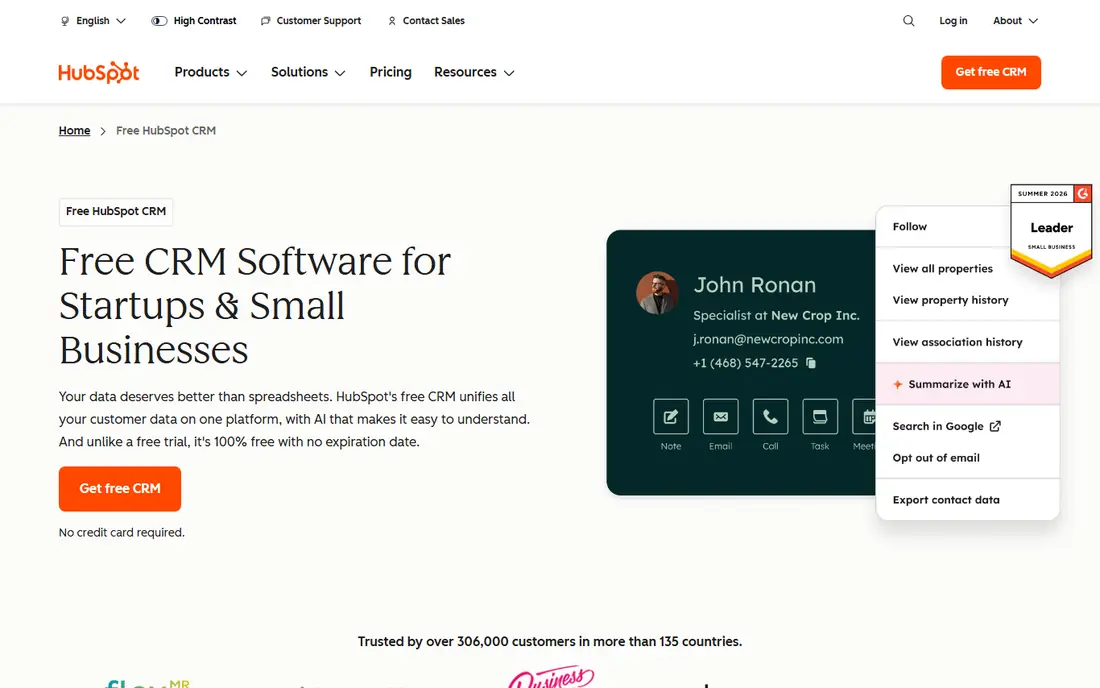
HubSpot is our pick for most B2B startups because its free CRM is not a teaser. You get contacts, companies, deals, pipelines and email tracking without paying, and the same database later powers marketing campaigns and support tickets. For a content-led startup that turns website visitors into pipeline, that unity is a real advantage.
The catch is the price ramp. Meaningful automation and custom reporting sit on paid tiers that cost far more than rivals, and the jump can surprise a growing team. Start free, prove the pipeline works, and budget carefully before upgrading, rather than buying the full suite on day one.
- Free CRM with contacts, deals and email tracking
- Marketing, sales and service in one database
- Huge integration library
- Paid automation and reporting jump sharply in price
- Free tier limits start to bite as teams grow
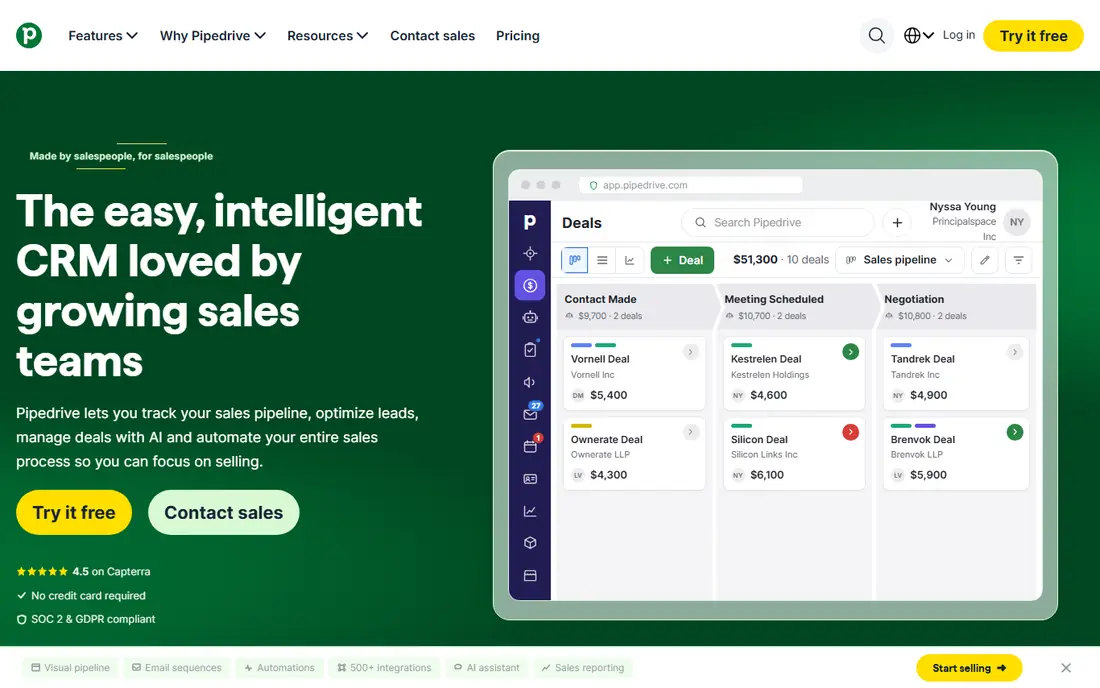
Pipedrive is the simplest paid CRM for a sales-only team. Its pipeline view shows every deal, its stage and its next action at a glance, and reps tend to use it without being nagged, which is rarer than vendors admit. Setup takes hours, not weeks, and email sync keeps activity logged automatically.
There is no permanent free plan, only a trial, and marketing tools arrive as paid add-ons rather than built-ins. Automation also starts on higher tiers. For a team that sells by phone and email and wants a pipeline, not a platform, Pipedrive is still the default choice.
- Clear visual pipeline that salespeople actually use
- Fast setup
- Strong email sync and automation on higher tiers
- No free plan, only a trial
- Marketing features need add-ons
- Automation starts on higher tiers
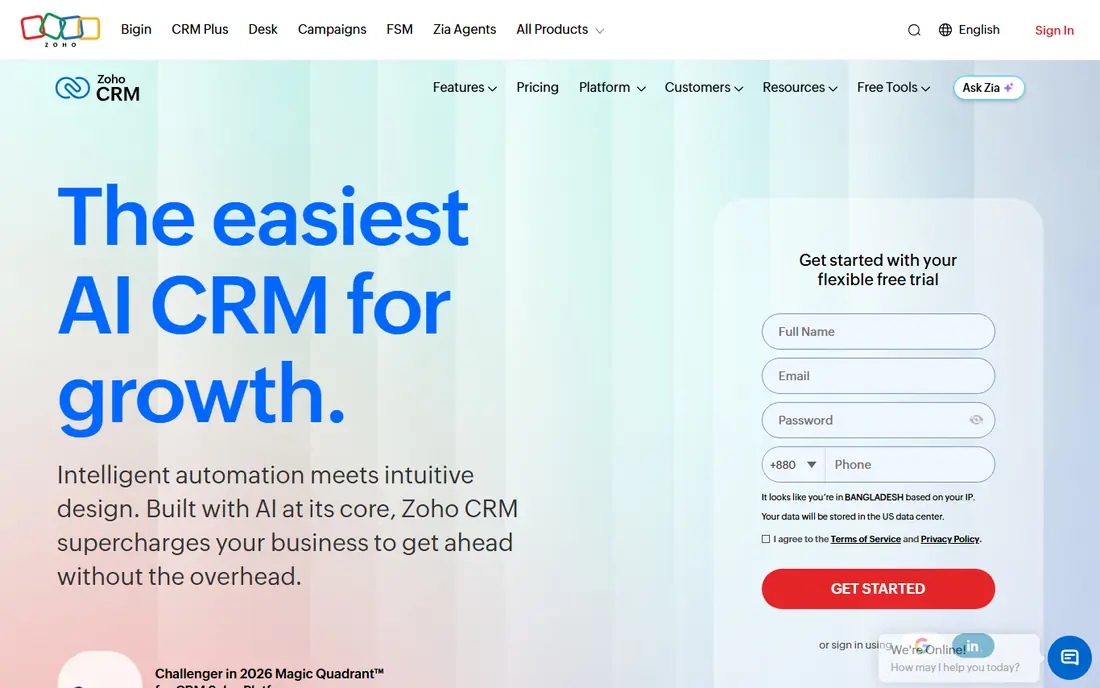
Zoho CRM gives a startup more features per dollar than almost any rival. The free plan covers up to three users, paid tiers add workflow automation, custom modules and forecasting, and the wider Zoho suite covers email, books and support under one roof. For a budget-conscious team that likes to customise, it is excellent value.
The interface is denser than Pipedrive's, and first-time setup rewards patience. Teams that want a beautiful, minimal tool may prefer Attio or Pipedrive. Teams that want power at a low price will forgive the learning curve quickly.
- Free plan for up to three users
- Deep customisation and workflow automation
- Huge Zoho app ecosystem
- Interface feels busier than Pipedrive or HubSpot
- Setup takes longer to get right
Freshsales, from Freshworks, suits small B2B teams that sell by phone. Calling, email and chat sit in one place, lead scoring highlights the hottest prospects, and the entry price undercuts most rivals with built-in telephony. A small team can run its whole outbound motion without bolting on a separate dialer.
The free offering is thinner than HubSpot's, and reporting is less deep than Salesforce-grade tools. For a team of a handful of reps who need calling and pipeline in one affordable package, though, Freshsales is a strong and often overlooked pick.
- Built-in phone and email in one inbox
- AI-assisted lead scoring
- Affordable entry tiers
- Free plan is limited compared with HubSpot
- Reporting depth lags larger platforms
Close is built for one job and does it brilliantly: high-volume outbound selling. Its power dialer, SMS, email sequences and call recordings live inside the CRM, so reps never switch apps mid-call. Teams that live on the phone report faster follow-up and cleaner activity logs than with a general CRM plus a bolt-on dialer.
It is less natural for marketing-led or long-cycle account-based selling, and there is no free plan. If your startup's growth comes from calling lists all day, Close will pay for itself; if it comes from content and inbound, HubSpot fits better.
- Built-in power dialer, SMS and email sequences
- Call recording and coaching tools
- Designed for outbound speed
- No free plan
- Less suited to marketing-led or account-based motions
- Price rises with team tiers
Attio is the modern choice for startups whose data does not fit a standard CRM mould. Its flexible objects, lists and attributes let you model companies, deals, investors and partners your own way, without workarounds. The interface is clean, the free plan covers small teams, and setup feels more like building a smart spreadsheet than configuring enterprise software.
The trade-off is ecosystem depth. Integrations are fewer than HubSpot's, and some advanced enterprise features are still maturing. For a startup that values flexibility and design over a vast app marketplace, Attio is an exciting pick.
- Modern, flexible data model that adapts to unusual pipelines
- Free plan for small teams
- Clean interface
- Smaller integration library than HubSpot or Salesforce
- Newer platform with evolving features
Copper removes the data-entry excuse for Gmail teams. It lives inside Gmail, captures emails, meetings and contacts automatically, and keeps the pipeline visible without forcing reps into a separate app all day. If your startup runs on Google Workspace, Copper feels less like a new system and more like Gmail with a memory.
Microsoft-based teams should look elsewhere, since Copper's strength is its Google integration. Automation is also lighter than Zoho or HubSpot. For a Gmail-native startup that hates manual CRM admin, Copper is a natural fit.
- Deep Gmail and Google Workspace integration
- Automatic activity capture from email
- Simple pipeline views
- Google-only focus limits Microsoft shops
- Automation depth lags HubSpot and Zoho
Folk suits startups whose growth runs on relationships: warm introductions, partnerships, investor networks and LinkedIn outreach. It organises people, not just deals, and its prospecting workflows help a founder turn a network into a pipeline without enterprise complexity. The free plan makes it easy to start.
It is not a full replacement for a heavy sales pipeline tool if you run large outbound teams. As a founder-led sales tool for relationship-driven B2B startups, though, Folk is refreshingly focused, and it pairs well with a pipeline CRM later if needed.
- Relationship-focused contact management
- LinkedIn and prospecting workflows
- Free plan for getting started
- Less of a full sales pipeline than Pipedrive
- Smaller ecosystem than major CRMs
monday Sales CRM suits startups where sales and delivery share one workspace. Its boards show deals, onboarding and delivery side by side, so a handoff from sales to operations is visible to everyone. Non-sales colleagues can read a board without CRM training, which helps small teams stay aligned.
Paid plans carry minimum seat counts that can sting a two-person startup, and pure sales teams may find it less focused than Pipedrive or Close. For a startup selling a service where delivery matters as much as the close, monday's shared visibility is a genuine advantage.
- Visual boards that connect sales to delivery
- Flexible automations
- Easy for non-sales teams to read
- Minimum seat counts on paid plans
- Can feel like a project tool wearing a CRM badge
How we picked these
We compared official feature pages and pricing pages, and we judged each tool on pipeline clarity, email and calling integration, automation, free plan generosity, setup speed and cost for a team of two to ten people. We favoured tools a startup can run without an administrator, since most startups do not have one. Where a paid price was not confirmed on the vendor's own page, we list it as See website. We did not claim hands-on testing, and we did not invent user counts or ratings.
Choosing by selling motion
Match the CRM to how you actually sell. Inbound and content-led teams should start with HubSpot Free. Pipeline-led sales teams should start with Pipedrive. Outbound call teams should start with Close or Freshsales. Gmail-native teams should try Copper, and relationship-led founders should try Folk. That one decision matters more than any feature comparison, because a CRM your team avoids is worse than a spreadsheet your team uses.
Also plan the total cost at twelve months, not the entry price. Add-ons, extra seats, calling minutes and automation tiers can double a headline price. Export your data regularly, in a format you can open elsewhere, so switching later is a choice rather than a hostage negotiation.
Getting started in a week
Import contacts from a spreadsheet, build one pipeline with stages that match your real sales process, connect email, and set a single rule: every conversation gets logged the same day. Review the pipeline together once a week, and delete stale deals rather than letting them rot. A CRM earns its keep in the first month through follow-ups that would otherwise have been forgotten, not through dashboards.
Frequently asked questions
What is the best CRM for a B2B startup?
HubSpot is the safest starting point for most B2B startups, thanks to its free CRM and marketing tools. Pipedrive suits sales-only teams, Close suits outbound call teams, and Zoho CRM suits budget-conscious teams that want deep features.
Is there a free CRM for startups?
Yes. HubSpot offers a free CRM with contacts, deals and pipelines, Zoho CRM is free for up to three users, and Attio and Folk have free plans for small teams. Check each plan's limits before committing, since free tiers cap features as you grow.
How much does a startup CRM cost?
Entry prices vary widely, and many vendors change them often, so check the vendor's pricing page for current rates. Expect free plans for tiny teams, low per-user monthly prices for basic paid tiers, and much higher costs once you add automation, calling or advanced reporting.
Do I need a CRM if I only have a few customers?
Yes, once follow-ups start slipping. A CRM earns its keep by reminding you who to call, what was promised and when a deal goes quiet. Below a handful of deals a spreadsheet works, but a free CRM is barely more effort and scales with you.
Can I switch CRMs later?
Yes, if you keep your data exportable. Export contacts, companies and deals regularly to a spreadsheet format, and avoid tools that make leaving difficult. Migration takes effort, but a clean export turns a painful switch into a manageable project.
What is the best CRM for outbound sales?
Close is the strongest pick for high-velocity outbound, thanks to its built-in dialer, SMS and sequences. Freshsales is a cheaper alternative with built-in calling, while Pipedrive works for outbound teams willing to add a separate dialer.
Sources we checked (9)

Online Jobs is an independent blog about careers, online work, learning new skills and the tools that help people earn. More about us.
Keep reading
All posts
Workday Alternatives
We compared the best workday alternatives for HR, payroll, and global hiring, from BambooHR and Gusto to Rippling, Deel, and HiBob for growing teams in 2026.
Which SaaS Tools Have the Best Customer Support
Which SaaS tools have the best customer support? Compare eight popular tools on help centres, live help, response options and overall support quality.

Top AI Helpdesk Software
Searching for top AI helpdesk software in 2026? We compared 8 AI helpdesks on automation, pricing, channels and ease of setup for small and growing teams.