Best Corporate Travel Management Tool in 2026: 8 Tools Compared

How we put this together: we compare official feature and pricing pages, app store listings, privacy policies and public user reviews. Prices change, so check the provider's site before you pay.
Key takeaways
- Navan and TravelPerk are the easiest starting points for small and mid-sized teams that want booking, policy, and expenses in one place.
- SAP Concur and Egencia suit large enterprises with complex approval chains, global travel programs, and deep ERP links.
- Spotnana suits technology-led companies that want an open, API-first travel platform rather than a closed booking tool.
- Ramp, Brex, and TravelBank blur the line between travel and spend management, which suits finance teams that want one view of company costs.
- Most enterprise pricing is quoted, so treat published prices as a starting point and get a demo with your real travel volume before deciding.
Quick comparison
| Name | Who it suits | Starting price | Free option | |
|---|---|---|---|---|
 Navan | All-in-one travel and expense | Free | Yes | Visit |
 TravelPerk | Flexible SMB booking | Free | Yes | Visit |
 SAP Concur | Enterprise policy and approvals | See website | No | Visit |
 Egencia | Global enterprise travel programs | See website | No | Visit |
 Spotnana | API-first travel infrastructure | See website | No | Visit |
 Ramp | Unified spend and travel | Free | Yes | Visit |
 Brex | Card-first startups and scale-ups | Free | Yes | Visit |
 TravelBank | Rewards for under-budget trips | See website | Yes | Visit |
The best corporate travel management tool
A corporate travel management tool should do three jobs at once: let employees book flights, hotels, and cars inside company policy, give managers approval and reporting tools, and keep travellers safe with duty-of-care features. The tools below split into two camps. Modern platforms like Navan and TravelPerk focus on fast booking and a good traveller experience, while enterprise systems like SAP Concur and Egencia focus on control, global scale, and integration with finance systems. We compared official feature pages, pricing pages, and public product documentation for each tool.
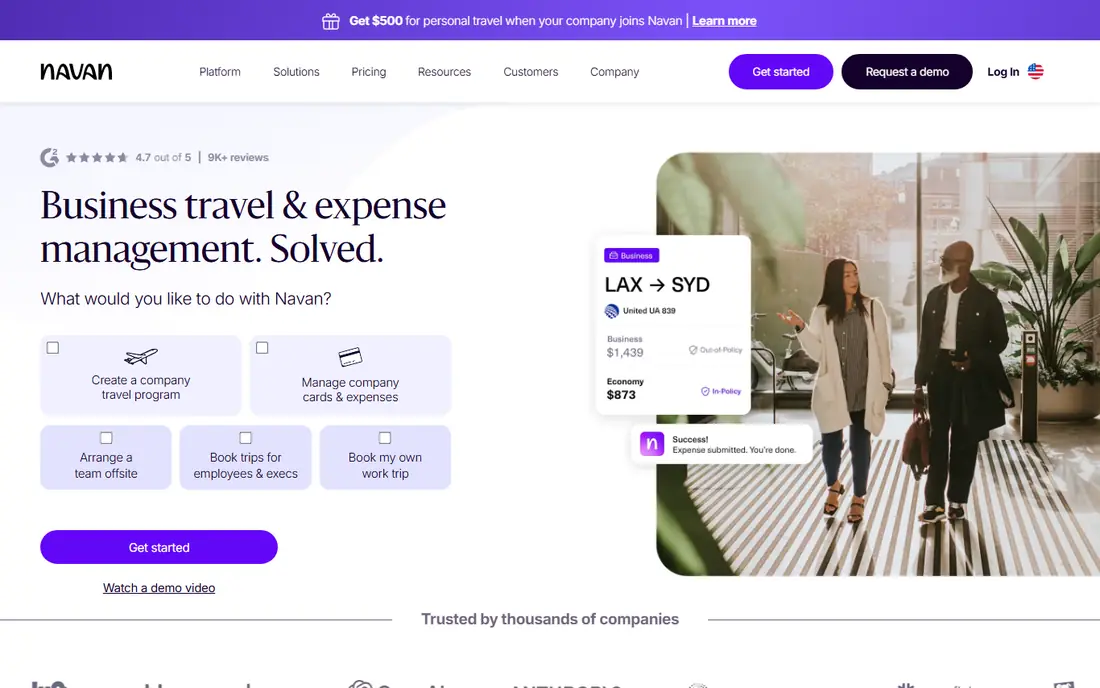
Navan, formerly TripActions, combines travel booking with expense management and corporate cards, so a trip can move from booking to expense report without re-entering details. Employees see only in-policy options when they book, which reduces the back-and-forth that slows down traditional travel programs. The mobile app handles changes, cancellations, and receipts in one place, which travellers appreciate on the road.
Smaller companies can start on a free travel tier, while expense features on that tier cover only a small number of users before paid pricing applies. Enterprise programs are quoted, so costs depend on company size and travel volume. If you want one platform for travel and spend, and you value a good traveller experience, Navan is our first recommendation for small and mid-sized teams.
- Travel booking, expenses, and cards in one platform
- Policy controls built into booking
- Traveller-friendly app
- Full enterprise pricing is quoted
- Expense features on the free tier are limited
- Larger programs may need dedicated support
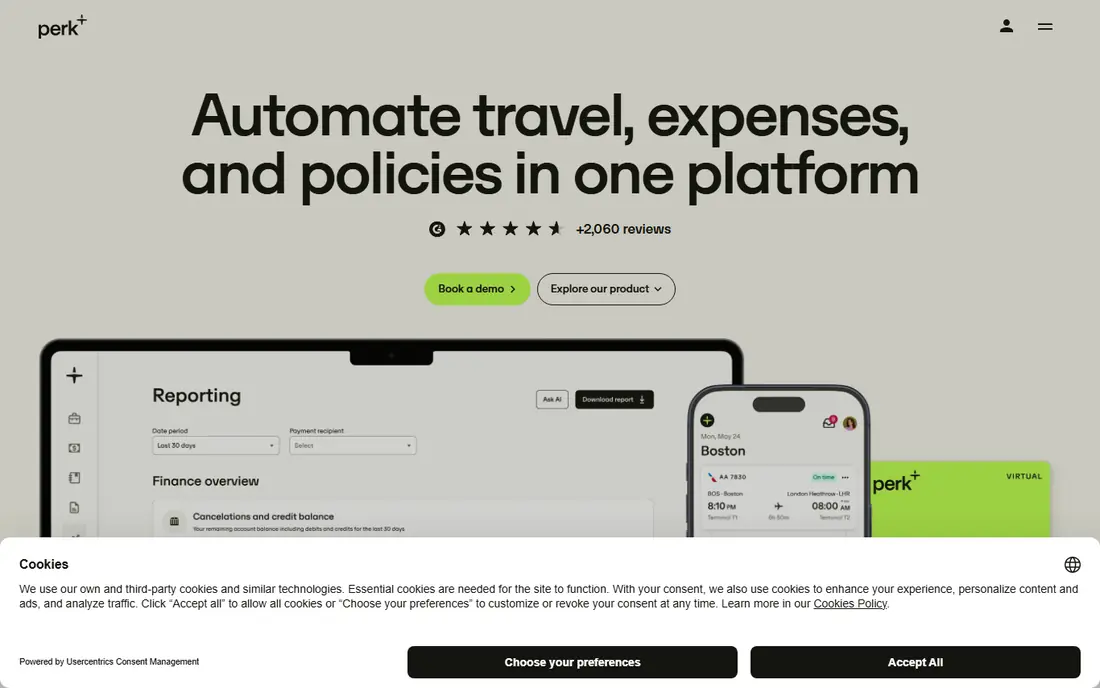
TravelPerk, now branded as Perk in some markets, is a booking-first platform with a large inventory of flights, hotels, cars, and trains. Its standout feature is flexible cancellation cover, which lets travellers cancel trips for a credit or refund under stated terms. That flexibility matters for teams whose plans change often, and it is a clear selling point over rigid corporate fares.
Pricing starts with a free tier plus a percentage fee per booking, with paid tiers lowering that percentage. Finance teams should model total cost on real trip volume, since per-booking fees add up fast for frequent travellers. TravelPerk suits small and mid-sized companies that mainly need great booking and simple policy controls, rather than a full expense suite.
- Large booking inventory
- Flexible cancellation options
- Clear per-booking pricing on entry tiers
- Fees apply per booking on top of subscriptions
- Expense tools are lighter than Navan
- Larger enterprises may need more control
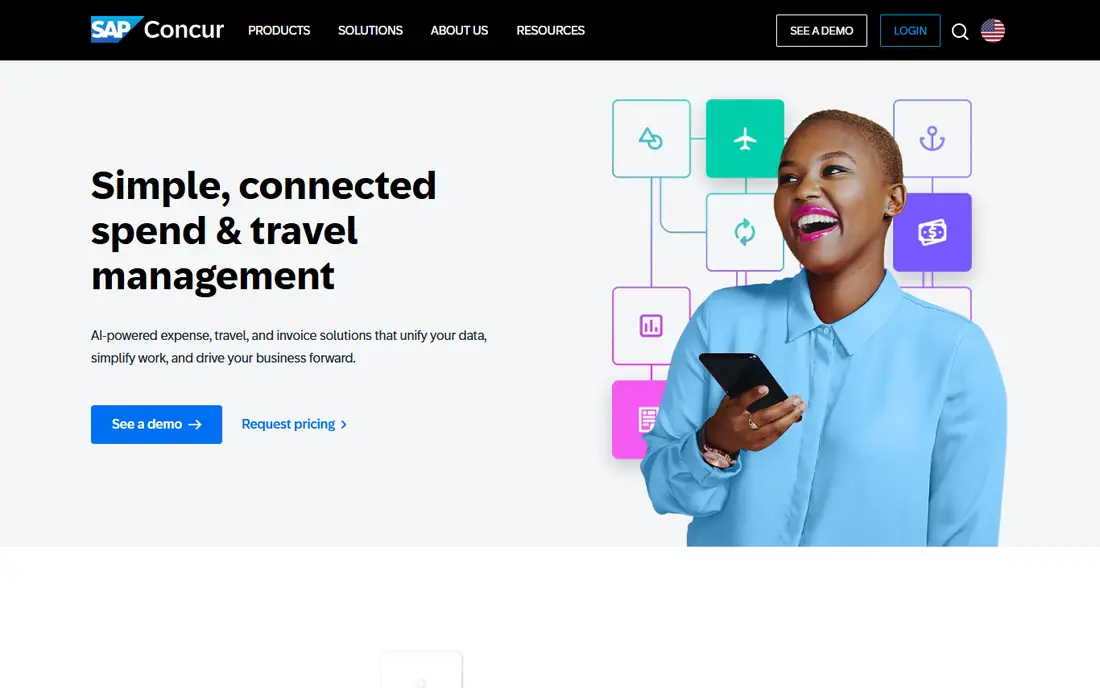
SAP Concur is the enterprise standard for travel and expense control. It handles multi-level approvals, detailed policy rules, expense reporting, and invoicing, and it integrates deeply with SAP ERP and other finance systems. For large companies with complex approval chains, global tax rules, and audit requirements, that depth is hard to match with a lighter booking tool.
The trade-off is effort. Implementation takes planning, pricing for full travel features is quoted, and the interface will not win design awards against Navan or TravelPerk. Small teams should look elsewhere. Large enterprises that already run SAP, or that need strict policy enforcement across many countries, will find Concur the safest and most complete choice.
- Deep policy and approval routing
- Strong ERP and finance integrations
- Global compliance and reporting
- Quote-only pricing for full travel
- Setup takes time
- Interface feels dated next to modern rivals
Egencia, part of American Express Global Business Travel, serves large companies with global travel programs. It combines online booking with human agent support, traveller tracking, and reporting that covers spend, compliance, and risk. For companies with travellers in many countries, duty-of-care duties, and negotiated supplier rates, that combination of technology and service matters.
Egencia is not a quick self-serve signup. Pricing is quoted, onboarding involves program design, and the platform suits companies with meaningful travel volume. Smaller firms will get faster value from Navan or TravelPerk. Enterprises that want a managed global program with agent backup should put Egencia near the top of the shortlist.
- Global travel management network
- Strong duty-of-care tools
- Experienced agent support alongside online booking
- Quote-only pricing
- Onboarding takes longer than self-serve rivals
- Smaller firms may find it heavy
Spotnana takes a different approach from most tools on this list. Rather than only selling a booking app, it offers travel-as-a-service infrastructure that other companies and large enterprises can build on. Open APIs, multi-source inventory, and a modern cloud design let technology-led firms create custom booking flows, connect multiple travel management companies, and keep data flowing into their own systems.
That flexibility is also the catch. Spotnana suits firms with engineering resources or a travel partner who can build on the platform, not teams that want to sign up and book in an afternoon. Pricing is quoted. If your company treats travel as a platform problem and wants control over the experience, Spotnana is the most forward-looking option here. If you just need booking and expenses, pick a simpler tool.
- Modern cloud platform with open APIs
- Multi-source inventory
- Designed for custom travel experiences
- Quote-only pricing
- Less suited to firms wanting a simple out-of-box tool
- Partner and integration effort varies
Ramp started as a spend management platform and added travel booking, so finance teams get cards, expenses, bill pay, and travel in one view. That unified picture helps controllers see total trip cost, including card spend, rather than just the flight and hotel. A free tier covers core cards and expenses, which makes Ramp easy to trial without a sales call.
Travel itself is not as deep as a specialist agency platform, and booking fees can apply depending on tier and spend. Ramp suits finance-led teams that care most about controlling total spend and automating expenses, with travel as one part of that picture. If traveller service and complex itineraries are your top priority, a specialist travel tool may serve you better.
- Corporate cards, expenses, and travel in one dashboard
- Free entry tier
- Savings insights on spend
- Travel is part of a spend platform, not a specialist travel agency
- Booking fees apply on some tiers
- Enterprise pricing is quoted
Brex combines corporate cards with expense and travel tools, aimed squarely at startups and fast-growing companies. Onboarding is quick, the free tier includes travel booking, and paid tiers add deeper software controls and a flat trip fee model for some plans. For a young company that needs cards and travel without a long procurement process, Brex is an attractive starting point.
The limits show up at scale. Premium features cost per user, and travel support does not match a full-service agency for complex multi-leg trips. Larger enterprises with strict policy needs should compare Brex against Concur or Egencia. Startups that want speed, cards, and simple travel in one place will find Brex hard to beat for ease of setup.
- Free card tier with travel booking included
- Fast onboarding
- Good for startups and venture-backed teams
- Premium software costs extra per user
- Travel support is lighter than specialist agencies
- Enterprise pricing is quoted
TravelBank rewards employees who book trips under budget, turning cost saving into a perk rather than a punishment. Travellers see their budget, book flights and hotels inside policy, and earn rewards for the savings, while finance gets travel and expense data in one place. That incentive design can shift behaviour more effectively than a policy document alone.
TravelBank is smaller than the leaders here, so inventory depth and support coverage should be checked against your routes. The rewards model also needs a clear internal policy, or it can create confusion about what counts as under budget. For companies that want to encourage frugal booking without heavy-handed rules, TravelBank is a distinctive and practical option.
- Rewards travellers who book under budget
- Combined travel and expense tools
- Free option for smaller teams
- Smaller inventory and brand presence than Navan or TravelPerk
- Rewards model needs clear company policy
- Enterprise features are quoted
How we picked these
We compared official feature pages, pricing pages, and product documentation for tools that are live and supported for United States companies in October 2026. We checked booking coverage, policy and approval controls, expense integration, duty-of-care features, and whether pricing is published or quoted. We included both modern self-serve platforms and enterprise travel management companies, so the list covers small teams through to global programs, and we noted where travel is part of a wider spend platform rather than a specialist service.
How to choose for your company size
Small teams should start with a free tier. Navan, TravelPerk, Ramp, and Brex all let you book real trips before you pay, which tells you quickly whether employees actually use the tool. Test with your most common routes, check how policy exceptions are handled, and see how expenses flow after a trip. If travellers bypass the tool because it is slow or restrictive, even the cheapest platform will fail, so traveller experience matters as much as finance controls.
Questions to ask on a demo
Ask how the tool handles multi-city trips, last-minute changes, and unused tickets, since those cases cause most support tickets. Ask who provides traveller support at night and on weekends, and how duty-of-care tracking works during disruptions. Finally, ask for total cost on your last twelve months of travel, including booking fees, subscription fees, and card fees, rather than accepting a headline monthly price. A tool that looks cheap per user can become expensive per trip, and the reverse is also true.
Rolling out without a revolt
Roll out in stages. Start with one department, gather feedback on booking speed and policy friction, and adjust policy rules before a company-wide launch. Publish a short guide that covers how to book, how to handle changes, and who to contact for help, and make sure managers understand approval timelines. The best travel program is the one employees actually use, so treat the first month as a trial and fix the friction points early.
Frequently asked questions
What is the best corporate travel management tool for small businesses?
Navan and TravelPerk are the strongest starting points for small businesses, thanks to free entry tiers and fast booking. Ramp and Brex also work well if you want cards and expenses in the same platform. Try booking a few real trips on a free tier before committing, and check total cost including per-booking fees.
What is the best corporate travel management software for large enterprises?
SAP Concur and Egencia lead for large enterprises, with deep policy controls, global coverage, and duty-of-care tools. Concur suits firms that need ERP integration and strict approvals, while Egencia suits firms that want a managed global program with agent support. Both are quote-priced, so run a pilot with your real travel patterns.
How much does corporate travel management software cost?
Costs vary widely. Some platforms offer free booking tiers with per-booking fees, while enterprise tools are quoted based on travel volume, users, and service levels. Model total cost on your last year of trips, including subscriptions, booking fees, and card fees, rather than comparing headline monthly prices alone. Always ask for a written quote before signing.
What is the difference between Navan and TravelPerk?
Navan combines travel booking with expenses and cards in one platform, which suits teams that want a single spend view. TravelPerk focuses more on booking itself, with a large inventory and flexible cancellation cover. If expenses matter as much as booking, lean toward Navan. If booking flexibility is the priority, TravelPerk is a strong choice.
Do corporate travel tools include duty of care?
Most enterprise and modern platforms include traveller tracking, alerts during disruptions, and reporting on where employees are travelling. The depth varies, so check whether tracking is real time, how alerts reach travellers, and what support is available outside office hours. For global programs, duty of care should be a shortlist criterion, not an afterthought.
Can employees book outside the tool and still claim expenses?
That depends on your policy. Most tools let you set rules that require in-tool booking for policy compliance, while still allowing expense claims for out-of-policy bookings with manager approval. Stricter policies improve data and negotiated rates, but they can frustrate travellers if the tool is slow. Set clear exceptions for emergencies and last-minute changes.
Sources we checked (8)

Online Jobs is an independent blog about careers, online work, learning new skills and the tools that help people earn. More about us.
Keep reading
All posts
n8n Alternatives
n8n alternatives compared for 2026, with Zapier, Make, Activepieces, and more, covering visual builders, code steps, self-hosting, and pricing models.

ZoomInfo Alternatives
The best ZoomInfo alternatives in 2026, compared on price, free plans, data coverage, and which tool fits small teams or large sales teams best in detail.
Workday Alternatives
We compared the best workday alternatives for HR, payroll, and global hiring, from BambooHR and Gusto to Rippling, Deel, and HiBob for growing teams in 2026.