Best Contract Lifecycle Management Software in 2026: 8 Platforms Compared


Large legal teams with complex approvals · Starting price: See website
How we put this together: we compare official feature and pricing pages, app store listings, privacy policies and public user reviews. Prices change, so check the provider's site before you pay.
Key takeaways
- Most full contract lifecycle management platforms are priced by quote, so budget for a sales conversation rather than a self-serve checkout.
- PandaDoc and Concord are the friendliest starting points for smaller teams that mainly need templates, signatures, and a searchable store of signed deals.
- Ironclad, Icertis, and Agiloft suit larger legal teams with multi-step approvals, conditional workflows, and strict control over who can change a clause.
- Juro and SpotDraft sit in the middle, with browser-based drafting and AI-assisted review that cut down on email back-and-forth.
- Renewal alerts and obligation tracking are where these tools earn their keep after signing, so test that part during any trial or demo.
Quick comparison
| Name | Who it suits | Starting price | Free option | |
|---|---|---|---|---|
| Ironclad | Large legal teams with complex approvals | See website | No | Visit |
 DocuSign CLM | Companies already using DocuSign eSignature | See website | No | Visit |
 PandaDoc | Small sales-led teams | See website | Free trial | Visit |
 Concord | Business teams that self-serve routine contracts | See website | Free trial | Visit |
 Juro | Teams that negotiate inside the document | See website | No | Visit |
 Agiloft | Organizations with unusual or changing workflows | See website | No | Visit |
 Icertis | Global enterprises with huge contract portfolios | See website | No | Visit |
 SpotDraft | Growing legal teams that want AI-first review | See website | No | Visit |
The best contract lifecycle management software
Contract lifecycle management software covers a contract from first draft through negotiation, approval, signature, storage, and renewal. The tools below all cover that full arc, but they differ sharply in price, setup effort, and who they are built for.
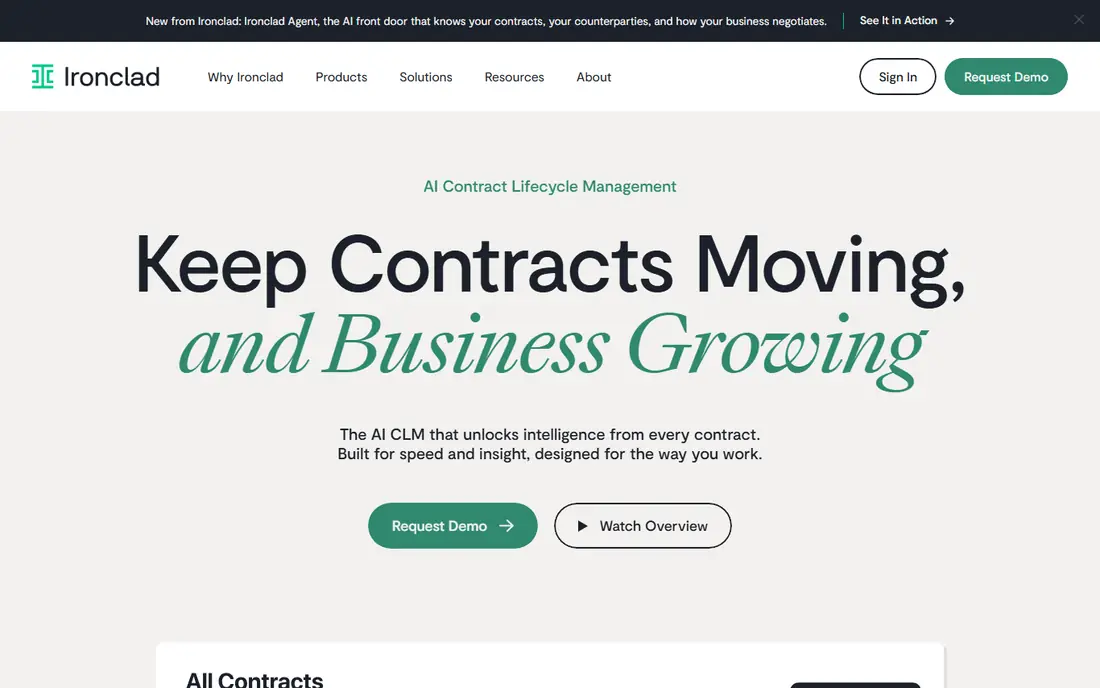
Ironclad is built for legal teams that handle high volumes of contracts with conditional approvals, multiple stakeholders, and audit requirements. Its workflow builder routes each contract type through the right reviewers, and its AI tools help draft from approved language and flag risky clauses. For a company where legal is a bottleneck on every deal, that structure is the main selling point.
The catch is scope. Ironclad is an enterprise purchase with enterprise onboarding, and smaller teams may find it heavier than they need. Ask for implementation costs and timelines in writing before signing, and confirm which AI features are included in the base quote rather than sold as add-ons.
- Deep workflow automation
- Strong Salesforce integration
- AI-assisted drafting and review
- Quote-only pricing
- Implementation takes real planning and internal time
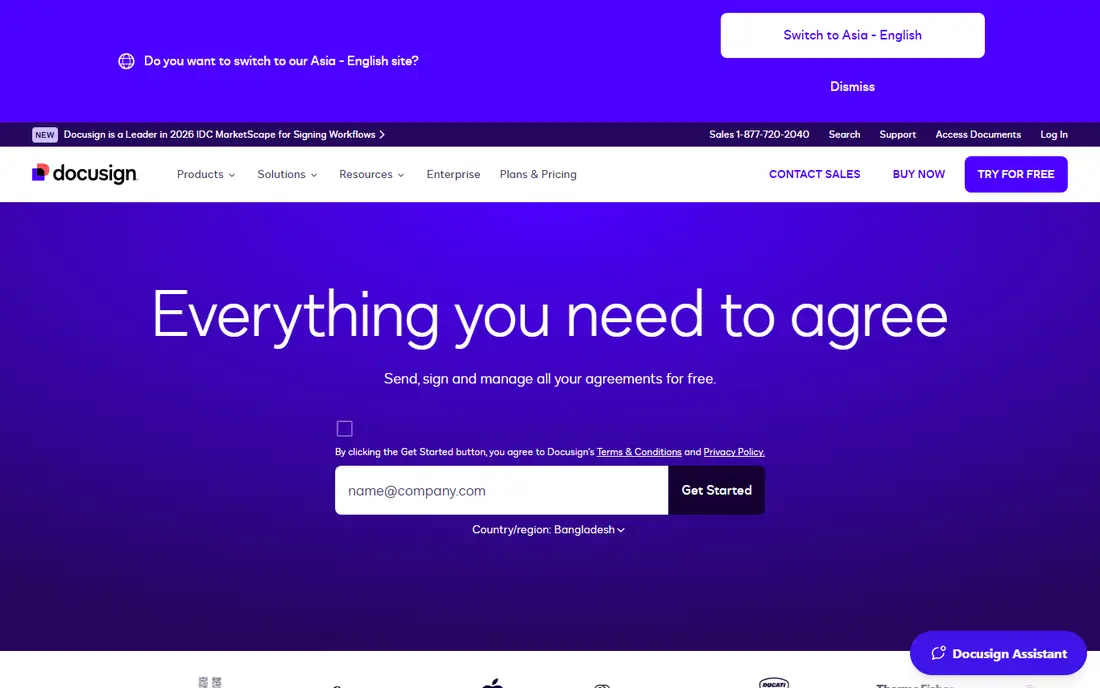
DocuSign CLM extends the signature tool many companies already use into drafting, negotiation, approvals, and a searchable repository. That familiarity matters. Teams that already send agreements through DocuSign can adopt CLM without learning a second signing flow, and signed documents land in the same system where they were negotiated.
The trade-off is that standalone value is thinner if you do not use DocuSign elsewhere. Pricing is by quote, and the platform rewards organizations that commit to the wider DocuSign agreement suite. If your company signs with another provider, one of the independent tools below will likely fit better.
- Tight fit with DocuSign eSignature
- Broad template and clause library
- Strong reporting
- Quote-only pricing
- Best value only if you already live in the DocuSign ecosystem
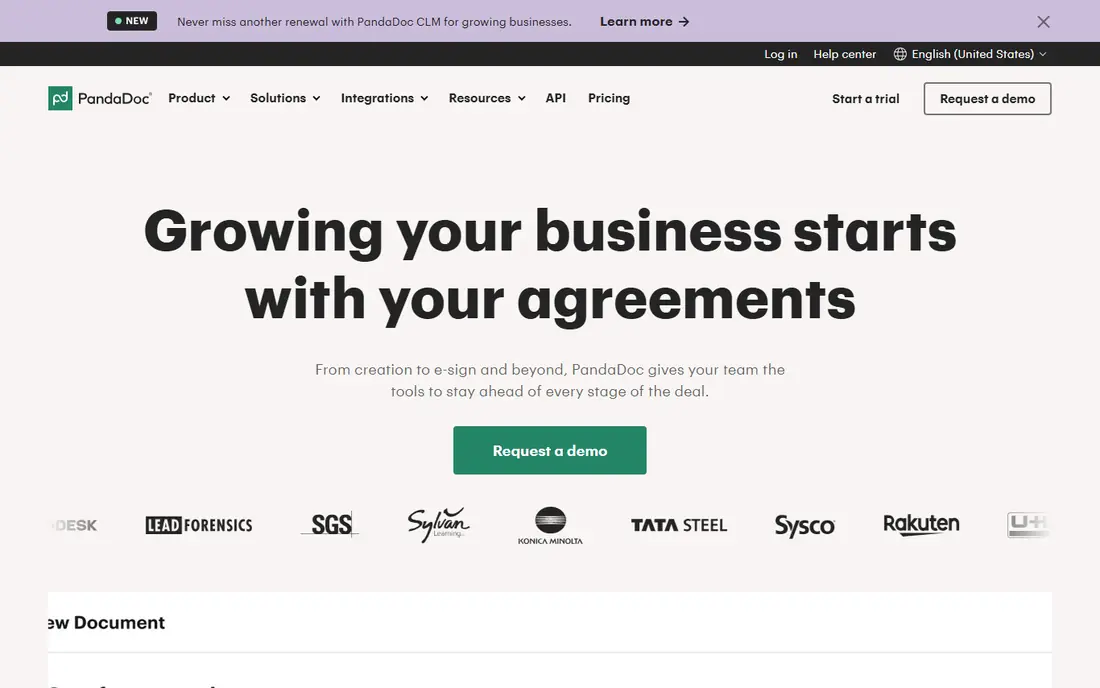
PandaDoc is the easiest tool on this list to start using today. Sales teams can build a proposal or contract from a template, send it for e-signature, and track when the recipient opens it. That makes it a strong pick for small businesses whose contracts are mostly standard sales agreements, NDAs, and service orders rather than heavily negotiated legal documents.
Where it falls short is complex legal process. Conditional approvals, deep clause libraries, and post-signature obligation tracking are thinner here than in Ironclad or Agiloft. For a sales-led team, that is usually a fair trade. For a legal department managing hundreds of negotiated agreements, it is a reason to look further up this list.
- Self-serve signup
- Combines proposals, quotes, and contracts
- Easy template editor
- Lighter on deep legal workflow than enterprise CLM tools
- Advanced features sit on higher tiers
Concord pitches itself at business teams that want to stop routing every routine contract through legal. Colleagues can draft, comment, negotiate, and sign in one document, with version history kept automatically. Unlimited e-signatures on paid plans remove the per-envelope anxiety that comes with some signature tools.
The honest limit is depth. Concord handles standard agreements well, but its AI assistance and workflow options are more modest than those of SpotDraft or Ironclad. If your contracts are mostly standard and your goal is speed, that simplicity is a feature. If you need clause-level analytics across thousands of legacy contracts, look at LinkSquares-style analysis tools or the enterprise options here.
- Unlimited e-signatures on paid plans
- Simple collaborative editing
- Clear published pricing tiers
- AI review features are basic compared with AI-first rivals
- Less suited to very large portfolios
Juro takes a different approach from tools that bolt contract features onto a document store. Its editor is built for contracts from the ground up, so negotiation, comments, approvals, and signatures happen in the same browser-based document. Commercial teams can self-serve routine agreements from approved templates while legal keeps control of the language.
That focus is also its limit. Juro is strongest for companies whose main pain is slow negotiation, not for enterprises that need deep procurement or compliance modules. Pricing is by quote, so smaller teams should confirm early whether the entry point fits their budget before investing time in a trial.
- Browser-native editor built for contracts
- Clean negotiation workflow
- AI drafting assistance
- Quote-only pricing
- Smaller integration catalog than the biggest enterprise platforms
Agiloft is the pick when your contracting process does not look like anyone else's. Its no-code builder lets teams design approval chains, data fields, and automations around their own process rather than adapting their process to the software. That flexibility suits organizations with complex or multi-jurisdiction requirements, and teams that expect their process to keep changing.
Flexibility has a cost in setup time. A tool this configurable needs someone internally who owns the design, or a paid implementation partner. Companies that want to sign up and start sending contracts the same afternoon will be happier with PandaDoc or Concord.
- Highly configurable no-code workflow builder
- Broad integration options
- AI features are modular
- Quote-only pricing
- Configuration depth can mean a longer setup
Icertis is designed for the largest end of the market, where contracts number in the hundreds of thousands and span many countries, business units, and languages. Its strength is contract intelligence at scale: finding obligations, tracking commitments, and keeping a single source of truth across a global portfolio. Large procurement and legal organizations use it as a system of record, not just a signing tool.
For everyone else, Icertis is overkill. Pricing is enterprise-only, implementation is a project, and the feature set assumes dedicated administrators. Smaller companies should treat it as a reference point for what mature contract management looks like, then buy one of the lighter tools above.
- Built for very large contract volumes
- Strong compliance and obligation management
- Deep enterprise integrations
- Quote-only enterprise pricing
- Far more than a small or mid-sized team needs
SpotDraft positions itself as the AI-first option for legal teams that have outgrown shared drives and email but do not want a year-long enterprise rollout. Its review tools surface risky language, its drafting tools work from approved playbooks, and its interface feels closer to a modern SaaS product than a legacy legal system. Mid-market teams often find it the quickest route to a working CLM setup.
The watch-out is ecosystem depth. SpotDraft does not yet match Ironclad or Icertis on the sheer range of integrations and enterprise modules, so teams with unusual stack requirements should check their must-have connectors during evaluation. For a growing legal team, though, the balance of speed and capability is hard to beat.
- AI-assisted review and drafting
- Modern interface
- Faster setup than legacy enterprise CLM
- Quote-only pricing
- Younger platform with a smaller partner ecosystem than the oldest vendors
How we picked these
We compared official feature pages, pricing pages, and public documentation for the leading contract lifecycle management platforms, and checked each vendor's homepage to confirm it loads and belongs to that product. We favored tools that cover the full lifecycle, from drafting and negotiation through signature, storage, and renewal alerts, rather than signature-only or drafting-only tools. Where a vendor does not publish pricing, we say so instead of repeating third-party estimates as fact.
What to check before you buy
Start with your contract volume and your bottleneck. If the pain is slow sales signatures, a lighter tool will pay off faster than an enterprise platform. If the pain is missed renewals or audit findings, weight post-signature tracking and reporting more heavily than drafting features.
Count the real cost
Quote-only pricing hides implementation, training, and add-on AI fees. Ask every vendor for a total first-year figure, including onboarding and the features you actually need. A cheaper license with a large implementation bill is not cheaper.
Test with your own contracts
Run a pilot with two or three of your real agreements, including one awkward one with heavy redlines. Watch how approvals route, how version history reads, and how easy it is to find the signed copy six months later. The demo that looks slick on sample data often feels different on your own paperwork.
Confirm renewal and obligation alerts
Ask to see a renewal reminder and an obligation report during the demo, not just a slide about them. Set the alert lead time you need, and check who gets notified if the contract owner leaves. This is the feature that quietly saves money after the first year.
Frequently asked questions
What is contract lifecycle management software?
It is software that manages a contract from drafting through negotiation, approval, signature, storage, and renewal. Instead of Word files moving by email, every stage lives in one system with version history, permissions, and alerts.
What is the best contract lifecycle management tool for a small business?
PandaDoc or Concord are usually the best starting points for small teams, because both offer self-serve signup and cover templates, signatures, and storage without enterprise pricing. If your contracts need heavy legal review, add Juro or SpotDraft to the shortlist.
What is the best contract lifecycle management platform for an enterprise?
Ironclad and Icertis lead for large organizations, with Agiloft close behind for teams with unusual workflows. The right choice depends on whether your priority is legal workflow depth, portfolio-scale intelligence, or configurability.
How much does contract lifecycle management software cost?
Most full platforms are priced by quote, so there is no single answer. Lighter tools publish self-serve tiers, while enterprise platforms typically require a sales conversation and an implementation budget. Always ask for total first-year cost.
Do these tools include e-signatures?
Most do, either built in or through an integration. PandaDoc, Concord, and DocuSign CLM include signing in the flow, while others connect to a signature provider. Confirm whether signatures are included in the quoted plan before you buy.
Can CLM software track renewals and obligations?
Yes, renewal alerts and obligation tracking are core features of the platforms on this list. The quality varies, so test alerts with a real contract date during your pilot and check how obligations are reported across the whole portfolio.
Sources we checked (8)

Online Jobs is an independent blog about careers, online work, learning new skills and the tools that help people earn. More about us.
Keep reading
All posts
ZoomInfo Alternatives
The best ZoomInfo alternatives in 2026, compared on price, free plans, data coverage, and which tool fits small teams or large sales teams best in detail.
Workday Alternatives
We compared the best workday alternatives for HR, payroll, and global hiring, from BambooHR and Gusto to Rippling, Deel, and HiBob for growing teams in 2026.
Which SaaS Tools Have the Best Customer Support
Which SaaS tools have the best customer support? Compare eight popular tools on help centres, live help, response options and overall support quality.