Best Content Marketing Tools in 2026: 8 Tools Compared

How we put this together: we compare official feature and pricing pages, app store listings, privacy policies and public user reviews. Prices change, so check the provider's site before you pay.
Key takeaways
- Semrush and Ahrefs cover research, rankings and audits in one subscription, while Surfer, Frase and Clearscope focus on optimising the article itself.
- Buffer and Hootsuite suit teams that need social publishing and scheduling more than search research.
- NeuronWriter is the budget pick for content optimisation, with a free plan and low monthly pricing.
- Start with one research tool and one writing tool, and add a social tool only when publishing volume makes it necessary.
Quick comparison
| Name | Who it suits | Starting price | Free option | |
|---|---|---|---|---|
 Semrush | All-in-one research | $139 per month | Yes | Visit |
 Ahrefs | Backlinks and keywords | $29 per month | Yes | Visit |
 Surfer | Content optimisation | $49 per month | Free trial | Visit |
 Frase | Briefs and drafting | $39 per month | Free trial | Visit |
 Clearscope | Team content grading | $129 per month | Free trial | Visit |
 NeuronWriter | Budget optimisation | $23 per month | Yes | Visit |
 Buffer | Social publishing | See website | Yes | Visit |
 Hootsuite | Social management | See website | Free trial | Visit |
The best content marketing tools
Content marketing covers several jobs, including finding topics, writing briefs, optimising drafts and publishing on social channels. No single tool does all of them equally well, so this list mixes research platforms, optimisation editors and social publishers. We compared official pricing pages, feature pages and public documentation, and we focused on what each tool adds to a real publishing workflow.
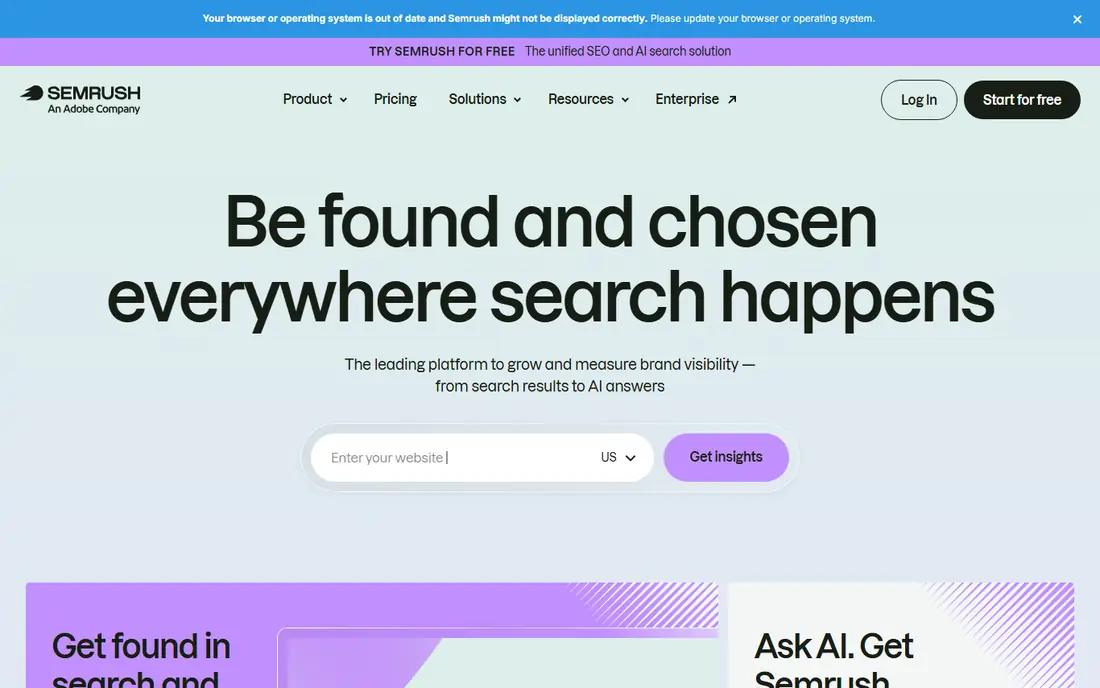
Semrush is the default all-in-one choice for teams that publish regularly and care about search traffic. Keyword research, competitor analysis, site audits and rank tracking sit in one account, which reduces the need to stitch together several subscriptions. The content tools, including topic ideas and writing help, work best when they can draw on that research data, so a brief starts with real search terms rather than guesswork.
The cost is the main barrier. At the monthly price shown here, Semrush is a serious expense for a solo blogger, and the interface takes time to learn. Smaller teams should check whether they will use audits, tracking and competitor tools often enough to justify the fee. If search is your main channel and you publish weekly, Semrush is often worth it. If you publish rarely, a narrower tool may be better value.
- Wide keyword and competitor data
- Site audits and rank tracking
- Social and content tools in one account
- Price is high for solo creators
- Interface can feel dense
- Content tools sit on higher plans
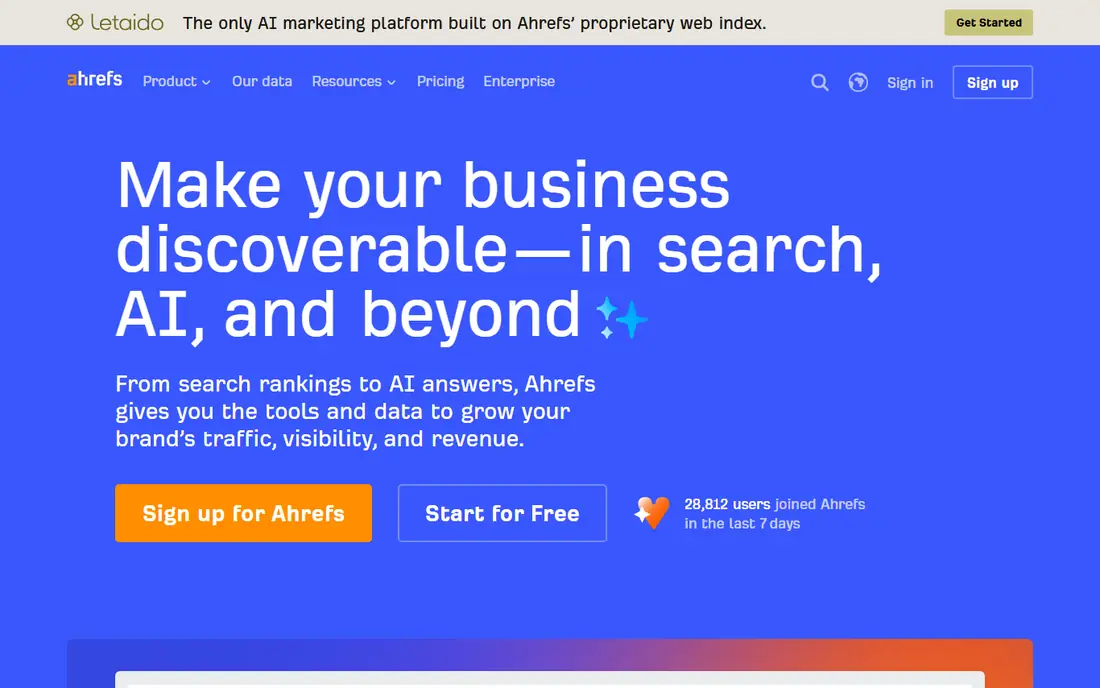
Ahrefs is best known for backlink data, but it is also a strong keyword research and audit tool. Its Site Explorer shows which pages earn links and traffic, which helps a content team decide what to write next and what to update. The audit tool flags technical problems that can hold back otherwise good articles, and the keyword tools give search volume and difficulty in a clear layout.
The starter price covers a limited tier, and the fuller plans that most agencies use cost considerably more. Content optimisation is also less central here than in Surfer or Clearscope, so some teams pair Ahrefs with a dedicated editor. Ahrefs suits teams that value link and ranking data above all else, and who want research they can trust before they brief a writer.
- Strong backlink and keyword data
- Clear site audit
- Useful free tools for site owners
- Full plans cost more than the starter price
- Content tools are an add-on for some users

Surfer focuses on the draft itself. As you write, its editor scores the content against top-ranking pages and suggests terms, headings and length ranges. That live feedback helps writers improve a draft without leaving the editor, and the audit tool can show why an older page may be underperforming. For teams that already have keyword research, Surfer turns that research into a practical writing guide.
The limits matter. Lower plans cap documents per year, so high-volume teams need a higher tier or careful planning. Surfer also does not replace a full research platform, so you still need a source for keyword and competitor data. It is best for writers and editors who publish search-focused articles and want a clear, measurable way to improve each draft.
- Live content scoring in the editor
- Clear term and structure guidance
- Audit tools for existing pages
- Document limits on lower plans
- Needs a research tool for full keyword work
- Annual billing for best price
Frase is built for the brief stage, which is where many content projects slow down. It pulls top-ranking content for a topic, groups common questions and headings, and turns that research into a brief a writer can follow. Drafting and optimisation sit in the same workflow, so a writer can move from brief to draft without switching tools. That speed suits small teams and freelancers who produce several articles a week.
The starter plan limits seats, sites and monthly articles, so growing teams will need to upgrade. Frase also gives less deep link or technical audit data than Semrush or Ahrefs, so it works best alongside a research tool rather than instead of one. If briefs are your bottleneck, Frase is a practical pick that pays for itself in saved research time.
- Fast research briefs
- Drafting and optimisation in one workflow
- Lower entry price than rivals
- Starter plan limits seats and articles
- Interface prioritises speed over depth
Clearscope is the premium editor for teams that care about content quality and consistency. Its grading is straightforward, its reports are easy for writers to follow, and unlimited users on plans make it simpler for larger editorial teams to share. Editors can set a target grade, writers can see which terms and topics are missing, and the final draft has a clearer standard to meet.
The price puts it out of reach for many solo creators, and standard plans limit drafts per month. Clearscope also does less keyword research than Semrush or Ahrefs, so it is best as an editorial layer on top of research you already have. For agencies and in-house teams that publish at scale and need a shared quality bar, that focus is a strength rather than a gap.
- Clear, trusted content grading
- Unlimited users on plans
- Useful for editorial teams
- High price for solo users
- Draft limits on standard plans
- Less research depth than all-in-one tools
NeuronWriter gives solo creators and small teams a lower-cost route to content optimisation. It offers a content planner, an editor with term guidance, and internal linking suggestions at a price well below Surfer or Clearscope. A free plan lets new users test the workflow before paying, which is rare in this category. For a blogger publishing a few articles a month, that combination is hard to beat on value.
The trade-offs are polish and depth. The interface feels less refined than premium editors, and some analysis features depend on the plan you choose. NeuronWriter also does not match the research breadth of Semrush or Ahrefs. It is best for budget-conscious creators who want optimisation help without a large monthly bill, and who are happy to do keyword research elsewhere.
- Low price for content optimisation
- Free plan available
- Content planner and editor included
- Smaller brand presence
- Interface less polished than premium rivals
- Analysis depth varies by plan
Buffer covers the publishing side of content marketing, which search tools do not. It lets you schedule posts across social channels, view them in a calendar, and keep a consistent posting rhythm without logging into each network every day. The interface is simple, which suits small teams and solo creators who want scheduling without a steep learning curve. A free plan helps new users test the workflow.
Analytics and listening are lighter than on Hootsuite, so teams that need deep social reporting may need a higher plan or a second tool. Pricing also varies with channel count, so check the current page for your exact setup. Buffer is best for creators and small businesses whose main social need is reliable, simple publishing.
- Simple scheduling for social channels
- Clean calendar view
- Free plan for getting started
- Analytics depth is limited on lower plans
- Social listening is basic
- Pricing varies by channel count
Hootsuite is the broader social management option, with scheduling, monitoring, engagement and reporting in one dashboard. Teams can assign posts, approve content and track performance across channels, which helps when several people publish under one brand. The network coverage is wide, and the reporting tools suit managers who need to show results to clients or leadership.
The cost and complexity are the downsides. Small teams may find the price hard to justify if they only schedule a few posts a week, and new users face a learning curve. Hootsuite suits agencies and larger social teams that need team workflows and reporting, rather than solo creators who only need a simple scheduler. Start with the trial and test team features before committing.
- Wide social network coverage
- Scheduling, monitoring and reporting in one tool
- Team workflows
- Price is high for small teams
- Interface can feel complex
- Free trial only, no lasting free plan
How we picked these
We compared official pricing pages, feature pages and public documentation, and we kept only tools that are still available and truly support content marketing work. We favoured tools with clear pricing, a usable free plan or trial, and a distinct role in the workflow, rather than listing many tools that do the same job. Research depth, editor quality, social publishing and price all shaped the final shortlist.
We did not claim hands-on testing, and we did not invent user counts or ratings. Where pricing varied by billing period or subscriber count, we used the monthly figure shown on the vendor page and marked prices as See website when no single current figure applied. Prices change often in this market, so check the vendor page before you buy.
Choosing a content marketing stack that fits your volume
Match the stack to how much you publish. A solo blogger publishing twice a month needs a research source and an editor, not a full agency suite. A team publishing weekly needs shared briefs, a clear quality standard and a social scheduler, because handoffs become the bottleneck. Write down your weekly article count, your main traffic channel and your team size before you compare plans.
Avoid paying twice for the same research
Check for overlap before you subscribe to two research tools. If you already pay for Semrush or Ahrefs, a separate optimisation editor may still be worth it, but a second research platform rarely is. List the features you actually use each week, and drop any tool whose main job is already covered.
Set a quality bar before you scale
Agree on what a finished article needs, including a brief, a target keyword, internal links and a clear heading structure. Tools can score a draft, but they cannot decide whether the article answers the reader question well. Review the first few articles from any new tool together, so writers and editors share the same standard.
Frequently asked questions
What is the best content marketing software for small businesses?
For small businesses, Frase or NeuronWriter plus a simple social scheduler such as Buffer often covers the core workflow at a lower cost. Semrush or Ahrefs become worth it when search traffic is a main channel and publishing volume is steady. Start small, track which features you use, and upgrade only when volume demands it.
What is the best content marketing platform for social media?
Buffer suits simple scheduling, while Hootsuite suits teams that need monitoring, approvals and reporting. The right choice depends on team size and whether you need listening and reporting or just a calendar. Test the free plan or trial with your real channels before you commit.
What tools do content marketers use for SEO?
Most teams pair a research platform such as Semrush or Ahrefs with an optimisation editor such as Surfer, Frase, Clearscope or NeuronWriter. The research tool finds topics and keywords, while the editor helps the writer cover the topic well. That pairing avoids paying for two tools that do the same research job.
Is there a free content marketing tool worth using?
Yes, Semrush and Ahrefs offer limited free tools, NeuronWriter has a free plan, and Buffer offers a free plan for social publishing. Free tiers are useful for learning and for low-volume publishing, but they limit reports, drafts or channels. Use them to test workflow, then pay for the limits you actually hit.
How much should a content marketing tool cost?
Costs range from free plans to more than $100 per month for premium research or editorial tools, and a full stack can exceed $200 per month. The right budget depends on publishing volume, team size and whether search or social drives your traffic. Price the stack by annual cost, not by the monthly headline, and review usage every quarter.
Sources we checked (8)

Online Jobs is an independent blog about careers, online work, learning new skills and the tools that help people earn. More about us.
Keep reading
All posts
ZoomInfo Alternatives
The best ZoomInfo alternatives in 2026, compared on price, free plans, data coverage, and which tool fits small teams or large sales teams best in detail.
Workday Alternatives
We compared the best workday alternatives for HR, payroll, and global hiring, from BambooHR and Gusto to Rippling, Deel, and HiBob for growing teams in 2026.
Which SaaS Tools Have the Best Customer Support
Which SaaS tools have the best customer support? Compare eight popular tools on help centres, live help, response options and overall support quality.