Best Concept Testing Platforms in 2026: 8 Platforms Compared

How we put this together: we compare official feature and pricing pages, app store listings, privacy policies and public user reviews. Prices change, so check the provider's site before you pay.
Key takeaways
- Maze is the best starting point for rapid prototype and concept tests, with a free plan and Starter at $99 per month.
- UserTesting suits enterprise teams that need video feedback and a large recruited panel, but pricing is quote based and costs are high.
- SurveyMonkey and Qualtrics suit concept surveys at scale, while Wynter suits message testing with business buyers specifically.
- A concept test needs a clear decision, a realistic stimulus and a defined audience, or the results will flatter an idea that users would not buy.
- Recruiting is often the real cost, so check whether a panel, participant incentives and screening are included before comparing plan prices.
Quick comparison
| Name | Who it suits | Starting price | Free option | |
|---|---|---|---|---|
 Maze | Rapid prototype and concept tests | $99 per month | Yes | Visit |
 UserTesting | Enterprise video feedback | See website | No | Visit |
 Qualtrics | Enterprise concept surveys | See website | Yes | Visit |
 SurveyMonkey | Fast concept surveys | $39 per month | Yes | Visit |
 Attest | Consumer concept surveys | See website | No | Visit |
 Lyssna | Affordable prototype and survey tests | $165 per month | Yes | Visit |
 Wynter | Message testing with buyers | See website | No | Visit |
 Userlytics | Moderated and unmoderated tests | $699 per month | No | Visit |
The best concept testing platforms
Concept testing answers a simple question before you build: does this idea, name, price or message make sense to the people who would use it? The platforms below test concepts in different ways, from quick prototype clicks to full surveys and live interviews, so pick by the decision you need to make.
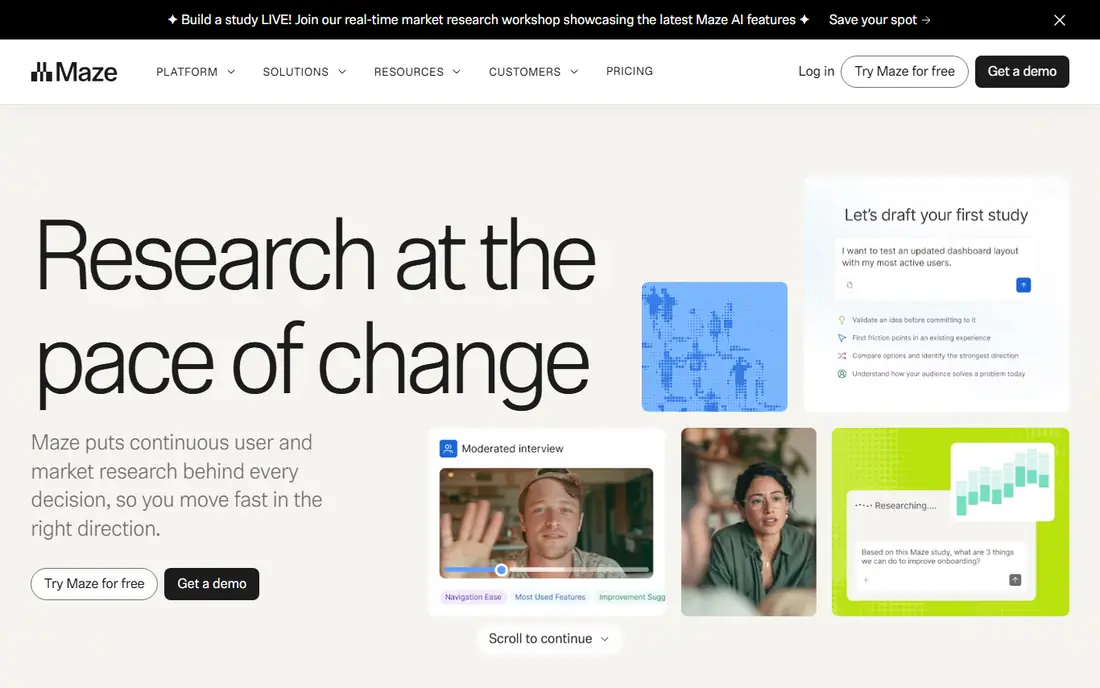
Maze is the fastest way to test a concept that already exists as a design, because it runs unmoderated tests directly from Figma prototypes, websites or wireframes. Participants complete tasks, answer questions and give feedback, and Maze returns task success, misclicks, heatmaps and AI summaries without a researcher moderating every session. That speed suits product teams testing several directions in a week.
Starter costs $99 per month, with a free plan for small tests, and panel recruitment is paid separately when you need Maze Panel participants. The honest limit is depth: Maze shows what people did and what they rated, but it does not replace a moderated interview when you need to hear why someone hesitated. Use it for early direction, then follow up with interviews for the winning concept.
- Unmoderated tests straight from Figma prototypes
- Fast results with heatmaps and AI analysis
- Free plan for small tests
- Moderated testing sits on higher tiers
- Panel participants cost extra
- Less suited to long interviews
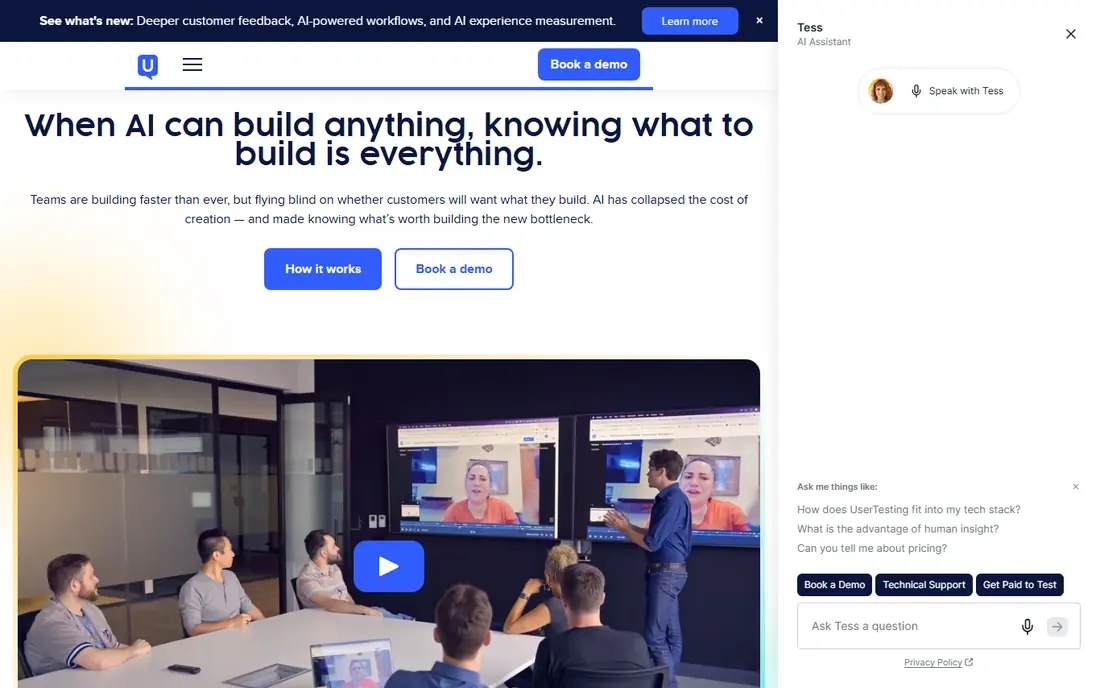
UserTesting suits teams that need to watch and hear real users react to a concept, not just read survey scores. Participants record their screen and voice while completing tasks, which reveals confusion, delight and hesitation that a rating scale misses. The panel covers many countries and audience types, and the platform supports moderated live sessions as well as unmoderated tests, with AI analysis to summarize themes.
Pricing is the barrier. UserTesting does not publish a standard price, and third-party transaction data puts annual costs in a wide range, commonly tens of thousands of dollars per year for mid-market teams. That makes it an enterprise choice, not a first test tool, and credit forecasting matters, since unused credits and overages both waste budget. If video evidence will decide a major launch, it is worth the cost, but smaller teams should start with Maze or Lyssna.
- Video and voice feedback from real users
- Large panel across many countries
- Moderated and unmoderated tests plus AI analysis
- Quote-only pricing with high annual costs
- Credit system needs forecasting
- More than most small teams need
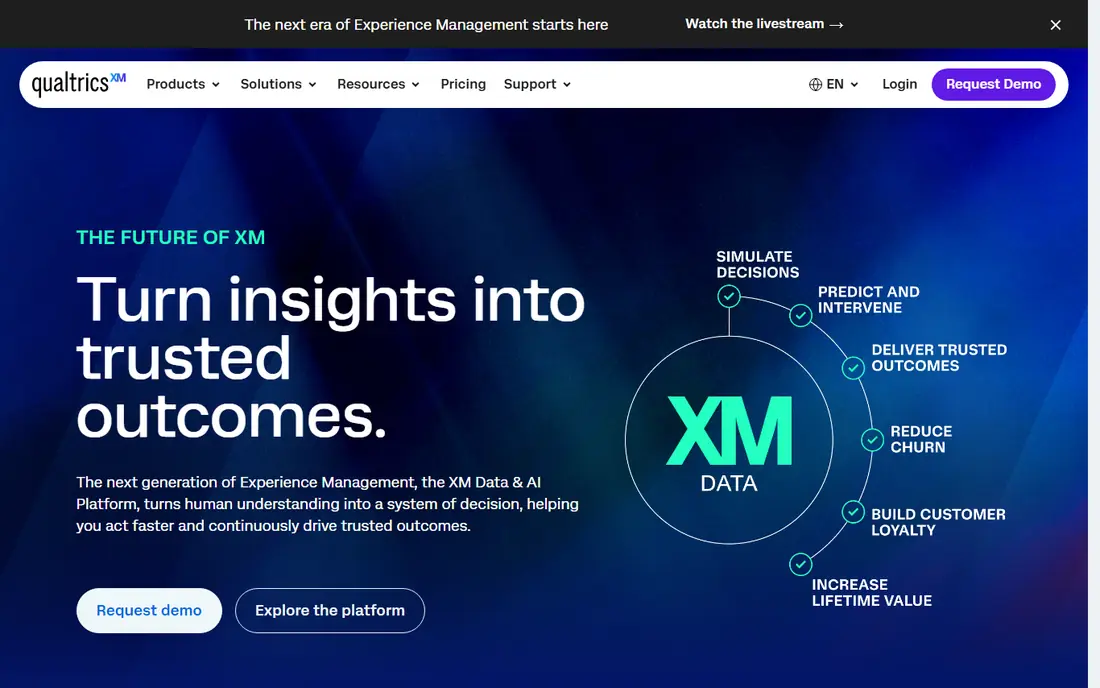
Qualtrics is the enterprise survey platform for concept tests that need rigorous methods, such as conjoint analysis, MaxDiff ranking, price sensitivity and brand tracking. It handles complex logic, quotas, randomization and large samples, and it integrates with CRM and analytics systems that product teams already use. A free account exists for basic surveys, which helps a team learn the interface before buying.
The full research product is quote based, and advanced methods need research knowledge to set up well, so a team without that skill should either train up or use a simpler tool first. For a company testing concepts across markets, segments and price points, with governance and security requirements, Qualtrics gives the control and scale that lighter tools lack.
- Strong survey logic, conjoint and MaxDiff methods
- Enterprise security and integrations
- Large research panel options
- Quote-based pricing for full research plans
- Learning curve for advanced methods
- More complex than a quick test tool
SurveyMonkey is the safe default for a quick concept survey, because most respondents already know the format and most teams can build a test in an afternoon. Templates for concept testing, message testing and pricing help avoid badly worded questions, and logic, branching and A/B question variants cover common test designs. A research panel can supply respondents when you lack your own audience, priced separately.
Advantage costs $39 per month billed annually, with Standard at $99 per month on monthly billing and Premier at $139 per month billed annually. The free Basic plan covers only 10 questions and a small response limit, so treat it as a trial, not a test tool. Watch response caps too, since overages at $0.15 per extra response add up fast on a large concept test.
- Familiar interface and huge template library
- Fast setup for concept and message surveys
- Research panel available separately
- Free plan is very limited
- Response overages cost $0.15 each on some plans
- Team plans need a three-user minimum
Attest suits brand and product teams that need consumer opinions on a concept, name, pack or claim, with a panel and targeting built for that job. You define an audience by age, location, behaviour or attitudes, field a survey, and read results in dashboards designed for marketers rather than statisticians. That focus makes it useful for go or no-go decisions on consumer ideas.
Pricing is quote based, and third-party listings put entry costs at enterprise levels, so Attest fits funded brands and agencies better than a solo founder. It is also a survey tool first, so prototype clicks and moderated interviews need another platform. If the question is what consumers think of a concept, Attest is a strong specialist, but get a written quote for your sample size before shortlisting it.
- Consumer panel built for brand and concept research
- Fast fieldwork with audience targeting
- Clear dashboards for non-researchers
- Pricing is quote based and starts at enterprise levels in third-party listings
- Less suited to prototype usability tests
- UK panel strength varies by market
Lyssna, formerly UsabilityHub, is the budget-friendly middle ground between a quick survey and a full enterprise test platform. It runs prototype tests, first-click tests, five-second tests, surveys, card sorting and preference tests, which covers most early concept questions in one place. A free plan lets a small team run basic tests, and Growth at $165 per month adds more capacity and features.
The trade is scale. Lyssna does not match UserTesting for video depth or Qualtrics for advanced survey methods, and panel participants may need separate recruiting depending on the test. For a startup or small product team testing a landing page, a name, a price or a prototype flow, Lyssna gives the most test types per dollar on this list.
- Prototype, first-click, survey and card sorting tests in one tool
- Free plan for small tests
- Lower cost than enterprise platforms
- Panel recruitment is separate in many cases
- Smaller panel than UserTesting
- Advanced analysis is thinner than Qualtrics
Wynter answers a narrower question than the other tools here, and it answers it well: does your message land with the business buyer who would actually approve a purchase? Tests show a landing page, homepage or message to verified B2B professionals in a target role and industry, and return structured feedback on clarity, relevance and buying intent. That is far more useful for B2B concept testing than a general consumer panel.
Pricing is quote based, and the B2B focus means it does not suit consumer products, apps or mass-market concepts. Niche roles and industries can also be harder to recruit, so check panel availability for your exact audience before committing. For a B2B company testing positioning, pricing pages or a new product message, Wynter is the most targeted option here.
- Feedback from verified business buyers, not general consumers
- Message and landing page tests built for B2B
- Clear, quotable feedback
- Pricing is quote based
- B2B only, so not for consumer concepts
- Panel size limits niche audiences
Userlytics suits teams that want both moderated interviews and unmoderated concept tests from one vendor, with a global panel and AI analysis to speed up review. You can run a concept survey, a prototype task and a live moderated session without switching tools, and bring your own participants when you already have an audience. That breadth helps research teams that test concepts at several stages.
The price is the main limit. Premium is listed at $699 per month billed annually, which puts Userlytics well above Maze and Lyssna for a small team. For an agency or mid-size product team running regular moderated and unmoderated tests, the combined panel and methods may justify the cost, but a team testing one concept should start cheaper and upgrade only when testing becomes routine.
- Moderated and unmoderated testing with a global panel
- Video, survey and card sorting in one platform
- AI analysis included
- Premium starts at $699 per month billed annually
- Higher cost than Maze or Lyssna
- Setup takes longer than a simple survey
How we picked these
We compared official feature pages, pricing pages, method documentation and public reviews for concept testing platforms that were live in October 2026. We kept tools that test an idea before build, whether by prototype task, survey, panel or interview, and we favoured a mix of fast, affordable tools and enterprise platforms. Where pricing is quote based we say so, and where a published price exists, such as Maze Starter, Lyssna Growth, SurveyMonkey Advantage and Userlytics Premium, we give that rate.
How to run a concept test that means something
Start with a decision, not a survey
Write the decision the test must support, such as whether to build version A or B, or whether to launch at a given price. Then choose one primary metric, such as purchase intent, task success or message clarity, and treat other questions as supporting detail. A test without a decision produces interesting results that change nothing.
Show something realistic
Test a prototype, a landing page, a pack design or a full message, not just a description of an idea. People rate descriptions more kindly than real products, so a realistic stimulus gives a truer read. Include a competitor or a current option as a control where possible, so a good score means something relative, not just absolute.
Recruit the right people, then read the why
Screen participants for the actual buyer or user, not just age and location, and check that they understand the concept before scoring it. Pair numbers with open answers or short interviews, because a concept can score well for the wrong reason, or fail on a fixable detail. Report the sample, the stimulus and the decision together, so a later team can judge the result fairly.
Frequently asked questions
What is concept testing?
Concept testing means showing a target audience an idea, prototype, name, price or message before building it, and measuring understanding, appeal and purchase intent. It helps teams kill weak ideas early, fix confusing messages and choose between directions with evidence instead of opinion.
Which concept testing platform is best for startups?
Maze and Lyssna are the best startup picks, because both offer free plans and affordable paid tiers for prototype and survey tests. Maze suits design-led teams testing Figma prototypes, while Lyssna suits teams that need several test types in one tool. SurveyMonkey is a good add-on for simple concept surveys.
How many participants do I need for a concept test?
It depends on the method. Five to ten users can reveal major usability problems in a prototype test, while a survey concept test usually needs at least 100 respondents per concept for stable scores, and more for segment comparisons. A small, well-screened sample beats a large, poorly screened one for early direction.
Is UserTesting worth the cost?
UserTesting is worth it when video evidence and a large panel will decide a major launch, a redesign or a high-stakes message. For a single early concept, Maze, Lyssna or SurveyMonkey give useful direction at far lower cost. Model the annual cost, including panel incentives and credits, before committing to an enterprise plan.
Can I test a concept without a prototype?
Yes. SurveyMonkey, Qualtrics, Attest and Wynter can test a written concept, a name, a claim or a price with surveys and message tests. A prototype gives stronger evidence for usability and appeal, but a clear written stimulus with a visual mockup is enough for an early go or no-go decision.
What is the difference between concept testing and usability testing?
Concept testing asks whether an idea is worth building and whether people understand and want it. Usability testing asks whether people can use a product that already exists. Concept tests come earlier, use surveys and prototype tasks, and focus on appeal and clarity, while usability tests focus on task completion and errors.
Sources we checked (8)

Online Jobs is an independent blog about careers, online work, learning new skills and the tools that help people earn. More about us.
Keep reading
All posts
Best White Label SEO Companies
We compare the best white label SEO companies and tools in 2026 for agencies, from fulfilment services to branded reporting platforms, margins and prices.
Best Webinar Software
We compared the best webinar software for 2026 on price, attendee limits, automation and ease of use, to help you host better live sessions with confidence.
Best Web Scraping Tools
Compare the best web scraping tools in 2026, from no-code Octoparse and Browse AI to Apify, Firecrawl, Bright Data, Zyte, ScraperAPI and free Scrapy, with prices.