Best Competitor Ad Tracking Platforms in 2026: 8 Platforms Compared

How we put this together: we compare official feature and pricing pages, app store listings, privacy policies and public user reviews. Prices change, so check the provider's site before you pay.
Key takeaways
- Similarweb and Semrush suit teams that want traffic, search and ad data in one place.
- Adbeat, SpyFu and WhatRunsWhere suit advertisers who want creative, placement and spend detail.
- Sensor Tower Pathmatics suits large brands tracking digital and video ads across channels.
- Most pricing is quote-based or tiered by data depth, so confirm coverage for your channels and regions before you buy.
Quick comparison
| Name | Who it suits | Starting price | Free option | |
|---|---|---|---|---|
 Similarweb | traffic plus ad intelligence | See website | Free trial | Visit |
 Semrush | search plus advertising research | See website | Free trial | Visit |
 SpyFu | competitor keywords and ads | See website | Free trial | Visit |
 Adbeat | display ad intelligence | See website | Free trial | Visit |
 Sensor Tower Pathmatics | cross-channel ad tracking | See website | No | Visit |
 WhatRunsWhere | display and native ad tracking | See website | Free trial | Visit |
 iSpot.tv | TV and video ad measurement | See website | No | Visit |
 Brandwatch | social and brand ad context | See website | Free trial | Visit |
The best competitor ad tracking platforms
Competitor ad tracking answers a simple question: where are rivals spending, what are they saying, and which creatives keep running? The platforms below differ in channel coverage, from search and display to social, video and TV. Some also add traffic and audience data, which helps explain why an ad strategy works. We compared official feature pages and plan details, and we use See website where pricing is quote-based, which is common here.
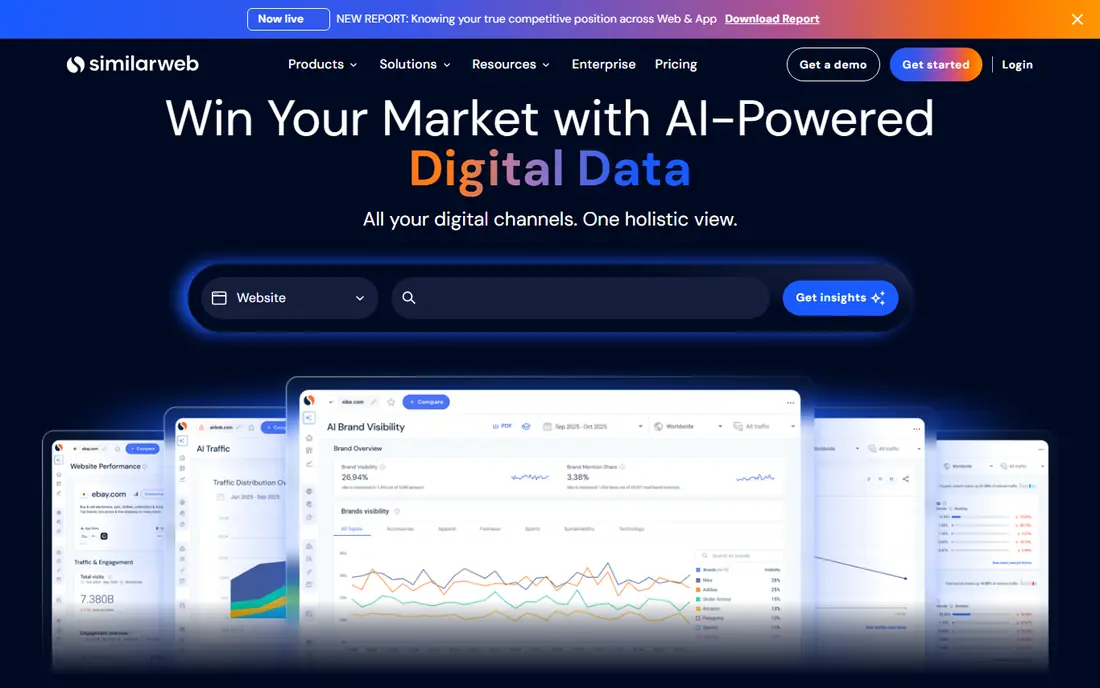
Similarweb gives context that ad-only tools miss. You can see a rival site traffic trend, top channels and audience overlap, then look at advertising alongside that picture. That context helps a marketer judge whether a rival ad push is actually driving visits, or just noise. Benchmarking dashboards make the comparison easy to share with a team.
Creative-level detail is lighter than in Adbeat or WhatRunsWhere, and pricing is quote-based, which can put it out of reach for small teams. Data for smaller sites can also be thin. For a mid-size or larger team that wants traffic plus ads in one view, Similarweb is a strong, broad pick.
- Traffic, audience and ad data in one place
- Broad website coverage
- Useful benchmarking dashboards
- Pricing is quote-based and can be high
- Ad creative depth trails specialist tools
- Smaller sites may have thin data

Semrush is best known for search, and its advertising research tools fit naturally into that strength. You can see rival paid keywords, ad copy history, landing pages and estimated traffic, which helps a search advertiser spot gaps and copy angles. The wider suite adds SEO, content and social tools, so one subscription covers several research jobs.
Pricing varies by tier, and the full suite can cost more than a single-purpose ad tool. Ad coverage also varies by market, so check your region before you commit. For a team that already does SEO and paid search, Semrush adds competitor ad insight without a second vendor.
- Strong search ad and keyword data
- Advertising research tools
- Broad SEO and content suite
- Full suite pricing adds up
- Ad data depth varies by region
- Learning curve for new users
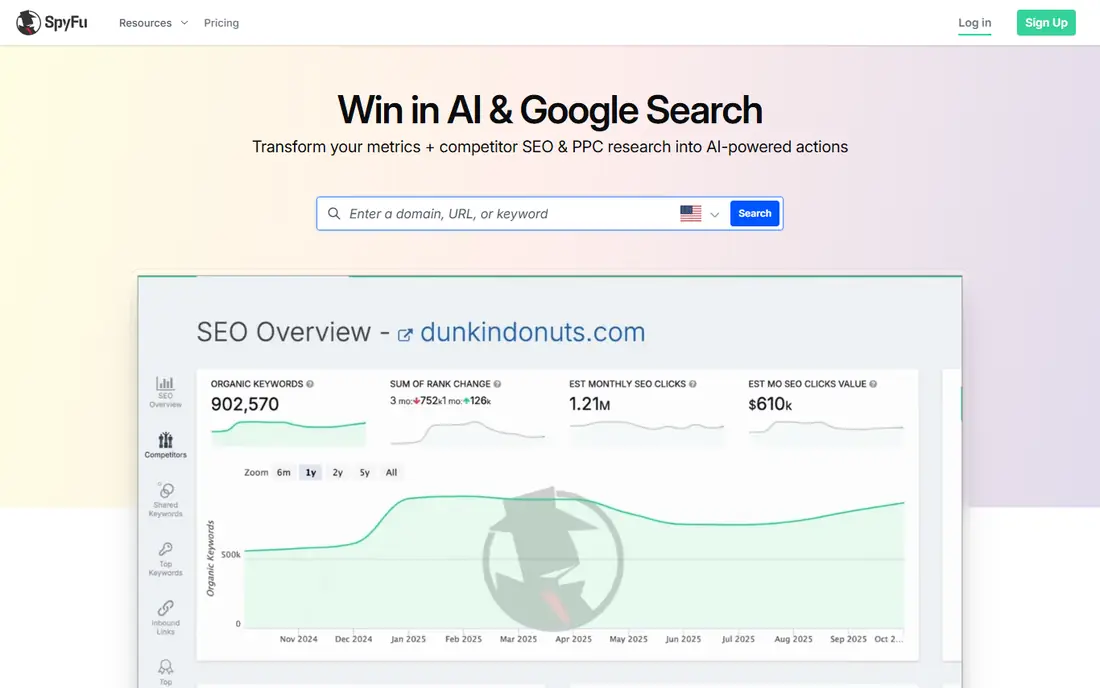
SpyFu focuses on search advertising history. Enter a rival domain and you can see paid keywords, ad variations, budgets estimates and organic rivals over time. That history helps a marketer spot which messages a rival keeps using, which usually signals what works for them. Comparison tools make it easy to line up several rivals at once.
Display, social and video coverage is lighter than in cross-channel tools, so SpyFu suits search-led teams best. The interface is functional rather than modern. For a small or mid-size advertiser focused on paid search, SpyFu offers strong value at a lower price than enterprise platforms.
- Long history of rival ad copy and keywords
- Easy domain comparison
- Lower cost than enterprise tools
- Display and social coverage is lighter
- Interface feels dated
- Data depth varies by market
Adbeat is a specialist in display advertising. It tracks creatives, landing pages, publishers and ad networks, so you can see where a rival runs display ads and which creatives last longest. That longevity signal is useful, since ads that run for months usually perform better than ads pulled after a week. Publisher data also reveals which sites a rival values.
Search and social tools are secondary here, so a team focused on those channels should pair Adbeat with another tool or pick a broader platform. Pricing is tiered by data access. For display-led advertisers and agencies, Adbeat is one of the deepest sources available.
- Deep display creative and placement data
- Publisher and network insight
- Long creative history
- Pricing is tiered and can be high
- Search and social coverage is secondary
- Best for display-led teams
Pathmatics, now part of Sensor Tower, tracks ads across digital, social, video and other channels, with a creative library that lets teams study rival messages in detail. Spend and impression estimates help brands benchmark share of voice and spot new campaigns early. That breadth suits large brands and agencies managing many clients.
Enterprise pricing puts it beyond most small teams, and there is no free plan. Smaller advertisers will get more value from SpyFu or Semrush at a lower cost. For a large brand that needs cross-channel creative and spend data in one place, Pathmatics is a leading choice.
- Digital, social and video ad coverage
- Creative library
- Brand and spend benchmarking
- Enterprise pricing
- No free plan
- Smaller teams may use only part of the data
WhatRunsWhere tracks display and native ads, showing creatives, publishers and networks for rival campaigns. Media buyers and affiliate marketers use it to find winning placements and creative angles, then test similar approaches in their own campaigns. The focus on where ads run, not just what they say, sets it apart from search-only tools.
Regional coverage varies, so check your markets during a trial. Social and video tracking is lighter than in Pathmatics. For display and native advertisers who care about placements as much as copy, WhatRunsWhere is a focused, practical pick.
- Display and native creative tracking
- Publisher insight
- Useful for affiliate and media buyers
- Coverage varies by region
- Pricing is tiered
- Social and video depth is lighter
iSpot.tv covers the TV side that most digital tools miss. It tracks TV ad airings, creatives and spend estimates, with video measurement tools that connect TV exposure to online outcomes on higher tiers. Brands that split budgets between TV and digital can finally see both sides in one view.
Digital-only teams will gain less, and pricing is enterprise-level with no free plan. For a brand with a real TV budget, iSpot.tv fills a gap that Similarweb and Semrush do not cover well. For a digital-only advertiser, a search or display specialist will be a better spend.
- TV ad creative and airing data
- Video ad measurement
- Attention and outcome metrics on higher tiers
- Enterprise pricing
- Digital-only teams gain less
- No free plan
Brandwatch is a social listening platform first, but it adds useful context to ad tracking. You can see how audiences talk about a rival brand, which campaigns spark conversation, and how sentiment shifts after a launch. That context helps explain why a rival ad works, not just where it ran.
It is not a direct replacement for Adbeat or Pathmatics, since creative and spend detail is lighter. Pricing is quote-based, and building good queries takes practice. Pair Brandwatch with an ad specialist, or pick it when social conversation and brand perception matter as much as ad placements.
- Social listening plus brand context
- Audience insight
- Campaign tracking across social
- Not a pure ad tracker
- Pricing is quote-based
- Setup and queries take learning
How we picked these
We compared official feature pages, channel coverage and plan details, and we favored platforms that still operate, track real rival campaigns, and publish clear information about channels and regions. We included search, display, social, video and TV tools, since competitor ad tracking spans all of them, and we noted where a tool is specialist rather than broad. We did not claim hands-on testing, and we based our notes on vendor documentation and public product information.
How to choose the right platform
Start with channels, then regions, then budget. A search-led team needs Semrush or SpyFu, a display-led team needs Adbeat or WhatRunsWhere, and a TV advertiser needs iSpot.tv. Check coverage for your country and your rivals during a trial, since data depth varies by market. A tool with thin data for your niche will disappoint no matter how good its dashboards look.
Use the data ethically and legally. Study public creatives, placements and messages to inform your own strategy, and do not copy rival copy, images or trademarks. Set a clear question before you subscribe, such as which creatives last longest or where a rival spends most, and judge the tool on whether it answers that question in the first month.
Frequently asked questions
What is the best competitor ad tracking platform?
Similarweb suits teams that want traffic plus ads, Semrush suits search-led teams, and Adbeat suits display-led teams. Pathmatics suits large brands that need cross-channel data. Your main channels decide the best pick more than any single feature.
How can I track competitor ads for free?
Most platforms here offer free trials, and public ad libraries from major platforms offer free, limited views of active ads. Free trials help you test coverage, but long-term tracking needs a paid plan. Start with a trial and a clear question about one rival.
Can I see how much competitors spend on ads?
Platforms estimate spend and impressions from observed data, but those figures are estimates, not audited accounts. Treat them as directional signals for comparison, not exact budgets. Cross-check estimates across two sources when a decision depends on them.
What is ad creative intelligence?
Ad creative intelligence means tracking rival ad images, videos, copy and landing pages over time, so you can see which messages last and which get pulled quickly. Tools like Adbeat, Pathmatics and WhatRunsWhere specialize in this view. Long-running creatives often signal stronger performance.
Is tracking competitor ads legal?
Studying public ads, placements and messages is a standard market research practice, but copying rival copy, images or trademarks is not. Use the data to inform your own original campaigns, and follow platform terms and local advertising rules.
Sources we checked (8)

Online Jobs is an independent blog about careers, online work, learning new skills and the tools that help people earn. More about us.
Keep reading
All posts
n8n Alternatives
n8n alternatives compared for 2026, with Zapier, Make, Activepieces, and more, covering visual builders, code steps, self-hosting, and pricing models.

ZoomInfo Alternatives
The best ZoomInfo alternatives in 2026, compared on price, free plans, data coverage, and which tool fits small teams or large sales teams best in detail.

Workday Alternatives
We compared the best workday alternatives for HR, payroll, and global hiring, from BambooHR and Gusto to Rippling, Deel, and HiBob for growing teams in 2026.