Best Code Review Tools for Distributed Teams in 2026: 8 Tools Compared


Teams already on GitHub · Starting price: Free
How we put this together: we compare official feature and pricing pages, app store listings, privacy policies and public user reviews. Prices change, so check the provider's site before you pay.
Key takeaways
- Most distributed teams can start with the review tools built into GitHub or GitLab and add an AI reviewer only when review queues grow.
- CodeRabbit and Greptile give the strongest AI first pass, while Graphite fixes the workflow problem with stacked pull requests.
- Pricing splits two ways: per developer seats for CodeRabbit and Codacy, and usage credits for Greptile and Qodo.
- GitLab teams get a full review workflow without a second tool, including merge request approvals and built-in CI.
- Gerrit still suits large, strict organizations that need fine-grained access control and a long audit trail.
Quick comparison
| Name | Who it suits | Starting price | Free option | |
|---|---|---|---|---|
| GitHub Pull Requests | Teams already on GitHub | Free | Yes | Visit |
 GitLab Merge Requests | Teams already on GitLab | Free | Yes | Visit |
 CodeRabbit | AI reviews at scale | $24 per developer per month | Yes | Visit |
 Graphite | Stacked PR workflows | $20 per user per month | Yes | Visit |
 Greptile | Whole-codebase bug hunting | $1 per credit | Yes | Visit |
 Qodo Merge | Governed AI review | $0.012 per credit | Free trial (14 days) | Visit |
 Codacy | Quality gates plus review | $15 per developer per month | Yes | Visit |
 Gerrit | Strict enterprise control | Free | Yes | Visit |
The best code review tools for distributed teams
Distributed teams feel review pain first. A pull request opened in one time zone waits hours for a reviewer in another, and large diffs pile up until merging becomes a project of its own. The tools below attack different parts of that problem, from AI reviewers that comment within minutes to workflows that keep changes small enough to review quickly.
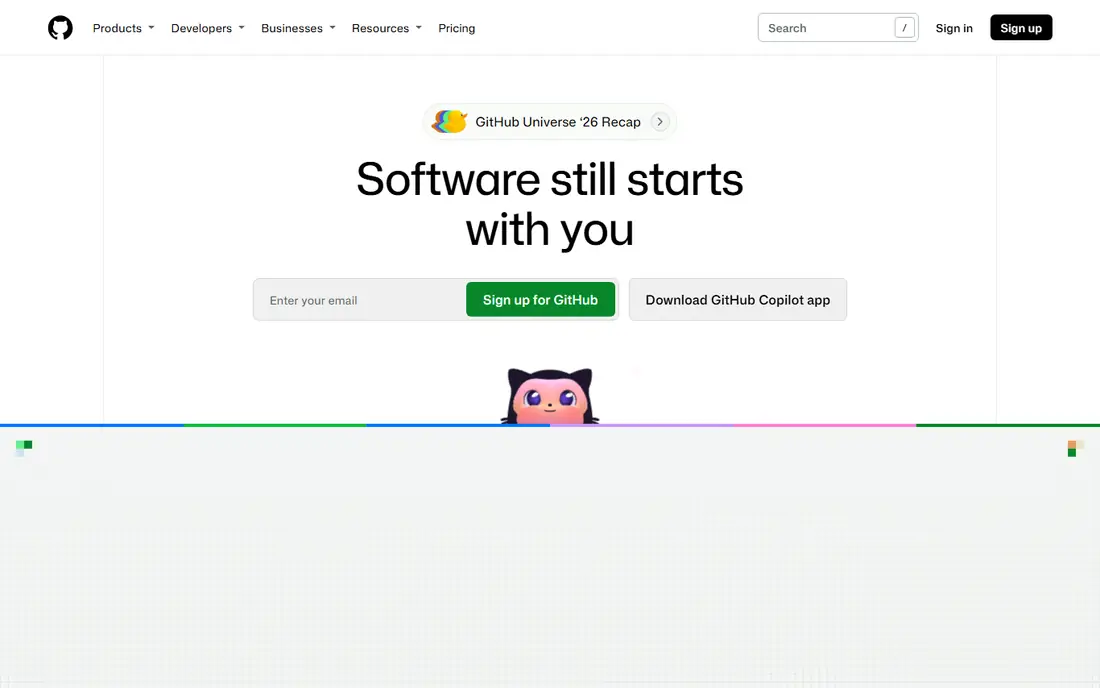
GitHub pull requests remain the default review surface for most distributed teams, and that familiarity is a genuine advantage. Reviewers already know the interface, suggested changes and code owners work out of the box, and the integration ecosystem covers CI, security scanning and project tracking. For a team already hosting code on GitHub, there is nothing to install and no new workflow to teach.
The limits show up at scale. Big pull requests are hard to review in one sitting, and GitHub has no native stacked PR workflow, so teams either keep changes small by discipline or add a tool like Graphite. AI review through Copilot is available but paid, and it now consumes metered credits on private repositories. As a starting point, though, GitHub pull requests are hard to beat.
- Built into the platform teams already use
- Huge ecosystem
- Copilot review available as an add-on
- No stacked PR workflow built in
- AI review costs extra and uses metered credits
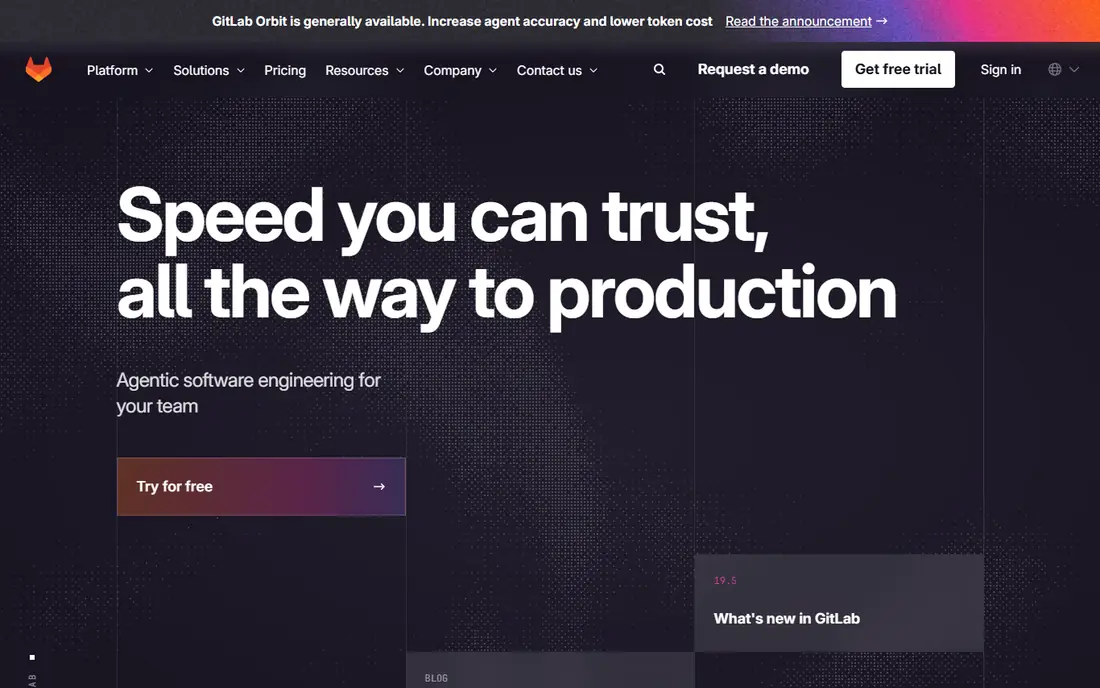
GitLab merge requests give distributed teams review, testing and deployment in a single place, which removes a whole class of integration work. Approvals rules let teams require specific reviewers for sensitive paths, and the built-in CI pipeline runs tests on every merge request without wiring up a separate service. For organizations that want one platform rather than a patchwork of tools, that completeness matters.
The trade-off is weight. Small teams sometimes find GitLab's interface busier than GitHub's, and the more advanced AI review features require paid tiers. If your code already lives on GitLab, though, its merge requests cover the review job without a second subscription.
- Review, CI and approvals in one platform
- No extra tool to buy
- Strong permission controls
- AI review features sit on paid tiers
- Interface feels heavier than GitHub for small teams
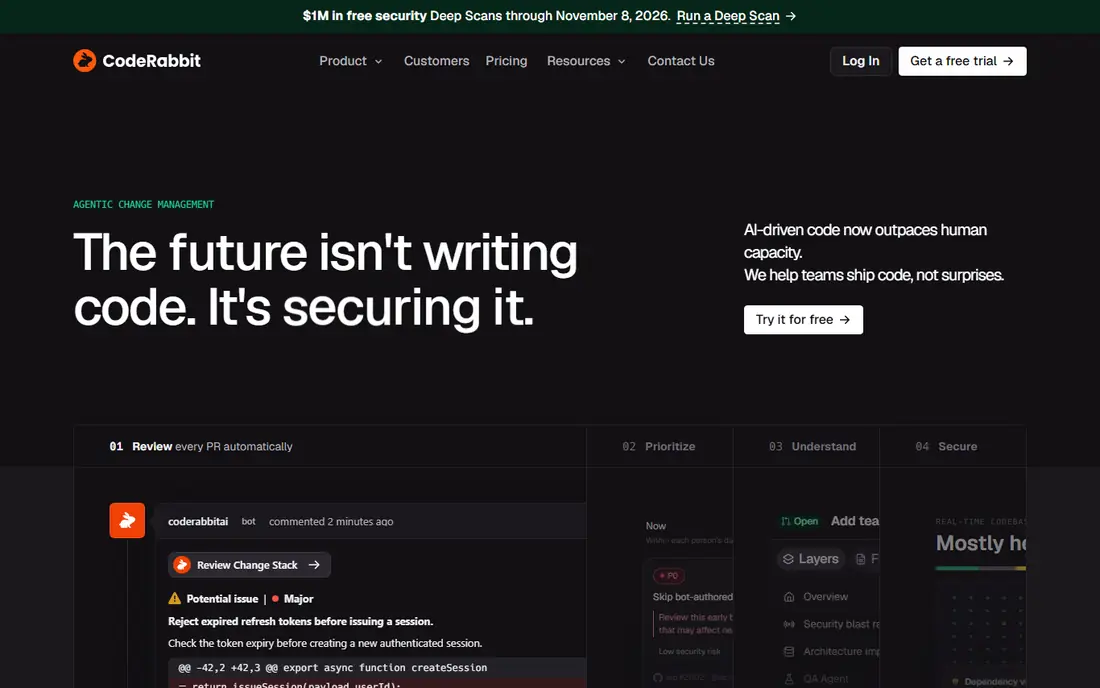
CodeRabbit pioneered the AI reviewer that comments on every pull request before a human opens it, and it remains the broadest option in the category. It reviews across GitHub, GitLab, Azure DevOps and Bitbucket, learns a team's coding guidelines, and can suggest fixes that authors apply with a click. Recent versions add triage that ranks the PR queue, so reviewers start with the riskiest changes.
The cost is per developer, which adds up fast on a large team, and the review output needs tuning: left on default settings, it can comment more than reviewers want to read. Teams that tune its profiles and treat it as a first pass, not a final verdict, get the most from it.
- Reviews every PR within minutes
- Learns team coding guidelines
- Works across GitHub, GitLab and Bitbucket
- Per-developer pricing adds up on large teams
- Chatty output needs tuning to stay useful
Graphite changes the review workflow instead of just commenting on it. Developers break work into stacks of small, dependent pull requests, each easy to review on its own, and Graphite's merge queue lands them in order. That structure directly attacks the biggest distributed-team problem: giant PRs that sit unreviewed for days. Its AI reviewer, bundled into the platform, comments on every PR in the stack.
The catch is commitment. Graphite works with GitHub only, and stacking is a habit teams must learn, with a CLI and new mental model. Teams that adopt it usually report faster review cycles, but the first two weeks feel different from plain GitHub flow.
- Stacked PRs keep changes small and reviewable
- Merge queue handles landing order
- Built-in AI reviewer
- GitHub only
- The stacking workflow takes a week or two to learn
Greptile stands out by reviewing with full codebase context rather than only the changed lines, which helps it catch multi-file logic bugs that diff-only reviewers miss. Its pricing is usage-based: a free Starter tier includes 50 credits a month, and paid reviews cost $1 per credit, with deeper reviews using more credits. Self-hosting is available for teams that cannot send code to a vendor cloud.
Usage pricing cuts both ways. Small teams may pay less than per-seat tools, but a month of heavy reviewing can cost more than expected if every PR gets the deepest review tier. For teams whose bugs hide across files rather than inside one function, Greptile is a strong pick.
- Reads the whole codebase, not just the diff
- Usage pricing with no seat fees
- Self-hosting available
- Credit costs vary with review depth
- Fewer platform integrations than CodeRabbit
Qodo Merge (formerly PR-Agent) builds its reviews around rules mined from a team's own history, so feedback reflects the standards reviewers actually enforce rather than generic style advice. Its cross-repo review reasons across services that depend on each other, catching breaking changes in shared libraries before merge. The homepage states a credit-based Pro Team plan at $0.012 per credit, pooled across the team, with a 14-day trial.
The credit model needs watching, since heavy months cost more, and Qodo's governance pitch is newer than CodeRabbit's track record. For teams that care about consistent standards and audit trails, especially in regulated work, Qodo's rule system is a real differentiator.
- Rules mined from your own PR history
- Cross-repo review
- Zero data retention option
- Credit model needs monitoring
- Newest positioning means fewer public case studies
Codacy pairs its AI reviewer with static analysis, security scanning, secret detection and coverage, so a pull request gets a quality verdict rather than just comments. Quality gates can block merges that drop below a team's thresholds, which gives distributed teams a consistent bar regardless of who is online. It integrates with GitHub, GitLab and Bitbucket.
Because review is one part of a broader platform, teams that only want an AI reviewer may find Codacy broader than they need. For teams that want review, quality and security gates in one subscription, it is good value at $15 per developer per month.
- Review plus static analysis, security and coverage in one tool
- Quality gates block bad merges
- AI reviewer is one feature among many
- Per-developer pricing
Gerrit takes a stricter approach than the hosted platforms: every change is reviewed as a patch set before it can merge, with fine-grained permissions over who can approve what. Large organizations with strict compliance needs have used it for years, and its audit trail is thorough. As open source software, it costs nothing to license.
The price is operational. Gerrit needs self-hosting, maintenance and training, and its interface feels dated next to GitHub and GitLab. For most distributed product teams, a hosted platform is the better choice, but for organizations where control and audit matter more than convenience, Gerrit remains a serious option.
- Free and open source
- Fine-grained access control
- Every change reviewed before merge
- Dated interface
- Needs self-hosting and maintenance
- Smaller community than GitHub tools
How we picked these
We compared official feature pages, pricing pages and documentation for each tool, and checked that the homepages listed here belong to the products named. We favored tools that work for teams spread across time zones: fast first-pass feedback, clear reviewer assignment, and workflows that keep changes reviewable. Prices come from vendor pages and recent pricing roundups, and we use "See website" where a figure could not be confirmed.
What to check before you choose
Start with where your code lives, since GitHub and GitLab already include solid review tools and switching platforms for review alone rarely pays. Next, name your bottleneck: if reviews are slow because PRs are huge, Graphite's stacking helps more than any AI commenter, while if reviewers miss bugs, CodeRabbit, Greptile or Qodo add a fast first pass. Finally, model the pricing honestly. Per-developer seats are predictable, while credit models reward light months and punish heavy ones, so check how many reviews your team actually runs each month before committing.
Frequently asked questions
What is the best code review tool for a distributed team?
It depends on the bottleneck. GitHub or GitLab built-in reviews suit most teams, CodeRabbit or Greptile add the strongest AI first pass, and Graphite fixes slow reviews caused by oversized pull requests.
Do AI code reviewers replace human reviewers?
No. They catch style issues, common bugs and security patterns within minutes, but design judgment, product context and final approval still need people. Treat AI output as a first pass that makes human review faster and more focused.
How much does CodeRabbit cost?
CodeRabbit offers a free tier, and paid plans start at $24 per developer per month for the Pro tier, with pricing varying by plan and billing period. Check the vendor pricing page before buying.
What are stacked pull requests?
Stacked pull requests break one large change into a series of small, dependent PRs that reviewers can approve one at a time. Graphite is built around this workflow, and it keeps review queues moving for distributed teams.
Can I self-host a code review tool?
Yes. Gerrit is free open source software you host yourself, and Greptile offers self-hosting for teams that cannot send code to a vendor cloud. Self-hosting trades subscription cost for maintenance work.
Sources we checked (8)

Online Jobs is an independent blog about careers, online work, learning new skills and the tools that help people earn. More about us.
Keep reading
All posts
Workday Alternatives
We compared the best workday alternatives for HR, payroll, and global hiring, from BambooHR and Gusto to Rippling, Deel, and HiBob for growing teams in 2026.

Which SaaS Tools Have the Best Customer Support
Which SaaS tools have the best customer support? Compare eight popular tools on help centres, live help, response options and overall support quality.
Top AI Helpdesk Software
Searching for top AI helpdesk software in 2026? We compared 8 AI helpdesks on automation, pricing, channels and ease of setup for small and growing teams.