Best Cloud Security Companies in 2026: 9 Tools Compared

How we put this together: we compare official feature and pricing pages, app store listings, privacy policies and public user reviews. Prices change, so check the provider's site before you pay.
Key takeaways
- Wiz and Orca lead for fast agentless visibility across multiple clouds, with attack path views that help teams fix the riskiest issues first.
- Palo Alto Cortex Cloud suits firms already standardised on Palo Alto tools, while Defender for Cloud suits Azure heavy estates.
- CrowdStrike and SentinelOne suit firms that want cloud protection tied closely to endpoint detection and response.
- Most pricing here is quote based, so a pilot on your real accounts gives a better cost picture than any headline price.
Quick comparison
| Name | Who it suits | Starting price | Free option | |
|---|---|---|---|---|
 Wiz | Multicloud visibility and risk ranking | See website | Free trial | Visit |
 Palo Alto Cortex Cloud | Palo Alto centred estates | See website | Free trial | Visit |
 Microsoft Defender for Cloud | Azure heavy estates | See website | Yes | Visit |
 CrowdStrike Falcon Cloud Security | Endpoint tied cloud protection | See website | Free trial | Visit |
 Orca Security | Fast agentless coverage | See website | Free trial | Visit |
 SentinelOne Singularity Cloud | Exploit validated cloud findings | See website | Free trial | Visit |
 Trend Micro Cloud One | Compliance focused cloud teams | See website | Free trial | Visit |
 Zscaler | Zero trust access for cloud users | See website | Free trial | Visit |
 Check Point CloudGuard | Multi cloud compliance and network security | See website | Free trial | Visit |
The best best cloud security platforms
We compared the current options for best cloud security companies by checking vendor sites, plan limits, and core features, then ranked them by fit for common users rather than by marketing claims. Our pick for most readers is Wiz, but the right choice depends on your budget, audience, and the workflow you will actually use every week.
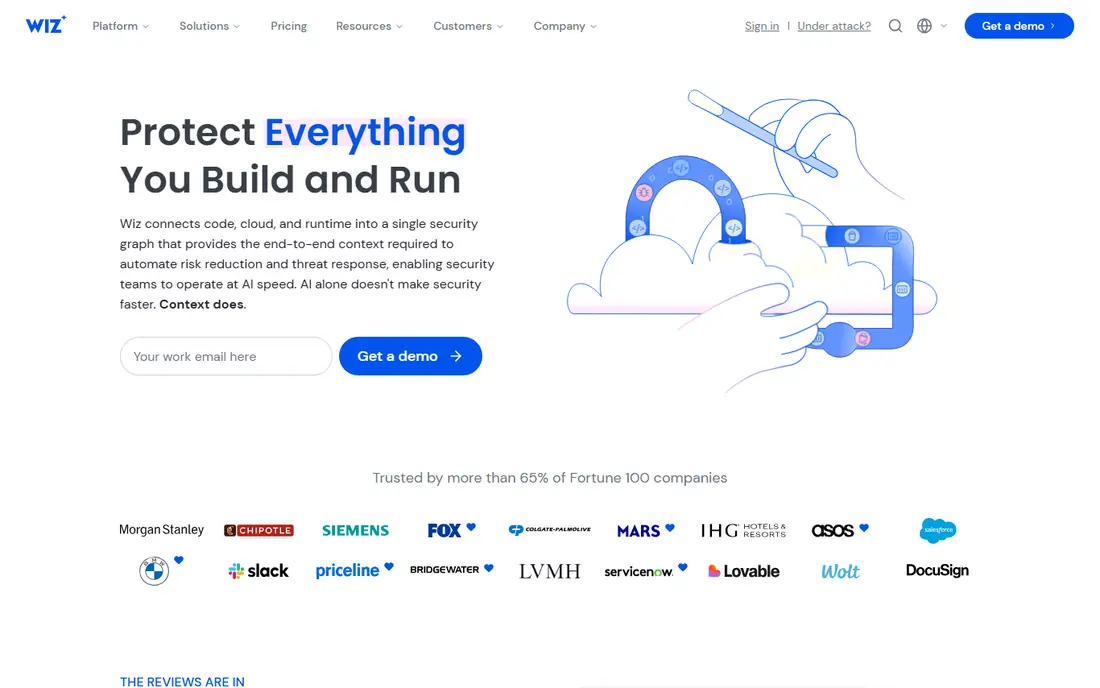
Start with Wiz when multicloud visibility and risk ranking matters most. Its strengths include agentless scanning across clouds, attack path views for toxic combinations, and fast time to first full inventory. In practice, that means less time spent on setup and more time on the work itself, provided the plan you choose covers the features you will use most often.
The honest catch is that quote based pricing, while runtime depth varies by workload type can also frustrate. Before committing, trial the core workflow with your own data, confirm the plan limits in writing, and compare the total cost at your real team or list size rather than the headline starter price.
- Agentless scanning across clouds
- Attack path views for toxic combinations
- Fast time to first full inventory
- Quote based pricing
- Runtime depth varies by workload type

Palo Alto Cortex Cloud suits palo Alto centred estates better than most rivals in this list. Its strengths include code to cloud coverage in one platform, strong network and workload controls, and good soc integration for large teams. In practice, that means less time spent on setup and more time on the work itself, provided the plan you choose covers the features you will use most often.
No product here is perfect, and Palo Alto Cortex Cloud is no exception: complex for small teams, while cost can rise with modules can also frustrate. Before committing, trial the core workflow with your own data, confirm the plan limits in writing, and compare the total cost at your real team or list size rather than the headline starter price.
- Code to cloud coverage in one platform
- Strong network and workload controls
- Good SOC integration for large teams
- Complex for small teams
- Cost can rise with modules
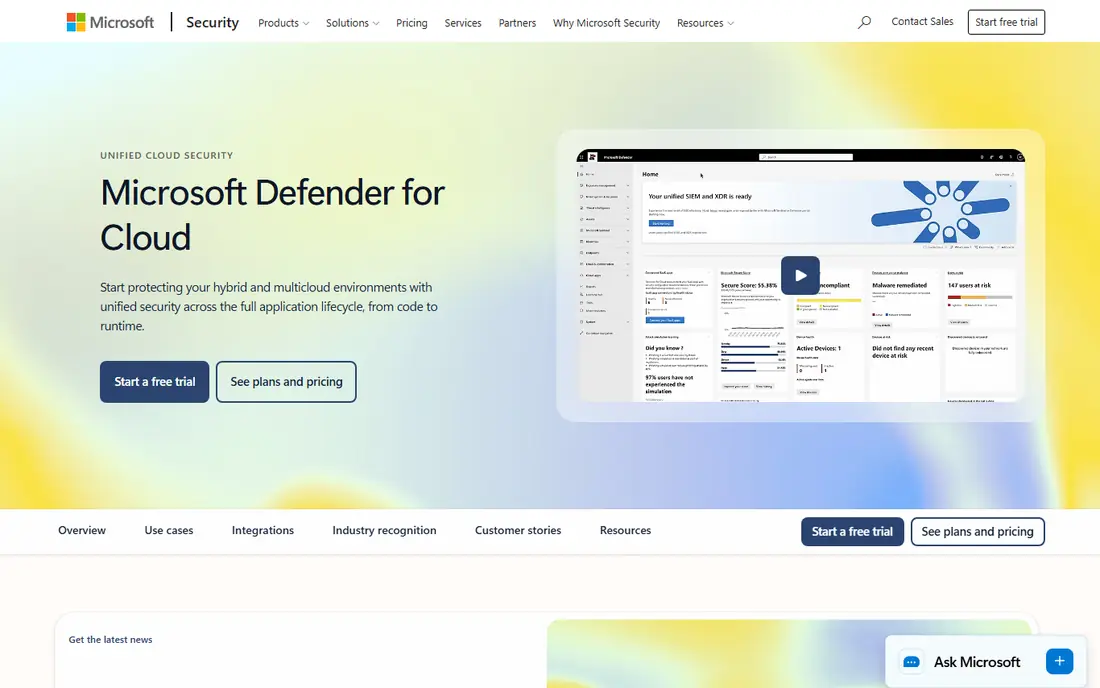
If azure heavy estates is the priority, Microsoft Defender for Cloud deserves a close look. Its strengths include native azure posture and alerts, foundational tier at no extra licence cost, and good microsoft security integration. In practice, that means less time spent on setup and more time on the work itself, provided the plan you choose covers the features you will use most often.
The main trade-off with Microsoft Defender for Cloud is that weakest outside azure for some teams, while full value needs other microsoft tools can also frustrate. Before committing, trial the core workflow with your own data, confirm the plan limits in writing, and compare the total cost at your real team or list size rather than the headline starter price.
- Native Azure posture and alerts
- Foundational tier at no extra licence cost
- Good Microsoft security integration
- Weakest outside Azure for some teams
- Full value needs other Microsoft tools
CrowdStrike Falcon Cloud Security
Who it suits: Endpoint tied cloud protection
Teams looking for endpoint tied cloud protection will find CrowdStrike Falcon Cloud Security a practical choice. Its strengths include strong runtime workload protection, unified agent for endpoint and cloud, and managed threat hunting options. In practice, that means less time spent on setup and more time on the work itself, provided the plan you choose covers the features you will use most often.
Before you commit, note that module pricing can add up, while deepest value inside crowdstrike tools can also frustrate. Before committing, trial the core workflow with your own data, confirm the plan limits in writing, and compare the total cost at your real team or list size rather than the headline starter price.
- Strong runtime workload protection
- Unified agent for endpoint and cloud
- Managed threat hunting options
- Module pricing can add up
- Deepest value inside CrowdStrike tools
Orca Security earns its place here by serving fast agentless coverage well. Its strengths include agentless scanning with wide cloud coverage, clear risk ranking for cloud assets, and fast deployment without agents. In practice, that means less time spent on setup and more time on the work itself, provided the plan you choose covers the features you will use most often.
The catch worth knowing is that quote based pricing, while some runtime features need agents can also frustrate. Before committing, trial the core workflow with your own data, confirm the plan limits in writing, and compare the total cost at your real team or list size rather than the headline starter price.
- Agentless scanning with wide cloud coverage
- Clear risk ranking for cloud assets
- Fast deployment without agents
- Quote based pricing
- Some runtime features need agents
SentinelOne Singularity Cloud
Who it suits: Exploit validated cloud findings
For exploit validated cloud findings, SentinelOne Singularity Cloud offers a clear and workable route. Its strengths include runtime detection for cloud workloads, validation that cuts noisy alerts, and good endpoint to cloud story. In practice, that means less time spent on setup and more time on the work itself, provided the plan you choose covers the features you will use most often.
A fair warning is that smaller cloud ecosystem than leaders, while pricing is quote based can also frustrate. Before committing, trial the core workflow with your own data, confirm the plan limits in writing, and compare the total cost at your real team or list size rather than the headline starter price.
- Runtime detection for cloud workloads
- Validation that cuts noisy alerts
- Good endpoint to cloud story
- Smaller cloud ecosystem than leaders
- Pricing is quote based
Consider Trend Micro Cloud One first when compliance focused cloud teams shapes the decision. Its strengths include compliance checks across clouds, workload and container protection, and long history in workload security. In practice, that means less time spent on setup and more time on the work itself, provided the plan you choose covers the features you will use most often.
The downside to weigh is that interface spans many modules, while pricing varies by workload count can also frustrate. Before committing, trial the core workflow with your own data, confirm the plan limits in writing, and compare the total cost at your real team or list size rather than the headline starter price.
- Compliance checks across clouds
- Workload and container protection
- Long history in workload security
- Interface spans many modules
- Pricing varies by workload count
Zscaler is built around zero trust access for cloud users, and that focus shows in daily use. Its strengths include zero trust access without legacy vpn, good for distributed workforces, and strong web and app access controls. In practice, that means less time spent on setup and more time on the work itself, provided the plan you choose covers the features you will use most often.
One limit to plan around is that not a full posture platform alone, while best paired with posture tools can also frustrate. Before committing, trial the core workflow with your own data, confirm the plan limits in writing, and compare the total cost at your real team or list size rather than the headline starter price.
- Zero trust access without legacy VPN
- Good for distributed workforces
- Strong web and app access controls
- Not a full posture platform alone
- Best paired with posture tools
Check Point CloudGuard
Who it suits: Multi cloud compliance and network security
When the job is multi cloud compliance and network security, Check Point CloudGuard is worth shortlisting early. Its strengths include network security for cloud estates, compliance and posture checks, and good for hybrid cloud networks. In practice, that means less time spent on setup and more time on the work itself, provided the plan you choose covers the features you will use most often.
The weaker side of Check Point CloudGuard is that setup can be complex, while pricing is quote based can also frustrate. Before committing, trial the core workflow with your own data, confirm the plan limits in writing, and compare the total cost at your real team or list size rather than the headline starter price.
- Network security for cloud estates
- Compliance and posture checks
- Good for hybrid cloud networks
- Setup can be complex
- Pricing is quote based
How we picked these
We compared vendors that still sell a cloud security platform in October 2026, checking product pages for posture management, workload protection, container security, and identity risk features. We kept platforms that cover more than one cloud or a clear enterprise niche, and we excluded point tools that only scan code or only block web traffic. Pricing is shown as quote based where vendors do not publish a plan price, because inventing a price for enterprise security would mislead buyers.
We did not claim hands-on testing we did not do, and we did not invent ratings, user counts, or awards. Where a vendor uses quote based pricing, we say so, because a guessed price would be worse than no price for a reader planning a budget.
Buy for coverage, ranking, and response, not for alert count
Start with a full inventory
A platform that cannot see every account, region, and workload will miss the riskiest assets. Run a trial on real accounts, including shadow accounts and old test projects, and compare the inventory against your cloud billing and identity lists.
Judge risk ranking on your worst issues
Ask each vendor to show its top ten risks for your estate and explain why those rank first. Good ranking combines exposure, vulnerability, identity privilege, and data sensitivity, rather than listing every misconfiguration as equal.
Plan who fixes what
Visibility without ownership fails fast. Assign each risk type to a team, set fix deadlines by risk level, and check whether the platform creates tickets, tracks fixes, and proves closure. If the tool only reports, the same findings will return next quarter.
Frequently asked questions
What is the best cloud security company overall?
Wiz is our pick for multicloud visibility and risk ranking, especially for teams that want fast agentless coverage. Palo Alto Cortex Cloud and Microsoft Defender for Cloud can be better picks inside their own ecosystems, so the best overall choice depends on your existing stack.
What is the best cloud cybersecurity company for small teams?
Small teams should start with the native tools in their main cloud, such as Defender for Cloud on Azure, then add a posture platform only when the estate grows. A full enterprise platform can overwhelm a small team with alerts it cannot staff.
Do cloud security companies offer free trials?
Most enterprise vendors offer a trial or a proof of concept rather than a self serve free plan. Use that trial on real accounts, and ask in writing what counts as a billable workload, account, or resource before you sign.
What is the difference between posture and workload protection?
Posture tools find misconfigurations and risky permissions. Workload protection watches running machines and containers for attacks and exploits. Most estates need both, because a well configured workload can still be attacked, and a protected workload can still leak data through a bad permission.
How much does cloud security cost?
Most pricing is quote based and tied to accounts, resources, or workloads, so costs vary widely by estate size. Get quotes from at least two vendors on the same account list, and include support, onboarding, and any runtime agent costs in the comparison.
Sources we checked (5)

Online Jobs is an independent blog about careers, online work, learning new skills and the tools that help people earn. More about us.
Keep reading
All posts
n8n Alternatives
n8n alternatives compared for 2026, with Zapier, Make, Activepieces, and more, covering visual builders, code steps, self-hosting, and pricing models.

ZoomInfo Alternatives
The best ZoomInfo alternatives in 2026, compared on price, free plans, data coverage, and which tool fits small teams or large sales teams best in detail.
Workday Alternatives
We compared the best workday alternatives for HR, payroll, and global hiring, from BambooHR and Gusto to Rippling, Deel, and HiBob for growing teams in 2026.