Best Cell Phone Service Providers in 2026: 9 Providers Compared

How we put this together: we compare official feature and pricing pages, app store listings, privacy policies and public user reviews. Prices change, so check the provider's site before you pay.
Key takeaways
- Verizon, AT&T, and T-Mobile run the three national networks, while smaller providers lease access to those networks at lower prices.
- Visible at $25 per month is a strong low-cost unlimited pick on the Verizon network, with taxes and fees included in that price.
- Mint Mobile suits buyers willing to prepay for several months to get a lower monthly rate on the T-Mobile network.
- Coverage at your home, work, and commute matters more than a national coverage map, so test with a trial or a short-term plan first.
- Check whether taxes and fees are included, since a low advertised price can rise on the final bill at some carriers.
Quick comparison
| Name | Who it suits | Starting price | Free option | |
|---|---|---|---|---|
 Verizon | Widest national coverage | See website | No | Visit |
 AT&T | Balanced coverage and bundles | See website | No | Visit |
 T-Mobile | Value postpaid plans | See website | No | Visit |
 Mint Mobile | Low prepaid prices | See website | No | Visit |
 Visible | Low-cost Verizon unlimited | $25 per month | No | Visit |
 US Mobile | Choice of network | See website | No | Visit |
 Cricket Wireless | AT&T coverage with stores | See website | No | Visit |
 Metro by T-Mobile | T-Mobile coverage with stores | See website | No | Visit |
 Google Fi | Flexible plans for travellers | See website | No | Visit |
The best cell phone service providers
Cell service in the US comes from three national networks, plus smaller providers that use those networks. The best provider is the one with strong coverage where you actually live and travel, at a price that fits how much data you use. Plan prices, taxes, hotspot rules, and phone deals all change the real cost, so compare the full monthly bill, not just the headline rate.
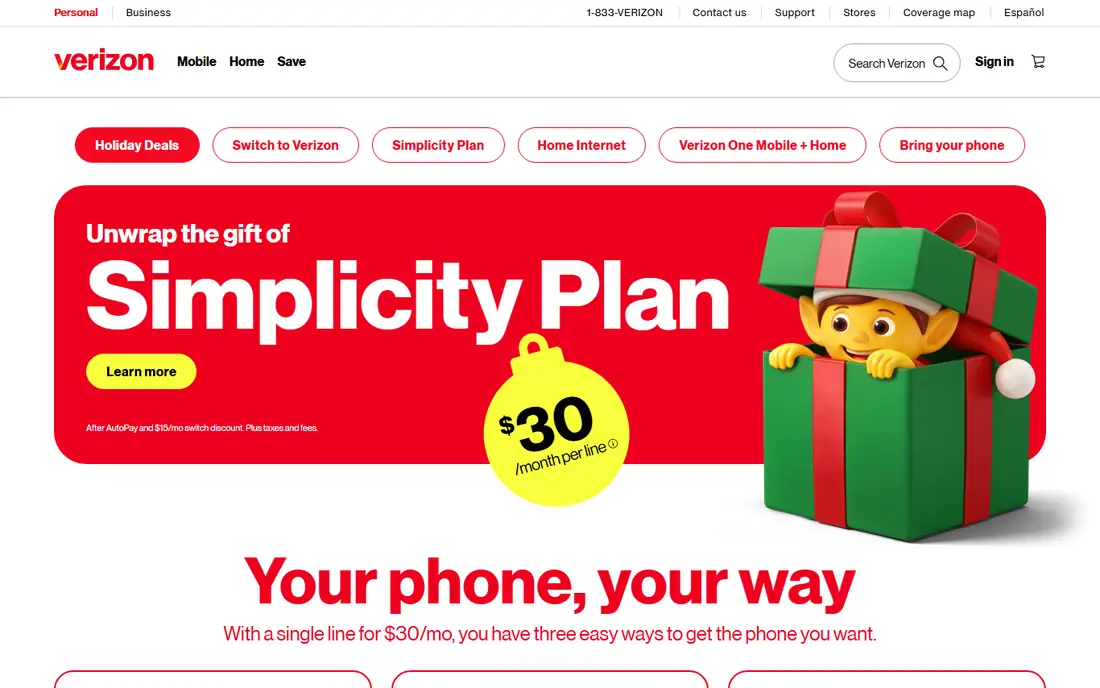
Verizon suits buyers who prioritise coverage above the lowest price, especially outside cities. Its network reaches many rural and highway areas where smaller providers may be thinner, and its plan range covers single lines, families, and business users. Store support is widely available for setup, trade-ins, and device help.
The trade-off is price. Verizon postpaid plans usually cost more than prepaid plans on the same network, and advertised prices on some plans exclude taxes and fees. Buyers who want Verizon coverage at a lower price should also compare Visible, which uses the Verizon network with a simpler plan structure.
- Strong national coverage, including rural areas
- Wide phone and plan range
- Store and online support
- Postpaid plans cost more than prepaid rivals
- Taxes and fees can add to advertised prices on some plans
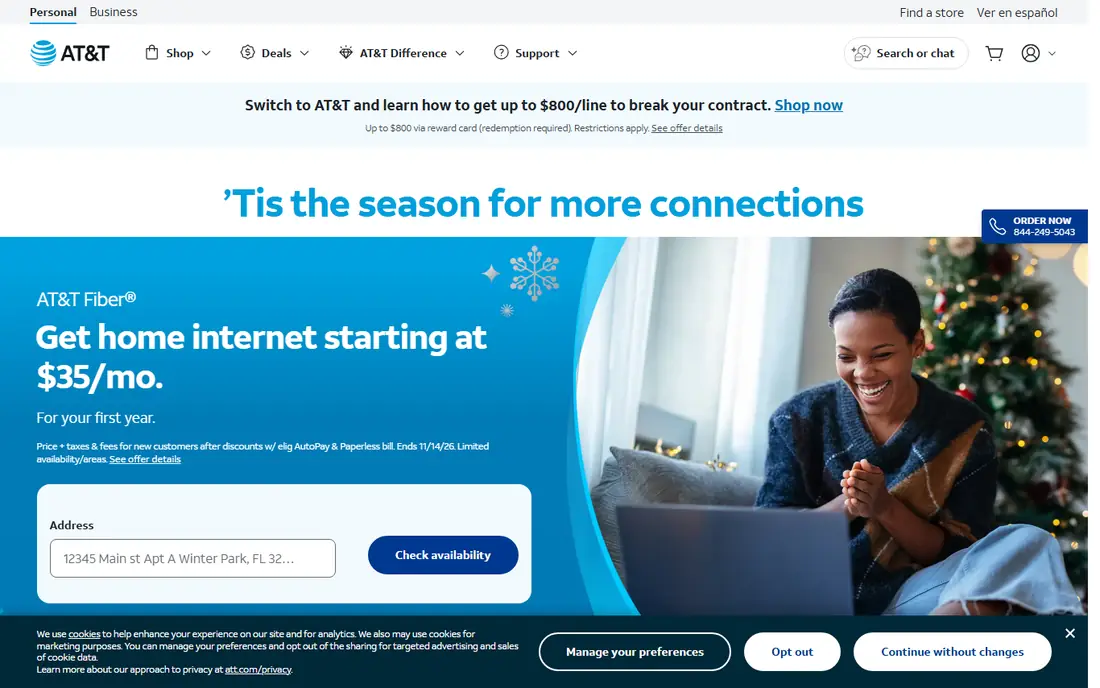
AT&T suits households that want a national carrier plus bundle options. Coverage is strong across much of the US, and some households can bundle mobile with home internet or TV for a simpler bill. The store network helps with in-person setup, device swaps, and family plan changes.
AT&T postpaid plans cost more than prepaid plans on its network, such as Cricket Wireless, so buyers should compare both before signing. Plan names, perks, and fees change often, so the current plan page is the source to trust. For a household that values bundles and stores, AT&T is a solid national pick.
- Strong national coverage
- Bundles with internet and TV for some households
- Wide store network
- Postpaid pricing is higher than prepaid options
- Plan details and fees vary by plan
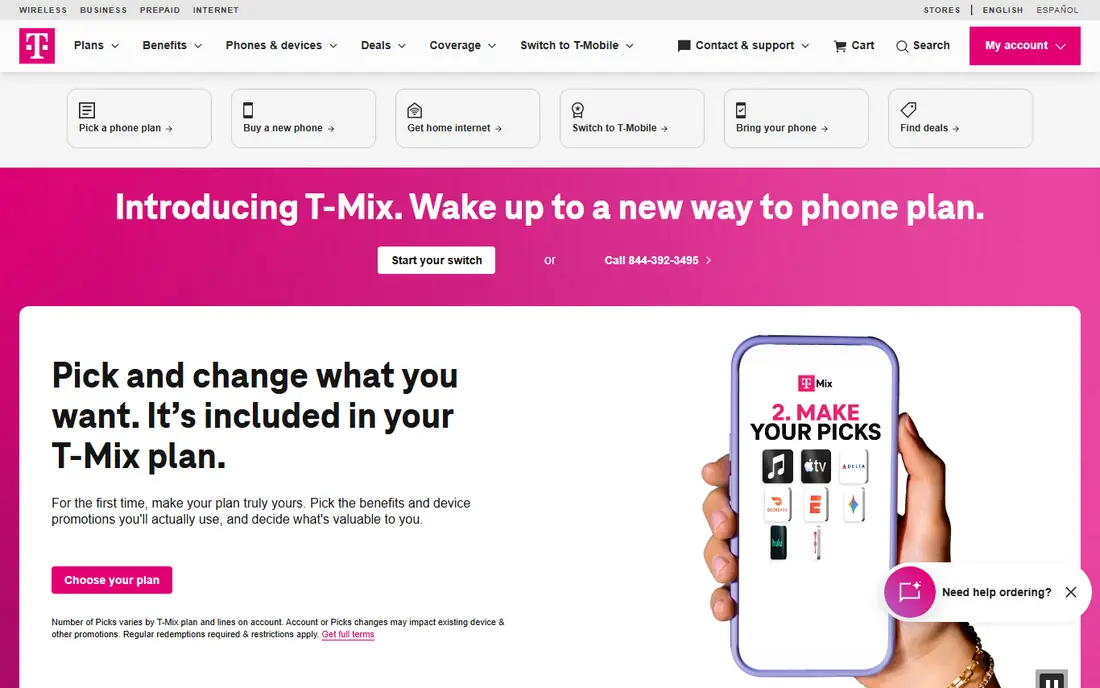
T-Mobile suits families and urban users who want postpaid service without the highest national carrier prices. Family plans, in particular, can bring the per-line cost down well below single-line postpaid rates. Higher plans add perks such as streaming or travel benefits, which some households will use and others will not.
Rural coverage is the main check. T-Mobile has improved coverage a great deal, but some rural areas still favour Verizon or AT&T, so a coverage check for home and commute matters. Buyers who want T-Mobile coverage at a lower price should also look at Mint Mobile and Metro by T-Mobile.
- Competitive postpaid prices for families
- Strong urban and suburban coverage
- Perks on higher plans
- Rural coverage can vary by area
- Taxes and fees add to some plan prices
Mint Mobile suits buyers who know their data use and are happy to prepay for three, six, or twelve months to cut the monthly rate. It runs on the T-Mobile network, offers unlimited and limited data plans, and keeps setup online and simple. For a single line with steady use, Mint is often one of the cheapest ways to get national network service.
The catch is commitment and billing. The lowest monthly equivalent usually needs a longer prepayment, and taxes and fees are added on top of some advertised prices. Buyers unsure about T-Mobile coverage at home should test with a short plan first. For confident prepaid buyers, Mint gives strong value.
- Low monthly rates when prepaying for months ahead
- Runs on the T-Mobile network
- Simple online setup
- Best prices need upfront prepayment
- Taxes and fees are added to some prices
Visible is our low-cost unlimited pick for buyers who want Verizon coverage without a Verizon postpaid bill. The base plan is listed at $25 per month, with taxes and fees included, which makes the final bill easy to predict. There is no annual contract, so buyers can leave if coverage or service does not suit them.
Support is the main trade-off, since help is mainly through online chat rather than stores or phone lines. Hotspot speed is also capped on the base plan, so heavy hotspot users should check the higher plan. For a single unlimited line on Verizon coverage, Visible is hard to beat on price clarity.
- Unlimited data on the Verizon network
- Taxes and fees included in the listed price
- No annual contract
- Support is mainly online chat
- Hotspot speed is capped on the base plan
US Mobile suits buyers who want to choose the network that works best at their address, rather than accepting one carrier. It offers service on major networks, with taxes and fees included in listed prices, and plans range from low-cost flexible options to unlimited plans with hotspot data. That choice helps households where one network covers home well and another covers work better.
The choice itself can be confusing, since buyers must pick a network during setup and may need help deciding. Perks such as streaming bundles are thinner than on national carrier plans. For buyers who care most about coverage at a specific address and a clear final price, US Mobile is a flexible option.
- Lets buyers pick among major networks
- Taxes and fees included in listed prices
- Flexible unlimited and shared plans
- Network choice can confuse first-time buyers
- Perks are thinner than national carrier plans
Cricket Wireless suits buyers who want AT&T coverage with store help and a clear price. It is owned by AT&T, runs on its network, and includes taxes and fees in listed prices, so the bill matches the advertised rate more closely than some postpaid plans. Stores across the US help with setup, device transfers, and family plans.
In busy network times, Cricket data can be prioritised below AT&T postpaid traffic, which may slow speeds in crowded places. Hotspot data is also limited or absent on some plans, so hotspot users should check plan details. For AT&T coverage with stores and a simple bill, Cricket is a strong prepaid pick.
- Runs on the AT&T network
- Taxes and fees included in listed prices
- Thousands of stores for in-person help
- Data speeds can be prioritised below AT&T postpaid in busy times
- Hotspot is limited on some plans
Metro by T-Mobile suits buyers who want T-Mobile coverage with a store nearby and a price that includes taxes and fees. Plans include unlimited options, and stores help with activation, device setup, and account changes. Promotions for new customers appear often, which can lower the first months of service.
As with other prepaid brands, data can be prioritised below postpaid traffic when the network is busy. Promotion prices also change, so buyers should note the regular price after any intro period. For T-Mobile coverage with in-person help, Metro is a practical alternative to a postpaid plan.
- Runs on the T-Mobile network
- Taxes and fees included in listed prices
- Stores for in-person help
- Data can be prioritised below T-Mobile postpaid in busy times
- Plan perks vary by promotion
Google Fi suits travellers and light data users who want flexible billing. Its flexible plan charges for data used, while unlimited plans suit heavier users, and international roaming is included in many destinations on eligible plans. That mix helps people who travel often and do not want a separate travel SIM for each trip.
The full network-switching experience works best on phones designed for Fi, while other phones may use a single network. Heavy data users on the flexible plan can also see costs rise, so an unlimited plan is usually better for them. For flexible, travel-friendly service, Google Fi is a distinct and useful option.
- Flexible data pricing
- International roaming in many destinations
- Works with a wide range of phones
- Best network switching features need a Fi-designed phone
- Data costs can rise for heavy users on flexible plans
How we picked these
We compared official carrier plan pages, network coverage, plan prices, taxes and fees treatment, hotspot rules, and support options for US providers. We kept national carriers and prepaid providers with current US service, and we favoured providers with clear published prices. Plan prices and promotions change often, so we note where taxes and fees are included and advise checking the current plan page before switching.
How to choose a cell phone service provider
Start with coverage, then data, then price. Ask friends or neighbours about service at your home, check coverage maps for work and commute routes, and consider a trial or short-term plan before porting a main number. A cheap plan on a weak network at home is not a bargain.
Work out real data use
Check past data use in your current carrier app for three months, ignoring months with unusual travel. Light users under a few gigabytes a month can save with a limited plan, while video-heavy users usually need unlimited. Hotspot use counts separately on many plans, so check hotspot allowances if you tether a laptop.
Compare the final bill, not the headline price
Some carriers include taxes and fees in the listed price, while others add them later. Add device payments, insurance, and add-ons to the plan price to get the true monthly cost. Family plans also change the maths, since per-line prices fall as lines are added on many postpaid plans.
Check phone compatibility and deals
Confirm your phone works on the new network and supports its main bands, especially for 5G. Trade-in and new-line deals can cut device costs, but they often need a higher plan or a long device payment term. Read the deal terms before switching, and keep your old service active until the number port completes.
Frequently asked questions
What is the best cell phone service provider?
The best provider depends on coverage at your address and data use. Verizon suits widest coverage, T-Mobile suits value postpaid families, AT&T suits bundles, and Visible suits low-cost unlimited on Verizon. Test coverage first, then compare the final monthly bill.
What are the best cell phone service providers for families?
Family plans from Verizon, AT&T, and T-Mobile bring per-line costs down as lines are added, while prepaid brands such as Cricket, Metro, and US Mobile can be cheaper for families that do not need postpaid perks. Compare the total family bill, including taxes, fees, and device payments.
What is the best service provider for cell phones on a budget?
Visible at $25 per month, Mint Mobile with prepayment, and US Mobile flexible plans are strong budget picks, depending on network and data needs. Check whether taxes and fees are included, and confirm coverage at home before committing to a longer prepayment.
Can I keep my phone number when I switch providers?
Yes, in most cases you can port your number to a new provider. Keep the old account active, have your account number and porting PIN ready, and do not cancel the old line before the port completes. Porting usually takes minutes to a day, but allow extra time for issues.
Do prepaid providers use the same networks as major carriers?
Yes, most prepaid providers lease access to Verizon, AT&T, or T-Mobile networks. Coverage is usually similar, but data speeds can be prioritised below postpaid customers when the network is busy. That difference matters most in crowded places and at peak times.
Sources we checked (9)

Online Jobs is an independent blog about careers, online work, learning new skills and the tools that help people earn. More about us.
Keep reading
All posts
Best Phone Company
Looking for the best phone company in 2026? We compared 9 US carriers on price, coverage, data and perks so you can pick the right plan for your line.

Best Google Search Alternatives
Looking for Google search alternatives with more privacy or different results? We compare eight search engines on price, privacy, results and AI answers.
Best EV Charging App
Best ev charging app picks for US drivers in 2026, compared by station coverage, payments, trip planning, and driver reports for public charging across the US.