Best Carbon Accounting Software in 2026: 9 Platforms Compared

How we put this together: we compare official feature and pricing pages, app store listings, privacy policies and public user reviews. Prices change, so check the provider's site before you pay.
Key takeaways
- Persefoni is the best free starting point, with a free tier that lets smaller teams begin measuring emissions without a large contract.
- Watershed and Sweep suit large enterprises with complex supply chains and strict audit needs, but both are quote-based and costly.
- Greenly suits small and mid-size companies that want a faster setup and European framework support.
- Most enterprise pricing is not published, so treat any third-party estimate as a starting point and get a written quote before budgeting.
- The right platform depends more on your data quality, scopes, and reporting duties than on dashboard design.
Quick comparison
| Name | Who it suits | Starting price | Free option | |
|---|---|---|---|---|
 Persefoni | Free entry and audit-grade data | Free | Yes | Visit |
 Watershed | Large enterprise programs | See website | No | Visit |
 Sweep | Supplier-heavy Scope 3 work | See website | No | Visit |
 Greenly | Small and mid-size companies | See website | No | Visit |
 Normative | Value-chain accounting | See website | No | Visit |
 Emitwise | Manufacturing supply chains | See website | No | Visit |
 Plan A | EU reporting and reduction planning | See website | No | Visit |
 IBM Envizi | Large enterprise ESG data | See website | No | Visit |
 Sphera | Regulated industries and ESG plus EHS | See website | No | Visit |
The best carbon accounting platforms
We compared official product pages, documentation, and pricing pages, and we focused on platforms that handle greenhouse gas accounting across scopes 1, 2, and 3, with audit trails and reporting support. Most enterprise vendors do not publish prices, so we use "See website" where a price is quote-based. The list below covers free entry tools, mid-market platforms, and enterprise suites.
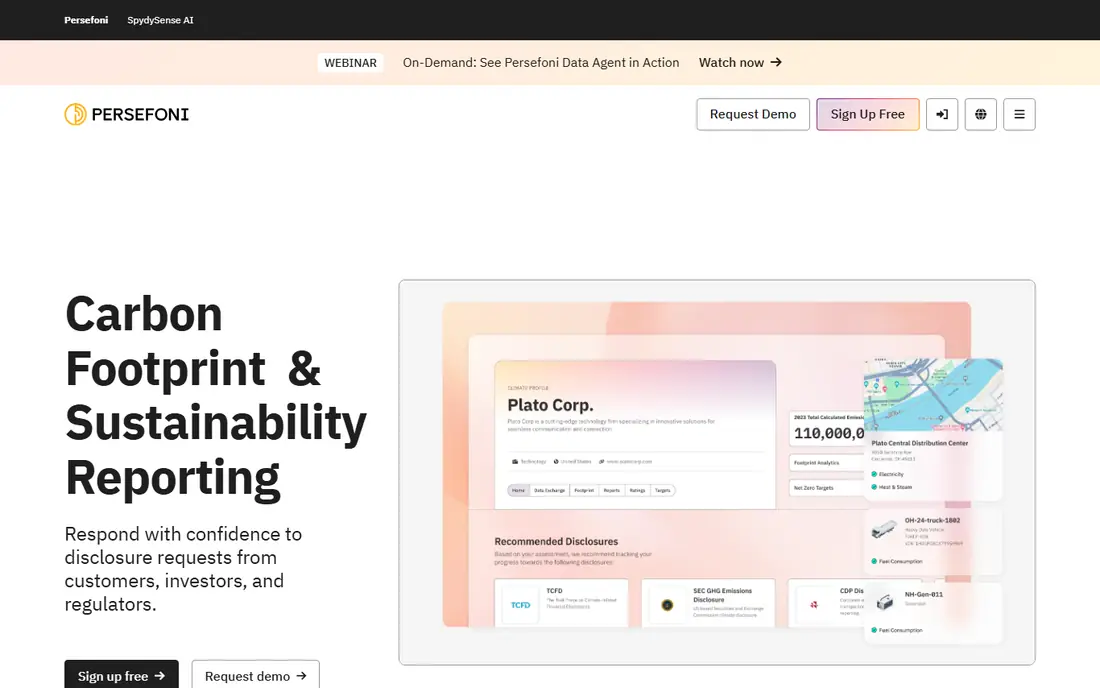
Persefoni is our pick for teams that want to start measuring without signing a large contract first. The free Pro tier covers basic carbon accounting, which lets a small company build a first footprint, test data collection, and learn what its reporting duties actually require. For financial firms and larger companies, Persefoni also supports financed emissions and investor-style reporting.
The free tier is not a full enterprise system, and advanced workflows, integrations, and advisory support sit on paid plans. Data quality remains your job in any case: a platform cannot fix missing fuel, travel, or supplier data on its own. Start with Persefoni if you want a low-risk first step with a path to a paid plan later.
- Free Pro tier for basic measurement
- Accounting approach suited to audits
- Financed emissions support
- Advanced features need a paid plan
- Setup still needs clean activity data from your team
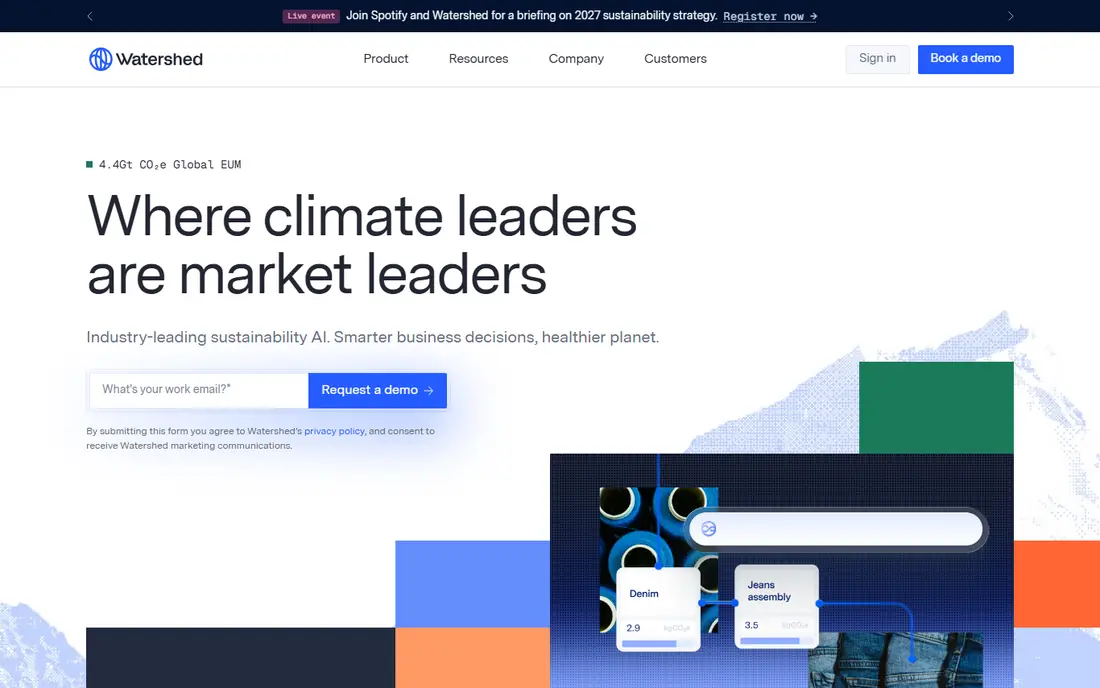
Watershed suits large companies with complex operations, many suppliers, and formal disclosure duties. It offers detailed emissions measurement, audit-ready data lineage, and reporting support for major frameworks, plus tools for planning reductions rather than just reporting a total. That depth helps sustainability teams that must defend numbers to auditors and investors.
Cost and effort are the trade-offs. Pricing is quote-based and aimed at enterprises, so smaller firms will likely find it out of reach. Implementation also needs staff time to connect finance, operations, and supplier data. For a large enterprise with a serious climate program, Watershed is a strong contender, but get a written quote early.
- Deep enterprise reporting and audit trails
- Large emission factor library
- Reduction planning tools
- Quote-based pricing, costly for smaller firms
- Implementation needs dedicated staff time
Sweep stands out when Scope 3, the emissions in your value chain, dominates your footprint. Its supplier tools help collect data from vendors, validate it, and track progress, which is often the hardest part of carbon accounting. The platform also covers wider ESG data, so a team can manage carbon and related reporting in one place.
As with Watershed, pricing is quote-based, and the platform is built for mid-size to large firms rather than a tiny business with a simple footprint. If your main problem is supplier data, Sweep deserves a demo. If your footprint is mostly energy and travel, a simpler and cheaper tool may cover it.
- Strong supplier collaboration tools
- Governed sustainability data
- ESG reporting alongside carbon
- Quote-based pricing
- May be more than a small firm needs
Greenly is a good pick for small and mid-size companies that want to start quickly without enterprise complexity. Setup is guided, frameworks for European reporting are supported, and supplier workflows help with Scope 3 without requiring a large sustainability team. That balance makes it popular with firms facing their first formal reporting duty.
Pricing is plan-based and varies, so check the current offers on the vendor site rather than relying on third-party estimates. Very large firms with complex audit needs may still prefer Watershed or Persefoni. For a growing company that needs a credible footprint soon, Greenly is a practical choice.
- Faster setup for smaller firms
- European framework support
- Supplier and reporting workflows
- Pricing varies by plan and region, so verify on the site
- Enterprise depth is thinner than Watershed
Normative focuses on automated accounting across the value chain, with a large factor database and support for science-based targets. That automation helps firms whose supplier data is messy or incomplete, since the platform can estimate and then refine as better data arrives. It also supports major frameworks for disclosure.
Pricing is quote-based, and buyers should confirm the current product and company structure on the vendor site, since Normative and Greenly have become closely linked in the market. Check whether you are buying Normative, Greenly, or a combined offer before signing. For Scope 3-heavy firms, it remains a serious option.
- Automated value-chain calculations
- Large emission factor database
- Science-based target support
- Pricing is quote-based
- Note that Normative has linked closely with Greenly in recent market changes
Emitwise suits manufacturers and industrial firms where emissions sit deep in production and supplier networks. Its tools focus on collecting supplier data, handling product-level detail, and keeping records that auditors can follow. That industrial focus sets it apart from general tools built mainly for offices and services.
A simple office footprint does not need this depth, and quote-based pricing will reflect the enterprise focus. If your emissions come from factories, materials, and logistics, Emitwise is worth a demo. If they come mainly from electricity and flights, a mid-market tool will be simpler and cheaper.
- Strong for industrial and manufacturing supply chains
- Supplier data tools
- Audit-friendly records
- Quote-based pricing
- Less suited to simple office-based footprints
Plan A pairs carbon accounting with reduction planning, so a team can move from measuring a footprint to setting actions and tracking progress. It supports EU reporting frameworks and covers all three scopes, which helps mid-size European firms facing formal disclosure. The planning tools are a real strength, not just a dashboard add-on.
Pricing is quote-based, and US-only firms with no EU duties may get equal value from a US-focused platform. For a European mid-market firm that must report and reduce, Plan A is a strong shortlist pick. Ask for a demo with your own data categories, not just a generic walkthrough.
- Carbon accounting across all scopes
- Decarbonization planning
- EU framework support
- Quote-based pricing
- EU focus may matter less for US-only firms
IBM Envizi suits large, multi-entity firms that need to gather ESG and emissions data from many sites, systems, and countries. It handles broad data capture, reporting, and analytics, and it fits firms already using IBM tools. For a global company with hundreds of locations, that scale matters.
Implementation is the catch. Connecting many data sources takes time, and pricing is enterprise-level and quote-based. Smaller firms will find mid-market tools faster and cheaper. For a large firm that needs one system across a complex estate, Envizi is a credible enterprise choice.
- Broad ESG data capture across many sites
- Strong for large multi-entity firms
- IBM ecosystem support
- Quote-based and enterprise-priced
- Implementation can be heavy
Sphera suits regulated firms that need ESG, environmental health and safety, and lifecycle data in one system. Chemical, manufacturing, and energy firms often need that breadth, since carbon is one part of a wider compliance picture. Audit trails and detailed data controls support that use.
A firm that only needs carbon accounting may find Sphera broader than required, and pricing is quote-based. If your team already manages EHS data, the combined system can save duplicate work. If carbon is your only need, start with a focused platform and add breadth later only if duties grow.
- Combines ESG, EHS, and lifecycle data
- Strong for regulated industries
- Detailed audit trails
- Quote-based pricing
- Breadth can feel complex for a carbon-only project
How we picked these
We reviewed each vendor's own product and pricing pages and documentation, and we used "See website" where pricing was quote-based or not published. We favored platforms that are actively maintained, that cover scopes 1, 2, and 3, and that support recognized frameworks such as the GHG Protocol. We did not claim hands-on testing; our comparison rests on official pages, docs, and public product descriptions.
How to choose a carbon accounting platform
Start with your reporting duty, not the software. List the frameworks you must meet, such as the GHG Protocol, CSRD, or California rules, and the scopes that matter most for your footprint. A firm with a large supply chain needs supplier tools, while a firm with mainly energy use needs strong utility data handling. That duty list will cut the shortlist faster than any feature comparison.
Next, audit your data before you buy. Gather a sample of fuel, electricity, travel, and supplier records, and ask each vendor to show how that sample flows into a footprint during a demo. A platform that cannot handle your messy real data will not improve when you sign a contract. Also check who owns the work: a platform still needs someone inside your firm to collect data, review results, and answer auditor questions.
Finally, get pricing in writing. Enterprise quotes vary by company size, entity count, and Scope 3 complexity, so a third-party estimate is not a budget. Ask what is included, what costs extra, and what happens to your data if you leave. A clear exit and data export plan matters as much as the first-year price.
Frequently asked questions
What is the best carbon accounting software for small businesses?
Persefoni's free tier is a good starting point for small firms, and Greenly suits small and mid-size companies that want guided setup and European framework support. Choose Persefoni to start free and learn your footprint, or Greenly for a more guided paid setup. Both beat a spreadsheet once reporting duties become formal.
What is the top carbon accounting software for large enterprises?
Watershed, Persefoni, and IBM Envizi are the usual enterprise picks, with Sweep strong for supplier-heavy Scope 3 programs. Watershed leads on enterprise reporting depth, Persefoni on audit-grade accounting and finance use, and Envizi on multi-site ESG data. Get written quotes from two or three vendors before deciding.
What is a carbon accounting platform?
A carbon accounting platform measures greenhouse gas emissions across scopes 1, 2, and 3, using activity data and emission factors, and turns the result into reports for frameworks such as the GHG Protocol. Scope 1 covers direct emissions, scope 2 covers purchased energy, and scope 3 covers the value chain. Good platforms keep an audit trail so results can be checked.
How much does carbon accounting software cost?
It ranges from free for Persefoni's basic tier to quote-based enterprise pricing that can run into tens or hundreds of thousands per year for large firms. Mid-market plans vary widely by size and features, so verify current pricing on the vendor site. Treat third-party estimates as a starting point and get a written quote for your firm.
Do I need carbon accounting software, or is a spreadsheet enough?
A spreadsheet can work for a very small footprint with few data sources and no formal audit need. Once you face formal reporting, many suppliers, or auditor review, a platform helps with factor updates, audit trails, and consistent calculations. Start with a spreadsheet to learn your data, then move to software when the workload or duty grows.
What is the best carbon accounting tool for Scope 3 emissions?
Sweep and Normative are strong for Scope 3, since both focus on supplier data and value-chain calculations, and Emitwise suits manufacturing supply chains. The best pick depends on whether your suppliers are many small vendors or a few large industrial partners. Ask each vendor to demo supplier onboarding with your actual supplier mix.
Sources we checked (9)

Online Jobs is an independent blog about careers, online work, learning new skills and the tools that help people earn. More about us.
Keep reading
All posts
n8n Alternatives
n8n alternatives compared for 2026, with Zapier, Make, Activepieces, and more, covering visual builders, code steps, self-hosting, and pricing models.

ZoomInfo Alternatives
The best ZoomInfo alternatives in 2026, compared on price, free plans, data coverage, and which tool fits small teams or large sales teams best in detail.
Zoom Alternatives for Webinars
Compare Zoom alternatives for webinars in 2026, from browser-based rooms to enterprise events, with prices, attendee limits, features and honest trade-offs.