Best calculator app in 2026: 8 Tools Compared

How we put this together: we compare official feature and pricing pages, app store listings, privacy policies and public user reviews. Prices change, so check the provider's site before you pay.
Key takeaways
- Our pick for most readers is PCalc, with HiPER Scientific Calculator close behind for readers who want a different balance of price and features.
- Free plans and trials matter here: check the free limits for Calcbot and Desmos before you build a workflow around them.
- The cheapest entry price is rarely the cheapest total cost, since renewals, add-ons, and plan limits change the yearly figure.
- Trial each shortlisted tool with real work for at least a week, and judge it on accuracy, exports, and daily ease rather than a feature list.
Quick comparison
| Name | Who it suits | Starting price | Free option | |
|---|---|---|---|---|
 PCalc | All-round scientific work | See website | Free trial | Visit |
 HiPER Scientific Calculator | Free scientific depth | Free | Yes | Visit |
 Calcbot | Clean scientific calculator | See website | Free trial | Visit |
 Desmos | Graphing and classroom maths | Free | Yes | Visit |
 GeoGebra | Maths suite with calculator | Free | Yes | Visit |
 Soulver | Text-based everyday maths | See website | Free trial | Visit |
 Numi | Menu bar maths for Mac | See website | Free trial | Visit |
 MyScript Calculator | Handwriting maths | See website | Free trial | Visit |
The best calculator apps
We looked for apps that handle everyday maths quickly, scientific work accurately, and history well enough to check your steps. The eight below cover basic use, engineering work, graphing, and text-based calculation.
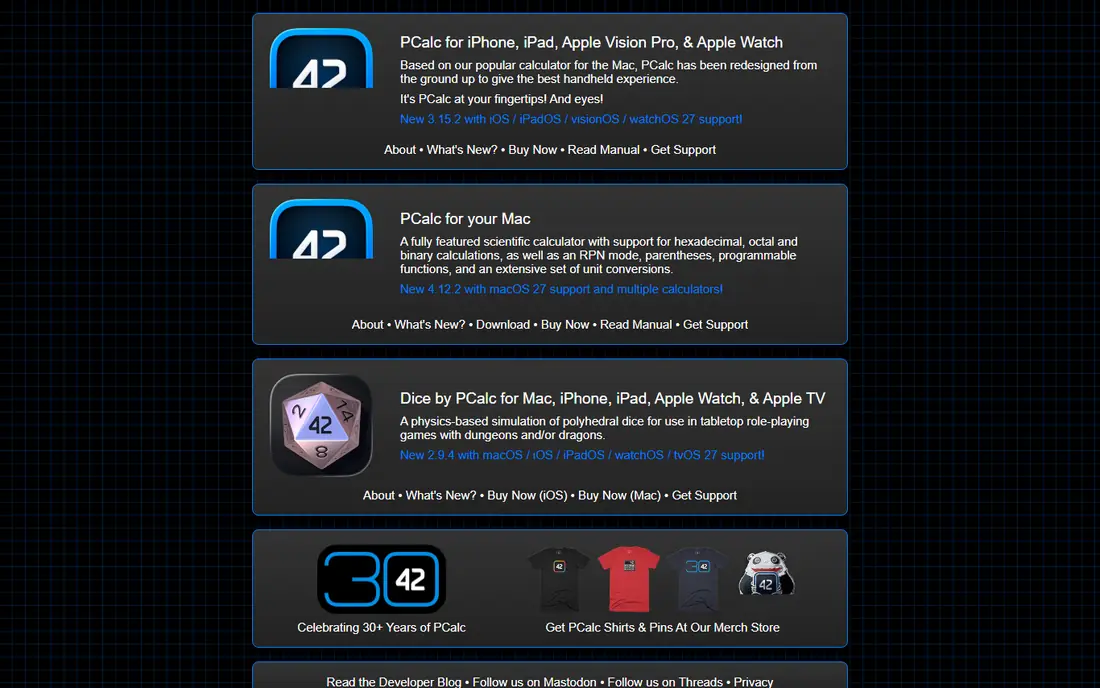
For all-round scientific work, PCalc stands out because a long-running scientific calculator with RPN mode, custom layouts, and unit conversions. In daily use, the workflow feels straightforward: you set up your preferences once, then the tool handles the routine steps without constant checking. That simplicity matters, because a tool that needs daily fiddling rarely stays in use for long.
The honest catch is the full version is paid, so casual users may prefer a free app first. That limit will not bother every reader, but it should shape your trial: test the exact feature you need most before you commit to a paid plan. We recommend a short trial with your own data, your own calendar or contacts where relevant, and your real weekly volume, so you can see whether the tool fits your routine before you pay for a year.
- Deep scientific functions
- RPN and custom layouts
- Versions for phone, tablet, and desktop
- Paid for the full version
- Feature depth can overwhelm casual users
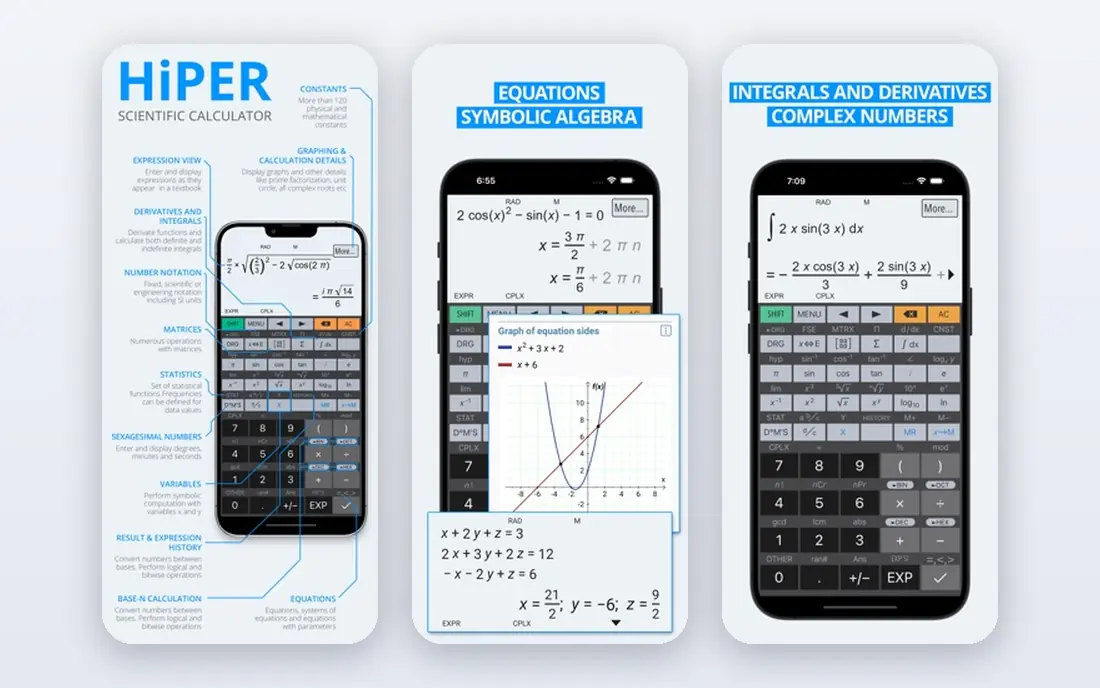
If free scientific depth is your main need, HiPER Scientific Calculator is worth a close look, since symbolic algebra, equations, graphing, matrices, and unit conversions in a free app. Day to day, the value shows up in small moments: fewer missed items, clearer records, and less time spent chasing details. That steady help is more useful than a long feature list that you rarely open.
The catch to weigh is the interface is dense, with many controls on screen at once. If that limit touches your main use case, try a rival on this list that handles that part better, and compare the two on real work. We recommend a short trial with your own data, your own calendar or contacts where relevant, and your real weekly volume, so you can see whether the tool fits your routine before you pay for a year.
- Very deep free scientific features
- Fractions and exact answers
- Graphing support
- Dense interface
- Ads in the free version

Calcbot fits clean scientific calculator well, thanks to a clean scientific calculator with a tape history that shows every step. The day-to-day experience is where this tool either helps or gets in the way, and here the basics are handled with care. Setup takes some attention, but once your preferences are set, routine work moves faster.
Watch out for the tape and history features suit iPhone and iPad users best. It is not a reason to dismiss the tool outright, but it is a reason to read plan terms and trial the tool with your own data first. We recommend a short trial with your own data, your own calendar or contacts where relevant, and your real weekly volume, so you can see whether the tool fits your routine before you pay for a year.
- Clean design
- Useful tape history
- Easy scientific functions
- Platform coverage is narrower than cross-platform rivals
- Full version is paid
Teams and owners focused on graphing and classroom maths will find Desmos practical, because a free graphing calculator that plots functions clearly and runs in a browser or app. What keeps this tool useful over time is how it handles routine work without demanding attention at every step. You still need to check important outputs, but the daily load feels lighter.
The trade-off is it is a graphing tool first, so everyday financial or unit work is not its focus. For many readers that trade-off is acceptable, but for heavy users it can change the total cost or the daily experience in a meaningful way. We recommend a short trial with your own data, your own calendar or contacts where relevant, and your real weekly volume, so you can see whether the tool fits your routine before you pay for a year.
- Excellent free graphing
- Clear classroom tools
- Browser and app access
- Not a general everyday calculator
- Fewer financial functions
Among the tools here, GeoGebra is the natural pick for maths suite with calculator, with a free maths suite with calculator, graphing, geometry, and algebra tools. Over a normal week, the benefit is consistency rather than drama: the same steps work the same way, records stay findable, and handoffs to other people are clearer. That reliability is easy to undervalue until you lose it.
The honest catch is the suite breadth can feel large for users who only want a simple calculator. That limit will not bother every reader, but it should shape your trial: test the exact feature you need most before you commit to a paid plan. We recommend a short trial with your own data, your own calendar or contacts where relevant, and your real weekly volume, so you can see whether the tool fits your routine before you pay for a year.
- Free suite with many tools
- Graphing and geometry built in
- Classroom friendly
- Interface is busy for simple sums
- Setup takes time
When text-based everyday maths matters most, Soulver earns its place through a notepad-style calculator where you type sums in words and numbers together. In practice, the tool works best when you give it a clean starting setup and a short trial with real work. That trial reveals whether the fit is genuine or only looks good on a feature page.
The catch to weigh is the text style suits notes and invoices better than rapid scientific entry. If that limit touches your main use case, try a rival on this list that handles that part better, and compare the two on real work. We recommend a short trial with your own data, your own calendar or contacts where relevant, and your real weekly volume, so you can see whether the tool fits your routine before you pay for a year.
- Natural text calculations
- Clear history in notes
- Good for everyday and money maths
- Paid for the full version
- Scientific depth is lighter than PCalc or HiPER
For readers who need menu bar maths for Mac, Numi offers a menu bar calculator for Mac that handles maths, units, and currency in plain text. The practical test is simple: does the tool save time on the task you repeat most, without creating a new admin job? Here the answer is yes for the core job, with some limits at the edges.
Watch out for Mac only, so Windows and Android users need another pick. It is not a reason to dismiss the tool outright, but it is a reason to read plan terms and trial the tool with your own data first. We recommend a short trial with your own data, your own calendar or contacts where relevant, and your real weekly volume, so you can see whether the tool fits your routine before you pay for a year.
- Fast menu bar access
- Plain text maths
- Unit and currency conversions
- Mac only
- Paid for the full version
A strong choice for handwriting maths, MyScript Calculator brings handwriting recognition that turns written sums into digital calculations. Used regularly, the tool settles into a routine quickly, and that routine is the real product. The features matter less than whether you trust the output enough to act on it without double-checking everything.
The trade-off is handwriting accuracy depends on writing style, and long expressions need care. For many readers that trade-off is acceptable, but for heavy users it can change the total cost or the daily experience in a meaningful way. We recommend a short trial with your own data, your own calendar or contacts where relevant, and your real weekly volume, so you can see whether the tool fits your routine before you pay for a year.
- Natural handwriting input
- Instant results
- Good for students
- Full version is paid
- Platform availability varies
How we picked these
We compared current app listings, function lists, platform support, and free plan or trial details for calculators still offered in October 2026. We favoured apps with a usable free version or trial and clear history or graphing tools, and we used See website where pricing varies by platform. We did not claim exam approval, since exam rules vary by board and institution.
How to choose a calculator app
Start with the maths you do most. Everyday sums suit a simple app with history, scientific work suits PCalc or HiPER, graphing suits Desmos or GeoGebra, and note-style sums suit Soulver or Numi. Check history and editing, since the ability to fix one step beats retyping a long sum. Check unit and currency support if you work across systems, and check whether the app works offline for exams or travel. Trial the free version with your hardest regular calculation before you pay, since button layout and history matter more than a long function list.
Frequently asked questions
What is the best calculator app?
PCalc suits all-round scientific work, while HiPER suits free scientific depth on Android. Desmos suits graphing, and Soulver suits everyday text-based sums. The best pick depends on whether you need scientific, graphing, or everyday maths most.
What is the best free calculator app?
HiPER Scientific Calculator offers the deepest free scientific features, while Desmos offers excellent free graphing. GeoGebra also offers a free suite, but its interface is busier for simple sums.
What is the best calculator app for students?
Desmos and GeoGebra suit classroom graphing and algebra, while HiPER suits scientific homework at no cost. Check exam rules first, since some exams restrict calculator apps or require a physical calculator.
Can a calculator app replace a physical calculator?
For homework and everyday work, yes, since apps offer history, graphing, and conversions that hardware often lacks. For exams, check the rules, since many exam boards still require an approved physical calculator.
What is the best app calculator for money maths?
Soulver suits money maths in notes, with clear labels beside each figure, while PCalc and HiPER handle percentages and conversions well. For loan or investment planning, a dedicated financial calculator may still suit you better.
Sources we checked (5)

Online Jobs is an independent blog about careers, online work, learning new skills and the tools that help people earn. More about us.
Keep reading
All posts
Zoom Alternatives
Zoom alternatives compared for 2026: Google Meet, Microsoft Teams, Webex, Jitsi and more for free calls, large meetings and webinars for teams and classrooms.

Which Software Is Best for Data Entry
Compare the best data entry software for forms, OCR scanning, and spreadsheets, with free plans, pricing, and honest limits for each tool before you commit.

What Is the Best Free Tool to Rotate a PDF
What is the best free tool to rotate a PDF? We compare eight free rotation tools on per-page control, limits, privacy and saved output quality in detail.