Best Business Internet Service in 2026: 8 Providers Compared


Fiber reliability and scale · Starting price: See website
How we put this together: we compare official feature and pricing pages, app store listings, privacy policies and public user reviews. Prices change, so check the provider's site before you pay.
Key takeaways
- The best business internet service depends first on what is wired to your building, because fiber, cable, 5G and satellite differ sharply.
- Fiber gives symmetrical speeds, which helps video calls, cloud backup and VoIP, while cable usually offers slower uploads.
- Verizon Business and AT&T Business lead for fiber, Comcast Business leads for availability, and Spectrum Business leads for no-contract plans.
- Starting prices vary by address, speed and contract, so confirm the full monthly cost, including equipment and installation, before signing.
- For critical operations, two connections from two providers with automatic failover beat a single faster connection.
Quick comparison
| Name | Who it suits | Starting price | Free option | |
|---|---|---|---|---|
| Verizon Business | Fiber reliability and scale | See website | No | Visit |
 AT&T Business | High-speed fiber | See website | No | Visit |
 Comcast Business | Wide availability | See website | No | Visit |
 Spectrum Business | No-contract flexibility | See website | No | Visit |
 Cox Business | Cable with phone bundles | See website | No | Visit |
 Frontier Business | Value fiber where available | See website | No | Visit |
 T-Mobile for Business | Fast 5G setup | See website | No | Visit |
 Google Fiber Business | Simple, fast fiber | See website | No | Visit |
The best business internet services
We compared business internet providers on connection type, speed, upload performance, reliability, support, contract terms and availability, with the caveat that availability varies by address.
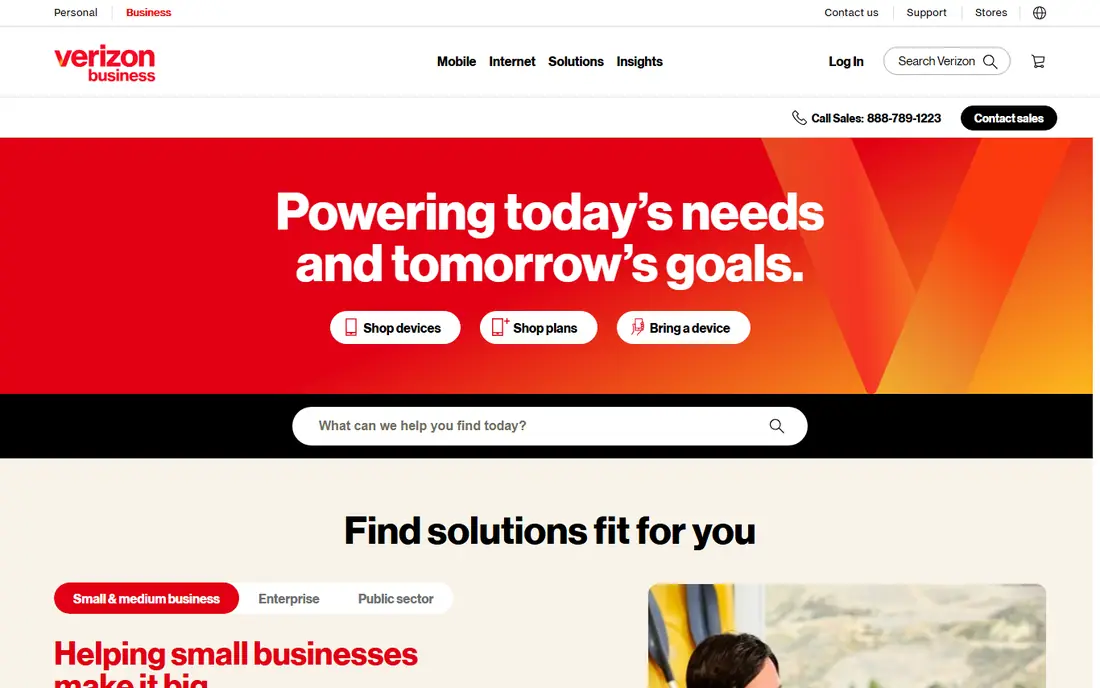
Verizon Business is our pick for most businesses that can get Fios fiber. Symmetrical speeds mean uploads match downloads, which helps video calls, cloud backups and large file transfers, and the service scales from a small office to a larger team without changing providers. Business support and service guarantees also suit firms where downtime costs money.
The limit is geography. Fios fiber is not available everywhere, and businesses outside its footprint must use Verizon 5G or another provider. Pricing also varies by speed, contract and address, so the headline monthly figure is only a starting point. Check availability at your exact address, not just your city, before shortlisting it.
- Symmetrical fiber speeds on Fios plans
- Strong reliability and business support
- Scalable plans for growing teams
- Fiber availability is limited to its footprint
- Pricing varies by speed and location
- Installation times vary by building

AT&T Business Fiber suits teams that need the fastest symmetrical speeds, with plans reaching multi-gigabit levels where fiber is available. That headroom helps offices with heavy cloud use, video production or large data transfers, and the fiber network's reliability supports VoIP and video as core tools rather than extras. Business bundles with phone service can also simplify billing.
Availability is the catch, since fiber reaches some streets and not others, even within the same city. A business that cannot get AT&T fiber may face slower cable or fixed wireless options instead. Confirm fiber availability, upload speed and contract terms for your building, and compare the total with Verizon where both are offered.
- Very high fiber speeds in its footprint
- Symmetrical uploads on fiber plans
- Strong customer satisfaction in business rankings
- Fiber availability varies sharply by address
- Pricing varies by speed and term
- Some plans need a contract for the best price
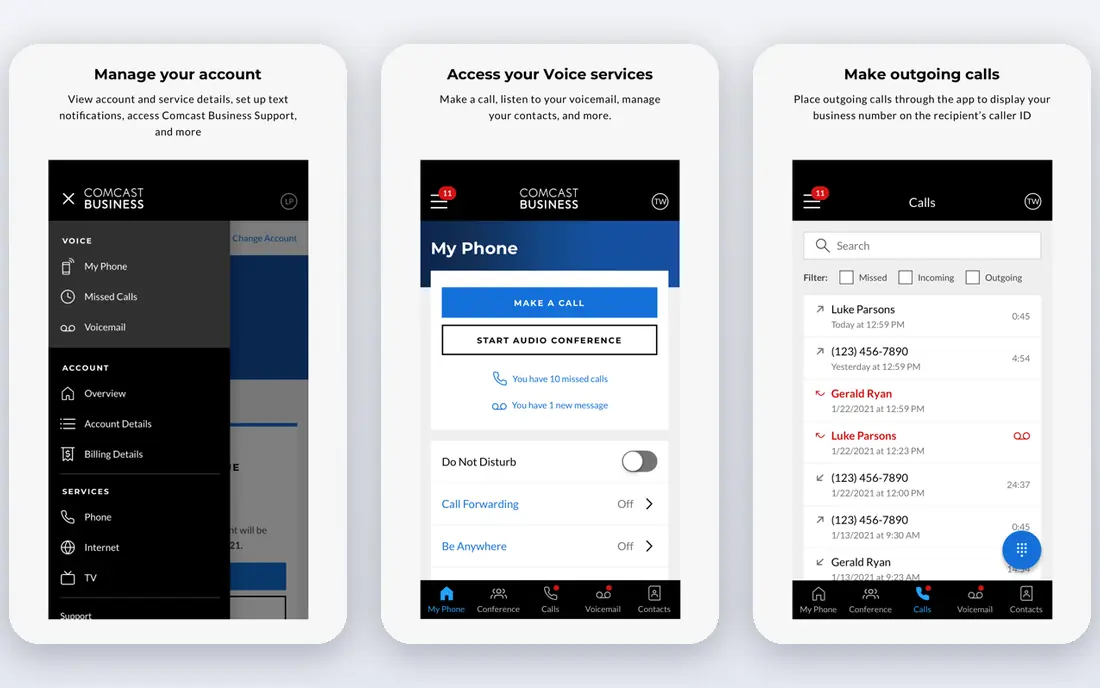
Comcast Business is the availability pick, because its cable network reaches many areas where fiber has not yet arrived. Download speeds are fast enough for most offices, and business plans add support, static IP options and, on some plans, LTE failover that keeps the office online during an outage. For a business that needs a reliable connection now, that reach matters.
The drawback is upload speed, since cable plans are usually asymmetrical, with uploads well below downloads. That gap hurts heavy video calling, cloud backup and VoIP at scale, so check the upload figure for your plan, not just the headline download speed. Contract length and termination fees also deserve a careful read before signing.
- The widest cable availability among national providers
- Fast download speeds
- Backup options with LTE failover on some plans
- Cable uploads are usually slower than fiber
- Contract terms and early termination fees need care
- Pricing varies by market
Spectrum Business suits businesses that want flexibility, because many of its business plans avoid long contracts. That freedom helps startups, seasonal businesses and firms that may move premises, since they are not locked into a multi-year term for a connection they may outgrow. Pricing is also relatively straightforward compared with providers that rely heavily on promotions.
The trade-offs are familiar. Upload speeds depend on whether the plan uses cable or fiber, and availability is limited to Spectrum's footprint. Support quality also varies by market, so local reviews for your area matter. For a business that values freedom over maximum speed, Spectrum is a strong, practical choice.
- No-contract options on many business plans
- Straightforward pricing
- Cable and fiber options in its footprint
- Upload speeds vary by plan and technology
- Availability is limited to its footprint
- Business support quality varies by market
Cox Business suits small and mid-size businesses in its markets that want internet and phone from one provider. Bundles simplify billing and support, and the service covers the core needs of an office that relies on cloud apps, video calls and point-of-sale systems. Fiber options in some markets give faster, symmetrical speeds where available.
The limit is region. Cox serves specific markets, so many readers will not have it as an option, and cable plans in its footprint still trail fiber on uploads. Check whether fiber or cable serves your address, what the upload speed is, and whether a bundle actually saves money compared with separate providers.
- Cable and fiber options in its markets
- Phone and internet bundles for small businesses
- Business support and service options
- Availability is regional
- Cable uploads trail fiber
- Pricing and contracts vary by market
Frontier Business is the value fiber pick where it is available. Starting prices for fiber can undercut larger rivals, and symmetrical speeds give small businesses the upload performance that cable often lacks. For a cost-conscious office that can get Frontier fiber, that combination is hard to ignore.
Availability and local service quality are the caveats. Frontier's footprint is regional, and some areas still depend on older technologies rather than fiber, so the experience varies by address. Check fiber availability, read local business reviews, and confirm whether the quoted price includes equipment and installation before comparing it with national rivals.
- Low starting prices for fiber in its footprint
- Symmetrical speeds on fiber plans
- No-contract options on some plans
- Fiber availability is limited to its footprint
- Service quality varies by market
- Some areas still rely on slower technologies
T-Mobile for Business Internet suits offices that need connectivity fast, or a backup to a wired connection. A 5G gateway can be running in days, without waiting for a wired install, which helps pop-up shops, temporary offices and businesses moving premises. It also works well as a failover connection that keeps card payments and email running if the main line fails.
As a sole connection, it has limits. Speeds depend on signal and network load, uploads trail fiber, and heavy video or cloud use can suffer at peak times. For a small shop with light to moderate use, it can serve as the main connection, but for a busy office, pair it with fiber or cable rather than relying on 5G alone.
- Very fast setup with no wired installation
- A good backup connection
- No-contract options on many plans
- Speeds vary with signal strength and congestion
- Uploads trail fiber
- Not ideal as a sole connection for heavy offices
Google Fiber Business suits small businesses in its cities that want fast, simple fiber without contract complexity. Plans offer symmetrical speeds, pricing is easy to understand, and the absence of an annual contract on many offers gives flexibility that larger carriers often lack. For a tech-heavy small office, that simplicity is appealing.
The barrier is availability, since Google Fiber serves a limited set of cities and neighbourhoods. Bundle options for phone and TV are thinner than at Comcast or AT&T, and support leans online rather than through local business reps. If Google Fiber reaches your building, it deserves a top shortlist spot, but most readers will need a national carrier instead.
- Fast symmetrical fiber speeds
- Simple plans with no annual contract on many offers
- A clear, no-frills buying experience
- Availability is limited to a small number of cities
- Fewer bundle options than national carriers
- Support is mainly online
How we picked these
We compared official provider pages, business internet guides and availability information for national and regional providers, and we kept only providers still offering business internet in October 2026. We favoured connection type, upload speed, reliability, contract flexibility and availability, and we noted where a provider's strength depends on its footprint. We did not claim hands-on testing, and prices we could not verify on a vendor site are shown as See website.
How to choose the right business connection
Start with an address check for every provider on this list, because national rankings mean little if a provider does not serve your building. Ask each provider for download and upload speeds, not just the headline speed, and confirm whether the price includes equipment, installation and any promotional expiry. A low first-year price that doubles in year two changes the comparison completely.
Next, match speed to use. A small office with email, browsing and card payments can manage on a modest plan, while an office with video calls, VoIP phones and cloud backup needs higher uploads and more headroom. Count devices and simultaneous video calls, not just staff, since each call and backup job consumes upload bandwidth. Finally, decide whether downtime tolerance justifies a second connection, and test failover before you need it, because an untested backup is only a theory.
When to add a second connection
A second connection pays for itself when an outage would stop sales, block patient or client access, or halt a production line. Use two providers and two technologies where possible, such as fiber plus 5G, so a single network fault does not take both lines down. Configure automatic failover, test it by unplugging the main line, and keep the backup plan active rather than letting it lapse. That setup costs more monthly, but it protects revenue in a way a slightly faster single line cannot.
Frequently asked questions
What is the best business internet service?
Verizon Business and AT&T Business lead for fiber, Comcast Business leads for availability, and Spectrum Business leads for no-contract flexibility. The best service for your business depends on what is wired to your building, how much upload speed you need, and whether you can accept a contract. Run an address check for each provider before deciding.
What is the best internet service for small business?
For a small business with fiber access, Verizon Business Fios or AT&T Business Fiber are the strongest picks, because symmetrical speeds support video, VoIP and cloud backup. Without fiber, Comcast Business or Spectrum Business offer the widest cable coverage, while T-Mobile for Business suits fast setup or backup use. Match the plan to upload needs, not just download speed.
What is the best internet service provider for a small business with no contract?
Spectrum Business is the clearest no-contract pick among national providers, with many business plans avoiding long terms. T-Mobile for Business and Google Fiber Business also offer no-contract options where available. Check the current terms for your address, since contract rules vary by plan and market.
How fast should business internet be?
A small office with basic email and browsing can manage on a modest plan, but offices with video calls, VoIP and cloud backup should aim for at least 300 Mbps download and strong uploads, with fiber preferred. Count simultaneous video calls and backup jobs, and choose a plan with headroom for growth rather than the minimum that works today. Upload speed matters more than most buyers expect.
Is fiber better than cable for business?
Yes, for most offices, because fiber offers symmetrical speeds, lower latency and more consistent performance under load. Cable offers fast downloads and wide availability, but uploads are usually slower, which hurts video calls and cloud backup. If fiber reaches your building at a similar price, choose fiber, and use cable or 5G as a backup where reliability is critical.
Sources we checked (8)

Online Jobs is an independent blog about careers, online work, learning new skills and the tools that help people earn. More about us.
Keep reading
All posts
n8n Alternatives
n8n alternatives compared for 2026, with Zapier, Make, Activepieces, and more, covering visual builders, code steps, self-hosting, and pricing models.

ZoomInfo Alternatives
The best ZoomInfo alternatives in 2026, compared on price, free plans, data coverage, and which tool fits small teams or large sales teams best in detail.

Zoom Alternatives for Webinars
Compare Zoom alternatives for webinars in 2026, from browser-based rooms to enterprise events, with prices, attendee limits, features and honest trade-offs.