Best Big Data Platform in 2026: 9 Platforms Compared


SQL plus machine learning on a lakehouse · Starting price: See website
How we put this together: we compare official feature and pricing pages, app store listings, privacy policies and public user reviews. Prices change, so check the provider's site before you pay.
Key takeaways
- Databricks suits teams that combine SQL analytics with machine learning on one lakehouse platform.
- Snowflake suits steady BI workloads with warehouse isolation and per-second credit billing.
- Google BigQuery suits spiky, serverless analytics, with pay-per-scan pricing and no capacity planning.
- Apache Spark and open-source tools suit teams that want control and lower licence costs, at the price of more engineering work.
Quick comparison
| Name | Who it suits | Starting price | Free option | |
|---|---|---|---|---|
| Databricks | SQL plus machine learning on a lakehouse | See website | Yes | Visit |
 Snowflake | Cloud data warehouse for BI | See website | Free trial | Visit |
 Google BigQuery | Serverless analytics on GCP | See website | Yes | Visit |
 Apache Spark | Open-source distributed processing | Free | Yes | Visit |
 Amazon Redshift | Data warehouse inside AWS | See website | Free trial | Visit |
 Microsoft Fabric | Unified data platform for Microsoft shops | See website | Free trial | Visit |
 Cloudera | Hybrid and on-prem big data platform | See website | No | Visit |
 Palantir Foundry | Operational data and decision workflows | See website | No | Visit |
 Dremio | Fast SQL on lakehouse data | See website | Yes | Visit |
The best big data platform
A big data platform stores, processes, and analyses large volumes of structured and unstructured data, and increasingly supports machine learning and AI on the same data. Cloud warehouses, lakehouses, and open-source engines all fit that description, but they bill and scale differently. We compared official pricing explanations and product documentation, and we focused on platforms that are actively used in production in 2026.
Databricks is the pick for teams that build production machine learning alongside SQL analytics. Its lakehouse combines data engineering, SQL warehouses, and ML tools, including MLflow, AutoML, and model serving, under Unity Catalog governance. Data scientists and engineers can share data and features without moving everything between systems.
Cost forecasting is the challenge, since you pay Databricks Units plus underlying cloud compute, and cluster settings have a large effect on the bill. A free edition exists for non-commercial use, with trial credits for commercial evaluation in published comparisons. Databricks fits best when ML is a core workload, not an afterthought.
- Unified SQL, engineering, and ML on one platform
- Strong Spark foundation
- Unity Catalog governance
- DBU plus cloud costs make forecasting complex
- Needs FinOps discipline to control spend
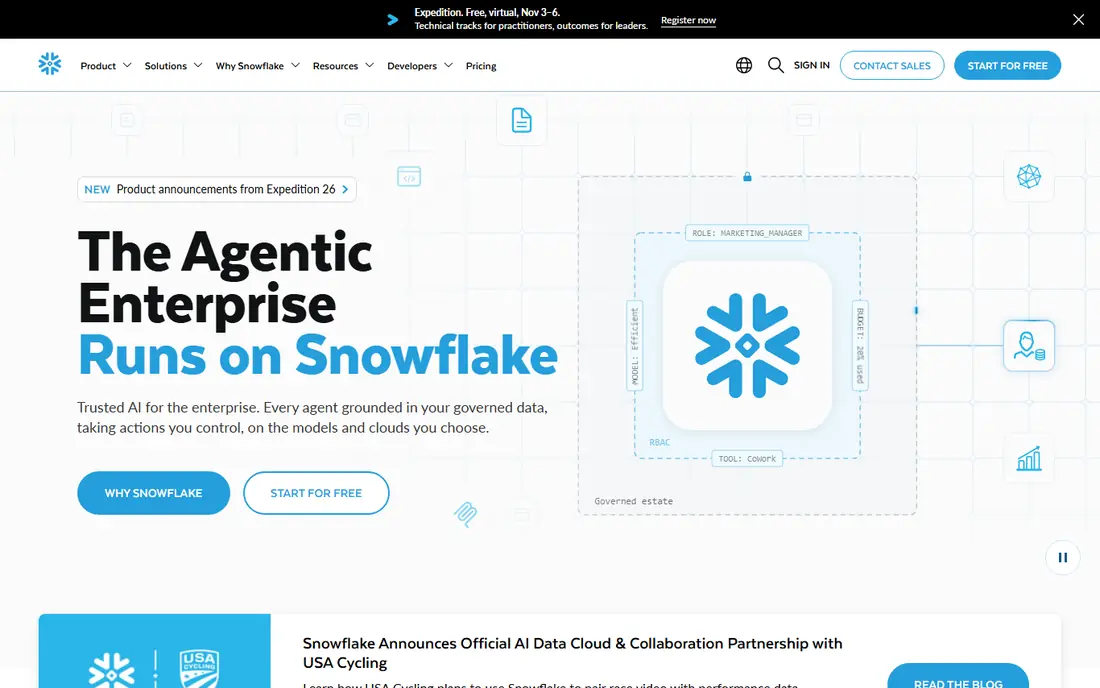
Snowflake is a cloud data warehouse built for analytics, with compute separated from storage so teams can scale each independently. Virtual warehouses bill per second, with auto-suspend to avoid paying for idle time, and different workloads can run on isolated warehouses. That model suits steady BI dashboards and reporting.
Bill shock usually comes from oversized warehouses or long auto-suspend delays, not from the headline credit price. Published list prices put a standard credit around $2 in recent comparisons, with trial credits for evaluation. Snowflake fits best for SQL analytics teams that want predictable, governed BI at scale.
- Separate compute and storage
- Per-second warehouse billing with auto-suspend
- Strong BI ecosystem
- Costs rise if warehouses are oversized or auto-suspend is poorly tuned
- No permanent free tier in published terms
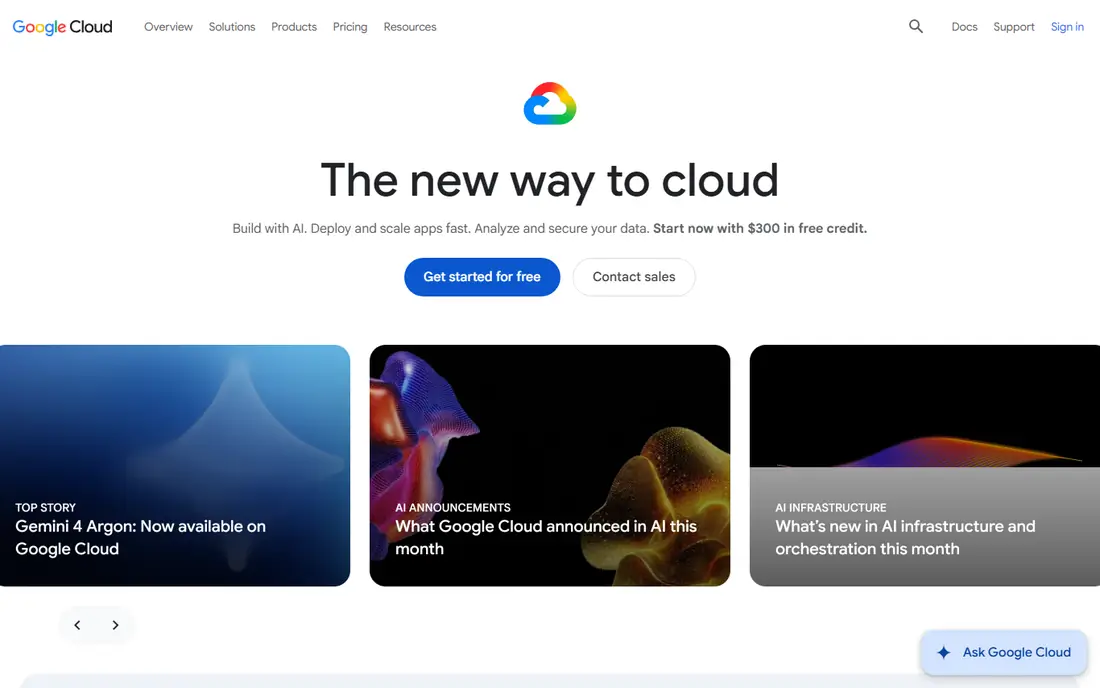
BigQuery suits spiky and ad-hoc analytics, since on-demand pricing charges per TiB scanned, with the first TiB each month free in published terms, and you pay nothing when idle. Recent comparisons put on-demand pricing around $6.25 per TiB scanned. That model is excellent for irregular workloads and terrible for poorly partitioned tables scanned thousands of times.
Capacity pricing with slots offers more predictable costs for heavy, steady use. BigQuery also includes ML tools inside SQL, which helps analysts build models without a separate platform. For GCP-native teams with variable query loads, BigQuery is a strong default.
- True serverless scaling
- Pay per TiB scanned on demand
- First TiB each month free in published terms
- Repetitive heavy queries can be expensive
- Best value inside Google Cloud
Apache Spark is the open-source engine behind many big data platforms, including Databricks. It processes large datasets in batch and streaming modes, supports SQL, machine learning libraries, and graph processing, and runs on premises, on Hadoop, or in the cloud. For teams with engineering skill, it offers control without licence fees.
That control comes with work: cluster setup, tuning, monitoring, and upgrades are your responsibility unless you use a managed Spark service. Spark fits best as a building block, or for teams that already have data engineering expertise. Others should choose a managed platform on top of Spark instead.
- Free open-source engine for batch and streaming
- Huge ecosystem
- Runs on many platforms
- Needs engineering skill to run and tune
- No vendor support unless you buy a managed service
Amazon Redshift is AWS data warehouse service, offering provisioned clusters and serverless capacity billed by RPU-hour. It integrates tightly with S3, Glue, Athena, and other AWS services, which makes it natural for AWS shops that already store data in S3. Published comparisons put serverless pricing around $0.36 to $0.375 per RPU-hour in recent terms.
Provisioned clusters are less flexible, since you pay for capacity around the clock unless you pause or resize. Serverless avoids that, but RPU use still needs monitoring. Redshift fits best for steady AWS analytics workloads, especially where data already lives in AWS.
- Deep AWS integration
- Serverless and provisioned options
- Familiar SQL analytics
- AWS-focused
- Provisioned clusters bill even when idle
- Serverless pricing needs monitoring
Microsoft Fabric bundles data engineering, warehousing, real-time analytics, and Power BI into one SaaS platform, billed by capacity units. For Microsoft shops, that unification reduces the number of separate tools to manage, and Power BI integration is a clear advantage for reporting. Recent workload comparisons have put Fabric among the cheapest options for a typical BI workload, although results depend heavily on the workload modelled.
Capacity planning is the main skill to learn, since under- or over-sized capacity affects cost and performance. Teams outside the Microsoft stack get less benefit. For Microsoft-centric organisations, Fabric is a compelling single-platform choice.
- Unified data engineering, warehousing, and BI in one platform
- Power BI integration
- Capacity-based pricing
- Best value inside Microsoft ecosystem
- Capacity sizing needs care
- Newer platform with evolving features
Cloudera suits organisations that cannot move all data to a public cloud, whether for regulation, latency, or existing infrastructure. It offers a hybrid data platform built on open-source tools, with governance, security, and data management for on-prem and cloud deployments. Regulated industries value that control.
Operational complexity and enterprise pricing are the trade-offs. Cloud-native teams will usually find Snowflake, BigQuery, or Databricks simpler and faster. Cloudera fits when hybrid or on-prem requirements are non-negotiable.
- Hybrid and on-prem deployment options
- Broad open-source stack
- Strong governance for regulated industries
- Enterprise pricing and complexity
- More operational work than cloud-native warehouses
Palantir Foundry is designed to turn data into operational decisions, linking datasets to real-world entities and workflows through its ontology model. Government, defence, healthcare, and industrial users employ it for complex operational problems where a dashboard alone is not enough. Governance and security are central to the design.
It is an enterprise platform with enterprise pricing and implementation effort, not a self-serve warehouse for small teams. Foundry fits when operational decision-making, not just reporting, is the goal, and when the organisation can support a specialist platform.
- Strong operational analytics and decision workflows
- Ontology for linking data to operations
- Enterprise governance
- Enterprise pricing and implementation
- Specialist platform, not a general BI warehouse
Dremio lets analysts run fast SQL directly on data in a lakehouse, using open formats such as Iceberg, without first loading everything into a warehouse. That reduces ETL work and keeps data in open storage, which appeals to teams worried about lock-in. A free tier and cloud options help smaller teams start.
Setup and tuning still need data engineering skill, and the ecosystem is smaller than the major cloud warehouses. Dremio fits best for teams building a lakehouse with open formats who want self-service SQL without a full warehouse migration.
- Fast SQL directly on lakehouse storage
- Open table formats
- Self-service analytics without heavy ETL
- Needs data engineering setup for best results
- Smaller ecosystem than Databricks or Snowflake
How we picked these
We compared official pricing explanations, product documentation, and workload models for cloud warehouses, lakehouses, and open-source engines that handle large-scale analytics. We included different billing models on purpose, since per-scan, per-credit, per-DBU, and per-capacity pricing lead to very different bills for the same workload. Where pricing was complex or quote-based, we wrote See website rather than publishing a single misleading price.
What to check before you choose
Model your real workload, not a vendor demo workload. Note data volume, query frequency, concurrency, and whether work is steady or spiky, then compare at least two platforms on that model. Check storage costs separately from compute, since storage is often the smaller but steadier part of the bill.
Governance, skills, and lock-in
Check governance, security certifications, and data residency for your industry, and confirm how data can be exported in open formats. Be honest about team skills: Spark and lakehouse platforms need engineering, while managed warehouses need FinOps discipline. Pilot on a real dataset with real queries, and measure both performance and cost before committing to a platform.
Frequently asked questions
What is the best big data platform?
Databricks is best for combined SQL and machine learning, Snowflake is best for steady BI warehousing, and BigQuery is best for serverless, spiky analytics. The best platform depends on your workload pattern and cloud provider.
What is the best big data software for small teams?
BigQuery and Dremio offer accessible starting points for small teams, with free tiers and serverless or open-format options. Managed warehouses are usually easier for small teams than running Spark or Cloudera themselves.
Is Apache Spark still used in 2026?
Yes. Spark remains a core open-source engine for distributed processing, and it powers managed platforms such as Databricks. Teams with engineering skill still use Spark directly, while others use it through a managed service.
How much does a big data platform cost?
It varies widely by workload, from free open-source tools plus infrastructure costs, to usage-based cloud bills that can range from hundreds to tens of thousands per month. Model your query and storage volume before budgeting, since headline rates alone do not predict the bill.
What is the difference between a data warehouse and a lakehouse?
A warehouse stores structured data optimised for SQL analytics, while a lakehouse combines lake storage for varied data types with warehouse-style SQL and governance. Databricks and Dremio are lakehouse examples, while Snowflake, BigQuery, and Redshift are warehouse examples.
Sources we checked (9)

Online Jobs is an independent blog about careers, online work, learning new skills and the tools that help people earn. More about us.
Keep reading
All posts
iPhone Alternatives
Looking for iPhone alternatives in 2026? Compare 9 Android phones from Samsung, Google, OnePlus, and more, with cameras, battery life, and honest trade-offs.

Who Has the Best Home Internet Service
Find who has the best home internet service for your address, with fiber, cable, 5G, and satellite providers compared on price, speed, and coverage here.

Best Robotics Companies
Compare the best robotics companies in 2026, from humanoids to factory robots, with focus areas, deployments, and honest limits for buyers and pilots.