Best Apps for Mobile Marketing in 2026: 9 Platforms Compared


Large consumer brands and lifecycle journeys · Starting price: See website
How we put this together: we compare official feature and pricing pages, app store listings, privacy policies and public user reviews. Prices change, so check the provider's site before you pay.
Key takeaways
- OneSignal is the easiest starting point for small and mid-size app teams, with a free plan and paid plans from $19 per month plus usage.
- Braze, Airship and Iterable suit larger consumer brands that need cross-channel journeys, but pricing is quote-based, so budget a sales process.
- Mobile marketing is not just push. The best platforms combine push, in-app messages, email, SMS and analytics in one audience view.
- Model cost at your expected audience size, not your current size, because per-user pricing can rise fast as an app grows.
Quick comparison
| Name | Who it suits | Starting price | Free option | |
|---|---|---|---|---|
| Braze | Large consumer brands and lifecycle journeys | See website | Free trial | Visit |
 OneSignal | Startups and growing app teams | $19 per month | Yes | Visit |
 Airship | Large mobile audiences and wallet offers | See website | No | Visit |
 CleverTap | Mobile analytics plus engagement | See website | No | Visit |
 MoEngage | AI-assisted lifecycle campaigns | See website | No | Visit |
 Iterable | Cross-channel lifecycle programs | See website | No | Visit |
 Attentive | SMS-led ecommerce growth | See website | No | Visit |
 Pushwoosh | Affordable omnichannel messaging | See website | Yes | Visit |
 Insider | Retail personalisation across channels | See website | No | Visit |
The best apps for mobile marketing, compared
A mobile marketing platform should help an app team reach the right users at the right time, without sending so many messages that users turn notifications off. The platforms below cover push, in-app messaging and wider channels, with different strengths for startups, ecommerce brands and large consumer apps.
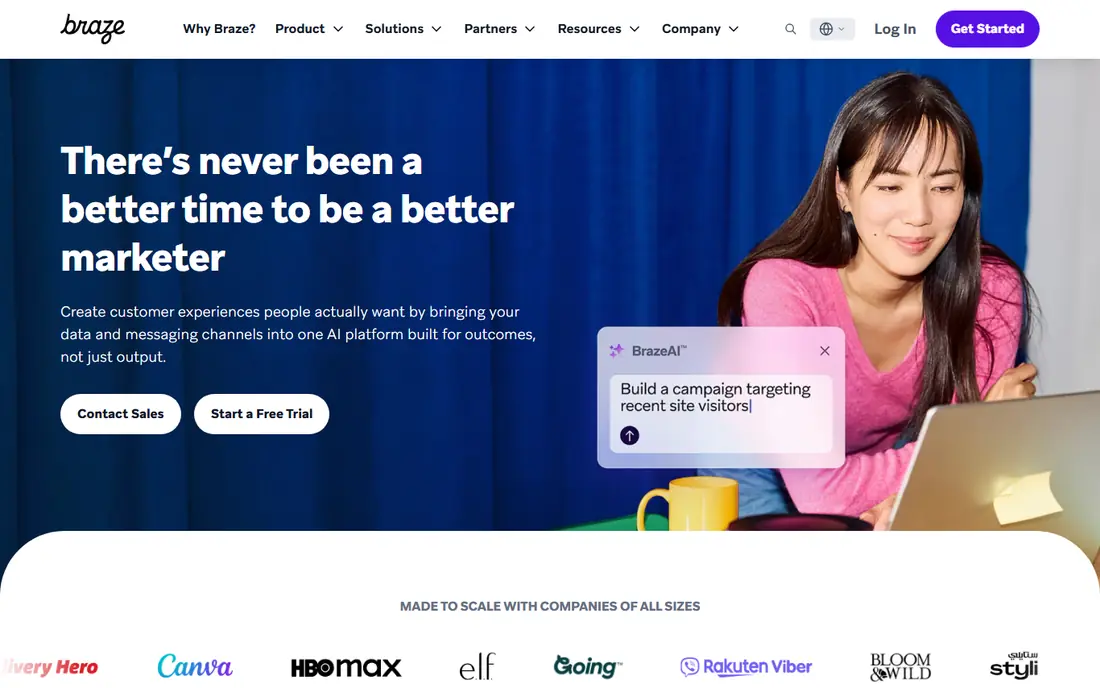
Braze is built for consumer brands that treat mobile as a core revenue channel, not a side channel. Its Canvas journey builder lets teams design multi-step flows that react to what a user does inside an app, from onboarding to win-back, and test different message versions along the way. Segmentation, personalisation and analytics sit in the same system, which helps larger teams avoid stitching together several tools. The drawback is access. Braze does not publish a simple price list, and smaller teams may find the sales process and implementation effort heavy for their needs. It is best suited to brands with a meaningful mobile audience and a team that can own lifecycle marketing full time. For that audience, it is one of the most complete mobile marketing platforms available.
- Deep cross-channel journeys across push, email, SMS and in-app
- Strong segmentation and testing
- Large integration range
- Quote-based pricing
- Setup and onboarding take time for smaller teams
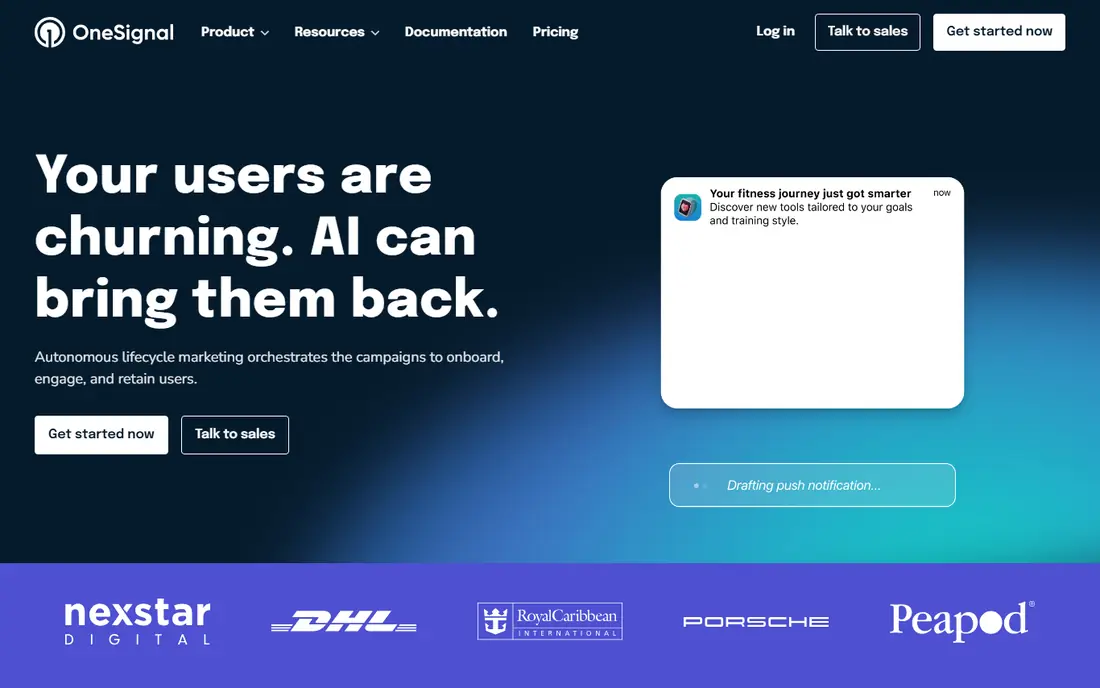
OneSignal is the most practical starting point for many app teams. You can send mobile and web push, email, SMS and in-app messages from one dashboard, set up segments and journeys without a long implementation, and start free for a small audience. The paid Growth plan starts at $19 per month plus usage, which keeps early costs clear. As an audience grows, usage-based pricing needs watching, and teams that need deep enterprise analytics or complex data warehousing may outgrow OneSignal. For startups and mid-size teams that want messaging live quickly, though, the balance of price, speed and channel coverage is hard to beat. It is also a useful step before moving to an enterprise platform later.
- Free plan for small audiences
- Push, email, SMS and in-app in one dashboard
- Fast setup for developers
- Advanced features and higher volumes raise costs
- Reporting is simpler than enterprise rivals
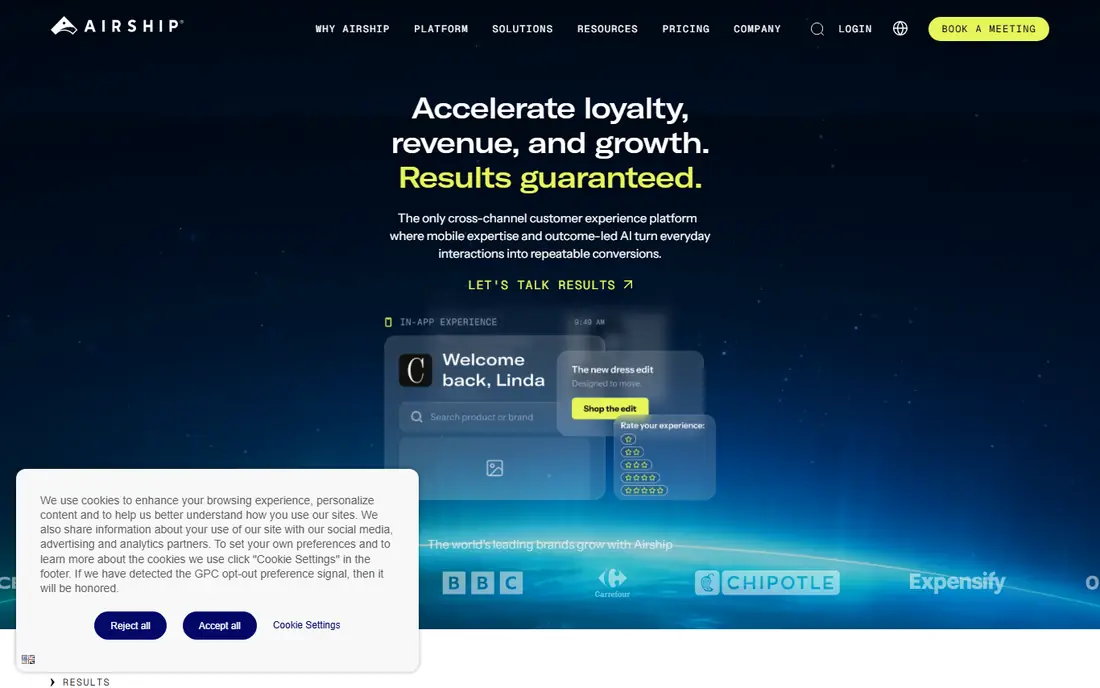
Airship has a long history in mobile messaging, and it shows in its handling of large audiences, deliverability and wallet-based offers. Teams can run push, in-app messages, Message Center inboxes and mobile wallet passes from one platform, which suits airlines, retailers and media brands with repeat mobile users. Predictive send time helps messages land when a user is more likely to engage. The main barrier is that Airship is priced by quote and aimed at larger organisations. Smaller teams will find the sales process slow and the feature set larger than they need. If you run a large consumer app and need proven scale plus wallet and inbox tools, Airship belongs on the shortlist, but expect a proper evaluation process before you get a price.
- Dependable push at large scale
- Message Center and wallet tools
- Predictive send-time features
- No public pricing
- Enterprise focus makes it heavy for small teams
CleverTap appeals to mobile-first companies that want to understand user behaviour and act on it in the same platform. Analytics show how users move through onboarding, purchase and retention funnels, and engagement tools let teams send push, in-app and email messages to the segments those analytics reveal. That loop, from insight to message, is the core reason teams choose it. The trade-off is complexity and cost transparency. Pricing is quote-based, and getting full value requires a team that is comfortable with events, cohorts and funnels. Teams that only want simple push notifications will find CleverTap larger than they need. For product and growth teams that live in mobile analytics, it is a strong combined choice.
- Analytics and engagement in one tool
- Strong cohort and funnel views
- Good support for mobile-first apps
- Quote-based pricing
- Setup can be complex for teams without analytics experience
MoEngage is designed for consumer brands running lifecycle programs across mobile and web, with push, email, SMS, in-app and on-site messages in one system. Its AI features help with content, timing and audience selection, which can save time for teams running many campaigns at once. Retail, banking and media brands are common users, because those sectors rely on repeat mobile engagement. As with other enterprise platforms, pricing is by quote, and the platform works best when event tracking is planned well from the start. Teams without a clear data plan may spend longer on setup than expected. If you want one vendor for lifecycle work across channels, and you have the team to run it, MoEngage is a credible alternative to Braze and CleverTap.
- Cross-channel journeys for mobile and web
- AI-assisted content and timing help
- Strong retail and finance use
- Quote-based pricing
- Onboarding needs clear data and event planning
Iterable suits growth and enterprise teams that run detailed cross-channel programs and need flexibility in how journeys are built. Marketers can combine email, push, SMS, in-app messages and webhooks in one flow, use catalogue data for personalised content, and test journeys at scale. That flexibility helps teams with complex product lines or many audience segments. The cost is learning time and a quote-based price. New users may need training to use the journey builder well, and smaller teams may not need its full depth. For teams that have outgrown a simple push tool and want a central lifecycle system, Iterable offers a level of control that simpler platforms cannot match.
- Flexible journey builder for email, push, SMS and in-app
- Strong data and catalogue tools
- Good for high volumes
- Quote-based pricing
- Learning curve for new marketers
Attentive is best understood as an SMS-first platform that has grown into wider mobile marketing. Ecommerce and retail brands use it to grow subscriber lists, send compliant SMS campaigns, and link SMS with email and push where that helps revenue. Its focus on deliverability and compliance matters, because SMS mistakes can damage trust and attract complaints fast. Pricing is custom, with a platform fee plus per-message SMS costs, so high-volume senders must model total cost carefully. Brands that do not rely on SMS may find Attentive narrower than Braze or Iterable. For stores where SMS is a major revenue channel, however, its specialisation is a real advantage.
- Strong SMS deliverability and compliance tools
- List growth and sign-up features
- AI personalisation across SMS, email and push
- Quote-based pricing
- SMS costs scale with sending volume
Pushwoosh is a useful middle option between a free push tool and an enterprise platform. It offers mobile and web push, email, SMS, in-app messages and WhatsApp in some plans, with a free tier for small audiences and paid plans that scale by monthly active users. That makes it easier for a growing app to budget than a quote-only platform. The limit is depth. Pushwoosh does not match Braze or Iterable on advanced analytics, data warehousing or enterprise integrations, and its brand is less well known in some markets. For teams that want omnichannel messaging without enterprise pricing, and that value a clear free starting point, it is a practical and honest choice.
- Free plan for small audiences
- Push, email, SMS and in-app options
- Clear per-user pricing on paid plans
- Smaller ecosystem than enterprise rivals
- Advanced analytics are less deep
Insider, also known as Insider One, targets retail and ecommerce brands that want personalisation across web, app, email, push and SMS from one vendor. Product recommendations, on-site personalisation and lifecycle messaging can share the same audience data, which helps stores show relevant products and offers in more places. Templates for retail use cases speed up early campaigns. The sales process is demo-led and pricing is by quote, so smaller stores may find it heavy to evaluate. Teams that only need push notifications will not need its breadth. For mid-size and large retailers that want one vendor across web and app, Insider is worth comparing with Braze, MoEngage and Iterable before deciding.
- One platform for web, app and messaging personalisation
- Strong retail templates
- AI-assisted recommendations
- Quote-based pricing
- Demo-led sales process
How we picked these
We compared official feature and pricing pages, developer documentation and public reviews for platforms that support mobile push plus at least one other mobile channel, and we checked that each platform is still offered in October 2026. We favoured platforms with a real mobile SDK, audience segmentation and journey tools, rather than email-only tools with a mobile add-on. Where a vendor does not publish pricing, we wrote See website instead of guessing a figure.
Choosing the best mobile marketing platform
Start with the channels your users actually use. If most of your audience is in your app, push and in-app messages matter most. If SMS drives sales, a platform with strong SMS compliance matters more. If you sell through a website as well as an app, look for a platform that joins web and app data.
Check SDK, data and consent first
A mobile marketing platform is only as good as its data. Check how the SDK handles events, how consent and opt-outs are managed, and how easily you can export audience data if you leave. Poor consent handling can harm trust and create legal risk, especially for SMS and push in regulated markets.
Model cost at three audience sizes
Price your shortlist at your current audience, at double that size, and at the size you expect in two years. Per-user and per-message pricing can look similar at small scale and very different at large scale. Include SMS and email costs, not just the platform fee, and ask each vendor for a written quote against the same volume.
Frequently asked questions
Which mobile marketing tool is the best for a small app team?
OneSignal is usually the best starting point for a small app team, because it offers a free plan, fast setup and push, email, SMS and in-app messages in one place. Pushwoosh is another affordable option with a free tier. Start with the tool you can launch this month, and move to an enterprise platform only when your audience and journey complexity demand it.
What are the best mobile marketing apps for ecommerce?
Attentive is strong where SMS drives revenue, while Braze, Insider and MoEngage suit larger stores that need cross-channel journeys and personalisation. Klaviyo-style email tools can also play a part, but a dedicated mobile platform is better for push and in-app work. Choose based on whether SMS, push or on-site personalisation brings in the most revenue for your store.
What are the best tools for mobile app marketing beyond push?
Beyond push, look for in-app messages, app inbox tools, deep links, onboarding flows and analytics that show retention, not just opens. CleverTap and MoEngage combine analytics with messaging, while Braze and Iterable offer strong journey builders. The best tool for app marketing is one that helps you improve retention and repeat use, not just send more messages.
How much do best mobile marketing platforms cost?
Costs range from free for small audiences on OneSignal or Pushwoosh, through $19 per month plus usage on OneSignal Growth, to quote-based enterprise pricing on Braze, Airship, Iterable and others. SMS and email sending costs are often extra. Ask for a quote against your expected monthly active users and message volume before you budget.
Do I need a mobile marketing platform if I already use email software?
Email software alone misses the in-app moment, when a user is already in your app and ready to act. A mobile platform adds push, in-app messages, app inboxes and mobile analytics that email tools do not cover well. If your app is a core channel, a dedicated mobile platform is worth it. If your app is small and email drives most revenue, you may not need one yet.
Sources we checked (9)

Online Jobs is an independent blog about careers, online work, learning new skills and the tools that help people earn. More about us.
Keep reading
All posts
Best Tool for Lead Generation
Find the best tool for lead generation in 2026, from prospecting databases and outreach tools to landing pages, with prices and honest trade-offs for buyers.
Best Omnichannel Marketing Platform
Compare the best omnichannel marketing platform in 2026. We review Klaviyo, HubSpot, Braze, Salesforce and more, with pricing, free plans and channel coverage.
Best Landing Page Tools
Compare the best landing page tools for 2026, from Unbounce and Instapage to Carrd and Framer, with pricing, free plans, testing and publishing compared.