Best Omnichannel Marketing Platform in 2026: 9 Platforms Compared

How we put this together: we compare official feature and pricing pages, app store listings, privacy policies and public user reviews. Prices change, so check the provider's site before you pay.
Key takeaways
- Klaviyo is the default for ecommerce brands that live on email and SMS revenue, with a free plan and paid email plans from $20 per month.
- HubSpot Marketing Hub is the best all-in-one for teams that want marketing joined to a real CRM, with free tools and paid plans from $20 per month.
- Braze, Iterable and Salesforce Marketing Cloud suit larger brands with high volumes, but pricing is quote-based and implementation takes longer.
- Omnichannel only works if customer data is joined up, so check data, consent and channel coverage before you compare feature lists.
Quick comparison
| Name | Who it suits | Starting price | Free option | |
|---|---|---|---|---|
 Klaviyo | Ecommerce email and SMS | $20 per month | Yes | Visit |
 HubSpot Marketing Hub | Marketing plus CRM in one system | $20 per month | Yes | Visit |
 Braze | Large consumer lifecycle programs | See website | Free trial | Visit |
 Salesforce Marketing Cloud | Enterprise journeys at scale | $1,250 per month | No | Visit |
 Omnisend | Smaller stores wanting Klaviyo-style automation | $16 per month | Yes | Visit |
 ActiveCampaign | Deep automation for smaller teams | $15 per month | Free trial (14 days) | Visit |
 Iterable | High-volume cross-channel programs | See website | No | Visit |
 Attentive | SMS-led retail marketing | See website | No | Visit |
 Brevo | Large lists on a lower budget | $9 per month | Yes | Visit |
The best omnichannel marketing platform, compared
An omnichannel platform should let a customer move from email to SMS to push to a website without receiving mixed messages or duplicate offers. The platforms below differ in focus, from ecommerce email and SMS to enterprise journeys across many channels, so the best pick depends on your business model and team size.
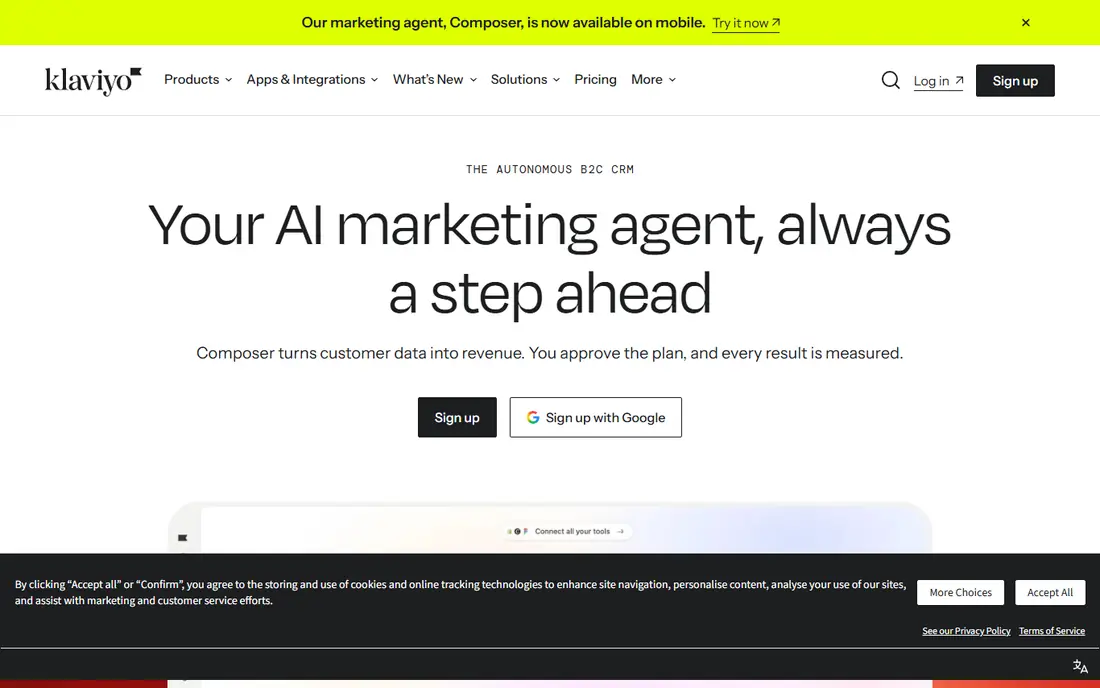
Klaviyo is built around ecommerce data. Purchase history, browsing behaviour and list segments feed flows for welcome series, abandoned carts, post-purchase follow-ups and win-back campaigns across email and SMS. That link between store data and messaging is why many direct-to-consumer brands treat Klaviyo as their default marketing platform. The cost model needs attention. Klaviyo prices by active contacts and channel use, so a growing list raises the bill even if team size stays the same, and SMS credits add further cost. For stores where email and SMS drive a large share of revenue, that cost is usually easy to justify. For businesses outside ecommerce, Klaviyo is narrower than HubSpot or Braze.
- Deep ecommerce segmentation and flows
- Strong Shopify and store integrations
- Clear revenue reporting for flows
- Costs rise with contact count
- SMS credits are extra and need careful budgeting
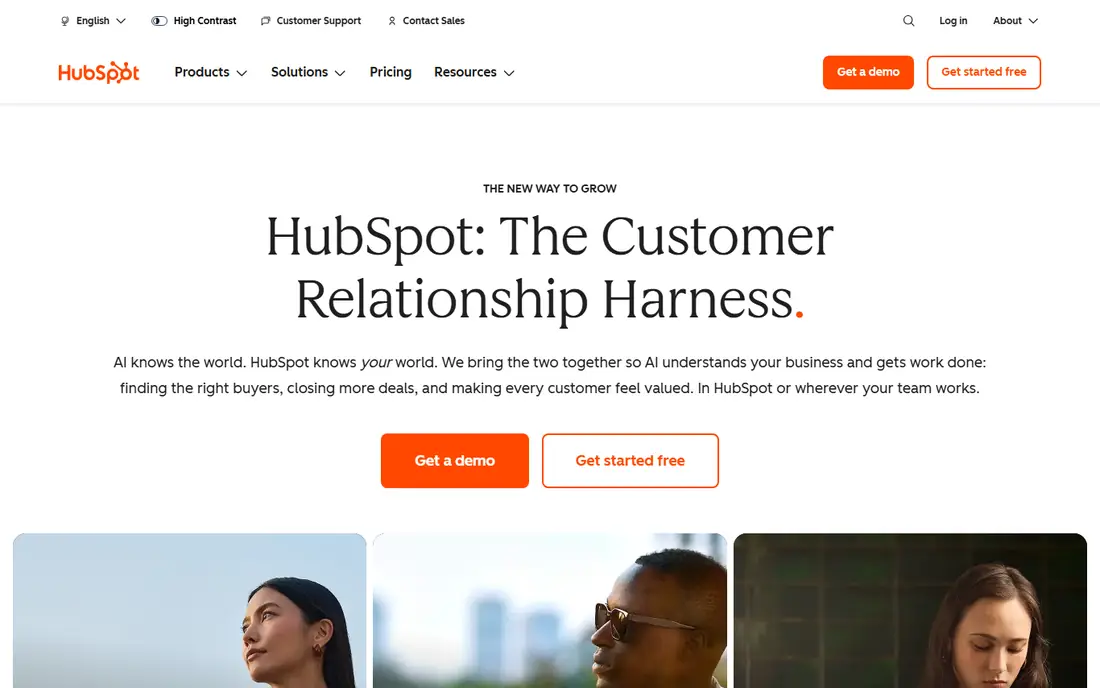
HubSpot Marketing Hub suits teams that want marketing, sales and service data in one place. Contacts, deals, tickets and campaigns share the same CRM, so a marketing email, a sales follow-up and a support reply can all draw on the same customer record. Free tools cover basic email, forms and CRM use, which makes it easy to start without a large upfront cost. The jump to Professional, from $890 per month in published pricing, is steep for smaller teams, and onboarding fees apply on higher plans. Teams that only need email and SMS may find HubSpot larger than they need. For B2B and B2C teams that want one system for marketing and sales, HubSpot is the most joined-up choice on this list.
- Free CRM and marketing tools to start
- Email, landing pages, social and automation in one system
- Strong reporting on higher plans
- Price jumps sharply to Professional plans
- Onboarding fees apply on higher plans
Braze is an omnichannel platform for consumer brands with apps and large audiences. Its Canvas journey builder lets teams design flows that react to app behaviour, purchase events and message engagement across push, email, SMS and in-app messages. That depth suits media, retail, travel and finance brands that run many lifecycle programs at once. Pricing is by quote, and getting full value requires good event data and a team that can own lifecycle marketing. Smaller brands may find the sales process and setup heavy. Note also that Salesforce agreed in October 2026 to acquire Braze, subject to approvals, with completion expected later, so buyers should ask about roadmap and contract terms during evaluation. For large consumer brands, Braze remains a leading omnichannel choice.
- Cross-channel journeys across push, email, SMS and in-app
- Strong testing and personalisation
- Large integration range
- Quote-based pricing
- Implementation and data work take time
Salesforce Marketing Cloud
Who it suits: Enterprise journeys at scale
Salesforce Marketing Cloud is built for enterprises that already use Salesforce and need omnichannel journeys at very large scale. Engagement plans start from $1,250 per organisation per month on annual billing, with higher tiers for growth and intelligence features. Journeys can span email, mobile, social, advertising and web, with data tools that join customer records across the Salesforce system. The trade-off is complexity and cost. Setup, data modelling and admin work are heavier than on Klaviyo or HubSpot, and smaller teams will not need its full range. For enterprises already committed to Salesforce, the native CRM link is a strong advantage. For teams outside that ecosystem, a simpler platform will usually deliver faster value.
- Enterprise journey builder and data tools
- Deep Salesforce CRM links
- Wide channel coverage for large teams
- High starting price
- Complex setup and admin needs
Omnisend gives smaller ecommerce stores much of the Klaviyo playbook at a lower entry price. Email, SMS and web push can run in one automation, with pre-built workflows for welcome, abandoned cart, order follow-up and win-back campaigns. The Standard plan starts at $16 per month for 500 contacts in published pricing, and a free plan covers small lists. At larger scale, Klaviyo offers deeper segmentation and reporting, and Omnisend may feel simpler for complex data needs. For a small or mid-size store that wants solid automation without enterprise pricing, Omnisend is a practical alternative. It is especially worth a look for stores that find Klaviyo costs rising faster than revenue.
- Email, SMS and push automation for stores
- Pre-built ecommerce workflows
- Lower entry price than Klaviyo
- Less deep segmentation than Klaviyo at scale
- Reporting is simpler on lower plans
ActiveCampaign suits small and mid-size businesses that want serious automation without enterprise cost. Its automation builder supports conditional logic, site tracking, lead scoring and multi-step journeys across email, SMS and other channels, while a built-in CRM keeps sales follow-up in the same system. Starter plans start at $15 per month on annual billing for 1,000 contacts in published pricing. There is no permanent free plan, only a 14-day trial, and new users may need time to learn the automation builder. Teams that only need simple newsletters may find it larger than necessary. For businesses that want deep automation logic for the money, ActiveCampaign remains one of the best value omnichannel options.
- Strong automation builder at a modest price
- CRM, email, SMS and site tracking in one place
- Good value for SMBs
- No permanent free plan
- Interface can feel busy for new users
Iterable is designed for growth-stage and enterprise consumer brands that send high volumes across channels. Journeys can combine email, push, SMS, in-app messages and webhooks, with catalogue data for personalised product content and testing at scale. That flexibility helps brands with many products, segments or regions run detailed programs from one platform. Pricing is by quote and there is no free plan, only demos, so evaluation takes longer than for a self-serve tool. New marketers may also need training to use the journey builder well. For teams that have outgrown a simple email tool and need a central, high-volume omnichannel system, Iterable is a strong candidate beside Braze.
- Flexible journeys across email, push, SMS and in-app
- Strong catalogue and data tools
- Built for high message volumes
- Quote-based pricing
- Learning curve for new marketers
Attentive is an SMS-first omnichannel platform for ecommerce and retail brands where text messages drive a major share of revenue. List growth tools, compliant sign-up flows and deliverability support help stores build SMS lists safely, while email and push can be added where they support the same campaigns. Its focus on SMS compliance matters, because poor SMS practice can quickly damage trust. Pricing is custom, with a platform fee plus per-message SMS costs, so high-volume senders must model total cost. Brands that do not rely on SMS will find Attentive narrower than Klaviyo or HubSpot. For stores where SMS is a core revenue channel, its specialisation and hands-on support are real strengths.
- Strong SMS deliverability and compliance tools
- List growth features
- AI personalisation across SMS, email and push
- Quote-based pricing
- SMS volume costs scale with sending
Brevo, formerly Sendinblue, is the budget pick for businesses with large lists and moderate sending. Pricing follows send volume rather than contact count, so a business with many contacts but modest sending can pay less than on a contact-based platform. The Starter plan starts at $9 per month, and a free plan covers 300 emails per day. The trade-off is depth. Brevo automation and CRM features are less extensive than HubSpot, and its ecommerce templates are simpler than Klaviyo. For newsletters, transactional email and basic omnichannel campaigns on a tight budget, Brevo is a smart choice. For complex lifecycle programs, a more specialised platform may fit better.
- Prices by email volume, not contacts
- Email, SMS, WhatsApp and automation in one tool
- Free plan for small senders
- Automation and CRM depth are less than HubSpot
- Templates are simpler than Klaviyo for ecommerce
How we picked these
We compared official feature and pricing pages, channel coverage and public reviews for platforms that support at least three marketing channels, such as email, SMS, push or in-app, in October 2026. We favoured platforms with a joined customer profile, journey or automation tools, and consent handling, rather than single-channel tools with omnichannel claims. Where a vendor does not publish pricing, we wrote See website instead of estimating a figure.
Choosing the best omnichannel marketing tool
Start with your main revenue channel. Ecommerce stores should shortlist Klaviyo and Omnisend, B2B and mixed teams should shortlist HubSpot and ActiveCampaign, and large consumer brands should shortlist Braze, Iterable and Salesforce Marketing Cloud. A platform that excels on your main channel and covers your second channel well will beat a platform that covers many channels poorly.
Check data, consent and deliverability
Ask how customer data is joined across channels, how consent and opt-outs are handled for each channel, and how deliverability is monitored for email and SMS. Poor consent handling can create legal risk and damage trust, especially for SMS. Also check how easily you can export contacts and campaign data if you change platform later.
Model the full cost, not just the plan fee
Include contact or volume pricing, SMS credits, extra seats, onboarding fees and any data or AI add-ons. A low headline price can become expensive once SMS volume, contact growth and higher-tier features are added. Ask each vendor for a quote against the same contact count, send volume and channel mix, so comparisons are fair.
Frequently asked questions
What is the best omnichannel marketing platform for ecommerce?
Klaviyo is the strongest default for ecommerce, thanks to its store data, segmentation and email plus SMS flows, with Omnisend as a lower-cost alternative. Attentive is best where SMS is the main revenue channel, and Brevo suits stores with large lists and modest sending. Choose based on whether email, SMS or push drives most of your store revenue.
What are the best omnichannel marketing tools for small businesses?
HubSpot free tools, Brevo and Omnisend are good starting points for small businesses, because they offer free plans or low entry prices. ActiveCampaign is also strong for small businesses that want deeper automation and can use a trial to test it. Start with one platform that covers email plus one other channel well, rather than paying for an enterprise suite you will not use fully.
What is the best omnichannel marketing platform software for large companies?
Braze, Iterable and Salesforce Marketing Cloud are the strongest enterprise options, with deep journey builders, high-volume handling and wide channel coverage. Salesforce Marketing Cloud fits enterprises already on Salesforce, while Braze and Iterable suit consumer brands with apps and large audiences. Enterprise buyers should run a proof of concept with real data before signing a long contract.
How does omnichannel marketing differ from multichannel marketing?
Multichannel marketing uses several channels, often managed separately, while omnichannel marketing joins those channels around one customer profile and one journey. In practice, that means a customer who buys by email should not get the same abandoned-cart SMS an hour later. Omnichannel tools aim to prevent those clashes by sharing data and journey logic across channels.
What should I check before buying an omnichannel platform?
Check channel coverage, data integration with your store or CRM, consent and opt-out handling, deliverability support, reporting by channel and by journey, and total cost at your expected volume. Also check migration help, support hours and contract terms, including what happens to your data if you leave. A short trial with real campaigns will reveal more than a sales demo alone.
Sources we checked (9)

Online Jobs is an independent blog about careers, online work, learning new skills and the tools that help people earn. More about us.
Keep reading
All posts
Best Tool for Lead Generation
Find the best tool for lead generation in 2026, from prospecting databases and outreach tools to landing pages, with prices and honest trade-offs for buyers.
Best Landing Page Tools
Compare the best landing page tools for 2026, from Unbounce and Instapage to Carrd and Framer, with pricing, free plans, testing and publishing compared.
Best Customer Engagement Platforms
We compared best customer engagement platforms for 2026, from Braze and Intercom to HubSpot and Klaviyo, on channels, pricing, AI tools, cost and team fit.